


From
Live Event Content
Joseph Davidson, MA(Oxon), MBBS MRCS(Eng) - Best of the Best in Pediatric Surgery 2024
With Dr. Joe Davidson
Chapter 3 of 4 · Long-Term Care
Fertility counseling
Discussion of early fertility counseling and preventative care
Cued at 7:36 · stops at 8:38 · press play
Expert statements on this page
No expert statements were drawn from this page.
Host summaries · secondary, not cited in answers
Educational content from recorded physician discussions — not medical advice. Talk to your (or your child's) care team about your situation.
Video
Quick Literature Updates Ep 23
4 min · Published Oct 2025
Video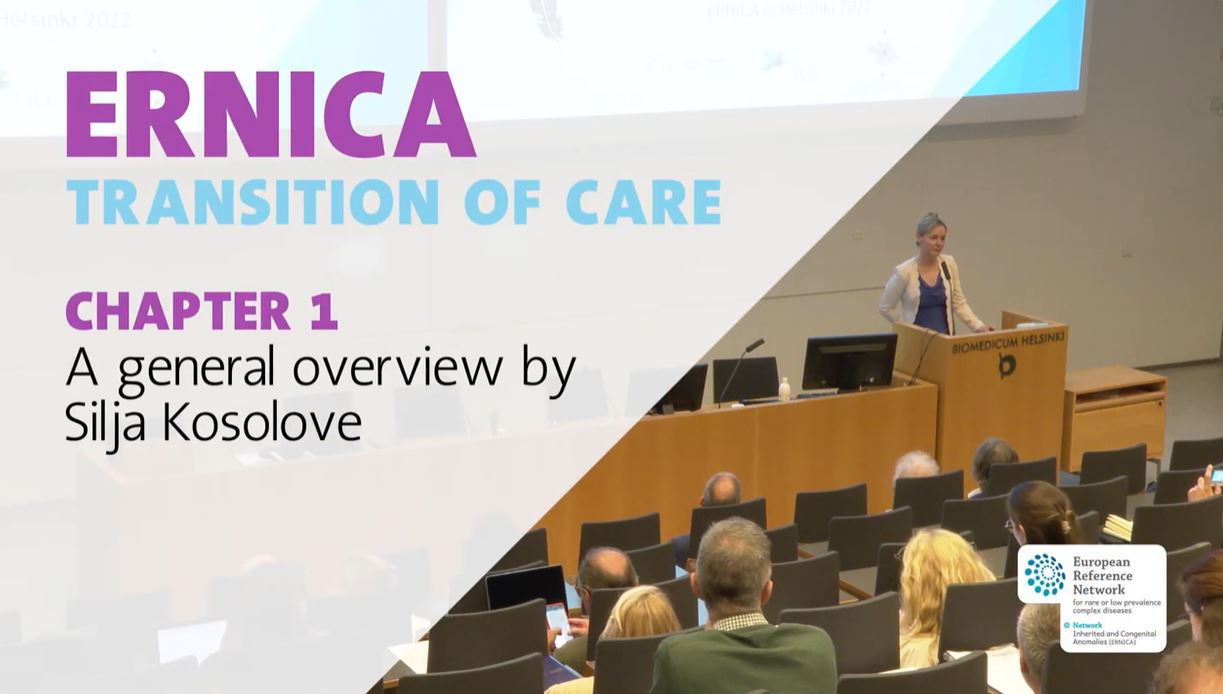
Transition of Care - A general overview by Silja Kosolove
21 min · Published Nov 2023
Video
Transitional Care in Anorectal Malformation and Hirschsprung's Disease
1 min · Published Jul 2024
Video
Transition From Pediatric to Adult Healthcare for Colorectal Conditions: A Systematic Review
58 s · Published Sep 2024
Podcast
Locum Tenens Guidelines, Clavien-Madadi Validation, and Transitional Care Challenges
4 min · Published Nov 2026
Podcast
Colorectal Quiz: Episode 47
Marc Levitt · 22 min · Published May 2025
Video
Clinical & Research Update: Renal Tumors with Drs. Ethan Smith, Lindsay Haacker, Michael Daugherty, and Meera Kotagal
71 min · Published Sep 2026
Video
Clinical & Research Update: Neuroblastoma with Drs. Katherine Somers, Cara Morin, Juan Gurria, and Meera Kotagal
67 min · Published Sep 2026
Video
Clinical & Research Update: Sarcoma w/ Drs. Roshni Dasgupta, Joseph Pressey, Arthur Meyer, Luke Pater
66 min · Published Sep 2026
Video
2026 Laparoscopic Pediatric Hernia Repair
123 min · Published Jun 2026
Video
Beyond the Spectrum: Diagnosis, Myths & Management - Caitlin Couch & Leslie Lopez - APP Conference 2026
50 min · Published May 2026
Video
Dysautonomia: Navigating the Journey - Martha Willis - APP Conference 2026
55 min · Published May 2026
What the experts said
Hirschsprung's disease has excellent survival to adulthood in non-syndromic cases.
Multi-system functional impairments with associated quality of life impact disproportionately affect female patients with Hirschsprung's disease.
The FINI study was a four-center international cross-sectional study recruiting women with Hirschsprung disease treated as children, aged 20-45.
About 50% of women in the study had ever been or tried to become pregnant.
About 50% of women with Hirschsprung's disease demonstrated an impaired bowel function score and about 16% had a poor score (less than 12 or need for permanent stoma).
The female sexual function index score of less than 26 suggests sexual dysfunction.
There was no statistical difference in overall sexual dysfunction rates between patients and controls, though an increased proportion did not reach statistical significance.
Pain related to intercourse (dyspareunia) was significantly more prevalent in patients compared to controls.
Patients unable to complete the sexual function index due to lack of sexual activity in the last 4 weeks had lower desire subscores than those with confirmed sexual dysfunction, along with lower bowel function scores and more frequent urinary incontinence.
Sexual abstinence may be a symptom prevalent in women with impairment after Hirschsprung's disease surgery.
There was increased incidence of ovarian and adnexal cysts and endometriosis in patients, which may be related to increased detection rate in a population undergoing investigations for other reasons.
There was a 35 times increased prevalence of pelvic inflammatory disease in patients, generally in the absence of any sexually transmitted infection.
Subfertility at 1 and 2 years was increased in patients compared to controls by about 2 to 3 times.
Access to IVF or assisted fertility services was increased 2 to 3 times in patients compared to controls, but not the success with these techniques.
There was no increase in rates of miscarriage or incidence of multiple or recurrent miscarriage in patients compared to controls.
Overall infertility rate was increased approximately 2.5 times in patients compared to controls when intending to conceive a child.
There were no associated factors with subfertility or infertility that could be discerned from the functional or surgical history of patients.
Sterile pelvic inflammatory disease was prevalent in 50% of patients who had subfertility at 2 years.
There was no statistical difference in age of first pregnancy between patients and controls.
The number of live births from the first pregnancy was the same between patients and controls.
There was increased use of cesarean section in patients compared to controls, with the majority being elective or planned.
There was a decreased number of live births per pregnancy in patients compared to controls.
Female patients approaching adulthood should be advised of a potential fertility impact that their condition and its resultant surgery might have.
Teenage girls leaving pediatric care should be advised that if they want to have a family, they shouldn't be waiting and if they're struggling, they shouldn't be struggling for too long.
The infant pelvis is a lot shallower than the adult pelvis and structures are a lot closer together.
Population level data suggests female patients with Hirschsprung disease may be older at their first child and may have fewer children than healthy controls.
The working assumption from pouch surgery literature is that when adhesions form in the pelvis in the retrovaginal space, the angle of the cervix changes, which can lead to problems conceiving and make receptive intercourse more painful.
Data from pouch surgery shows that after adopting minimally invasive pouch surgery, the fertility impact is still there but less so.