

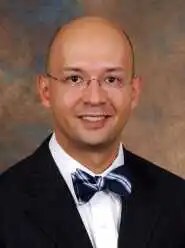
Inside Tract: Bilateral Vocal Fold Paralysis | Cincinnati Children's
With Dr. Alessandro de Alarcon
Chapter 1 of 3 · Fundamentals
Condition overview
Introduction and Definition of Bilateral Vocal Fold Paralysis
Cued at 0:22 · press play
Expert statements on this page
No expert statements were drawn from this page.
Host summaries · secondary, not cited in answers
Educational content from recorded physician discussions — not medical advice. Talk to your (or your child's) care team about your situation.
Podcast
Preventing MRSA infections in pediatric airway surgery through preoperative screening
Alessandro de Alarcon · 8 min · Published Oct 2026
Podcast
Combined cervical and thoracic approach for esophageal atresia with tracheopexy
Alessandro de Alarcon · 5 min · Published Dec 2023
Video
QUAD #1: Cervical Tracheopexy with Dr. Alessandro de Alarcon
Dr. Todd Ponsky · 5 min · Published Dec 2023
Podcast
Screening and treatment of MRSA colonization in pediatric airway surgery patients
Alessandro de Alarcon · 8 min · Published Feb 2012
What the experts said
Bilateral vocal fold paralysis is when the vocal folds don't move and typically they're stuck in the middle.
When vocal folds are stuck in the middle, patients have problems with breathing.
Cincinnati Children's has outstanding airway reconstruction history over the last 30 to 40 years.
The initial evaluation at Cincinnati Children's typically begins with a phone call from an airway nurse practitioner to obtain patient history.
The airway nurse practitioner collaborates with a surgeon to determine the initial evaluation plan.
Surgery for vocal fold paralysis aims to balance breathing, voicing, and swallowing.
Grafting involves taking a piece of rib cartilage and inserting it into an incision in the back part of the voice box to make the voice box bigger at the level of the vocal cords.
Endoscopic grafting is performed through the mouth without external neck incisions.
Open grafting involves making an incision on the neck to open the larynx and insert the graft.
Endoscopic and open posterior grafting offer the best advantage for balancing airway, voicing, and swallowing.
These grafting techniques offer the opportunity to improve voice in the long term by allowing future voice reconstruction operations.