15 views 0 likes

StayCurrentMD

GCMD Space · View profile →

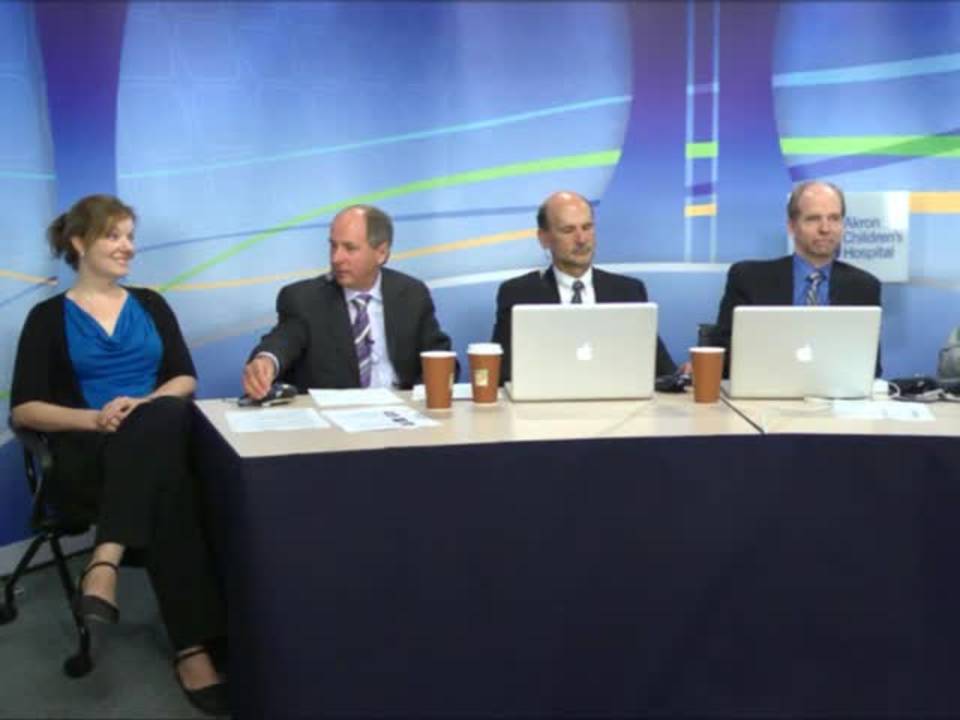
Fetal Interventions Part II: Lung Lesions

Video Published 2019-01-11 Updated 2022-08-22

Timestops (5)

Topic Overview

A multidisciplinary discussion on fetal interventions for congenital lung lesions, primarily congenital cystic adenomatoid malformations (CCAMs). The panel addresses indications for prenatal intervention, techniques for vessel occlusion in hybrid lesions, the role of pleuro-amniotic shunting in macrocystic lesions with hydrops, and the predictive value of cyst-volume ratio (CVR) for adverse outcomes. Speakers emphasize that the vast majority of prenatally diagnosed lung lesions do not require fetal intervention, though careful prenatal evaluation at experienced centers is essential to avoid inappropriate termination recommendations. The discussion includes technical considerations for EXIT procedures, the limitations of various ablation techniques, and diagnostic challenges including lesions that mimic CCAMs such as bronchial stenosis and lung agenesis.

Key Takeaways

  • 95% of prenatally diagnosed CCAMs need no fetal intervention; most can deliver without distress or EXIT procedure. (3:46)
  • CVR <1.6 predicts <5% hydrops risk; CVR >1.6 requires close monitoring for rapid progression to hydrops. (13:33)
  • Pleuro-amniotic shunts reserved for macrocystic CCAMs with true hydrops (not just ascites); avoid prophylactic use. (11:08)
  • Vessel occlusion techniques (RFA, coil, alcohol) have poor safety profiles; RFA uncontrollable in fetal tissue. (1:27)
  • Many lesions regress spontaneously or become isoechogenic; termination often recommended inappropriately by inexperienced centers. (4:57)

Inside this episode

Kai, the Library's AI content creator, listened to this episode and mapped who's speaking, the chapters, key claims, and cases. Every item links to the exact moment in the recording.

AI-enriched

Who's speaking

  • Alan — guest
  • Speaker 2 — host
  • Jack — guest
  • Speaker 4 — guest
  • Speaker 5 — guest
  • Jean Martin — guest
  • Speaker 7

Chapters

  • 0:00Fetal Thoracic Interventions: Techniques and Outcomes — Discussion of various fetal intervention techniques for thoracic lesions including shunts for macrocystic lesions, vessel occlusion attempts using radiofrequency ablation, coils, and alcohol injection, with mixed results and significant complications noted.
  • 3:43Clinical Perspective on Intervention Indications — Emphasis that 95% of prenatally diagnosed CCAMs do not require prenatal intervention, with discussion of lesion regression, the importance of fetal evaluation to prevent inappropriate termination recommendations, and the distinction between prenatal and postnatal CCAM presentations.
  • 6:05Disappearing Lesions and Diagnostic Challenges — Debate over whether true cystic CCAMs can disappear versus regress, discussion of mimics including bronchial stenosis, and cautionary case of EXIT procedure performed for what was actually congenital lung agenesis misdiagnosed as CCAM.
  • 9:19Indications for Pleuro-Amniotic Shunting — Specific criteria for pleuro-amniotic shunt placement in macrocystic CCAMs: presence of hydrops defined as pleural effusion, pericardial effusion, and skin/scalp edema, not just ascites alone. Prophylactic shunting generally avoided.
  • 12:07Referral Criteria and Imaging Strategy — Discussion of when to refer to fetal centers, role of CVR measurement (cutoff 1.6 for microcystic lesions), indications for fetal MRI versus ultrasound surveillance, and acknowledgment of lack of registry for fetal lung interventions.

Key claims

  • 0:29Shunts for macrocystic CCAMs have been performed with pretty good success, with similar test numbers to published series — Jack
  • 0:49Vessel occlusion in bronchopulmonary sequestrations or hybrid lesions using various techniques has had mixed success — Jack
  • 1:27Radiofrequency ablation for vessel occlusion was a disaster and is not recommended — Jack
  • 1:33Coil embolization was initially successful but the fetus died about a week later for unclear reasons — Jack
  • 1:52Alcohol injection for vessel occlusion carries risk of systemic circulation through shunts, potentially causing thrombosis in cardiac chambers and other sites — Alan
  • 2:29The effects of alcohol injection on fetal neural development and organ development have not been studied experimentally, even in sheep models — Alan
  • 3:00Radiofrequency ablation cannot be controlled in the fetus due to 90% water content, with energy dispersing unpredictably and causing collateral damage — Alan
  • 3:46Probably 95% of CCAMs are now prenatally diagnosed — Speaker 4
  • 3:52Almost none of prenatally diagnosed CCAMs require prenatal intervention and very few require intervention the day the child is born — Speaker 4
  • 4:09Only one or two centers in the world should be thinking about extreme fetal interventions for lung lesions due to the small number of cases requiring such treatment — Speaker 4
  • 4:33The majority of children with prenatally diagnosed lung lesions can be delivered without fetal distress — Speaker 4
  • 4:57Some cases with hydrops have regressed spontaneously, with the CCAM not even detectable on CT scan a year after birth — Speaker 5
  • 5:20Many lung lesions have been referred after recommendation for termination by practitioners who don't understand the natural history — Alan
  • 5:31Even very large prenatal lung lesions can regress and be asymptomatic at birth, or have very good survival rates with appropriate interventions — Alan
  • 5:44Garden variety postnatal CCAM is very different than some prenatal CCAMs — Alan
  • 6:05True cystic CCAMs do not disappear, though they often regress and become isoechogenic in third trimester — Alan
  • 6:30All cystic CCAMs seen prenatally and followed with postnatal CT scan at one month remain present and prominent — Alan
  • 6:13Some lesions that look like CCAMs in utero are actually bronchial stenosis or atresia, which can be minimally apparent or non-apparent after birth — Alan
  • 7:45Congenital lung lesions should be called 'congenital lung lesions' (macrocystic, hyperechoic, or mixed) rather than CCAMs, since CCAM is a pathological diagnosis requiring specimen examination — Jean Martin
  • 8:17Many tertiary centers have the capacity to perform EXIT procedures with appropriate team approach and leadership — Jean Martin
  • 8:28Indications for EXIT procedure are more important than technical capability, as inappropriate use can lead to unnecessary intervention — Jean Martin
  • 9:19Good prenatal diagnosis is essential and not equivalent across all centers or practitioners — Alan
  • 9:33Lung agenesis is frequently misdiagnosed as microcystic CCAM at other centers — Alan
  • 9:56EXIT procedure is more invasive than regular cesarean section — Jean Martin
  • 11:08Pleuro-amniotic shunts are used specifically for macrocystic CCAMs with evidence of hydrops — Alan
  • 11:18Hydrops is defined as requiring more than just ascites: must include pleural effusion, pericardial effusion, and skin or scalp edema — Alan
  • 11:27Pure ascites is not necessarily hydrops and can be related to mediastinal shift and hepatic venous return — Alan
  • 11:48Pleuro-amniotic shunts are avoided prophylactically — Alan
  • 11:52Large macrocystic lesions may be tapped just prior to delivery to improve ventilation, but shunts are not placed unless there is hydrops — Alan
  • 13:33CVR cutoff of 1.6 is used for prediction of adverse physiology — Alan
  • 13:36CVR less than 1.6 on presentation of a CCAM predicts likelihood of hydrops evolution at about 3% or less than 5% — Alan
  • 14:04It is very unusual for a CVR less than 1.6 with microcystic lesion to evolve into hydrops — Alan
  • 14:11CVR greater than 1.6 requires close watching with much higher likelihood of hydrops evolution — Alan
  • 14:18Macrocystic lesions are a wild card because cystic component can grow very rapidly and can be worrisome even if CVR is less than 1.6 — Alan
  • 14:40MRI is often helpful in defining anatomy and general size of lesions — Alan
  • 15:07MRI can clarify abnormalities when there is ambiguity on ultrasound or confusion about diagnosis — Alan
  • 15:25In centers not geared toward fetal aspects, most patients are followed with fetal ultrasound alone and evaluated after birth, with MRI reserved for unusual cases — Speaker 4

Cases discussed

  • 0:49Fetus with bronchopulmonary sequestration or hybrid lesion with large feeding vessel, treated with shunt and vessel occlusion
  • 1:33Fetus treated with coil embolization for vessel occlusion
  • 1:52Teratoma case with alcohol injection complication
  • 3:12Teratoma treated with radiofrequency ablation
  • 4:57Prenatal CCAM with hydrops that regressed spontaneously
  • 8:35Misdiagnosed lung lesion that underwent EXIT procedure

Points of disagreement

  • 6:05Whether true cystic CCAMs can completely disappear
    • Speaker 5: Reported case where CCAM could not be found on CT scan one year after birth despite prenatal diagnosis
    • Alan: True cystic CCAMs do not disappear, they regress but remain present on postnatal CT; some mimics like bronchial stenosis may appear to disappear
  • 14:35Routine use of fetal MRI for lung lesions
    • Alan: Gets fetal MRIs routinely for all lung lesions at their center for better anatomic definition
    • Speaker 4: Uses fetal MRI only for unusual cases due to practical and cost considerations, as it doesn't change prenatal management in most cases

Open questions

  • What are the long-term effects of alcohol injection on fetal neural and organ development?
  • Why did the fetus die one week after successful coil embolization?
  • What is the optimal technique for vessel occlusion in fetal bronchopulmonary sequestrations?
  • Should a registry be established for fetal surgery and EXIT procedures similar to the ECMO registry?
This episode was analyzed and enriched by Kai, the Library's AI content creator. Every item links to the moment it comes from — click a timestamp to listen in context.

Fetal Lung Lesion Intervention: When Restraint Outweighs Technical Capability

The episode's teaching points arranged as a structured lesson, building from the basics up to the finer points. Written by Kai from the episode transcript and reviewed before publishing.

For specialists · Teaching arc · AI-written, human-reviewed

Vessel occlusion techniques carry unacceptable risks

Radiofrequency ablation in the fetus is uncontrollable 3:00. The fetus is approximately 90% water, and energy disperses unpredictably — laboratory studies have demonstrated that activating a probe on one side of a lesion causes tissue on the opposite side to boil 3:00. One of the discussants described placing a radiofrequency ablation probe in one side of a resected fetal teratoma and observing the opposite side begin to boil as energy dispersed 3:00. Collateral damage in the thorax is extensive and unavoidable 3:00. Coil embolization appears initially successful but has resulted in fetal death approximately one week post-procedure for unclear reasons 1:33.

Alcohol injection for vessel occlusion introduces two distinct hazards 1:52. First, alcohol can traverse fetal shunts into systemic circulation, causing thrombosis in cardiac chambers and distal organs — this has been documented in at least one case involving a teratoma 1:52. Second, and more troubling, the effects of intravascular alcohol on fetal neural and organ development have not been studied even in sheep models 2:29. The absence of basic experimental data makes this intervention difficult to justify.

CVR stratifies risk but macrocystic lesions defy prediction

A CVR less than 1.6 in microcystic lesions predicts hydrops evolution in fewer than 5% of cases 13:36. This threshold has held across prospective studies and ongoing clinical experience 13:36. It is very unusual for a microcystic lesion below this threshold to progress to hydrops 14:04. CVR greater than 1.6 requires close surveillance with substantially higher hydrops risk 14:11.

Macrocystic lesions are less predictable 14:18. The cystic component can expand rapidly, and these lesions can become concerning even when CVR remains below 1.6 14:18. This unpredictability justifies closer monitoring regardless of the calculated ratio.

Hydrops requires more than ascites

True hydrops demands pleural effusion, pericardial effusion, and skin or scalp edema 11:18. "By high drops we mean fluid in, uh, our skin edema. Um, it has to be more than just ascites. So, pure ascites is not necessarily hydrops" [q10]. Isolated ascites may reflect mediastinal shift affecting hepatic venous return rather than systemic fluid overload 11:27. Misclassifying ascites as hydrops leads to overtreatment — pleuro-amniotic shunts are reserved for true hydrops in macrocystic lesions 11:08 11:48. Large macrocystic lesions may be tapped immediately before delivery to improve initial ventilation, but shunts are not placed prophylactically 11:52.

Diagnostic precision determines whether intervention is appropriate

Lung agenesis is frequently misdiagnosed as microcystic CCAM at referring centers 9:33. Performing an EXIT procedure on lung agenesis — believing it to be a resectable lesion — would leave the infant with no functional lung tissue 9:33. One documented case involved a severely obese mother who could not undergo MRI; the team proceeded to EXIT for what appeared to be a large hyperechoic lesion with mediastinal shift, only to discover at delivery that what looked like a CCAM with mediastinal shift was actually the only lung present 9:33. Had they performed EXIT to lobectomy, there would have been no lung left 9:33.

Prenatal diagnostic capability is not equivalent across centers or practitioners 9:19. If diagnostic uncertainty exists, referral to a fetal center is appropriate before considering intervention 9:19. MRI is helpful when ultrasound findings are ambiguous or the diagnosis is unclear 15:07, though centers not focused on fetal intervention may reasonably follow most cases with ultrasound alone and evaluate definitively after birth 15:25.

The denominator problem: most lesions require no fetal intervention

Approximately 95% of CCAMs are now diagnosed prenatally 3:46. Almost none require prenatal intervention, and very few require intervention on the day of birth 3:52. "Probably 95% of the C cams I see now are prenatally diagnosed. And in, In the, you know, we're, we're talking about the end of the nth, um, the experience of CHOP or that you might have up in Toronto, but almost none of these lesions require prenatal prenatal intervention and in fact very few require intervention the day the child is born" [q4]. The majority of infants with prenatally diagnosed lung lesions can be delivered without fetal distress 4:33. Some lesions with hydrops regress spontaneously and are undetectable on postnatal CT scan 4:57.

Many referrals follow recommendations for termination by practitioners unfamiliar with the natural history of these lesions 5:20. Even very large prenatal lung lesions can regress and be asymptomatic at birth, or have excellent survival with appropriate postnatal interventions 5:31. Only one or two centers globally should be performing extreme fetal interventions for lung lesions, given the small number of cases that genuinely require such treatment 4:09. Technical capability to perform EXIT procedures exists at many tertiary centers 8:17, but the critical question is indication, not feasibility 8:28. "Remember to first do no harm. So if you're not sure, better not to put the mom through an exit because it is more invasive than a regular C-section" [q9].

Takeaways from this story

  • Radiofrequency ablation is uncontrollable in the fetus due to 90% water content—energy disperses unpredictably causing distant tissue injury
  • True hydrops requires pleural effusion, pericardial effusion, and skin edema—isolated ascites may reflect mediastinal shift, not systemic overload
  • CVR <1.6 in microcystic lesions predicts <5% hydrops risk; macrocystic lesions are less predictable as cystic components can expand rapidly
  • Lung agenesis is frequently misdiagnosed as CCAM—performing EXIT on misdiagnosed agenesis would leave the infant with no functional lung
  • 95% of CCAMs are now diagnosed prenatally, but almost none require fetal intervention and very few need intervention at birth

Keywords

Hashtags

Transcript

Comments

Loading comments…