


From
Live Event Content
EUPSA - MicroRNAs in amniotic fluid stem cellextracellular vesicles modulate lung development in experimental congenital diaphragmatic hernia - Kasra Khalaj
With Dr. Kasra Khalaj
Chapter 2 of 8 · Fundamentals
CDH background
Background on CDH lung hypoplasia and AFSCEV treatment approach
Cued at 0:45 · stops at 0:58 · press play
Expert statements on this page
No expert statements were drawn from this page.
Host summaries · secondary, not cited in answers
Educational content from recorded physician discussions — not medical advice. Talk to your (or your child's) care team about your situation.
Video
BOB Winner Presentation - Dr. Rebeca Figueira - EUPSA
Published Feb 2023
Podcast
Fetoscopic Tracheal Occlusion for Congenital Diaphragmatic Hernia: Procedural Walkthrough
4 min · Published Nov 2026
Video
Inside a FETO Procedure: Fetoscopic Balloon Tracheal Occlusion with Dr. Beth Rymeski
4 min · Published Jul 2026
Video
Dr. Adriana Dekirmendjian - Best of the Best in Pediatric Surgery 2025
Dr. Todd Ponsky · 9 min · Published Mar 2025
Video
What is Congenital Diaphragmatic Hernia (CDH)? An ERNICA animation for parents and families
3 min · Published Dec 2023
Video
EUPSA - Circular RNA profiles isolated from amniotic fluidscan distinguish between CDH survivors and non-survivers - Richard Wagner
9 min · Published May 2022
Video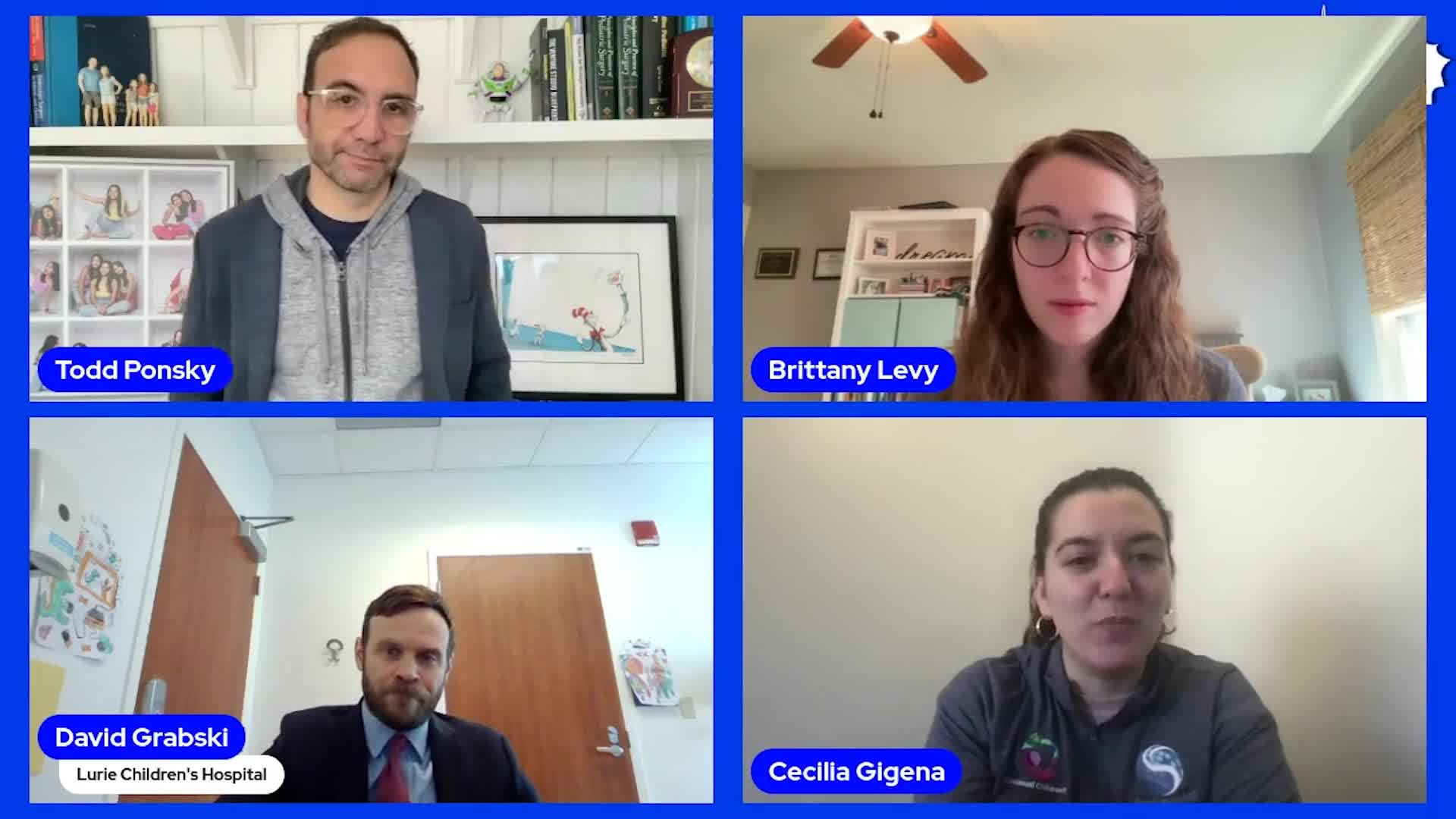
Kasra Khalaj, MSc, PhD - Best of the Best in Pediatric Surgery 2024
Dr. Todd Ponsky · 7 min · Published Feb 2024
Video
CAPS - Administration of amniotic fluid stem cell extracellular vesicles regenerates the lung epithelium in fetal rats with CDH at translationally relevant developmental stages - Kasra Khalaj
7 min · Published May 2022
Video
Clinical & Research Update: Renal Tumors with Drs. Ethan Smith, Lindsay Haacker, Michael Daugherty, and Meera Kotagal
71 min · Published Sep 2026
Video
Clinical & Research Update: Neuroblastoma with Drs. Katherine Somers, Cara Morin, Juan Gurria, and Meera Kotagal
67 min · Published Sep 2026
Video
Clinical & Research Update: Sarcoma w/ Drs. Roshni Dasgupta, Joseph Pressey, Arthur Meyer, Luke Pater
66 min · Published Sep 2026
Video
2026 Laparoscopic Pediatric Hernia Repair
123 min · Published Jun 2026
Video
Beyond the Spectrum: Diagnosis, Myths & Management - Caitlin Couch & Leslie Lopez - APP Conference 2026
50 min · Published May 2026
Video
Dysautonomia: Navigating the Journey - Martha Willis - APP Conference 2026
55 min · Published May 2026
What the experts said
Hypoplastic lungs of babies with pulmonary hypoplasia secondary to CDH have impaired fetal lung growth and maturation
Several treatment agents have been administered prenatally for CDH, but none have been shown to fully rescue lung development
Extracellular vesicles are nanoparticles known to be the mediators of stem cell paracrine signaling
AFSCEV administration rescued the number of lung branches back to normal in CDH models
AFSCEVs improve fetal lung maturation as shown by rescuing the expression of surfactant protein C
AFSCEVs contain microRNA 17-92 cluster, which has been reported in the literature to modulate fetal lung development
Knockout of the microRNA 17-92 cluster can recapitulate pulmonary hypoplasia
Autophagy has been shown to be critical for lung branching morphogenesis
Autophagy is a recycling mechanism of cellular trash and is one of the key ways that cell survival is promoted
Autophagy is most impaired at the pseudoglandular and canalicular stages in the nitrofen model of CDH
CDH fetal lungs show reduced levels of Beclin 1 and ATG5 (autophagy activators) and higher levels of sequestosome (autophagy adapter) at pseudoglandular and canalicular stages
High levels of sequestosome indicate autophagy impairment
Treatment with AFSCEVs restores autophagy key genes (Beclin 1, ATG5, sequestosome) at the pseudoglandular and canalicular stage
AFSCEVs are taken up by virtually all cells in fetal lung explants, including the fetal lung epithelium
Activation of autophagy by AFSCEVs is localized in the lung epithelial compartment of the fetal lung microenvironment
Knockdown of microRNAs 17 and 20 in AFSCEVs results in increased sequestosome and down regulation of Beclin mRNA, indicating impaired autophagy
Knockdown of microRNAs 17 and 20 results in lower levels of LC3B2 protein, which is the active isoform of the autophagy cascade
Human fetal lung explant model of pulmonary hypoplasia was established using fetal lungs from healthy terminated fetuses from 15 to 19 weeks of gestation, corresponding to late pseudoglandular and canalicular stages
In human hypoplastic fetal lung explants, there is a reduction of Beclin 1 and ATG5 at the mRNA level
Treatment with human AFSCEVs results in restoration of Beclin 1 and ATG5 in human hypoplastic fetal lung explants
At the protein level in human tissue, all three autophagy markers (Beclin 1, ATG5, sequestosome) were dysregulated in the hypoplastic group, and human AFSCEVs restored all three markers back to control
This is the first study discovering autophagy impairment as an important mechanism in CDH pathophysiology
Autophagy levels are restored with administration of AFSCEVs, thus partially explaining their effect on branching morphogenesis
Autophagy can be targeted with microRNAs 17 and 20
Future work includes looking at ER stress, which is very closely interrelated with autophagy pathway, to see if AFSCEVs can exert an effect on this related mechanism
Studies in oncology have shown that the quantity of extracellular vesicles released when autophagy is impaired is different
Future functional studies will examine endogenous extracellular vesicle production in hypoplastic fetal lungs
The study evaluated autophagy in hypoplastic lungs throughout gestation and established whether extracellular vesicles from rat and human amniotic fluid stem cells can improve branching morphogenesis through autophagy-mediated mechanisms including microRNA cargo transfer
The study demonstrated that autophagy levels are deregulated in fetal hypoplastic lungs from rats and humans