
Cloacal Exstrophy: A Modification of the Newborn Operation - Leaving the Cecal Plate Untouched
Educational content from recorded physician discussions — not medical advice. Talk to your (or your child's) care team about your situation.
More about cloacal exstrophy
same diagnosisPodcast
Cloacal Exstrophy with Dr. Alberto Peña
53 min · Published Apr 2017
Video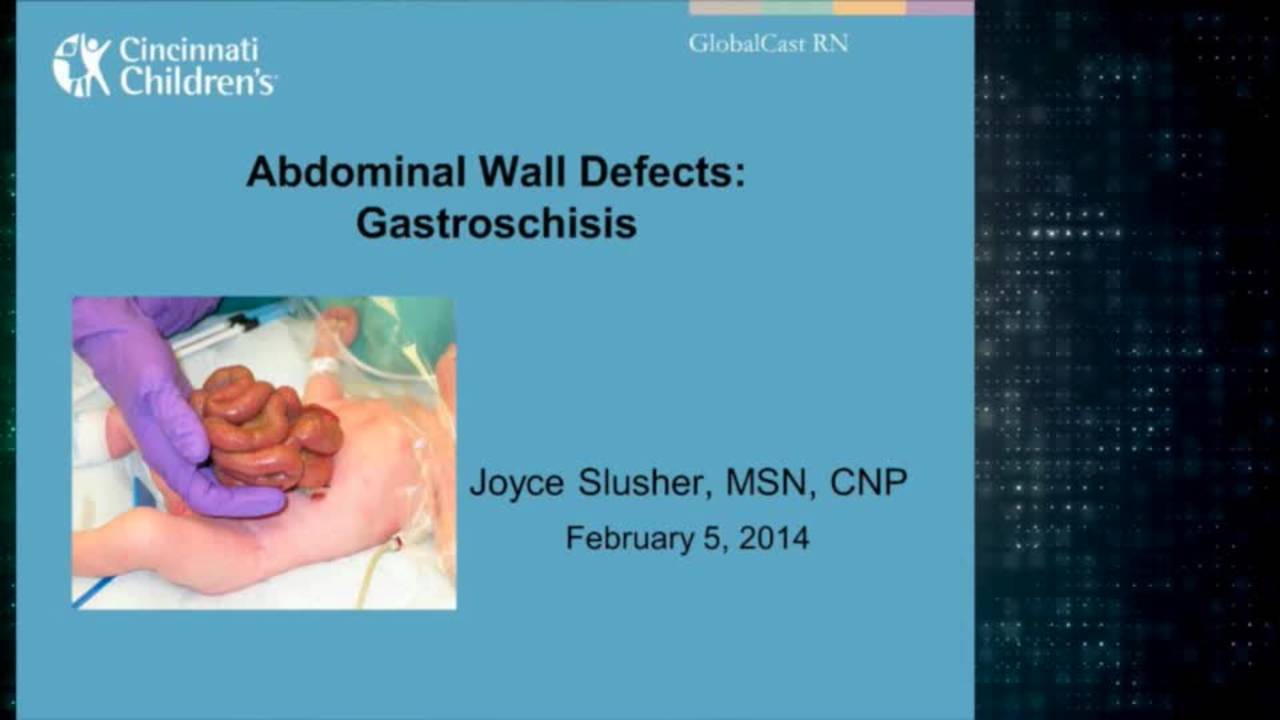
Gastroschisis: Advanced Practice Providers
43 min · Published Feb 2014
Video
ERN eUROGEN ARM Webinar Series: Management of Cloacal Malformations – what is new in 2021?
48 min · Published Dec 2022
Video
Panel Discussion and Case Presentation Part I: Pediatric Bowel Management 2013
Dr. Todd Ponsky · 12 min · Published May 2013
Video
Prenatal Imaging and Counseling: Cloaca and Complex ARMs 2015
CCHMC Pediatric Surgery · 31 min · Published Oct 2015
Video
Cloaca - Prental Imaging & Diagnosis - Counseling
Dr. Todd Ponsky · 36 min · Published Nov 2018
Video
Posterior Rectal Advancement Anoplasty (PRAA) in a male with an anorectal malformation and rectoperineal fistula
9 min · Published Mar 2026
Video
Sphincter Reconstruction in a patient who suffered from Fournier’s gangrene
5 min · Published Mar 2026
Video
Total colonic Hirschsprung disease: Ileostomy take down and ileoanal pull-through
9 min · Published Mar 2026
Podcast
Colorectal Quiz: Episode 50 - 16th Annual European Pediatric Colorectal and Pelvic Reconstruction Conference, Stockholm, Sweden, October 2025 - What did we learn?
24 min · Published Mar 2026
Video
Turnbull Stoma
4 min · Published Feb 2026
Video
Rectal Atresia - a Unique Anorectal Malformation
4 min · Published Oct 2025
What the experts said
Cloacal exstrophy is the most complex of all anatomic problems faced by the pediatric reconstructive surgeon.
In cloacal exstrophy, the distal ileum and appendix are often intussuscepted.
The traditional approach to the newborn operation is to separate the cecal plate from within the two hemibladders, tubularize it, and add it to the fecal stream.
The rationale for the traditional approach was to maximize the amount of colon the patient had and to avoid resorption of urine by bowel mucosa.
Over time it became clear that the tubularized cecum was problematic as it led to stasis and bacterial overgrowth.
Urinary absorption by bowel did not lead to the clinical concern of acidosis that had been expected.
The new approach to the newborn operation leaves the cecal plate untouched and performs an ileal-to-hindgut anastomosis.
The new approach avoids the technically challenging separation of the cecal plate from between the two hemibladders.
The new approach allows for an auto-augmentation of the bladder.
The ileum-to-hindgut connection is a 1-to-1 size differential.
The new approach avoids the tubularized cecum, which down the road leads to problems related to dysmotility.
In this case, the hindgut measured about 12 centimeters in length.
The hindgut ended blindly as a colonic atresia.
In this case, essentially only the right colon was present.
A Cheatle maneuver was performed on the hindgut to set up a better aligned ileum-to-hindgut anastomosis.