


From
StayCurrentMD
Chylothorax & Chylous Ascites Rapid Fire: Update Course 2015
Chapter 1 of 2 · Case-Based Learning
Chylous ascites
Chylous ascites case: intraoperative identification and management of lymph leak
Expert statements on this page
No expert statements were drawn from this page.
Host summaries · secondary, not cited in answers
Educational content from recorded physician discussions — not medical advice. Talk to your (or your child's) care team about your situation.
More about this diagnosis
ChylothoraxPodcast
Lymphatic Anomalies
43 min · Published Mar 2018
Video
Interesting Case Presentations Part II: EA/TEF
66 min · Published Dec 2012
Video
Dr. Luis Iván León Ortega & Joel Cazares - Best of the Best in Pediatric Surgery 2025
Dr. Todd Ponsky · Published Mar 2025
Video
Pediatric Vascular Access in Brief: Preoperative, Operative, and Postoperative Considerations
CCHMC Pediatric Surgery · 13 min · Published Sep 2022
Video
Intestinal Atresia Types Explained: Grossfeld Classification for Pediatric Surgery
1 min · Published Sep 2026
Video
Derivation and validation of the Pediatric Community-Acquired Pneumonia Severity (PedCAPS) score: A prospective cohort study
50 s · Published Sep 2026
Video
FETO for Late-Diagnosed Severe Congenital Diaphragmatic Hernia (CDH) at Cincinnati Children's with Dr. Beth Rymeski
4 min · Published Sep 2026
Video
Severe Congenital Diaphragmatic Hernia (CDH) Case: FETO Management & Unexpected Findings with Dr. Beth Rymeski
3 min · Published Sep 2026
Video
Fetoscopic Endoluminal Tracheal Occlusion (FETO) Procedure: Step-by-Step Guide with Dr. Beth Rymeski
4 min · Published Sep 2026
Video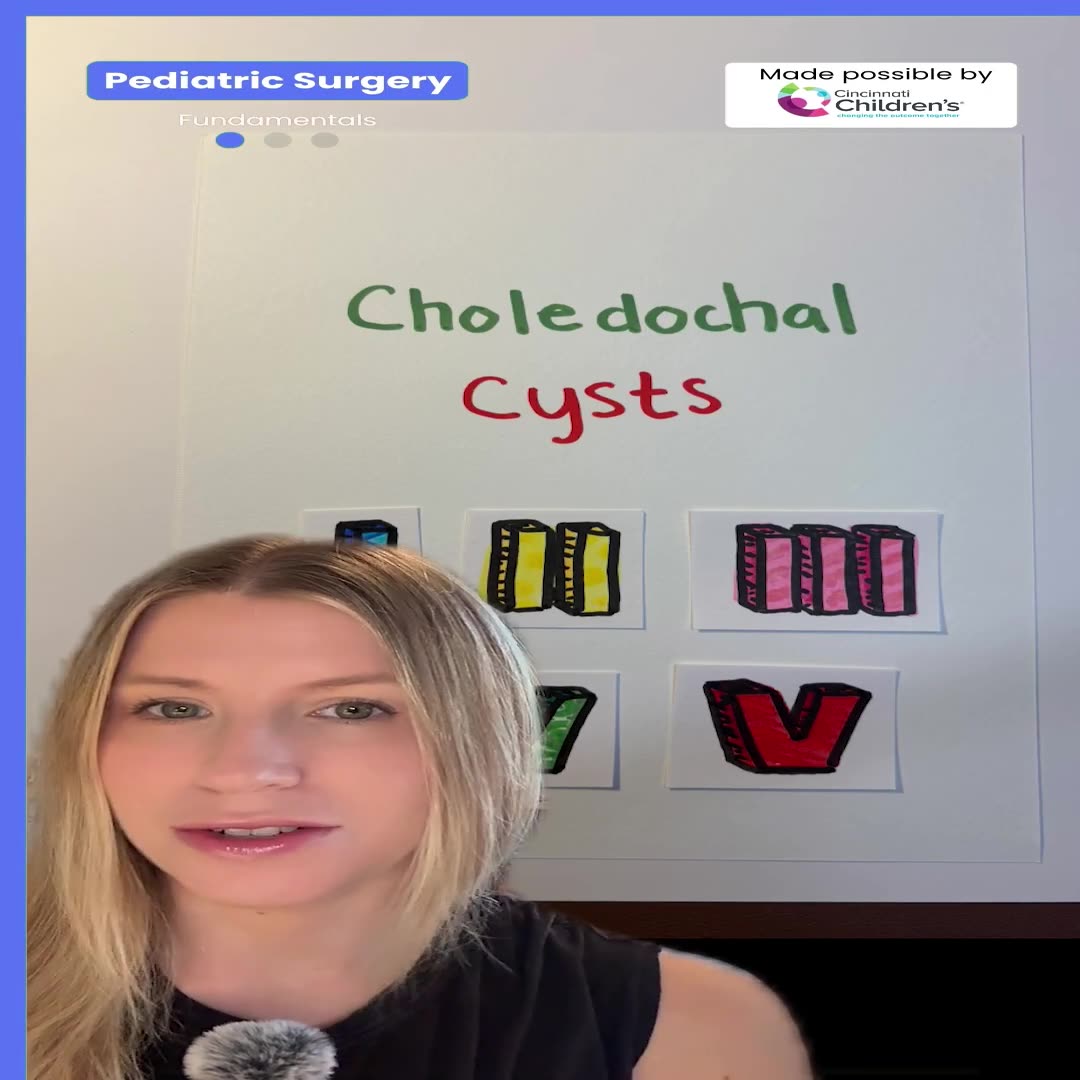
Choledochal Cyst Types Explained: Pediatric Surgery Fundamentals
1 min · Published Sep 2026
What the experts said
Heavy cream is given at approximately 20 cc/kg about 30 minutes before the patient is put to sleep to aid intraoperative identification of lymph leak.
Methylene blue is no longer used by some practitioners for lymph leak identification.
For persistent chylous ascites despite medical and surgical management, repeat laparoscopy with heavy cream administration to re-identify the leak is an option.
Peritoneal-to-thoracic shunts can be used for refractory chylous ascites, adding the thoracic cavity as extra absorptive space; a prosthetic device is placed on the ribs and pumped to facilitate shunting.
Denver shunts have a thrombosis rate and are not always patent, so peritoneal-to-thoracic shunts are preferred over Denver shunts in some centers.
NPO is therapeutically superior to MCT feeding for chylothorax; MCT is primarily a way to continue feeding rather than a therapeutic intervention.
Available MCT formulas are approximately 80% medium-chain triglycerides, so some fat content remains even with MCT feeding.
Duration of conservative management (octreotide, NPO/MCT) before escalating therapy is typically 14-30 days, but is symptom-driven; infectious complications from lymphopenia may prompt earlier intervention.
Iatrogenic chylothorax after cardiac surgery has a better chance of sealing off on its own compared to congenital chylothorax.
Post-bidirectional Glenn chylothorax creates a very high-pressure system, and the thoracic duct may appear to be pumping on inspection.
For lymph leak over the bare area of the liver without a discrete source, absorbable cellulose with fibrin glue is a preferred management approach.
If a discrete duct is identified, management options include endo loop, vessel sealing device, sutures, or ligature.
Fluorescein can be used with a black light scope to identify the thoracic duct, as described by veterinarian Jeff Runge in animals.
Lymphangiography is being studied by vascular malformation teams in Philadelphia to identify leak sites preoperatively, and the procedure itself can sometimes serve as therapeutic embolization.
For lymphangiography, contrast is now injected into the groin (into a lymph node) rather than toe web spaces.
Octreotide has marginal or no clear benefit for chylothorax management.
Neonatologists are concerned about octreotide use due to a solitary case report linking it to necrotizing enterocolitis.
A Michigan study of nearly 100 post-cardiac surgery chylothorax patients found that early surgical ligation (within 2 weeks for high-output cases) reduced ICU length of stay by half, overall hospital stay from 30 to 23 days, and ventilator days by half, compared to waiting 30 days.
High-output chylothorax in cardiac patients requires expert fluid management due to significant fluid losses, progressive hypoalbuminemia, and underlying cardiac pathology.
The Michigan group's clinical practice guideline recommends surgical ligation within 2 weeks for high-output post-cardiac chylothorax rather than waiting 30 days.