


From
Live Event Content
BOB Ped Surg 2023 - Bernadette Jeremiasse, IPSO - Presentation
With Dr. Bernadette Jeremiasse
Chapter 1 of 5 · Fundamentals
Clinical challenge
Introduction and Clinical Problem
Cued at 1:25 · press play
Expert statements on this page
No expert statements were drawn from this page.
Host summaries · secondary, not cited in answers
Educational content from recorded physician discussions — not medical advice. Talk to your (or your child's) care team about your situation.
Video
Dominique Simons, MSc - Best of the Best in Pediatric Surgery 2024
Dr. Todd Ponsky · 7 min · Published Feb 2024
Video
Neuroblastoma vs. Nephroblastoma (Wilms Tumor): Pediatric Surgery Differences Explained
3 min · Published Nov 2026
Video
Social Determinants of Health Influence on Survival in Wilms Tumor, Neuroblastoma, and Hepatoblastoma
1 min · Published Jan 2026
Video
Update Course Rewind: Staging and Management of Neuroblastoma 2022
Published Jun 2023
Podcast
Journal of Pediatric Surgery Article Review: The Disruption Score
12 min · Published Aug 2021
Video
The International Neuroblastoma Risk Group (INRG) staging system: an INRG Task Force report
59 s · Published Mar 2026
Video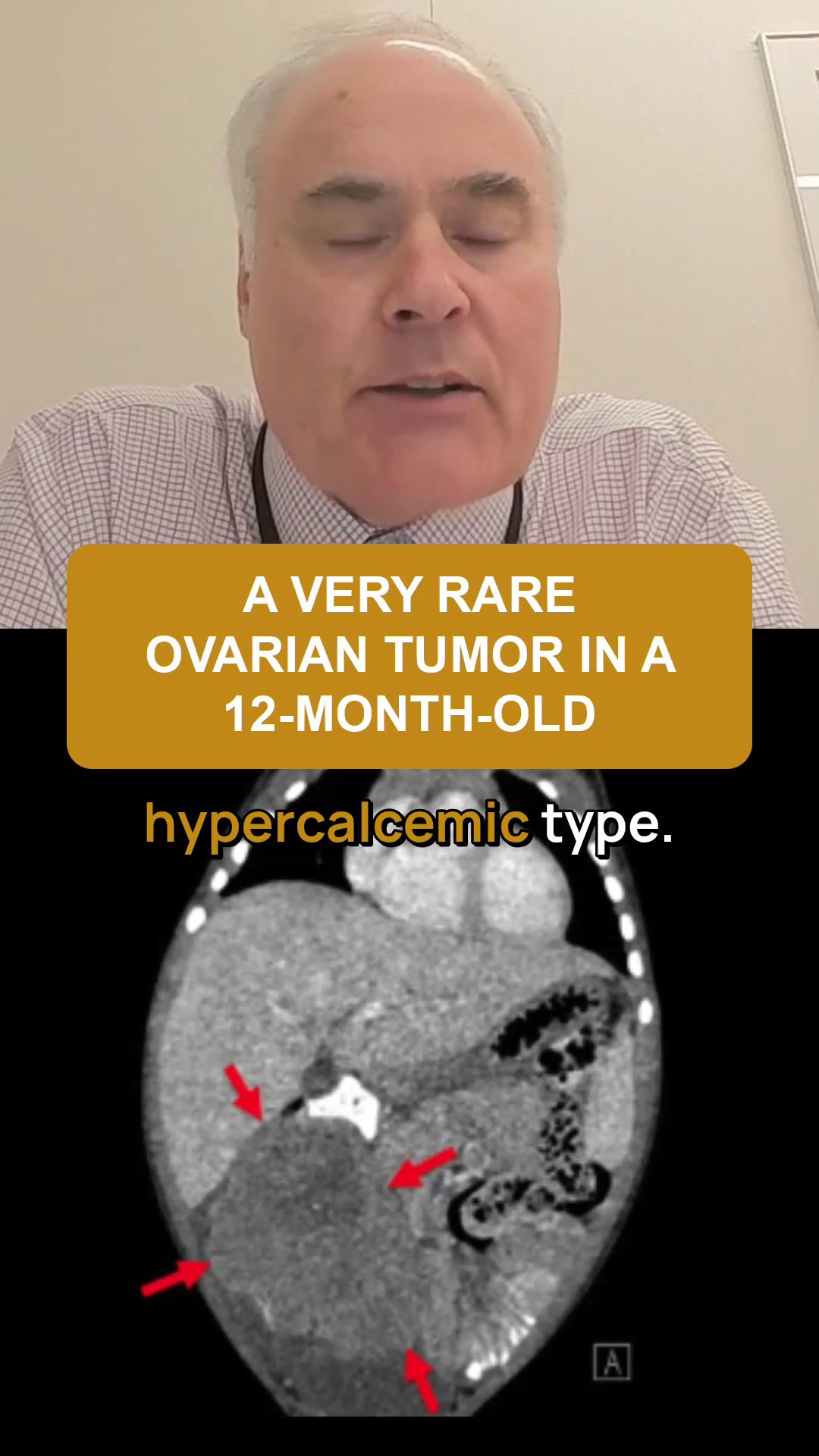
Rare Ovarian Tumor in Infants: Small Cell Carcinoma of Ovary, Hypercalcemic Type & SMARCA4 Mutation
21 s · Published Oct 2026
Video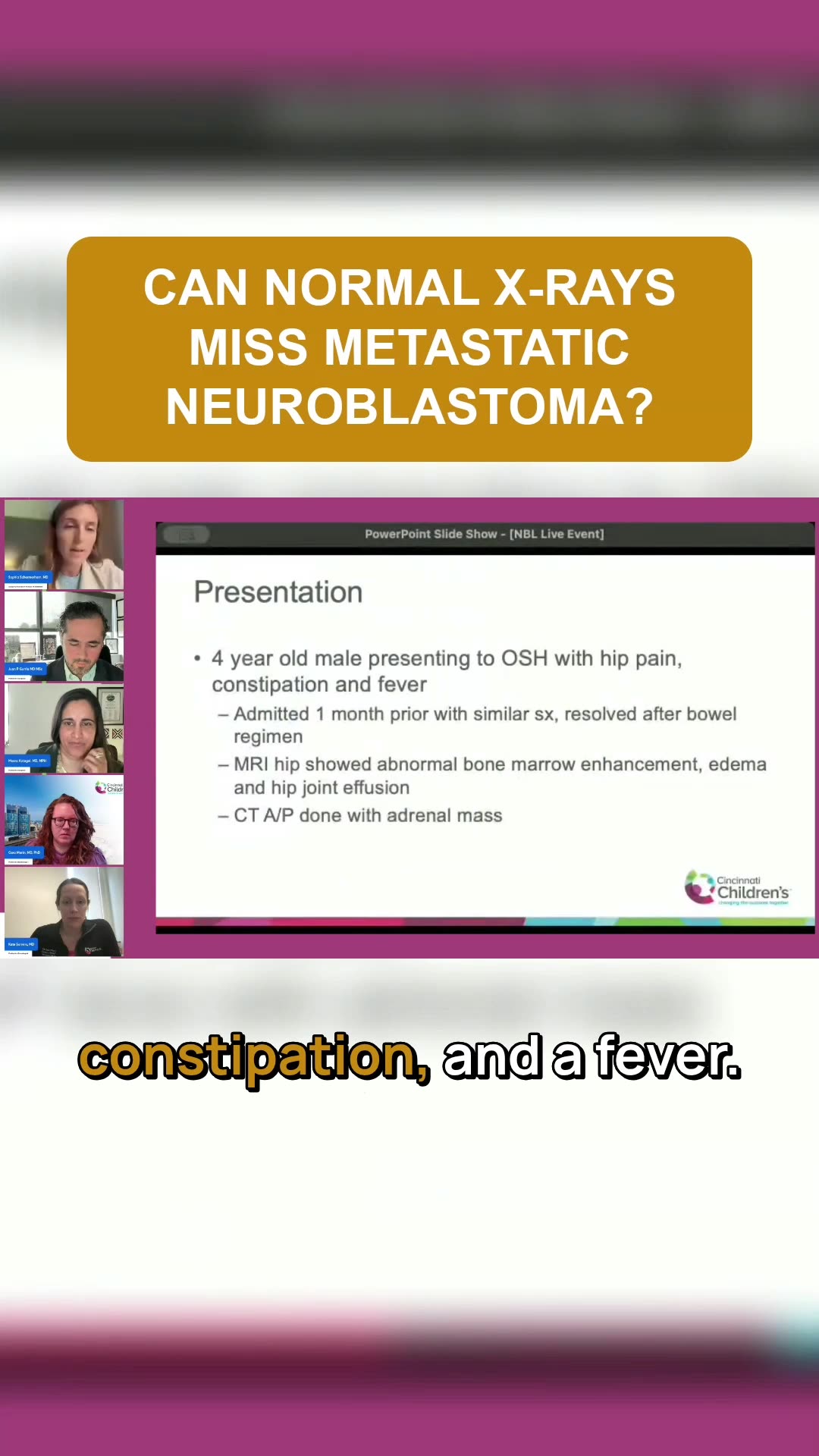
Can Normal X-Rays Miss Metastatic Neuroblastoma? A Pediatric Radiology Case Study
26 s · Published Oct 2026
Video
Can Fractures Be a Sign of Hepatoblastoma in Children? Understanding Pediatric Liver Cancer Symptoms
37 s · Published Oct 2026
Video
Pancreas, Muscle, and Subcutaneous Fat Atrophy in Patients Undergoing Radiation for Neuroblastoma
47 s · Published Oct 2026
Podcast
Hepatoblastoma
Todd Ponsky · 54 min · Published Oct 2026
Podcast
Wilms Tumor
Todd Ponsky · 64 min · Published Oct 2026
Only a few other public items share this expert — go deeper there →
Video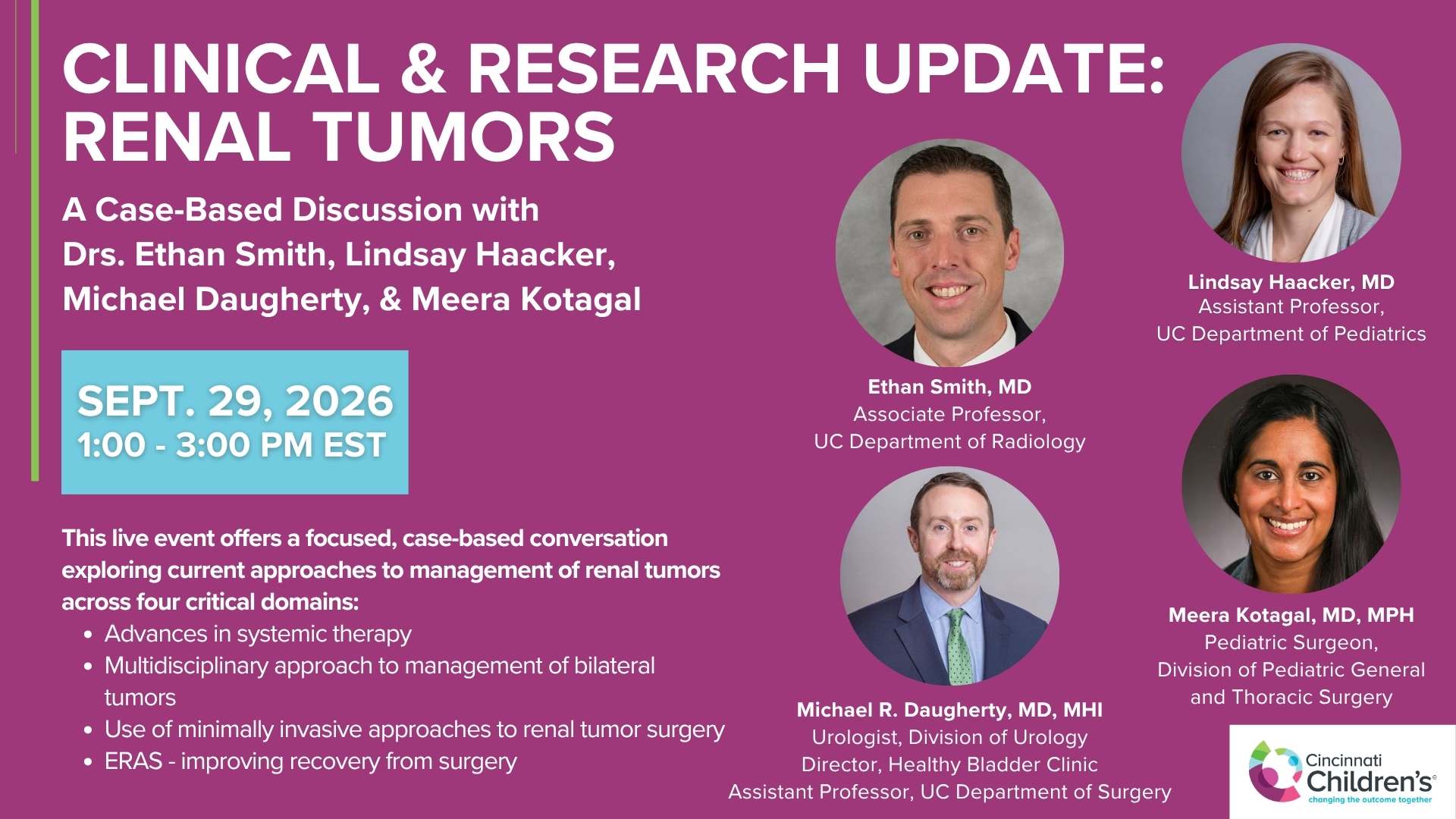
Clinical & Research Update: Renal Tumors with Drs. Ethan Smith, Lindsay Haacker, Michael Daugherty, and Meera Kotagal
71 min · Published Sep 2026
Video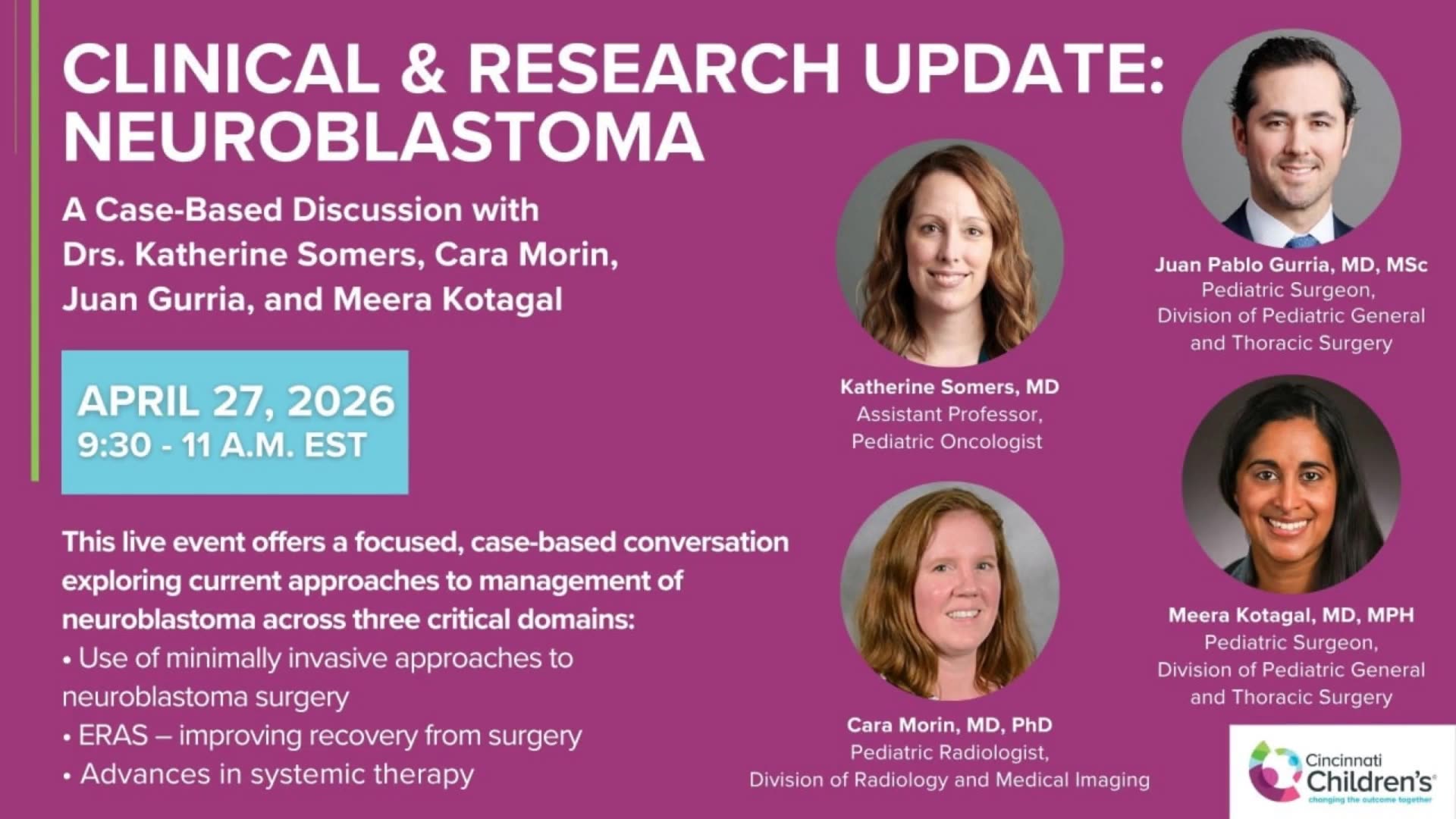
Clinical & Research Update: Neuroblastoma with Drs. Katherine Somers, Cara Morin, Juan Gurria, and Meera Kotagal
67 min · Published Sep 2026
Video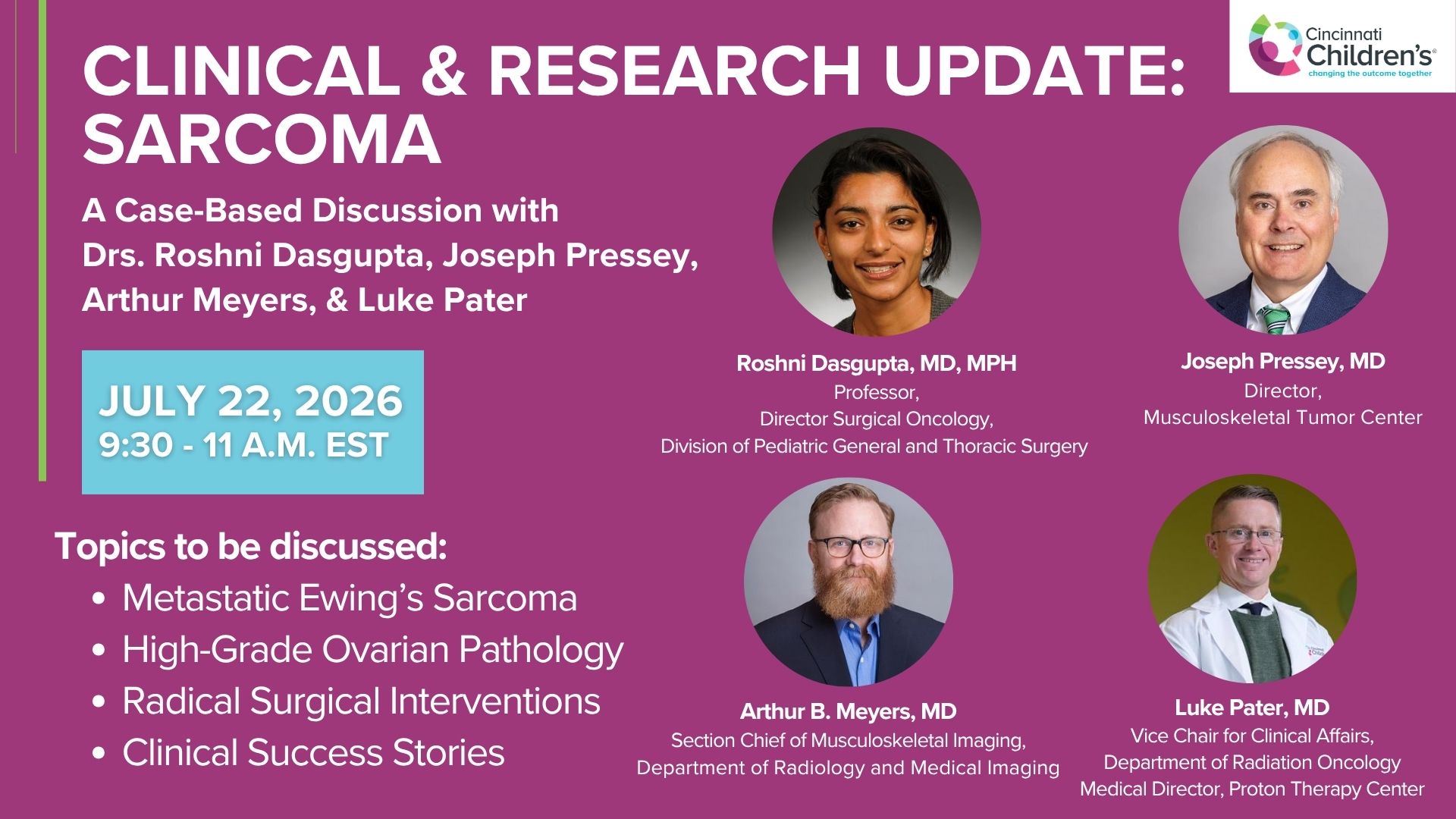
Clinical & Research Update: Sarcoma w/ Drs. Roshni Dasgupta, Joseph Pressey, Arthur Meyer, Luke Pater
66 min · Published Sep 2026
Video
2026 Laparoscopic Pediatric Hernia Repair
123 min · Published Jun 2026
Video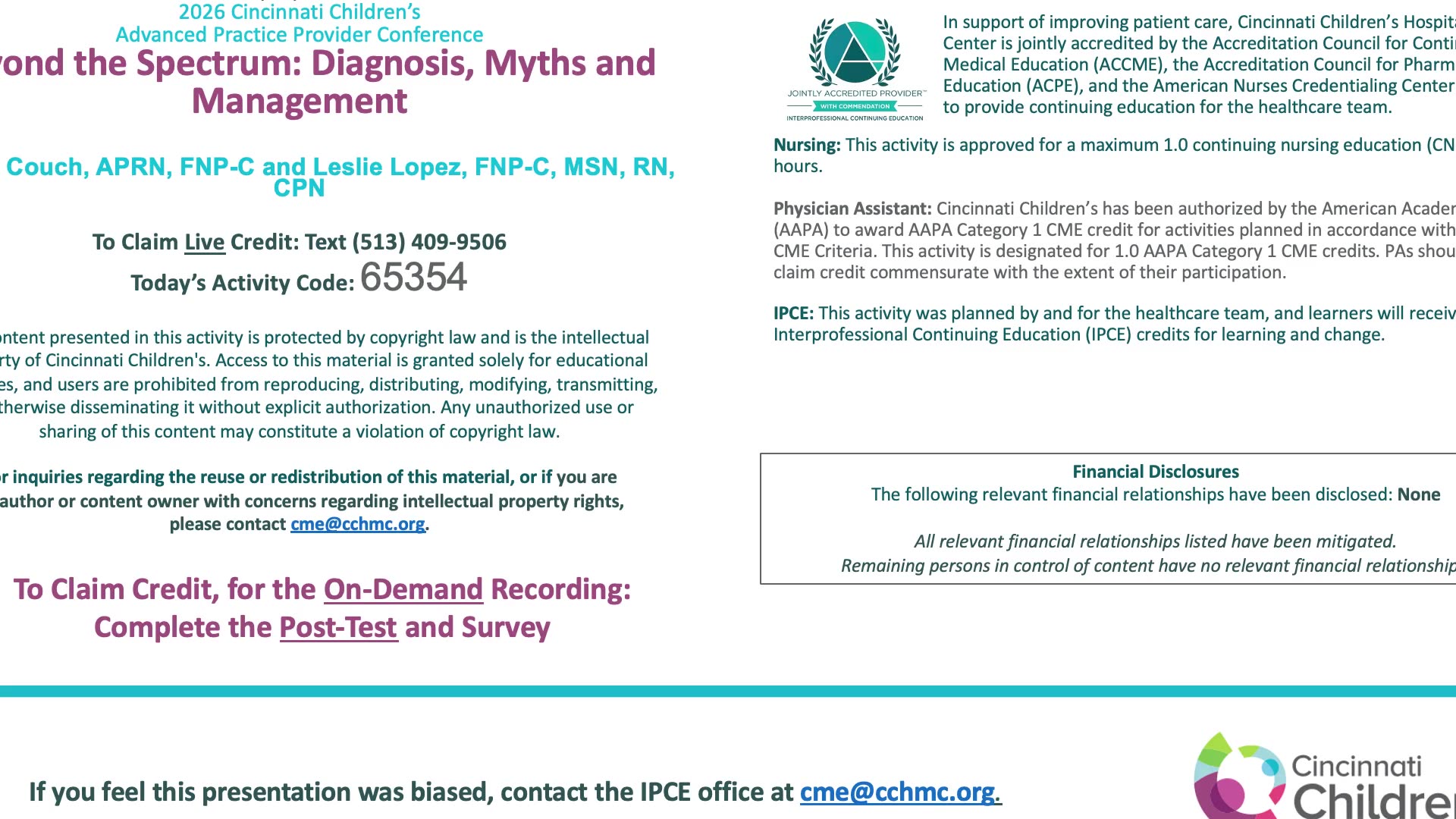
Beyond the Spectrum: Diagnosis, Myths & Management - Caitlin Couch & Leslie Lopez - APP Conference 2026
50 min · Published May 2026
Video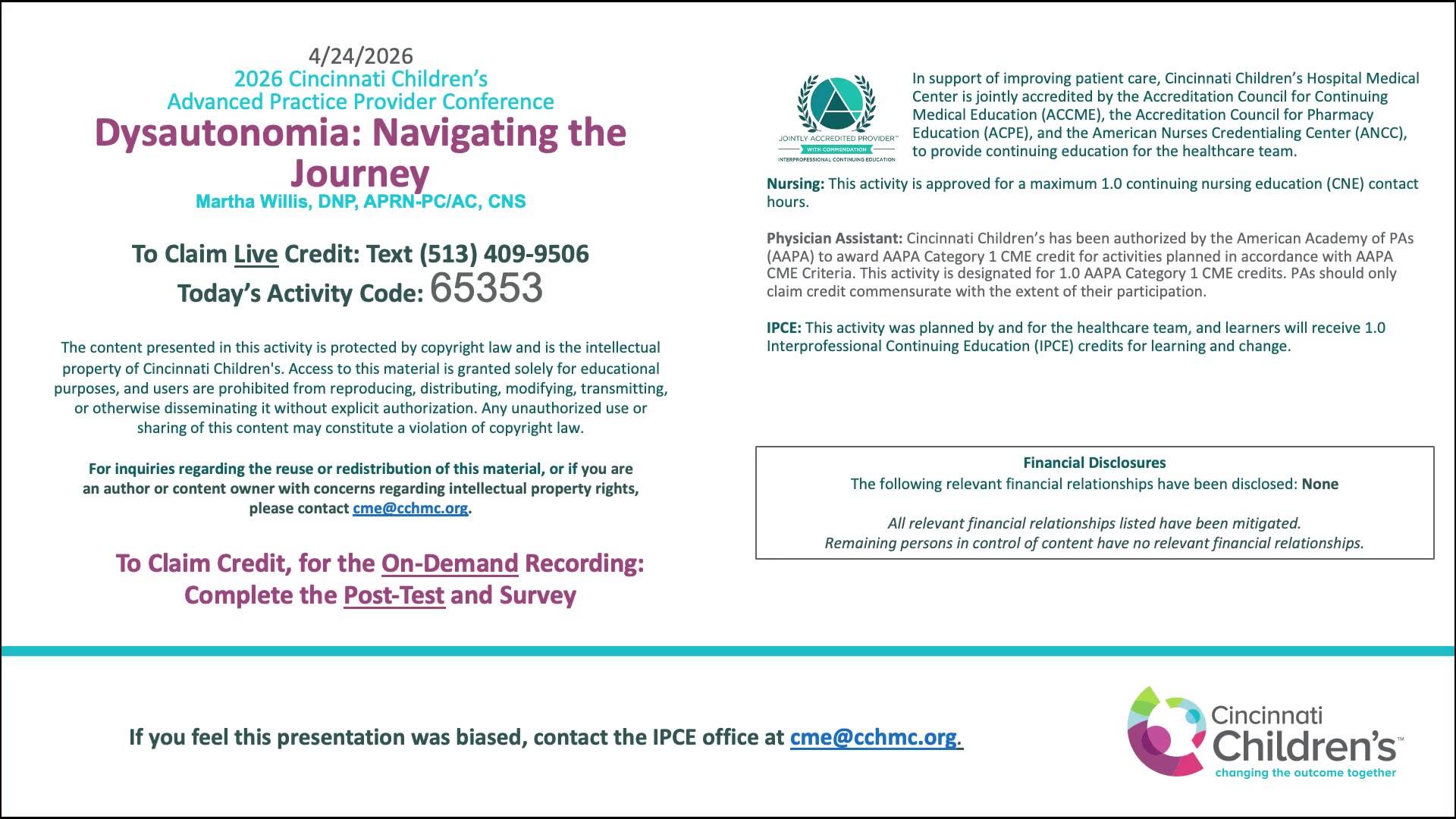
Dysautonomia: Navigating the Journey - Martha Willis - APP Conference 2026
55 min · Published May 2026
What the experts said
Achieving complete tumor resections without major complications remains challenging because some tumors are difficult to distinguish from healthy tissue and in other tumors the margin is very narrow.
Fluorescence guided surgery with tumor-specific probes can visually assist the surgeon in discriminating tumors from healthy tissue.
Tumor-specific probes are currently screened one by one and per tumor type.
The imaging platform combines tumor organoid biobanks with 3D live imaging and is able to screen fluorescent guided surgery probes in a tumor-specific and patient-specific way.
Organoids maintain molecular tumor characteristics and can be held in culture for a long time.
The platform uses both adult and pediatric tumor organoid biobanks, specifically neuroblastoma and breast cancer.
Control organoids were chosen based on the tissue surrounding the tumor: kidney organoids for neuroblastoma and healthy breast organoids for breast cancer.
Surface markers upregulated in neuroblastoma or breast cancer were identified based on RNA profiling, the human protein atlas, and literature review.
Probes targeting surface markers were conjugated to six different fluorophores ranging between 488 and 647 nanometers.
Seven-colored 3D live imaging using confocal microscopy on living organoids was performed, including six probe fluorophores plus the general marker eFluor.
Segmentation analysis was performed using the STAPLE pipeline developed in the laboratory, and fluorescent signals were quantified.
The three most promising probes for neuroblastoma were validated in vivo using a mouse xenograft model with tumors originating from neuroblastoma organoids.
Probe fluorescence varies between patients and even within a patient in neuroblastoma organoid lines.
Different probes work on tumor organoids compared to healthy control organoids.
The STAPLE pipeline performs 3D segmentation by first segmenting membrane and nuclear signals, generating cells, and combining cells to form single organoids.
An organoid is determined to be positive when the intensity of the tumor organoid is at least twice the fluorescence of the healthy control organoid.
The order of neuroblastoma organoid line performance was similar in vitro and in vivo, with line 129 being highest and line 67 being lowest.
One of the tested probes is advancing to a clinical trial this year.
Thousands of organoids were quantified using this methodology.
Four markers showed promise for neuroblastoma based on high percentages of positive organoids and high fluorescent intensities.
The platform can predict which combinations of probes are most promising by screening six probes simultaneously.
The three most promising probes tested in vivo for neuroblastoma were GD2, L1CAM, and NCAM.
These three probes resulted in tumor-to-background ratios above 2, indicating good intraoperative visibility.
In vitro imaging patterns resemble the efficacy in vivo, with L1CAM showing higher signal than GD2 in both settings.