

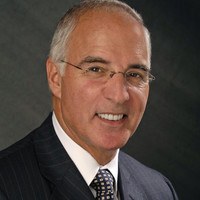
From
Dr. Jeffrey Ponsky
All About Advanced Surgical Endoscopy
With Dr. Jeffrey Ponsky · hosted by Dr. Scott Steele
Chapter 1 of 8 · Fundamentals
Introduction
Introduction and Guest Background
Expert statements on this page
No expert statements were drawn from this page.
Host summaries · secondary, not cited in answers
Educational content from recorded physician discussions — not medical advice. Talk to your (or your child's) care team about your situation.
More about this diagnosis
EsophagitisPodcast
Gastroesophageal Reflux Disease
Jeffrey Ponsky · 33 min · Published Jun 2016
Podcast
Gastroesopheal Reflux Disease
33 min · Published Dec 2016
Video
Gastoesophageal Reflux: Update Course 2015
30 min · Published Nov 2018
Video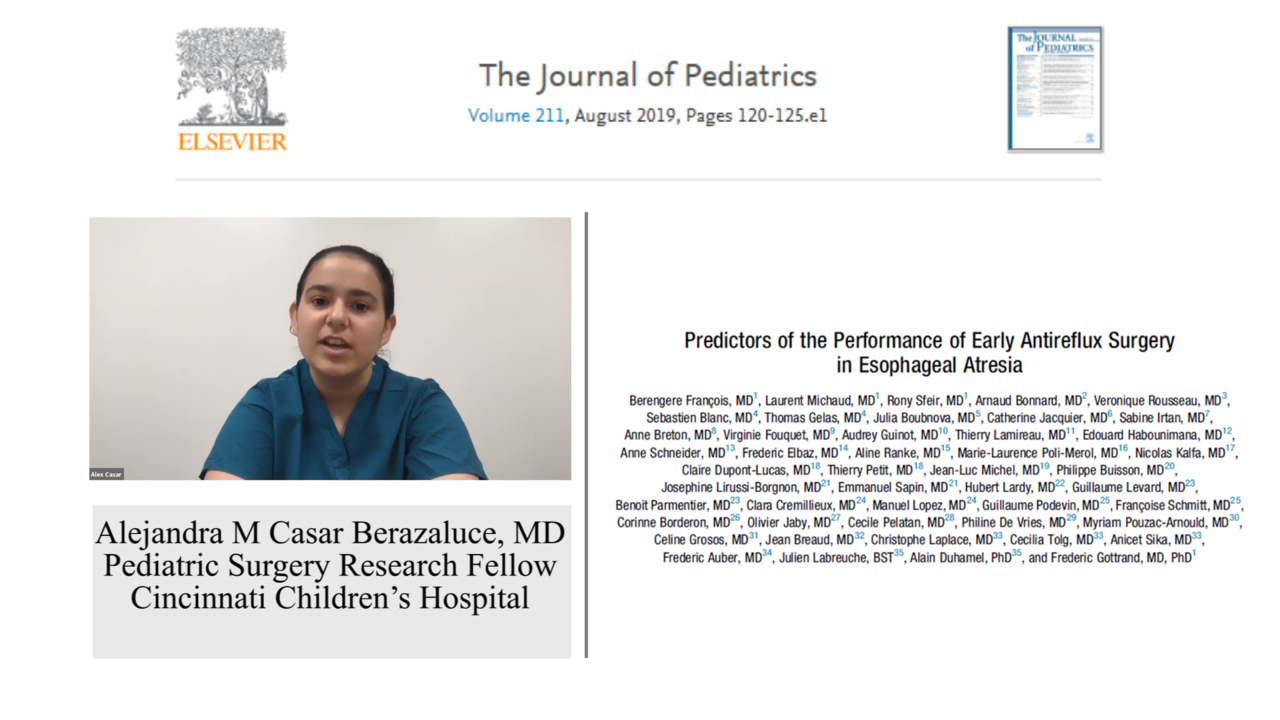
What are risk factors for anti-reflux surgery after esophageal atresia repair?
Published Oct 2019
Video
How should esophagitis in esophageal atresia patients be recognized and treated?
Published Feb 2020
Podcast
Journal of Pediatric Surgery Article Review: October 2023
12 min · Published Apr 2024
Podcast
The invention of the PEG tube with Dr. Jeffrey Ponsky
Jeffrey Ponsky · 33 min · Published Jul 2026
Podcast
Update Course Rewind: Pediatric Biliary Stones - Preventing Gallstone Pancreatitis 2024
Jeffrey Ponsky · 3 min · Published Aug 2025
Video
ACS Icons in Surgery | Jeffrey L. Ponsky, MD, FACS
Jeffrey Ponsky · 20 min · Published Jul 2024
Video
SAGES Stories Episode 11 – Jeff Ponsky, MD
Jeffrey Ponsky · 61 min · Published Jun 2024
Video
From Idea to Ubiquity - the PEG Journey
Jeffrey Ponsky · Published Nov 2023
Podcast
Innovations in Surgery: PEG Tube
Jeffrey Ponsky · 33 min · Published Aug 2023
What the experts said
Early 20th century endoscopy used rigid tubes requiring patient contortion to align with the tubes for visualization of the esophagus and colon.
Fiber optic technology developed mid-20th century allowed flexible endoscopes to assess diseases including esophagitis, esophageal cancer, gastric tumors, gastritis, colon cancer, and causes of colonic inflammation and diarrhea.
Therapeutic endoscopy began with pinch biopsies, then advanced to polypectomy using electrocautery snares to remove polyps that previously required surgical removal.
Endoscopic coagulation of bleeding ulcers prevented the need for surgery.
Gallstones can be removed from the bile duct by opening the sphincter of Oddi endoscopically and extracting the stones.
Balloon-assisted enteroscopy uses inflating and deflating balloons on the outside of endoscopes to walk down the small intestine farther than normal scopes, allowing visualization and treatment of distant lesions.
Video capsule endoscopy involves swallowing a capsule with a flashing light that takes frequent pictures, recording to a hip-worn monitor to assess the small intestine for occult bleeding sources not found on upper endoscopy or colonoscopy.
ERCP allows access to the bile duct opening in the duodenum where dye injection can identify problems, sphincterotomy can be performed to extract stones, and stents (plastic or metal) can be placed for tumors.
Endoscopic ultrasound allows visualization and biopsy of structures beyond the intestinal wall including the bile duct, pancreas, stomach wall, and adjacent vessels, identifying tumors not visible on standard endoscopy.
Peroral endoscopic myotomy (POEM) treats esophageal motility disorders by making a mucosal incision, tunneling through the esophageal wall, cutting the lower esophageal sphincter muscles, and closing the mucosal entry, allowing patients to go home without abdominal surgery.
Endoscopic mucosal resection (EMR) allows shaving out of tumors seen during endoscopy.
Endoscopic submucosal dissection (ESD) is used for flat, long, broad tumors by lifting tissue and shaving down to the next layer, providing better cancer or pre-cancer resection than EMR.
EMR and ESD have been proven safe and effective, avoiding the need for open surgery.
Percutaneous endoscopic gastrostomy (PEG) was developed 40 years ago by Michael Gauderer and Jeffrey Ponsky to place feeding tubes in patients unable to eat due to neurological or oral problems, replacing open abdominal surgery with endoscopically-guided needle puncture.
The PEG technique was discovered when transillumination through the abdominal wall of brain-damaged infants during endoscopy revealed close contact between the endoscope and abdominal wall, suggesting needle puncture was feasible.
Endoscopic surgical procedures carry risks of bleeding, perforation, and infection.
Endoscopic pyloric myotomy can be performed as an outpatient procedure by opening the pyloric muscle in the intramural space, cutting the thick muscle, and clipping it closed, with patients going home the same day with improved gastric emptying.
Endoscopic pyloric myotomy requires 2 days of liquid diet before the procedure and 1 week of liquid diet afterward.
Zenker's diverticulum, which previously required major neck surgery, can now be treated transorally by making a mucosal incision in the posterior pharynx, cutting the cricopharyngeus muscle, and clipping it closed, with same-day discharge.
Zenker's diverticulotomy requires 2 days of liquid diet before and 1 week of liquid diet after the procedure.
Advanced endoscopic procedures are increasingly performed as outpatient or overnight-stay procedures.
All current surgical procedures are being evaluated for less invasive, endoscopically-guided approaches.
Future endoscopic surgery will incorporate robotics for more precise movements and better results, progressing to image-guided, robotically-assisted, and eventually robotically-controlled surgery.