


Chapter 1 of 5 · Fundamentals
Obesity epidemiology
Introduction and Epidemiology of Childhood Obesity
Expert statements on this page
No expert statements were drawn from this page.
Host summaries · secondary, not cited in answers
Educational content from recorded physician discussions — not medical advice. Talk to your (or your child's) care team about your situation.
Video
Justin Ryder, MD- 2024 Pediatric Bariatric Surgery Update Course
12 min · Published Feb 2024
Video
Marc Michalsky, MD - 2024 Pediatric Bariatric Surgery Update Course
14 min · Published Feb 2024
Video
Wrap Up Discussions - 2024 Pediatric Bariatric Surgery Update Course
13 min · Published Feb 2024
Video
Guillermo Ares, MD and Mark Wulkan, MD - 2024 Pediatric Bariatric Surgery Update Course
16 min · Published Feb 2024
Video
Clinical Research Facilitators, Barriers, and Preferences of Parents of Children With Overweight...
41 s · Published Aug 2026
Video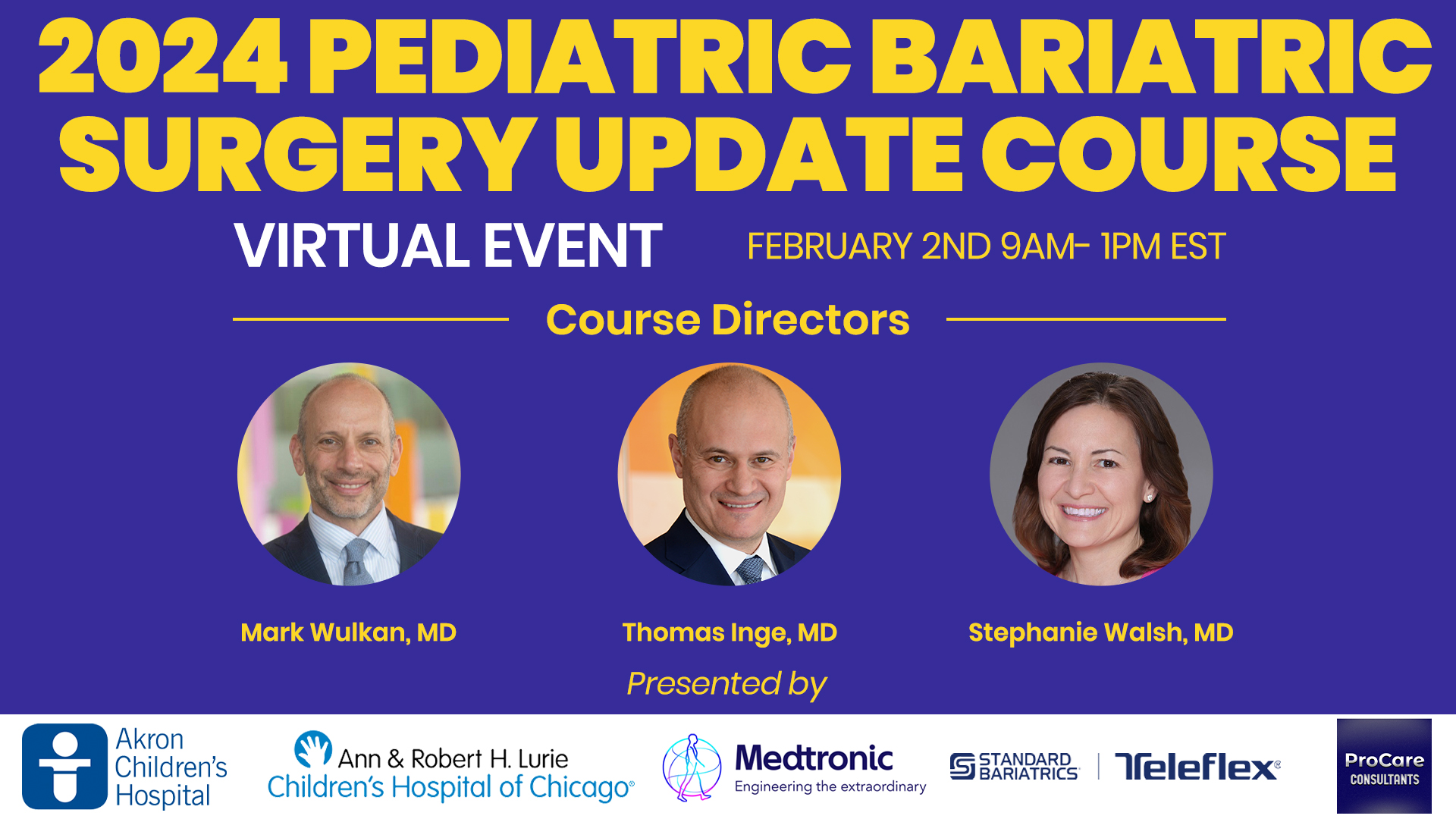
Traci Williams, MD - 2024 Pediatric Bariatric Surgery Update Course
19 min · Published Feb 2024
Podcast
The invention of the PEG tube with Dr. Jeffrey Ponsky
Jeffrey Ponsky · 33 min · Published Jul 2026
Podcast
Update Course Rewind: Pediatric Biliary Stones - Preventing Gallstone Pancreatitis 2024
Jeffrey Ponsky · 3 min · Published Aug 2025
Video
ACS Icons in Surgery | Jeffrey L. Ponsky, MD, FACS
Jeffrey Ponsky · 20 min · Published Jul 2024
Video
SAGES Stories Episode 11 – Jeff Ponsky, MD
Jeffrey Ponsky · 61 min · Published Jun 2024
Video
From Idea to Ubiquity - the PEG Journey
Jeffrey Ponsky · Published Nov 2023
Podcast
Innovations in Surgery: PEG Tube
Jeffrey Ponsky · 33 min · Published Aug 2023
What the experts said
14.5 million children in the United States were struggling with obesity as of 2017.
Childhood obesity has seen big increases with COVID.
Childhood obesity is a worldwide problem, particularly in more developed countries where levels are increasing.
Epigenetic changes are thought to be causing higher levels of obesity, not just caloric intake.
Obesity is a disease, and once weight is gained, the body fights to keep it on.
Talking about weight with children increases the likelihood they will develop eating disorders in the future.
Treatment should focus on health and the whole family doing healthy habits together rather than discussing weight.
Stopping sugar drinks and sodas is recommended as a first step because they are easy calories to eliminate and harmful to the body and liver.
Physical activity in children provides metabolic improvements in muscles and lungs beyond just burning calories.
There has been a tremendous decrease in physical activity among children.
All patients receive lifestyle changes regardless of their treatment path.
Medications for childhood obesity are used off-label until age 18, with growing use and good research support.
Bariatric surgery is not a last resort but a viable option that should be offered to children.
Bariatric surgery works equally well across races and cultures—outcomes are similar whether patients are Black, White, or Asian.
Medications used for pediatric obesity include GLP-1 inhibitors, phentermine, Wellbutrin, and Topamax.
Some GLP-1 inhibitors have been approved for ages 12 to 18.
Obesity medications in children have the same side effects as in adults, including jitteriness and increased heart rate with phentermine.
Wellbutrin has a black box warning because it is an antidepressant, but it can be beneficial as an activator that provides an energy boost.
Some patients stay on obesity medications forever, while others can stop and sustain weight loss, though outcomes vary.
Adult bariatric surgery patients have average BMIs in the low 40s at time of surgery.
Pediatric bariatric surgery patients have average BMIs closer to the 50s at time of surgery.
Bariatric surgery produces about a 25 to 35% decrease in BMI.
Pediatric bariatric surgery requires a multi-month preparation process including exercise logs, food logs, and lifestyle changes.
Children's frontal lobes are not fully developed, limiting their ability to plan, so preparation focuses on building skills for post-operative success.
Patients are told they will lose about 25% of their weight and that their body shape will remain the same—just a smaller, healthier version.
Most pediatric bariatric patients have not been disappointed with their weight loss; any weight loss makes them feel good, stronger, and happier.
Patients are given preparation materials including cups, bariatric plates, and meal prep guidance to understand post-operative portion sizes.
The sleeve gastrectomy removes ghrelin cells, leading to decreased hunger after surgery.
The sleeve gastrectomy is always the first choice for adolescents, with Roux-en-Y gastric bypass as the second choice.
In Dr. Walsh's program, only one or two bypasses have been performed, sometimes due to insurance company requirements rather than medical reasons.
Almost all adolescent bariatric surgeries are sleeve gastrectomies.
Initial post-operative challenges include getting patients back to eating and ensuring adequate caloric intake, with some initial dehydration that has improved over time.
Research shows that after sleeve gastrectomy, one-third of patients develop reflux, one-third have improved reflux, and one-third stay the same.
New recommendations suggest endoscopy before transition to adult care after 5 years to check for Barrett's esophagus.
Zero percent of Dr. Walsh's pediatric sleeve patients have required conversion to Roux-en-Y gastric bypass.
Pediatric bariatric patients are followed until age 21 at Dr. Walsh's institution, so any needed conversions would likely be performed by adult surgeons.