


From
StayCurrentMD
Update Course Rewind: Management of Chronic Pancreatitis 2023
With Dr. Juan Gurria · hosted by Dr. Cecilia Gigena
Chapter 1 of 5 · Case-Based Learning
Case presentation
Case Presentation and Surgical Decision-Making
Expert statements on this page
No expert statements were drawn from this page.
Host summaries · secondary, not cited in answers
Educational content from recorded physician discussions — not medical advice. Talk to your (or your child's) care team about your situation.
Video
Update Course 2023 - Updates in Pancreatitis
32 min · Published Aug 2023
Video
Endoscopic & Surgical Interventions: Pancreatic Disease
55 min · Published Sep 2016
Video
Pancreas Care Updates 2020 - FULL SHOW
124 min · Published Dec 2020
Video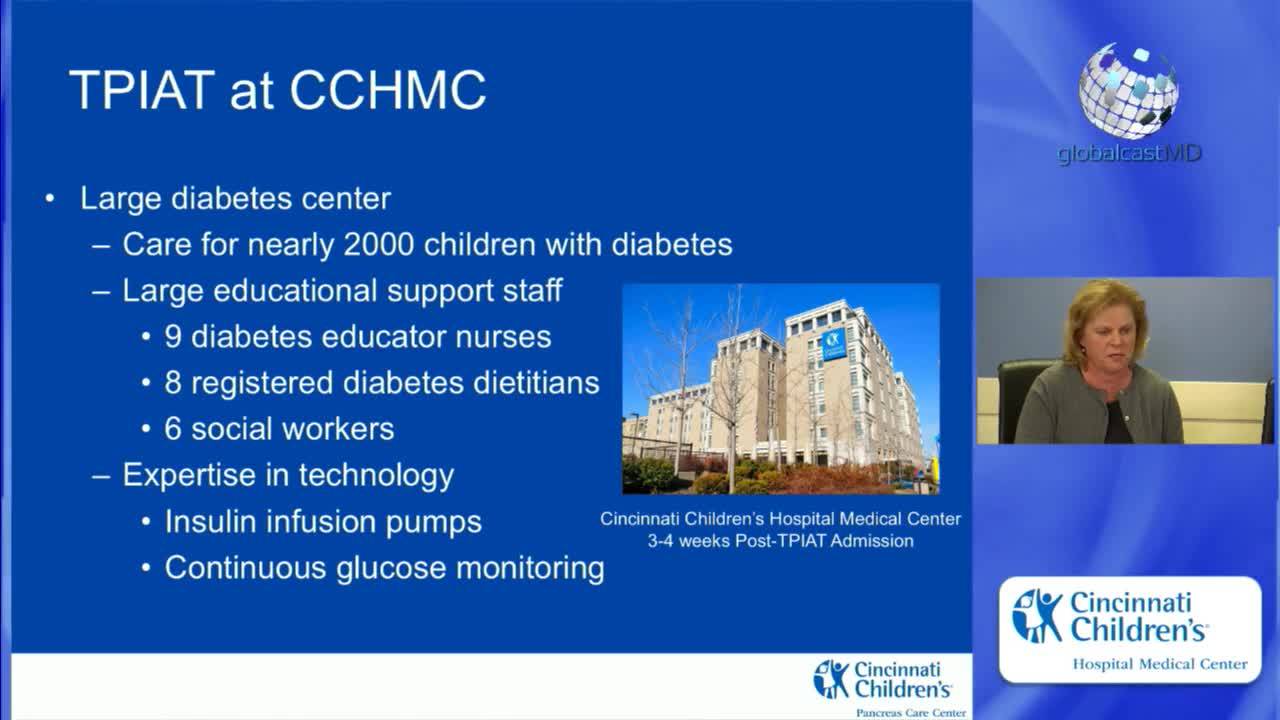
Total Pancreatectomy with Islet Autotransplantation: Pancreatic Disease
47 min · Published Sep 2016
Video
Function Tests & Pain Management: Pancreatic Disease
26 min · Published Sep 2016
Video
Welcome and Introductions: Pancreatic Disease
Dr. Todd Ponsky · 6 min · Published Sep 2016
Video
Pancreatitis in pediatric patients with pancreatic solid pseudopapillary neoplasms- a single center experience
59 s · Published Apr 2026
Podcast
Update Course Rewind: Pediatric Biliary Stones - Preventing Gallstone Pancreatitis 2024
Jeffrey Ponsky · 3 min · Published Aug 2025
Video
Update Course Rewind: Pediatric Biliary Stones - Surgery First Mindset 2024
Dr. Todd Ponsky · 7 min · Published Jul 2025
Video
Multi-Institutional Analysis of Choledocholithiasis in Pediatric vs Adult Patients
59 s · Published Mar 2025
Video
Chronic Pancreatitis - Pancreatic Pathologies by Cincinnati Children's Pancreas Care Center
CCHMC Pediatric Surgery · 8 min · Published Nov 2024
Video
Exploración laparoscópica trancística del conducto biliar común en pacientes pediátricos con coledocolitiasis
1 min · Published Jul 2024
Podcast
Update Course Rewind 2025: Robotics in Pediatric Surgery: Which indications benefit the most?
Juan Pablo Gurria · 4 min · Published Jun 2026
Video
Overview of the Surgical Management of Acute and Chronic Pancreatitis in Children with Dr. Juan Gurria
66 min · Published Apr 2026
Video
Total pancreatectomy with islet autotransplantation (TPIAT) - Cincinnati Children's Pancreas Care Center
CCHMC Pediatric Surgery · 10 min · Published Dec 2024
Video
Acute Pancreatitis - Pancreatic Pathologies by the Pancreas Care Center at CCHMC
CCHMC Pediatric Surgery · 4 min · Published Sep 2024
Video
Update Course Rewind: 2023 Top Ten Key Takeaways
16 min · Published Jun 2024
Video
Update Course Rewind: Management of Recurrent Pancreatitis
CCHMC Pediatric Surgery · 6 min · Published May 2024
Video
Intestinal Atresia Types Explained: Grossfeld Classification for Pediatric Surgery
1 min · Published Sep 2026
Video
Derivation and validation of the Pediatric Community-Acquired Pneumonia Severity (PedCAPS) score: A prospective cohort study
50 s · Published Sep 2026
Video
FETO for Late-Diagnosed Severe Congenital Diaphragmatic Hernia (CDH) at Cincinnati Children's with Dr. Beth Rymeski
4 min · Published Sep 2026
Video
Severe Congenital Diaphragmatic Hernia (CDH) Case: FETO Management & Unexpected Findings with Dr. Beth Rymeski
3 min · Published Sep 2026
Video
Fetoscopic Endoluminal Tracheal Occlusion (FETO) Procedure: Step-by-Step Guide with Dr. Beth Rymeski
4 min · Published Sep 2026
Video
Choledochal Cyst Types Explained: Pediatric Surgery Fundamentals
1 min · Published Sep 2026
What the experts said
Most of the pancreatic parenchyma is in the head and the uncinate process.
If a patient has a PRSS1 mutation and only the pancreatic head is removed, recurrent attacks will occur.
Up to 50% of patients with chronic pancreatitis will eventually require surgery.
TPIAT requires a multidisciplinary team including surgery, GI pancreatologists, social worker, geneticists, psychiatry, and pain control.
Patients with chronic pancreatitis always have micro and macronutrient deficiencies.
Chronic pancreatitis patients sometimes need pancreatic enzyme replacement therapy.
In chronic pancreatitis, exocrine function is lost first, then endocrine function.
The primary goal of TPIAT is to restore the child's quality of life and return them to normal activities.
The secondary goal of TPIAT is to prevent brittle diabetes by preserving beta cell function.
All TPIAT patients require enzyme replacement therapy post-operatively.
With an islet cell count of 5000, there is a 50% chance of not requiring insulin post-TPIAT.
With an islet cell count of 5000, there is a 20% chance of requiring a small dose of insulin post-TPIAT.
With an islet cell count of 5000, 30% of patients remain diabetic post-TPIAT.
TPIAT potentially exchanges chronic pancreatitis for diabetes, and families must be counseled about this trade-off.
TPIAT surgery takes an average of 8 to 10 hours.
The pancreas is cemented in the retroperitoneum with neovascularization and collateralization, making removal the most problematic part of TPIAT.
Some chronic pancreatitis patients have thrombosis in the portal vein or splenic vein.
Pancreatectomy during TPIAT takes 3 to 4 hours.
During TPIAT, biliary and intestinal reconstruction is performed using a Roux-en-Y technique while islet isolation is occurring.
The spleen is removed along with the pancreas during TPIAT.
Islet cell isolation takes 4 to 4.5 hours.
Islet cells are injected into the portal vein inside the liver.
In the acute post-operative period, glucose must be managed externally to prevent stress on transplanted islet cells.
All TPIAT patients are on insulin in the ICU to allow islet cells to implant without stress.
Islet cells need to find new vessels from the liver to survive after transplantation.
Islet cells implant in the end branches of the portal vein inside the liver.
Extrahepatic islet cell reimplantation does not work as well as intrahepatic placement.
Extrahepatic islet cells produce a better glucagon response for hypoglycemia compared to intrahepatic cells.
The liver is the best site for islet cell transplantation.
The risk of portal vein thrombosis after intrahepatic islet injection is less than 1%.
Portal pressure is monitored during islet cell injection to prevent complications.
During TPIAT, the duodenum is removed at D1 post-pyloric level along with the pancreas.
The duodenum and pancreas share blood supply, making duodenal preservation difficult during TPIAT.