


From
Live Event Content
Yuichiro Miyake, MD - Best of the Best in Pediatric Surgery 2024
With Dr. Yuichiro Miyake
Chapter 1 of 3 · Fundamentals
Introduction
Introduction to presentation on nanoparticle drug delivery for CDH
Expert statements on this page
No expert statements were drawn from this page.
Host summaries · secondary, not cited in answers
Educational content from recorded physician discussions — not medical advice. Talk to your (or your child's) care team about your situation.
Podcast
Fetoscopic Endoluminal Tracheal Occlusion (FETO)
5 min · Published Jul 2021
Video
Inside a FETO Procedure: Fetoscopic Balloon Tracheal Occlusion with Dr. Beth Rymeski
4 min · Published Jul 2026
Video
Tracheomalacia and tracheomegaly in infants and children with congenital diaphragmatic hernia managed with and without fetoscopic endoluminal tracheal occlusion (FETO): a multicentre, retrospective cohort study
59 s · Published Oct 2024
Video
Giussepe Cala, PhD candidate - Best of the Best in Pediatric Surgery 2024
Dr. Todd Ponsky · 7 min · Published Feb 2024
Video
Fetoscopic Endoluminal Tracheal Occlusion (FETO) Procedure: Step-by-Step Guide with Dr. Beth Rymeski
4 min · Published Sep 2026
Video
Quick Literature Updates Ep 19
4 min · Published May 2025
Only a few other public items share this expert — go deeper there →
Video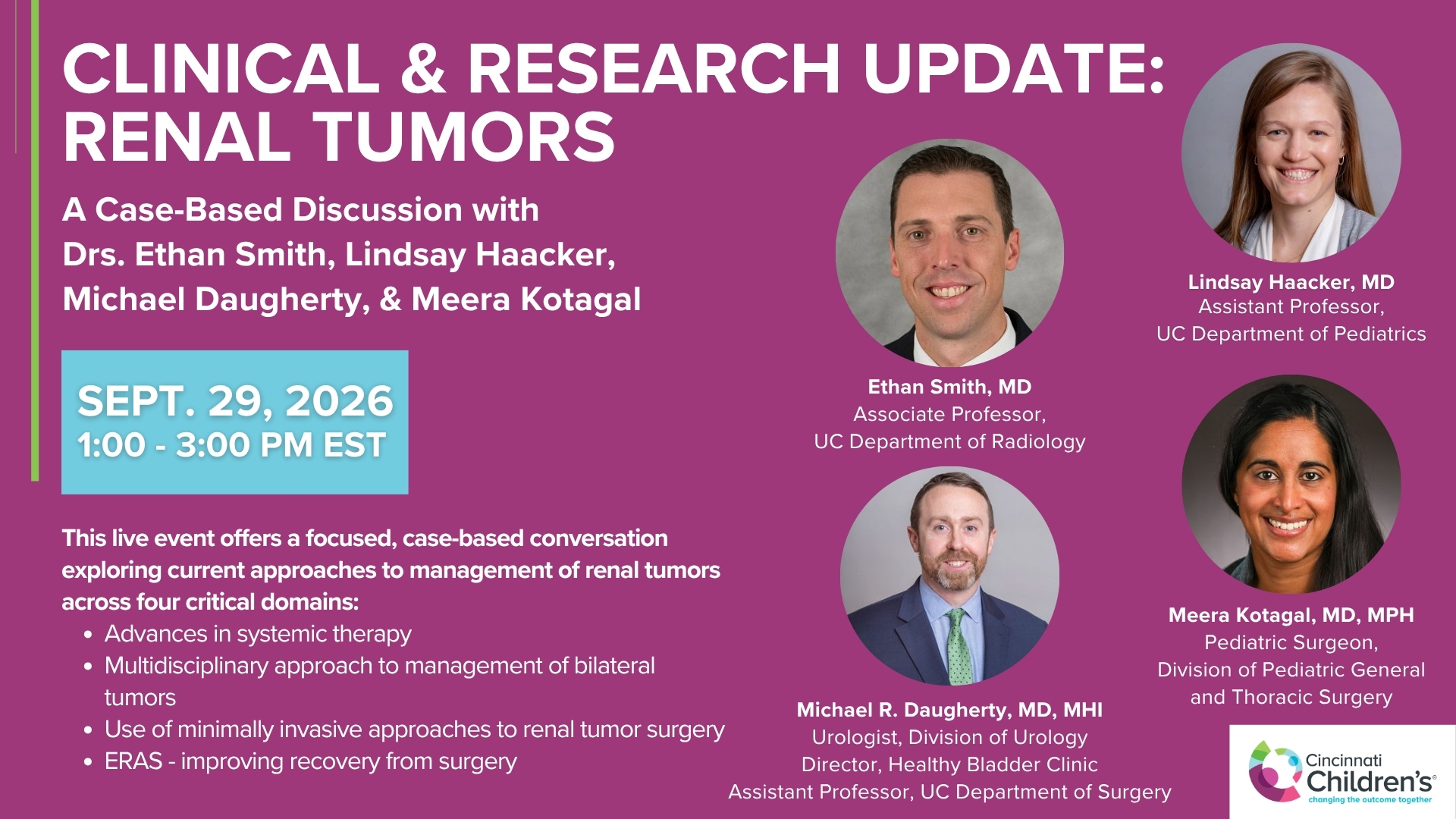
Clinical & Research Update: Renal Tumors with Drs. Ethan Smith, Lindsay Haacker, Michael Daugherty, and Meera Kotagal
71 min · Published Sep 2026
Video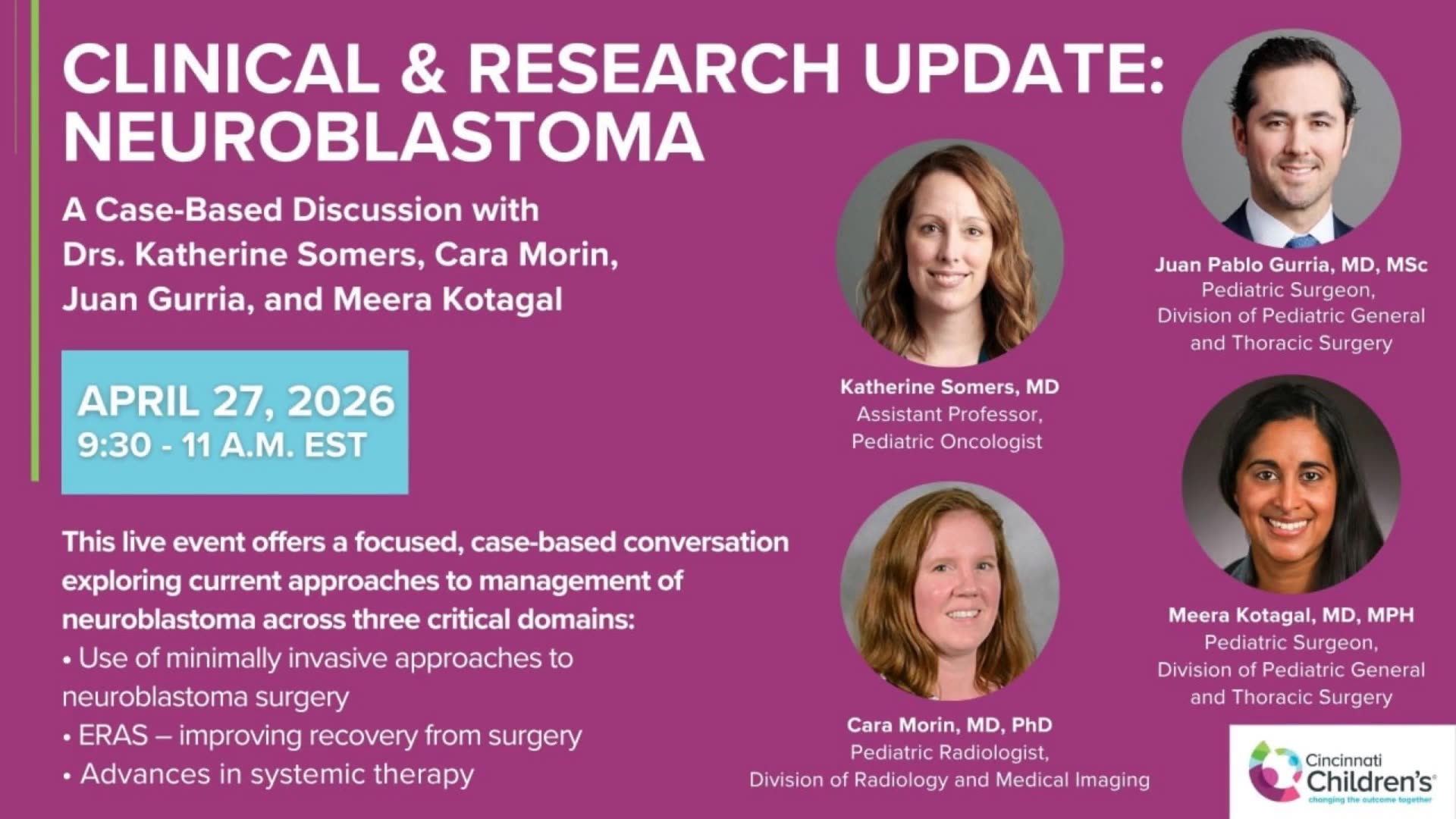
Clinical & Research Update: Neuroblastoma with Drs. Katherine Somers, Cara Morin, Juan Gurria, and Meera Kotagal
67 min · Published Sep 2026
Video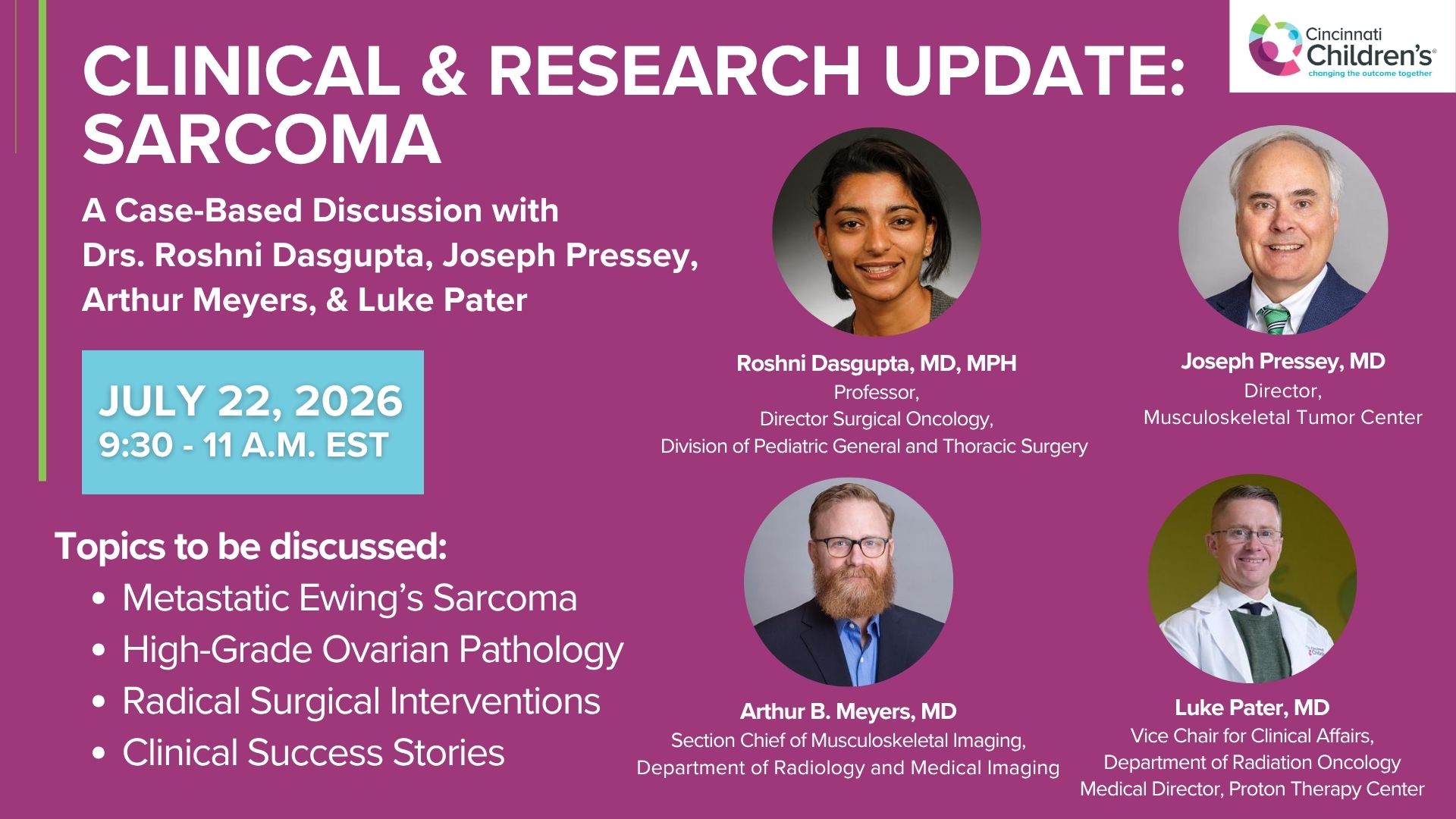
Clinical & Research Update: Sarcoma w/ Drs. Roshni Dasgupta, Joseph Pressey, Arthur Meyer, Luke Pater
66 min · Published Sep 2026
Video
2026 Laparoscopic Pediatric Hernia Repair
123 min · Published Jun 2026
Video
Beyond the Spectrum: Diagnosis, Myths & Management - Caitlin Couch & Leslie Lopez - APP Conference 2026
50 min · Published May 2026
Video
Dysautonomia: Navigating the Journey - Martha Willis - APP Conference 2026
55 min · Published May 2026
What the experts said
CDH patients present with a hole in the diaphragm and abnormal lung development resulting in lung hypoplasia and persistent pulmonary hypertension
The incidence of CDH is 1 in 2000 to 5000 live births
About 150 CDH babies are born every day in the world
About 50 CDH babies die every day
Fetoscopic endoluminal tracheal occlusion (FETO) is currently performed to increase survival rate of CDH babies
In a randomized controlled trial, FETO improved the survival rate for severe CDH from 15% to 40%
Chitosan nanoparticles possess the ability to encapsulate various therapeutic substances
Combining FETO with nanoparticle-based drug delivery could potentially lead to better outcomes for CDH babies
A microinjector was designed based on a microinsemination device to investigate combination of FETO with drug administration
Rat fetuses were removed on embryonic day 18 for the lung explant model
Nanoparticles were injected into the trachea and the trachea was tied with surgical suture to replicate the FETO model
An IgG antibody selected to target pulmonary tissue was used to functionalize the nanoparticles
IgG nanoparticles exhibited superior uptake into the lungs compared to bare nanoparticles
The relative number of nanoparticles to DAPI was about 2.5-fold higher in the IgG nanoparticles group compared to bare nanoparticles
Active caspase-3 protein abundance was not significantly different among control, bare nanoparticles, and IgG nanoparticles groups
IL-6 protein abundance was not significantly different among control, bare nanoparticles, and IgG nanoparticles groups
Lungs were dissected from rat pups, nanoparticles injected, trachea tied, and cultured for 2-3 days before analysis
The next step involves encapsulating therapeutic agents in chitosan nanoparticles and testing whether they improve lung development in the explant model