


From
StayCurrentMD
Comparison of robotic versus thoracoscopic repair for congenital esophageal atresia
hosted by Dr. Cecilia Gigena
Chapter 1 of 1 · Evidence & Research
Robotic vs Thoracoscopic Repair for Esophageal Atresia
Expert statements on this page
No expert statements were drawn from this page.
Host summaries · secondary, not cited in answers
Educational content from recorded physician discussions — not medical advice. Talk to your (or your child's) care team about your situation.
Video
Prophylactic Acid-suppression Medication to Prevent Anastomotic Strictures After Oesophageal Atresia Surgery
Published Dec 2023
Video
La vigilancia esofágica en pacientes pos reparación de atresia de esófago
Published Jul 2023
Video
Quick Literature Updates Episode 17
4 min · Published Feb 2025
Video
Supresión ácida profiláctica para prevenir estenosis anastomóticas después de la cirugía de atresia esofágica
Published Dec 2023
Video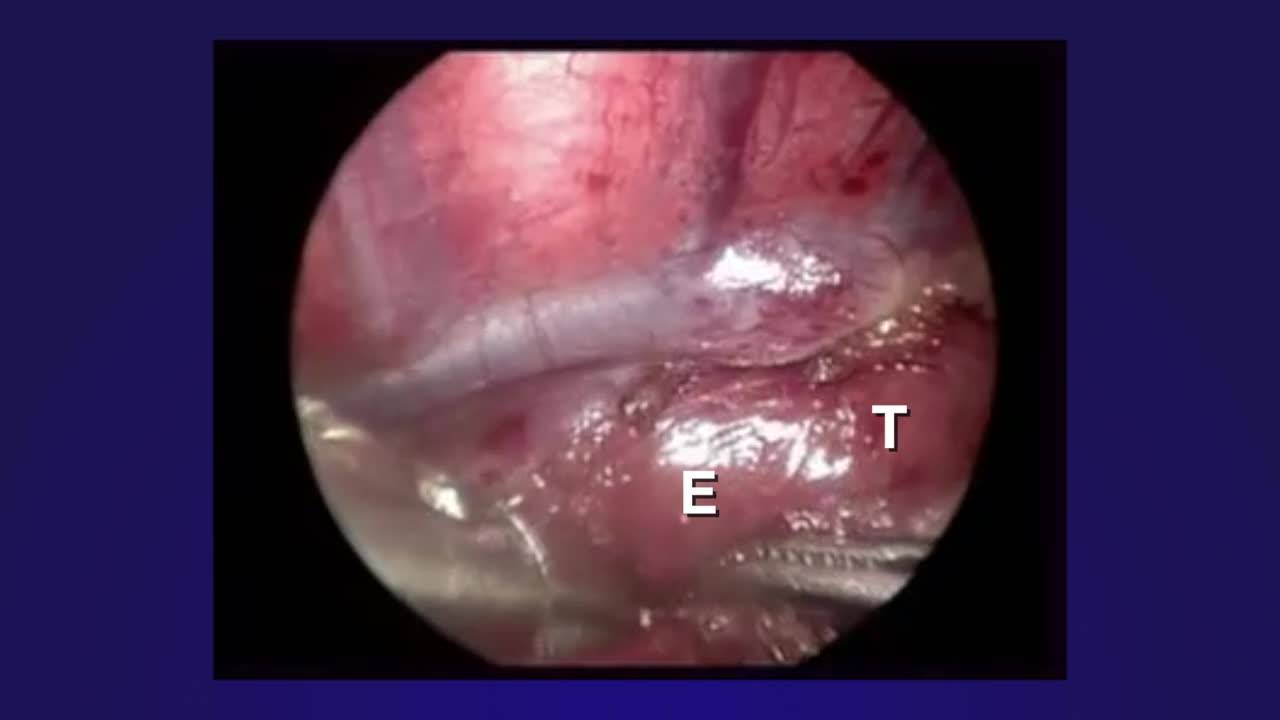
Thoracoscopic Repair of Esophageal Atresia with Distal Tracheo-esophageal...
5 min · Published Feb 2020
Video
Comparación de la cirugía robótica versus toracoscópica para la reparación de la atresia de esófago
Published Jan 2024
Video
Intestinal Atresia Types Explained: Grossfeld Classification for Pediatric Surgery
1 min · Published Sep 2026
Video
Derivation and validation of the Pediatric Community-Acquired Pneumonia Severity (PedCAPS) score: A prospective cohort study
50 s · Published Sep 2026
Video
FETO for Late-Diagnosed Severe Congenital Diaphragmatic Hernia (CDH) at Cincinnati Children's with Dr. Beth Rymeski
4 min · Published Sep 2026
Video
Severe Congenital Diaphragmatic Hernia (CDH) Case: FETO Management & Unexpected Findings with Dr. Beth Rymeski
3 min · Published Sep 2026
Video
Fetoscopic Endoluminal Tracheal Occlusion (FETO) Procedure: Step-by-Step Guide with Dr. Beth Rymeski
4 min · Published Sep 2026
Video
Choledochal Cyst Types Explained: Pediatric Surgery Fundamentals
1 min · Published Sep 2026
What the experts said
The study is a retrospective multi-center study done in China
After propensity score matching, there were 126 patients total, 63 in each group
Robotic surgery had longer operative time compared to thoracoscopic repair
Robotic surgery had shorter anastomotic time compared to thoracoscopic repair
The robotic group had lower anastomotic strictures compared to thoracoscopic repair
The robotic group had lower unplanned readmissions within 2 years post-op compared to thoracoscopic repair
Robotic surgery appears to be a good option for esophageal atresia repair