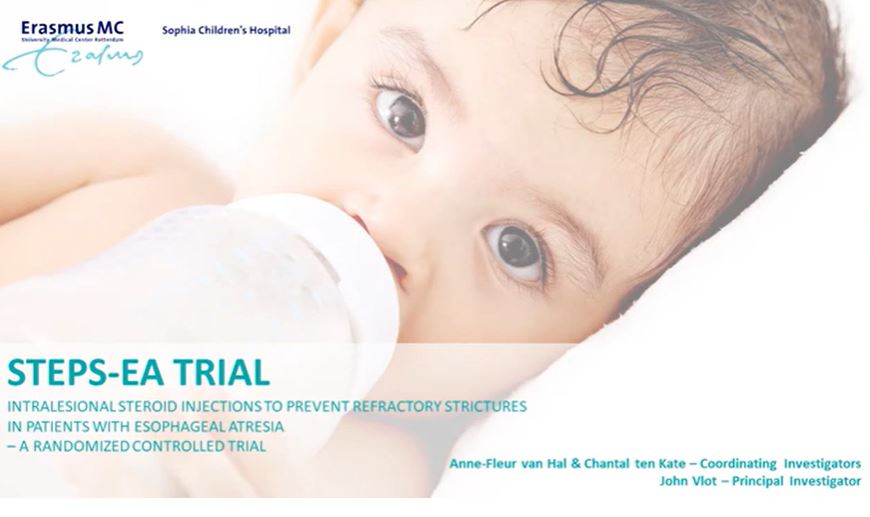
Between Ernica members. For the near future, we aim to stimulate our partners or our partners actually, uh, to make consortia on research topics for potential goals in the future, uh, which probably is getting more and more important to have an international network. Next slide, please. Um, to gain insight into the research work performed by ErRnica members, we organized the Ernica Research survey, and this resulted in a large file with information on the many different projects performed in Europe. Um, next slide. As scientific committee, we pulled the results, we gained and reviewed the results and categorize them among four different themes, which are research on the origin, intervention, impact, and comorbidity. As you can see, this is a small snapshot of our file and what you can see there are 4 different colors which all refer to a specific uh category. White. Currently, we know from many European centers what type of research they're performing, and we try to facilitate the collaboration between these centers. And this webinar is an attempt to further stimulate the collaboration. Therefore, the goal is to exchange experiences on performing international clinical trials. Everybody who is performing international trials is probably aware of the difficulties involved in it. We want to offer the opportunity to you to learn from each other and to share everybody's ideas and tips. At the end, we hope you can uh have a lively discussion. Next slide please. Therefore, I'm very pleased that I can announce the first speaker, which is on the Fleur von Hall. On the floor is a PhD student in Rotterdam under the supervision of uh uh Renee Weiner and Doctor Flott, and her research focuses on esophageal atresia in relation to different aspects influence the patient's life. In her pre uh presentation, she will address issues in performing an international trial on refractory structures in patients with oesophageal cancer. And hopefully, we can learn a lot from all her success and maybe difficulties in performing this research. On the floor, please. Thank you. Uh, thank you for the introduction. Um, I am going to try and show my screen. Um, let me see if it works this time. Yes, that's what I was afraid of. Um. I think just push on the button again on top. On top, yeah, yeah. Now it's working, right? All right. Thank you for the introduction. Oh. I'm sorry? Is it um All right, sorry. Well, thank you for the introduction and thank you all for joining. Uh, I will give a short introduction on the SEP CA trial and tell you about the difficulties we experienced and the lessons that we have learned. So the SEDA trial stands for um intralesional steroid injections to prevent refractory strictures in patients with esophageal atresia. And what we do in this trial is one on one randomization to injection with quinacort prior to balloon dilatation and balloon dilatation without any injection in order to prevent a refractory stricture after a soft coresia correction. With this trial, we have 3 main objectives which are the effectiveness, the safety, and the cost effectiveness. Setting up this trial has taken some time, and the first idea for this steps trial was brought up in May 2017, and eventually in January 2019, the ethical board gave permission to start the trial. And a few months later in October, the first patient was included and the first participating center was ready, which was Helsinki. Uh, this same year, a grant was awarded, making it possible for other centers to join and give the trial a real go. And the second Inclusion came more than a year after the first inclusion. And this was not only because of the pandemic, but it was also because it's just a rare disease. Um, and less than a month ago, the 5th and the 6th center received ethical approval, which were Lund and Stockholm in Sweden. And uh they will probably be ready to start the trial in the coming, uh, in the upcoming next weeks and exactly 4 years after the ethical approval in Rotterdam has been obtained, uh, we have been able to include the 11th patient today, um, which means, um, We, we are 4 years later now and um that means it's, uh, will be and it is a long journey. Uh and in the next few slides, I will show you what it is that takes so long and what you can do to improve, um, in your next trial. So, as mentioned, um, when setting back, when setting up the trial back in 2017, consensus on the protocol needed to be reached. And as the pediatric surgery was not the only department involved, um, in order to set up the trial, we needed to discuss with the pediatrics, the gastroenterology, the pharmacy, the endocriniology, the radiology, and more departments. Um. This Eventually it took more than 1.5 years to reach consensus on the protocol and therefore we would like to advise you, though it might be difficult to logistically plan, organize an away day with all the people involved to keep yourself from constantly emailing back and forth for more than a year. And um so after the protocol was uh written, what are the rules you'll have to follow? So as mentioned, this is an international multi-enter randomized control trial using corticosteroids, which means the clinical trial, it's a clinical trial with a medicinal product. And we use, uh, we have young children in the, in the trial, which means stricter regulations, and because of these stricter regulations, we chose not to include patients younger than 3 months, even though this means we miss a few of the already rare patients. And lastly, we have an additional esophogram exposing the children to an extra radiation. So this altogether means we have to apply for ethical approval within the Medical Review ethics Committee, and because it was a Rotterdam-initiated study, our METC in Rotterdam was going to have a look at the paperwork, and after they approved all the participating centers in the Netherlands would be able to join the trial. After receiving local approval in their hospital, of course. Um, and as mentioned earlier, it's, um, a medicinal study, uh, meaning that the Central Committee on Research, uh, involving human subjects, uh, needs to give positive advice after ethical approval from the METC. So the ethical approval from the ethical board is the biggest task, and I'm sure you're all aware of the most documents needed for the approval, um, and a few documents took some more time or really study specific. Uh, for instance, as previously mentioned, this is a medicinal study, and therefore the uterus CT is mandatory. This is a European database registering all drug trials. And when submitting for the ethical approval in Rotterdam, we made sure to have the subject insurance ready for all patients to be included in the Netherlands, and the liability insurance is covered by the Erasmus Ese. And sometimes something that makes a lot of extra time is finding the committee members for the data safety monitoring board, and this is something that is not mandatory in the Netherlands but highly recommended, especially for a trial like this one which has a moderate risk, and the board members should be from different hospitals, and they are therefore not involved in the trial. Uh, or within the hospital, uh, and it can be quite, quite tricky to find the right people who are willing to join, um, the board, and, um, some even ask a fee in return. Uh, so this is something to keep in mind, uh, before starting the trial, uh, and for your own future trial. Um, what we also needed to have, uh, was the application, uh, for the application was an advice from the radiation committee, uh, for the X-ray esophagram performed during the trial. And then after the ethical approval was obtained in Rotterdam, we needed to make sure that all the documents are ready for the participating centers, which also means the contracts that need to be signed before being able to send all the documents to a center who wants to participate, you have to ask them to sign a confidentiality agreement, and this one is mostly signed pretty fast. However, the CTA tends to take Yeah, way more time, and this is mainly because we need to talk about money, and this can take very long. With one center, it even took us almost 2 years to get through on the CTA, and after that it was only possible to start the ethical approval. And with other centers we can count on at least a few weeks or even months. Um, so, as previously mentioned, we have received a grant, and this enables us to give, uh, the participating centers âŦ750 for each included patient. Um, and with these âŦ750 we expected to be able to, uh, for the centers to cover the costs for a research nurse, for the pharmacy, extra visits to the outpatient clinic, additional esophagram, and travel costs for the patient. However, what we did not notice, um, or what we didn't include, uh, was the money needed for it. Somebody still has their mic um unmuted. Thank you. Um, so for, uh, the insurances, uh, the legal department, the ethical approval, and the pharmacy, um, those costs were not covered, uh, of course, with the âŦ750 for each patient. If the ethical to start with the ethical approval, that can already cost, um, easily âŦ2000 or even more. Um, then we have the translations, um. And uh the tran other translations and the standard ones were not um foreseen in the costs, and some translation agencies can ask a lot of money, especially when you want them to translate medical documents. And because of the small amount of patients, the expenses are very high for each included patient because it doesn't matter with an ethical board if you're applying for a study which is going to include 500 patients or a study that's going to include 10 patients, and in our case, centers will probably not exceed 10 included patients, so it's really expensive for the amount of inclusions. So the fact that oesophageal atresia is a rare disease is one of the study's specific difficulties. The amount of time and money to join the trial is rather big compared to the amount of patients possibly included, and the Kinnacot A10, which is not available on the market in every country, in the right size of ampules or the same dilutions, that sometimes is a bit of a tricky question. And when starting up the trial, we thought the centers would have to let the documents pass the legal department and apply for ethical approval. However, most centers also need to submit the documents to the medicinal agency, and not in every country. The same rules apply. For instance, Sweden needs to apply for biobank approval as we ask them to cut a piece of hair after 6 months of follow-up. Um, so this is some extra work for the people, for, for the, for the centers, and the insurances are not the same everywhere. For example, Denmark, uh, they didn't need to apply for any insurances as the government and the hospitals already have a liability insurance and a subject insurance for every doctor or patient, whether they participate in a study or that it's just the normal clinic. Um, so even, um, I say some differences on this slide. Um, the aim of every country is I think the same, uh, and that is to make sure the trials are safe and doable for the patients. Um, and that's why it can be difficult to do the same administrative procedure over and over again. Um, however, there might be a solution. Um, so unfortunately for this FDA trial, we started too early, um, to have the benefits of the CTIS system. Um, but hopefully it will help the international trials with the amount of work and enable a more efficient way of collaborating. And because it can be tough, and what we see with the Ernica centers is that the centers with a research nurse or a PhD candidate are more likely to get through the ethical board and the legal department compared to centers where the full-time clinicians need to make, need to take the responsibility for the trial. And even though we have um a lot of um patients, um, as in patients, um, in time, not in patients, the patients themselves, uh, we must not forget how valuable this network is and that is a network with lots of potential, um, and that we're in a unique position. Um, because there's barely level one evidence for rare diseases, which is understandable, but it's unfortunate, and I think without such trials, uh, we will not make any huge steps for the patients and their caregivers. Um, so we must hold on tight, I think. Uh, because as you can see, after the COVID pandemic, um, has come to ease, uh, more patients were able to be included, and, um, now more centers will be joining, as you can see. Uh, and we think the inclusions will only continue to grow even exponentially. So to summarize, uh, what we have learned, um, during the trial is that you need to expect higher expenses than calculated. And even when you think you're expecting higher expenses, expect even more, um, and expect longer duration than calculated, uh, which concludes to the manpower planning and finances, which you really should think through before starting the trial. Just make sure you have a Plan B. Uh, and a central coordinator and a local, um, researcher who takes ownership is very important, uh, and an important key factor, I think, for success. And eventually, it's definitely worth the effort. Um, I think we can all be very happy if we, uh, find solutions for problems where we all, um, uh, which we all see during the clinics. Um, so I think it's important to work together and, um, organize such webinars as this to exchange ideas. So thank you very much for your attention and I look forward to answering your questions. Yeah, thank you very much. Um, Ru, do you want me to go on to announce the second because I think we'll have a discussion in the end. I already have a lot of questions for Anna, but I guess we discuss in the end, right? Yeah, let's do that if that's OK with flu. Yeah, I think that would be maybe the best um. OK, so the second speaker of this afternoon's session is uh Ahmed Madadi Sanjani. He's attending surgeon at Hannover Medical School, studied medicine in Marburg, Rostock, and Lubeck, and started his peat surgery training 2014, um, with Ben Ure. Then did a surgical residency in Gerden and Munster. Including a six-month clinical fellowship um in hepatobiliary surgery at the liver transplant surgery unit at the NHS Royal Free Hospital in London with Professor Pollock, and he's boarded both for general surgery and uh pediatric surgery. On this side. scientific side, he's very active. He's PI of several studies, including being the co-PI of the Mukfaya trial that he will talk about today, which is funded by the German Research Foundation with âŦ1.5 million and um Sorry, and this, um, study, this MCFaya trial, uh, is also the topic of his talk today and in particular, Ahmed, what challenges, uh, we both face because I'm co-PI on this study, uh, and it has been a, a great, uh collaboration since then. Um, so, Ahmed, it's a great pleasure uh to have you with us tonight, um, and we are looking forward to your talk. Thank you very much, Martin, for the kind introduction. Thank you very much, Royal, for the option, for the opportunity to talk today about the challenges we faced and the difficulties with the Mukfaya trial. I hope everybody can see the screen, and as I want to start, maybe I can just use it as an introduction. Martin already said I started my surgical career in 2014 and you will see a timeline. We started MCFAya in 2014, so it accompanies me through my whole career. And that's why, why I'm quite emotional and enthusiastic about uh the studies. So what is MOUCFAya? Just have a very short introduction on that. It is a mucus fistula refeeding trial and um the aim is to assess the effects of the mucus fistula refeeding. And the model is a multi-center international prospective randomized trial, and you see that it is um registered on clinical trials, gov, and you're more than free to see what our primary and secondary endpoints are in fact, but it is as simple as it sounds. We are observing and investigating the effect of the mucus pistilary feeding. And it's sometimes as it is, research is to see what everybody else has seen and to think what nobody else has thought, and it's not that simple because a lot of authors, a lot of researchers have talked about the option of, uh, conducting a prospective trial on the mucus ficillary feeding, but not yet, um, applied. So, uh, the study started with an idea in 2014. We were on a NICU ward round. We had a preterm neck infant undergoing laparotomy and ostomy, and the question was, should we start mucus fistula refeeding. The most important question in clinical and scientific practice is what's the evidence? So we conducted a small review, and we've seen that there were at that time from 12 reports, all of them retrospective, however, numerous practical guidelines based on eminence. So there were no prospective trials, and that's what got our attention. So it was that we had the idea, let's fill the gap with some evidence. And let's conduct a prospective clinical trial. And as soon as Martin and I reviewed our own medical records, we had to revise that. We said, OK, let's conduct. The prospective multi-center randomized trial because the patient numbers are one of the most important aspects about it. And as a young and quite idealistic and nice surgeon, I thought having an idea would result in a publication maybe 3 to 4 years afterwards, but that's not realistic, so optimistic would have been to say, OK, we have the idea and we work on the ethics and everything, and within 1 to 2 year times, we have some sort of idea how we want to conduct the study. And the reality was that it took us Approximately 2 years, uh, 2.5 years to get to the point where we had the 1st, 1st ethics approval. It's quite important to emphasize it was the first one. There was a lot more to come, and that's one of the most important things, patience, patience, patience, patience. We already heard from and that will take time and this was one of the first lessons I was taught during the process or Martin and I, that you have to have patience in the work, uh, especially when you want to conduct a prospective trial. Because the timeline took took us a lot of time. It was a lot different. So we had back in 2014, numerous, numerous meetings discussing the idea. We had numerous meetings discussing the first protocol versions, and then we had, in fact, numerous meetings with our statisticians to take a look at the end points we wanted to observe. So I have to conclude we had more than 100 meetings in 18 months. Time and that wasn't the end because one of the first aspects we learned is you need to find the right partners. We heard from Anne as well, so it's not only the partners you need in the hospital, it's the partners you need in the office. So we had a good team of neonatologists, dietitians, and the soma team supporting us in the first steps, but we needed the statisticians, the methodologists, and the quality monitors to get on the next level, and this was what took us the first month and years of the study. So, we continued serving the first, uh, the first thing we wanted to complete with the primary endpoint, and again we conducted a literature review and we reviewed our own medical records and all studies have one thing in common. The primary endpoint was the weight gain, uh, during the process of mucus fistulary feeding, and when we had the discussions, especially with the statisticians and the methodologies, got to the results, in those kind of endpoints, you have a lot of confounders, a lot of confounders that make problems as soon as you want to take on the results. So The confounders can be as simple as it gets, the scale, the daytime, the clothing, and the edema, but these are things when you're conducting a study and when you're working on the first protocol versions that you have to take, and you have to think about when you want to get into the next steps. So we have to continue with our meetings on the ideas and include some of our colleagues, and in the end, we concluded that the enteral feeding with a very standardized protocol of the feeding, could be. A good measure in the end, especially after reviewing our feeding protocols, and there was a next study conducted in our neonatology department, so we had a very standardized protocol and the estimated effect works. So we concluded that the hypothesis of the study would be mucus pistilary feeding reduces the time to full enteral feeds after enterostomic closure based on the kilocalories of the enteral feeding on the, the body weight. In 24 hours. So at that time point, our checklist was quite green. We had quite strict protocols, standardized protocol for the type of surgery, for the perioperative management, drug A, antibiotic for the duration of B. So we had a lot of things. Especially the mucus vista refeeding protocol and the entering nutrition protocol. And we said, OK, we have the partners in Hanover at that time point. We have a primary endpoint that we all agreed on. We had a first protocol version, and in 2016, we had the first ethics approval from Hanover. But from there on it somehow got difficult because parallel timelines started. And the first one was in the process of the ethics application, we wanted to keep on working, so we had to do some amendments until we get the approval. And so we were about to find ps, collaborating centers. And I remember especially Martin had a lot of, uh, a lot to do. I think more than 50 phone calls, uh, several meetings during the conferences in Congress, national and international, and in the end we had 11 centers agreeing to participate. However, you need money because it's getting really, really expensive if you're conducting a prospective multi-center trial, so we needed a grant application. That's not that simple because we wrote 12 months, the application process, writing it, and it took 15 months for the decision and we got to know that the quality and the monitoring is the most expensive aspect. So 80% of our budget, and you will see the numbers later on. are for the quality monitoring, and at that point you would say, OK, you have the money, you have the partners, so the worst part probably is finished, not yet, because you have to accept the new reality, even if it's less good than the one you had before, because Martin and I had to accept that before that probably we were surgeons and somehow clinical scientists and now we have become, become economists because we have to talk a lot about money and to share the money. So this was a lesson I had to learn very early. Because in the end, we had a grant approved âŦ800,000 by the German Research Foundation, one of the most important grants, uh, for patients in Germany, and the first study period was fixed for three years, 2018 to 202021. And again, I have to tell you the study didn't start there because at that point we had the centers agreeing to participate. But we didn't have the center of recruitment yet, so we had to do the pre-study visits, visiting all of those centers, talking to the pediatric surgeons, not only the pediatric surgeons, but also the neonatologists. We had a lot of protocol discussions, and then again, I have to tell you, we couldn't start the study yet because you get to the point where you have to discuss the protocol. You have to agree on a standardized protocol, and the most common problems were the surgical protocol and the perioperative management protocol. And I would say there is no short term formula but for success, but there is for failure, try to please everybody because at that time point to somehow, to some degree, you have to get into conflicts. You cannot accept everything from the sentence, and it's quite difficult to balance because you have to keep, keep everybody on board. You have to keep everybody motivated. So, taking a look at the protocol amendments, we had the first ethics approval in Hanover 2016. Next one, the First Amendment 2018, the Second Amendment 2019, and then we already had the third one, and I have to tell you, it's not the final one because we are already working on the fourth and hopefully final amendment for this year, and we have the first ethics approval for that because this is quite important. Every amendment in a multi-center trial needs Ethics approval from the, uh, from the study, study that is participating. So you have to acknowledge that studies are a dynamic process. You are not finished with this first protocol version, and this was a very important lesson, the adaptability and the, uh, and the dynamics of the study. So the protocol amendments included, uh, amendments of the inclusion and exclusion criteria because a lot, a lot of centers participating were centers for congenital heart diseases and, uh, congenital heart surgery. So we had a lot of problems for our enter a feeding feeding protocol, the standardized one for the patients with cardiac neck, cardiac necks, for example. One of the inclusion criteria is children less than 12 months of age, and you would agree that a preterm infant or an extremely preterm infant needs more kilocalories than the term infant with an ostomy. So we have to work on the primary endpoint and further stratify it for the cohort, this heterogeneous cohort that we're working with. And in addition, we have amendments for the secondary endpoints and in the end also for the definition of adverse events. It's quite important in such a study. So now after 7 to 8 years, I can tell you, OK, the checklist now is most likely green, so we have the partners, to find a protocol, the ethics approvals, and the grants that we can work with. And that's the study overview. And taking a look at it, it looks quite complicated because you have the course of the study, you have the overall information, several inclusion and exclusion criteria, the stratifications for the primary and secondary endpoints, and talking facts. We have 13 inclusion, exclusion criteria, we have more than 12 endpoints, we have 5, more than 5 standard operating procedures, SOPs. And if you have a patient recruited, you have daily documentations in an electronic CRAF. So increasing protocol complexity, uh, negatively impacts the patient recruitment, that's something that you have to accept, and that's something that I learned during the process because it's not only the recruitment, but also if you have recruited a patient, get them to stick to the protocol because what's most important is all those data, all those aspects regarding the inputs have to be protocol, and you need them in the ECRF for the results and the analysis in the end. So the power analysis said we need a total of 120 patients, 60 versus 60. We had 11 centers and based on the numbers that the centers gave us, the estimated patient numbers per year, we had 201 patients expected for screening in 48 months. So 3 patients per center per year. And I think we get to the reality check. Did we end the study successfully in 2022? We would have based on those numbers. That's the reality. You see the blue line, that's the actual recruitment line, and you see that we are lacking, that we're far behind the numbers that we expected at this time point. I still I have to say we have added some, uh, over the last week, so we have now 62 patients. That's quite a good number for those diseases. So we still need some time. And just because you made a good plan doesn't mean that's what's going to happen, so you have to again get to the adaptability, and I think that's a very, very great lesson. The great thing about new friends is that they bring new energy. So this is something you always have to consider and study. You will always have some participating center. Uh, lacking behind the recruitment numbers that they promised to bring into the study. So at that time point you have to think of recruiting new centers, and that was the reality of the MOOC 5 study. So we had 6 centers already excluded during the study period because we already spend a lot of money in those centers. We had 5 new centers included and we started European collaborations. We have esteemed colleagues from Austria, from Vienna and Graz that we're quite happy to have in the study, and currently we're working. Um, on Amsterdam and Rotterdam to have them, um, starting to recruit patients in 2023, early 2023, and we're quite happy that we received a second funding period, adding another âŦ500,000 to the, to the money that we're already working with. So we are working now with a total of more than 1.2, close to âŦ1.5 million. So currently we have 12 centers, halftimes reached more than 60 patients, and we hope that we have the last patient in. Again, quite optimistic, in 2024, at least in 2025. There is no I in team. This is a very, very important aspect because the most important thing is keeping your partners motivated and you have to think of a plan for the motivation of the center. So we work with regular newsletters, keep everybody updated. We are in regular contact with the centers, especially if we see that the recruitment numbers are going behind or decreasing, so we ask if there's anything we can help with. We have annual investigator meetings and we're really, really happy that we started the in-person meetings again in 2022 after COVID, and we have recruitment fees and the co-authorships. But I think one more thing that is a great motivation is the option of subsidies. So we're offering the network of those centers and uh everybody is uh able to get some ideas if they are not included in the primary and secondary endpoints. So this is something that motivated the centers as well. And the lessons learned, we talked about the patience you need during protocol, and the amendments, the ethics, the grants, the resilience you need to quickly recover from difficulties because you will face a lot of them already early in this period. Compromise, you need to find a middle path, especially regarding the protocols. You cannot make everybody happy, but still you need to find a way to have everybody motivated. And adaptability. studies are dynamic processes. There is a lot of things you will learn during the process of the studies. So protocol amendments are something you definitely have to plan with. So keep it simple, as simple as possible, especially the endpoints. Um, you need to rethink plans during the process and recruitment as the one most important aspect. Um, think about in an execution of centers. You have to always think that you need this energy and the dynamic process also with the recruiting centers, and I think that's something motivation, keep everybody motivated and encourage the participants. So thank you very much for your attention. It's been a lot, but thank you. Omi, thank you very much for your uh clear presentation with a lot of pitfalls and problems you experienced. So hopefully, we can increase the uh recruitment of your, of your trial, but we'll discuss that later on. Um, hopefully, uh, Monique is also available now. Monique, can you Say something so we can hear you. Yes, can you hear me? I can hear you, so probably everybody can. OK, well. I can, maybe I know. Can I turn off the camera, I've turned on the camera. Uh, I'm not sure whether it is working. Otherwise you have to do it uh while you did see a picture of my of me. But uh I have some assistance of my lovely daughter, um. OK, OK, well, let, let me introduce you, let's leave it like it is, uh, yeah. And I will share my presentation over you uh. Whatever you like. Do you have it, Carlos? I have it ready, so if it doesn't work, then I can switch to my screen. I, I have, I have a button change presenter. Do I have to click on it? Yes Um, but I can't, uh, I'm not in the list for the change presenter. So Carlos, if you could do it for me, that would be very nice because I can't select myself. OK, well, um, Uh let me give you a small update on who you are, Monique. Monique is a special advisor at the Central Committee on Research involving human subjects in the Netherlands. And she's been highly involved in the introduction of the European clinical Trial regulation, and I think that was in 2021. Um, so I'm very happy that you will share your, um, insights on the trial regulation and hopefully you can, uh, explain to us how it impacts clinical research and maybe you have some tips for us how to have a more easy done and where that you're speaking mainly on uh medicine research, but I'm really looking forward to your presentation. So thank you for your attendance. Yeah, well, thank you for these nice words. Um, yeah, I have, I think I have about 10 to 15 minutes to tell you something about a clinical trial regulation, and I did see that and Fleur already knows, uh, something about it and yeah, 10 to 5 minutes is, is really too short and, and, and Fleur expressed some hope for improvement with the EU clinical trial regulation. Um, well, we have to see. Uh, so I have more focusing on, on why do we have a clinical trial regulation, uh, what does it mean a regulation, and I, I try to focus a little bit on, on the risk proportionate approaches, uh, which might be of interest, uh, for your group as investigators, and there's a lot to say about it and I'm, I'm, I'm willing to say something, but it's, it, today is, is not the time. So, uh, well, it can be the time where we don't have the time. So please, next slide. First of all, I wanted to explain for the one who don't know the difference between a regulation and a directive, uh, because up till now we are most of the times, uh, acquainted with this directives, uh, where national legislation can give its own touch, uh, but with the regulation, it's Brussels who dictates, uh, the rules, uh, and there is less room for, uh, adaptations on a national level, and it has advantages and disadvantages. So, uh, we do see, uh, lately, uh, coming more regulations from Brussels. Uh, you probably know the GDPR, the General Data Protection Regulation. This is the clinical trial regulation. It's about clinical trial with medicinal products. Uh, this year, we had the regulation on the in vitro diagnostics, uh, and last year we also have the regulation on medical devices. So I, now I will focus on the regulation for clinical trials of medicinal products. Next slide. So why regulation? Um, well, one of the things was that uh we, we, well, OK, previous one, please. It goes a little bit too fast. Previous. Well, it was seen that there was a, a large decrease in, in the, in the number of clinical trials uh among the European Union, um, and the reason was that the, the costs from studies were, were increasing. Um, the, the start of the studies were delaying and there was no harmonization between member states. So what can be an advantage of a clinical trial regulation, harmonization between member states. OK, next one. Uh, but another important purpose was, uh, also to foster innovation and, and research in the European Union, so to have more clinical trials, a faster startup, and, and a faster assessment, uh, procedure. And also there was a need to, to facilitate larger clinical trials cross-border. So not only small national clinical trials, but work together and have multinational clinical trials. Um, Well, the key benefits of the regulation is that, yeah, there will be better information sharing and there will be a collective decision making because it's now not, uh, the clinical trials which take place in more than one member state will be assessed together with the member states, so it's not a, an assessment procedure per member state, but there will be one member state in the lead. And together with the input from the other member states, uh, there will be a conclusion. Um, and Bill, uh, one of the other objectives is to be more transparent on clinical trials. I will tell you a little bit, um, uh, later, and I can't see it on the slide, but the last one is again, the harmonization, uh, among member states. Next slide, please. Yeah, uh, you have to click once and I think. Yeah, so Just to summarize, it is to foster innovation, harmonization. Next, to be more efficient, and the last one is again, the transparency. Uh, next one. How will we do it? Please click. I was not aware that I, I had this. So there will be one single portal for submissions and notifications of clinical trials, and this portal is named CTIS Clinical Trial Information System, and the big advantage is, is that there is one application dossier. So during previous time, you had to have an application dossier for every member state. Now you only need 11 central part where you have your protocol or your product information, um, information about the medicinal products which you want to administer, and there is also a national part too, obvious I would say because if you have an, uh, Information, uh, letter for the potential trial participants that has to be, of course, in the language of that member state. Uh, there are different rules with respect to insurance, uh, but also, um, the assessment of the clinical trial site, if they are feasible to conduct. Uh, the investigators are being assessed, that is all on a national level, so that will be a national part two and a central part one, but it will all be submitted at this one single portal. In the regulation, it's mentioned uh strict timelines for every step in the process. So from the start, the trial has been submitted, the time uh the, the, the tick is clocking, I have to say, and the trial will be validated with a certain timeline. If there are questions for the investigator, the investigator will be given a certain timeline and so on and so on, and these timelines are very strict. Uh, if you don't manage, uh, to address certain issues within a specific timelines, uh, the, the application can lapse. Uh, in certain times there can even be a tacit approval. Um, and, um, yeah, you really have to take into account those timelines. This was all done to speed up the process, but, uh, it can be challenging, especially for sponsors. They do have a relatively short time period to respond on questions from the regulators or ethics, and that, uh, is, uh, in most cases only 12 days, 10 to 12 days depending on the stage you are. Next, please, uh, click there's another one. Uh, and I just said it's a central coordinated assessment, so this, this central part will be assessed together with, uh, other member states, and this is really, uh, an, an advantage, uh, of this, uh, a new system, I have to say. So next one. And the regulation do, does know uh some risk proportionate approaches and for instance, the low intervention clinical trials, um, and that might be of interest, I think for, for, for the, the scope you are working in, if I understand correctly because you are investigating uh uh of comparing uh standard of care, different standards of care between Hospitals or between countries and, and try to find out uh what is the best uh uh standard of care. So, and this falls a little bit in this category of low intervention clinical trials. Uh, what we do have to realize that uh that the European Commission finds it's very important that we will be more transparent, uh, among, uh, about clinical trials performed in the European Union. So almost everything what is submitted in this EU portal system, the CTIS system will be made public at some point in time. Uh, the only thing which will not be made public is information, what is considered commercial confidential information or, uh, personal data. This will not be made public and there are specific rules on that for another time, uh, just for you to know. Next slide, please. So the scope is important, uh, I think. Uh, the scope is what I say, it is for clinical trials with medicinal products. It doesn't mean that every trial with a medicinal product is used will within the scope. The objectives of your study, uh, will have to be, uh, that you are studying for. Uh, efficacy, safety, or, uh, pharmacokinetics or pharmacodynamics, uh, from a certain, uh, specific medicinal products studied in a specific, uh, population that can be healthy volunteers or uh patients. Um, the studies can also be national or multinational, just to be clear on that. Um, and if this is the objective of your study, to study this efficacy, safety, or Or PKPD, uh, um, things, uh, then there are other things you have to consider and that is in the orange box that first of all, the assignment to this therapeutic strategy, to this IMP, this investigational meal product, um, is decided in advance and does not fall within normal clinical practice in your masters or in your member state. Also, the decision to prescribe the investigational medicinal product is simultaneously decided with the decision to include the subject in the trial, uh, or diagnostic or monitoring procedures additional to normal clinical practice are applied. So if any of these three are applicable, then your trial falls within the scope of a clinical trial regulation. So for instance, if you are just studying normal clinical practice and then, well, uh therapy with product X, uh, this is decided by the treating physician, not because of a clinical trial or whatsoever, but you want to take some blood samples from these patients, uh, and maybe, uh, there's a scan made there, then. They are exposed to additional diagnostic and monitoring procedures. And then it falls within the scope. So you didn't change the treatment whatsoever, you didn't give them another uh medicinal product, but you were interested in the efficacy and safety of this medicinal product, and they are exposed to additional procedures like for instance, blood sampling or, or an MRI or whatever. So, and sometimes you will do nothing and only administer the product and you have only minor uh additional monitoring procedures, for instance, a simple, uh, let's say a quality of life questionnaire, uh, and then it's also within the scope. So, so you see several times and the, the wording normal clinical practice in the clinical trial regulation and you could say what everything what is not normal clinical practice and you are interested to study safety and efficacy of the medicinal product is within the scope. Next slide, please. So, and what is not considered normal clinical practice, so as soon as you start randomizing, so you, yes, for instance, you do have two types of treatments, it, it's, it's standard of care in, in hospitals A and, and, and another hospital B, but as soon as you start randomizing patients to treatment A or B, then it's already within the clinical trial regulation or if you want to blind medication. Or you will administer the medicinal product without a marketing authorization, uh, or administer medicinal products uh to, to subjects, uh, without a clinical indication or a medical need. So for instance, if you do a phase one trial with healthy volunteers, and also what I just said, if you have additional or more frequent or increased diagnostic of monitoring procedures, then, then it's also all within the scope. Next one. And people find it uh very different always to, to find out, does my study fall within the scope, yes or no, and sometimes there is a gray area, uh, so we have developed a clinical trial decision tool which you can go through, uh, which you have to answer some questions and then it's an outcome whether it's not within the scope and whether you have to fulfill all the rules of the clinical trial regulation or not. And next one. So just an example of one question where it's been asked, what kind of products are you administered, administering, and if you don't, uh, one of these, then you go to the next question, etc. etc. just an example. OK, next slide, please. So what I said there, there is a guidance on, on risk proportionate approaches in clinical trials. So if you have decided that, OK, my trial is within the scope, I have to follow the rules of the clinical trial regulation. You have, it's very interesting to see if your clinical trial is qualified as a low intervention clinical trial. And that could be the case if you fulfill all the conditions which are mentioned here on the slide. Uh, first of all, the investigation of medicinal product has to be authorized. Um, and the investigationalmosinal product are used in accordance with the term of the marketing authorization or it is evidence-based, um, an evidence-based treatment that could be based on published scientific evidence or could be based on, um, uh, treatment guidances from, from your, um, organization of, of, uh, specialists. Um, and in addition, the last one, these additional diagnostic or monitoring procedures should have not, uh, more than minimal risk or burden, uh, to the safety of the subject. So the risk and burden should be minimal for the trial participants. The medicinal products should be authorized. If not authorized, they should at least be evidence based. And I think many times within, in your field that could be, could be the case, uh, and I know that within rare diseases, there are not really published uh uh treatment guidances or, but if you can um uh support that with other information that could also be uh accepted uh as an uh a criteria for law intervention clinical trials. Next one. And, and there are some adaptations uh possible which are interested uh to do so. It's not only for low intervention clinical trials, it can also be for a non-low intervention clinical trials if your product is authorized. But one of the interesting things which is also a large cost uh uh in, in clinical trials is the I, sorry, yeah, is the IMP management, so the management of the investigational product. The traceability and accountability. Well, if it's a product which is authorized and, and, and used on label, you could, for this part, the traceability and accountability, you could use the standard uh prescription documentation at the pharmacy, so you don't have to have an additional uh uh one. The Next one. It's also not necessary this is the next slide. Um, OK. Oh, now it sleeps. OK, I will tell you, I will continue a little bit because then uh OK. OK. Thank you. Because also, and, and, and highly cost is the labeling of the medicinal products as soon Previously, it was the case that as soon as your medicinal product is qualified as an investigational medicinal product, you have to label it, which is expensive, but if it's authorized, your product, uh, and it is not blinded, of course, or there might be other reasons, uh, where labeling might be required, but in general, you don't have to do additional labeling, uh, for this, uh. Uh, authorized medicinal, uh, products. So I think that that's also an advantage, uh, of the new system. Next slide. So, another advantage is that if your trial is qualified as a low intervention clinical trial with minimal risk and burden, there is the possibility to have an exemption on the insurance, uh. So on the, on the mandatory damage compensation, um, so in the Netherlands, we have, you have to have two, you have to have an insurance for your trial participants, uh, and you have an, uh, you have to have a liability insurance. The last one should always be there. But the specific trial participant uh insurance uh could be uh exempted uh if your trial is a low intervention clinical trial, uh, so that's uh also I think, uh, interested to, to know. OK, next slide, please. Um, Yeah, the EU single portal. Just uh to let you know that this portal is a very complex uh system where everybody who has a role within the clinical trial or within the authorization procedure of medicinal product has a role. So it is the marketing authorization holder who has an account, it is the Commission, the European Commission who has an account. It is the EMA, the European Medicine Agency. Uh, but it is also the sponsor, it's in green, um, who has a role in this system. The, the purple one are the member states, uh, the member states who have to, uh, register their assessment, their full assessment, all the questions they have will be registered in the system, and you have to respond also in this system, so. It's, it's the system where you have to be, if you want to uh do a clinical trial, uh, where you do your submissions, where you answer questions, where you're, uh, you have to uh register the start of the clinical trial, the end of the clinical trial, the summary of the results, and also it is not within this clinical trial, but, uh, all the serious, unexpected adverse events have to be administered at, uh, registered at. The Oravi system, I will not address this here, but it's uh a full IT system, uh, currently. Next one. Um, and as of yesterday, um, um, all applications, all initial applications has to go through CTIS. So two days ago, you could still use the old legislation, uh, which was different per member state, but for now, for of today, you have to use CTIS if you have a, a new application, um. And if you have substantial modifications from your old application and your old system, you can still use the old system, um, but, uh, new applications have to go through this system and you can see in the slide there is an entrance for sponsors, and interest for authorities, and there is also an interest for the public, uh, and I've given the link to have a look. OK, next slide. Well, this system, I already said it is a very complex system for many, many reasons. Uh, one of the Primarily and primarily I think is that uh there are so many roles and with these roles, there are so many different rights, what you can do and what you can't do in the system, uh, and also with the fact that everything is, is really regulated with the timelines, uh, the timelines have to take into account the all holidays across Europe, um. And, and, and also the, the transparency rules are part of the system, uh, what should be made public, what should not be made public. So the system is not what it used to be and, and recently there were all kinds of publications in the German press, uh, to, to postpone the clinical trial declaration because of all the, uh, yeah, concerns with the system. Um, there are still, uh, big concerns. Everybody is working hard to, to improve the system, but, uh, the, the, they have to introduce a new complexity. I, I would like to say, uh, more positive words about the system, but it is really a concern, uh, so I wanted to share it with you, uh, that you do know it, that you're not surprised when you start. Next slide, please. Uh, and for this reason, uh, we have made a quick guide, uh, to sponsors, especially to academic sponsors to find your way. There's a lot of information out there, how to, uh, start, uh, with this new system, where to, what, uh, the things you have to take into consideration, and this is the first version to, yeah, to some kind of roadmap, you could use it for sponsors, uh, because, um, I think there is a lot of information out there, but it's not always easy to find, and we hope with this quick kite, it's uh it's easier to find and uh it's published on Odelle Volume 10. It's on the bottom of the, of this uh slide. Uh, next one. And we also have on our own website at the CCMO, a kind of roadmap and start to finish, uh, which takes you through all the processes to submit a clinical trial and then give you some context with respect to legislation, the type of documents which you have to submit and what to take into account, yeah, just to inform your next slide. Uh, OK, and you just stick, uh, sorry, um, and I think, yeah, I think it's probably already your experience that if you want to do a, uh, clinical trial, nowadays or, or even the last years. It, it's not something you do, uh, apart, uh, easy to do next to your regular work. It's, it's, it's a job on SIG, uh, and especially with this new system, although it has many advantages because of the coordinated assessment, is one place, but, uh, you really have to be organized before you even start submitting your clinical trial. Uh, and this is something I, I really want to emphasize, uh, and I hope the quick kite, uh, will, uh, will be of any help, uh, on, uh, for this, yeah, next one. Um, and this is it for now. Uh, questions, uh, you can always ask questions. I've put a link on our website for the clinical trials, but we also have guidance and, and standards for clinical investigations with medical devices and also for in vitro diagnostica. So this was just the first glimp of the clinical trial regulation. Um, the risk proportionate approaches, which you can see in the other regulations as well, uh, but I only focus now on the medicinal products, and, uh, thank you for your attention and if there are any questions, I'm very much willing to answer them. Thank you. Well, Monique, thank you very much for this, um, this talk about the clinical trial regulations. Um, I assume that there are many questions, at least I have a lot of questions. Um, but, but first, I, I would like to start with one question. Is it correct that this is, this applies to the trials you perform? involving medic medicinal products. So if we compare two different types of surgery and we randomize it, it does not apply to it, does it? That's correct. Yeah. Yeah. And, and my second question was that if you, if you have a national trial, are you obliged to use the CTIS as well? So if you, if you want to do it in your country alone, do you also have to use the system? Yeah, so if it's a national trial studying a medicinal product and fulfilling the, yeah, the criteria what I try to explain, but yes, it is for national, multinational conducted uh in the European Union. It's also for academic trials as well as for commercial trials. It doesn't make any difference. Yeah. OK. All right, well, um, I would like to invite everybody to join us in the discussion. Um, I'm not sure if I can see where we can have the questions, but Martin is raising his hand, so yeah, I didn't see a chat. Also, maybe we have to go by, I don't know how you can raise a hand in this, uh, go to webinar meeting. I'm not familiar with that. Maybe, but then I just start with, um, asking Anna. Um, so Anna, um, this. The trial has started already and how many patients have you included so far? I didn't really get that. Well, today we've included our 11th patient, um, and we have, um, uh, a goal of 110 patients, so we're 10%, yeah. And, and how did you define how deep you inject this uh steroids into the lesion? Um, we did not define that in the protocol. Um, we just defined that, uh, you have to inject 1 mL of quinacort into 4 quadrants of the esophagus where the stenosis is, but it's not defined, how deep it needs to be injected. Maybe John has, uh, I see John is there. Maybe you have some insights about that. Well, it's a standard vari injection needle you use, which is about 2 millimeters long. So that's the maximum you can go in depth. Usually that's what you use. You put it in about another 90 degrees a bit obliquely. So you, you see a nice uh sub submucosal quadd. OK. We, when we inject, we, we add some methylene blue also to it to make sure we, we know where, where the dye goes or the medicine goes. Do you also do this or? No, but today we, we could see quite clearly where the medicinal product was because, um, because it's really white, um, and, uh, yeah, you can see where you're injecting, you can see where it is at that moment, and, and I, I didn't really maybe I, I, I, I didn't get it. The inclusion criteria, is it just the recurrent stricture or how, how often do you have to dilate with before is this, can you? from the start. Yeah, I indeed didn't tell the inclusion and exclusion criteria. So the patients that are included, they must have a type C esophageal resia, and they need to be above the age of 3 months or 3 months old, and it needs to be their 3rd dilatation. So only the 3rd 1 we're including in the trial so that everybody's at the same time point. Um, and that, that we chose the third one because we hope to prevent a refractory stricture, which sometimes is defined as 5, dilations or more. Uh, so that's why we chose for the third one. And, and, uh, another question, this âŦ750 case payment, when do you pay? When they completed the full data set, because that was an obstacle we faced in the Mukfaya trial. You have a lot of, in, when you start off, you have a lot of enthusiastic colleagues. And then some of them are asking for money, but, but you need to make sure they're submitting the data set also, and that is a big obstacle for a lot of centers. They, they participate, but you can only pay them when, when the data is submitted. Do you also have this protocol? How do you deal with that? We don't have this written in the protocol, and it's something that's kind of an ongoing discussion, and we make Yeah, we actually made different um agreements with different centers because, yeah, some are in a bit more of a hurry to receive the âŦ750. Um, so actually, only recently we've included, uh, we ended the follow-up period for the first two patients abroad. Uh, so that's something I wanted to discuss with Professor Weiner and John if we were able to pay them already or, um, Um, later on, and the, yeah, well, they didn't ask for it yet, but maybe after this webinar they will. Don't pay upfront, but these were my questions for now. Yeah, I have a question for Monique still. Um, I was wondering, you said that you had to um apply to the to the uh portal, but are there penalties involved because you have to start within the portal, you have to end the study, etc. etc. But what, what happens if you won't do it? Um, well, there are penalties, uh, that differ between member states, uh, but our national legislation, uh, uh, has been adjusted, uh, with respect to this, uh, penalties are, um. Um, um, I don't know the English word of it, you can even go to jail, I think. Anyway, um, if you, uh, if your trial is subject, uh, to the clinical trial regulation and you, you start a clinical trial without an authorization. Um, or you neglect certain, uh, obligations you have with respect to notification or with respect to submission of trial results, you could have, uh, can receive a fine and penalty depending on, on the seriousness of the Uh, of the, of the things you did, uh, or not did, uh, yeah, so. OK. And why, why is the timeline so strict in the, in the regulation? You know, yeah, I'm, I, I really don't know. I really don't know why the timelines for the sponsor are so much shorter, uh, compared to the regulators. We do have a little bit more time. We do find it some challenging as well. Um, I, I, I really don't know what, what they were thinking. I was too sorry. It is for a, for a commercial sponsor, they can organize themselves. And, and uh it's manageable, but for academic, it's, it's really a challenge. I have to say that there is a, a simplification with respect to resubmission. So if your application is lapsed because you didn't manage the timelines, the 12 days, for instance, uh, then there is an, a rather easy button in the system for a resubmission. Nevertheless, the cost for the assessment will increase. Because there are Fees for uh the different phases uh which you have to pay. In the Netherlands, we do have a reduced fee for academic trials and in Denmark, you don't have to pay at all, but it is different between member states, yeah. And what are the costs involved grossly? Is that, is that known? Uh, yeah, it's, well, in the Netherlands, it's published on our website, uh, and for the other member states, I do not know, you have to find out per member state, but even though it is a central application, but suppose 3 member states are participating, uh, and they all ask a fee, uh, then it is 3 times the fee. It's not just a fee for only the member state who is in the lead. And there's a fee for a part one, for the central part, which we do together with the member states. There's a fee for the national documents and there's a fee for a substantial modification, um, yeah, etc. You, you can find the fees in the Netherlands on, on our website, um, yeah. So, it doesn't seem to be simple to perform these kinds of studies. No, you were mention to get some questions, sorry. Uh, yes, if I, if I. First, I have to congratulate Omid and Anna Fleur that with so many hurdles, you're still so enthusiastic. That's amazing. So, uh, I have, um, that's very great, and what I see for the both of you, the time is expanding, but you still are fanatic to, to reach the, the, the different goal. Um, And I think if you have a third center, who has also this kind of um um Experience with a trial in pediatric surgery. Maybe it's interesting to combine this for an experience article. That would be great, I think, yeah, definitely, yeah, and, and therefore we maybe also can can use some information of Monique and Monique, I have uh uh uh two questions for you. Uh, what do you call a sponsor? Uh, well, the sponsor is, is that can be in person, just an, an, an individual, can be a sponsor, it can be an organization. Uh, somebody who pays, or is that the principal, this is somebody who is, uh, who is responsible for the initiation and the conduct of the clinical trial. So it's a kind of principal investigator. Uh, well, the sponsor and the principal investigator could be the same, uh, but in the Netherlands, most of the times if we are talking about, let's say, academic centers, then the board of the directors of this academic center is the sponsor, where that's where the principal investigator is appointed, and then you have the investigator. So the sponsor and investigator all have both different roles and responsibilities. It could be in theory, the same person. Uh, but that's more an exception, I think. And then I have a second question. Uh, of course, we have to deal with rare diseases and some of the RCTs we are working with is also, uh, for example, an RCT from, uh, initiated from or the UK or the states. And if we want with European centers to participate, do we still have to do it also then to put this in the RCT? Is it even possible or not? Uh, yes, well, if the sponsor is in the US or wherever he is in, in, in the, in the world, that doesn't matter. This can be everywhere. Um, the only thing is that if you want to do a clinical trial in the European Union and the sponsor is not Uh, located in one of the member states in the European Union, you have to have a legal representative of the sponsor that can also be one person that, that can, that can be rather simple, to be honest, which, which have an agreement, uh, with the sponsor, um. And, and, and then there are all kinds of uh arrangements with respect to uh responsibilities and who is doing what. Uh, but for the per member state, you have to apply, uh, not per member state, you have to apply in the clinical trial information system for an authorization of this clinical trial to be conducted in country ABC in the European Union. So worldwide it's still possible, we see that many, many often, especially in, in, in rare diseases, we, we assess a lot of trials as the CGMO in rare diseases, uh, um, and that are almost uh trials with third countries, so the US, Australia, Canada, and, and some member states in the European Union, yeah. But you have to uh Arrange something, yeah. OK, good. I want to say, sorry, sorry, I just in in addition that we are always open if, if the study will be performed in the Netherlands, we are always open to have a, a, a meeting, uh, to discuss what is the best way forward, uh, to submit your application, you know, not really an assessment but to assist you. In, in how to approach the system, which documents and, and, uh, so we are really open to give advice on that, so. That's what I wanted to share with you on a national level applies to the Dutch, I guess or not. Well, we're thinking of from a European perspective, uh, there, there is also a group with all the competent authorities, uh, to set up something, um, on the EU level as well, a more regulatory advice, uh, apart from the scientific advices which we already have, yeah, but this, yeah. We hope to arrange it, but there are some political things, uh. Anyway, so, but you can always approach CCMO, yeah, OK, OK. I have another question for Omid because he said to me something very interesting that he, um, that you also invite people to, uh, initiate, uh, sub-studies. Uh, to, to, to perform it within, uh, the construct of your trial. Um, but how is the paperwork? Because what I noticed from your presentation is that it takes a long time, but what, what happens with the paperwork? Do you have to do that all over again or can you just shove it in and, uh, and, and, and have the shortcut? Yeah, well, a sub-study is, yeah, the problem is what do we consider a sub-study that, that's Um, but if you are using the, the, the same population and it's related, uh, more or less to the primary objective, it can be still part of this whole package and it will be a substantial modification, I would say. Uh, yeah. But, yeah, Monique, I just wanted to add because that's exactly the way we did it and so we had like an extended protocol version for everybody who wanted to participate in the sub-studies. So, and like a contracted one for the ones who wanted to stay just stuck with the main study. So what I mentioned is that through this we have the, it's the same cohort that we are investigating, we just offer the network to some degree for scientific collaborations and we as the PIs, I think Martin was involved in even more sub-studies than I was, so we are even willing to actively participate in those constructs as well and In our case, it's been a good motivation for the centers, to be honest. Yeah, what, what you, uh, yeah, I'm, I'm, sub studies is always in Europe, oh, there's always a lot of discussion, uh, because, uh, man is afraid that somebody gives the title substudy and it is uh a completely new clinical trial, uh, but we do see more often that, that there is more, uh, kind of platform for doing clinical trials. So this is the basic, uh, with the master of trial. And within this platform concept, there could be several, yeah, I will call sub-arms or domains or subprotocols or how you want to call it within those constructs of a platform trial, and that's most of the time just, you start with one initial submission, explaining the mother, the master protocol, uh, with one arm, and then, then within this concept. You can add subprotocols uh if it's still within more or less the same, uh, hypothesis of, or primary uh objective, uh, and that, that is easier uh to continue and, and to progress, uh, most of the times, yeah. Martin, you had a question. Yeah, I, I just wanted to echo on it. I think some studies are really important because people ask, what is my share, right? So some, some people don't like just to add one or two patients. There's a lot of pain for every, everybody, and, uh, some of the juniors, they're very interested to, to do some research by themselves. So if you add a substudy, you motivate a lot of people to actually participate in the main, main trial. So I think sub-studies is, uh, is a nice teaser. Can I maybe ask something in addition? Um, what, what, do you have an example of one of your substudies? Um, I didn't actually know that was possible within a bigger trial. Maybe I can just, um, just add it. We had some subtypes, for example, we're working on mucus fistul repeating, so we're having stool before surgery, before we put back the ostomy, and there were some investigations of, for example, microbiome in those. So you see, it's quite simple to Add something that doesn't add any additional trauma to the patients that we're still working with all those samples that we already have. So that's the most simple thing about it because something that we have to stick with with within our whole protocol is that we. That we said during all ethics approval that we had that we won't add any additional harm or trauma to the patients, and still we have a lot of samples stuck in our banks, biobanks and labs, and that's one of the main things that we offer the networks for, and it's really working well, to be honest. Thank you. Oh yeah, just to add, sorry, uh, I, uh, but, uh, OK, this might be something different because you want to more or less have secondary use of, of, of data or secondary use of, of sampling samples which you already have in a biobank, that's, that's different legislation, uh. To be honest, yeah. Yeah. Yeah, OK, I think, can I just add one last thing, well, what's quite interesting for me because we're thinking when Martin and I wrote the first grant application back then, and, uh, I think Martin mentioned it as well, the German Research Foundation that we're working with, with is the most important scientific organization in Germany to get a grant from to, but the quite interesting thing is we are talking about European collaborations and, um. That was an obstacle because we are only allowed to have less than 20% of patients outside from Germany. So even though we have Austria and the Netherlands, we see that those national research organizations still have some obstacles for our European collaboration. So I would be happy to see more options in the future through the ERNs uh to have uh grants that are really, really focusing on the European collaborations, especially in pediatric surgery where we need those academic centers to participate in those studies with those rare diseases because that's a major problem. So you mean that if you initiate from Germany, that only 20% of the participants can be from abroad. Yes. That that's in fact a big problem, you know. Yeah, well, that's, that's German regulation, I guess, it's probably not European, but you know, this is why that's where the money comes from, I think the German Research Foundation wants to make sure that they are funding like national projects which would have some touch of internationality, but they don't want to fund an EU project, obviously. Yeah. Well, that could be a burden, the problem, I guess. Yeah. OK, um, is there someone else who has a question? I don't see anything in the jet. So I think we're exactly on time. It's 5:3030. So I would like to thank everybody, every speakers, Omid Anna Fleur, and Monique, thank you very much for your presentations. Um, I would like to thank Martin very much for co-hosting this. Um, I would also thank Carlos, who you can see probably in the part of your screen, uh, who did a lot of organizations. So thank you very much for all the help. And I would like to thank all the participants in this first, uh, Ernica, uh, webinar. And of course, also a big thanks to Renee to uh uh facilitate this. And hopefully we can uh continue with this. I think we have one more slide because this was the first of 3 webinars we're organizing. And hopefully, Carlos can show you the dates because there will be another 2 additional webinars and I think they will all be uh before we go to Madrid. Um, but I don't know exactly the dates by head, so I'm really relying on Carlos now. Do you see it? Just put them in the chat. That's also fine. Yeah. OK, no, we don't see them, but I think that the 8th of March would be the first one, but I'm not sure, but we'll make sure that we distribute the the dates. 8th of March. It's about quality of life. Uh, and, um. Uh, and, uh, 15th of March, it's about translational research. Uh, you will all get, uh, some information where the speakers are, and we monitor, uh, we will monitor the, the, the webinar, um. Uh, and it will be also on the website of Enica and in Madrid, we will evaluate these three webinars, uh, how we, is it a good thing or it's useless or not. But for me, this at least was a very, uh, inspiring, uh, to these talks and uh for clinical trials, we have still a lot of things to do. And I would like to add as a member of the scientific committee that if any one of you have a great idea, would like to see that prosecuted, um, just inform me or Renee. So if you have a good idea on how we can collaborate better within the Ernica network, I'm really looking forward to those answers. Um, thank you very much, everybody. I wish you a very pleasant night and hope to see you all, uh, on the 8th of March or in Madrid at the end of March. Thank you very much. You too. Bye bye. Bye bye bye. Mhm
Click "Show Transcript" to view the full transcription (72665 characters)
Comments