


From
EUPSA/ERNICA
What is Gastroschisis? An ERNICA animation for parents and families
Chapter 1 of 4 · Fundamentals
Definition & diagnosis
Definition and Diagnosis of Gastroschisis
Expert statements on this page
No expert statements were drawn from this page.
Host summaries · secondary, not cited in answers
Educational content from recorded physician discussions — not medical advice. Talk to your (or your child's) care team about your situation.
Podcast
Gastroschisis and sutureless abdominal wall closure
12 min · Published Jan 2021
Video
Immediate vs Silo Closure for Gastroschisis
Dr. Todd Ponsky · 26 s · Published Dec 2019
Video
Dr. Adriana Dekirmendjian - Best of the Best in Pediatric Surgery 2025
Dr. Todd Ponsky · 9 min · Published Mar 2025
Video
Management of Gastroschisis: Timing of Delivery, Antibiotic Usage, and Closure Considerations
55 s · Published Jan 2025
Video
Educational Outcomes in School-Aged Children With a History of Simple and Complex Gastroschisis are Poor Compared to Controls
53 s · Published Apr 2025
Podcast
Intestinal Rehabilitation, Episode 3: Enteral Autonomy, Part 1
16 min · Published Mar 2022
Video
Impact of social determinants of health on outcomes in pediatric short bowel syndrome...
43 s · Published Aug 2026
Video
Advancements in Pediatric Intestinal Failure: Innovative Therapies and Improved Outcomes
17 min · Published Aug 2026
Podcast
Update Course Rewind: Omphalocele & Gastroschisis 2020
Miguel Guelfand · 15 min · Published Jul 2026
Video
Update Course Rewind 2025: Updates in NEC Management
11 min · Published Jul 2026
Video
Availability, utilization, and barriers to bowel ultrasound for necrotizing enterocolitis...
55 s · Published Jul 2026
Video
Malrotation and Volvulus with Trinity
Dr. Steve Rothenberg · 8 min · Published May 2026
Video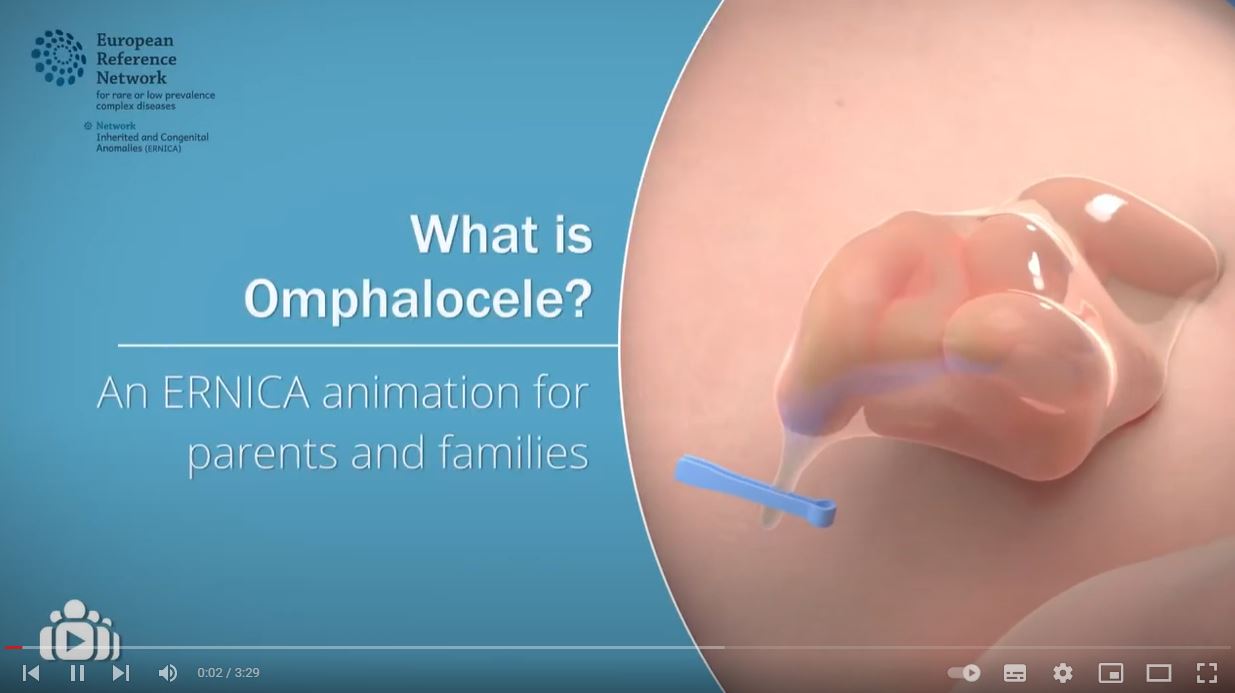
What is Omphalocele? An ERNICA animation for parents and families
3 min · Published Dec 2023
Video
What is Congenital Diaphragmatic Hernia (CDH)? An ERNICA animation for parents and families
3 min · Published Dec 2023
Video
What is small bowel atresia?: An ERNICA animation for parents and families
4 min · Published Dec 2023
Video
Hirschsprung-associated enterocolitis in children: An ERNICA animation for parents and families
3 min · Published Dec 2023
Video
Surgical treatment for Hirschsprung’s Disease: An ERNICA animation for parents and families
3 min · Published Dec 2023
Video
How is Hirschsprung's Disease diagnosed? An ERNICA animation for parents and families
3 min · Published Dec 2023
What the experts said
Gastroschisis occurs when the front of a baby's belly does not form properly during early pregnancy, resulting in an opening on the right side of the belly button through which the intestines pass.
Gastroschisis is classed as a rare birth defect.
The cause of gastroschisis is unknown.
Gastroschisis may mean that the intestines are not able to work properly.
Gastroschisis is not usually associated with other malformations.
A diagnosis of gastroschisis can be made before birth using ultrasound.
Many babies with gastroschisis are born prematurely (before 37 weeks).
Ongoing care for babies with gastroschisis should be provided at a specialist center by a dedicated team of professionals with knowledge and experience of the condition.
Gastroschisis is a serious condition and can be life threatening for the baby before and after birth as a newborn.
Most babies with gastroschisis do survive.
Some babies with gastroschisis may be transferred to a dedicated intensive care unit if they are born prematurely.
After birth, the baby's intestines are wrapped in a sterile bag to avoid damage.
Babies with gastroschisis receive the fluid they need via a tube that delivers it through a vein.
When the baby is stable, surgery is performed to place the intestines back in the belly and close the opening.
Surgical repair can be done in one operation (primary repair) or in several steps (staged repair), depending on the baby's circumstances and severity of gastroschisis.
Further surgery may be needed if other malformations are also present.
While the intestines recover, the baby receives feed through a tube that delivers it through a vein, a method called parenteral nutrition.
Hospital stay duration differs depending on the severity of gastroschisis, any complications, and how well the baby responds to treatment, often ranging between 2 to 10 weeks but may be longer.
Follow-up care by a multidisciplinary team (MDT) of different clinical specialists is required to monitor the baby's growth and development.
Some babies may experience ongoing difficulties that require different types and levels of care.
Identifying any complications or difficulties early is very important.
Some babies may require parenteral nutrition for a longer period to promote continued growth.
Peer support can be accessed through patient and family support groups.