


From
Live Event Content
PAPS -Perioperative Opioid Use In Paediatric Inguinal Hernia Patients- A Systematic Review And Retrospective Audit Of Practice - Isabel Hageman
With Dr. Isabel Hageman · hosted by Dr. Em Gootee
Chapter 1 of 4 · Evidence & Research
Study presentation
Study presentation: perioperative opioid use in pediatric inguinal hernia patients
Expert statements on this page
No expert statements were drawn from this page.
Host summaries · secondary, not cited in answers
Educational content from recorded physician discussions — not medical advice. Talk to your (or your child's) care team about your situation.
Video
BOB Ped Surg 2023 - Wendy Song, CAPS - Presentation
Published Feb 2023
Video
Delayed versus early repair of inguinal hernia in preterm infants
43 s · Published Nov 2023
Video
Surgeon annual volume impacts recurrence rates of pediatric inguinal hernia repairs: A multi-institutional study
54 s · Published Feb 2026
Video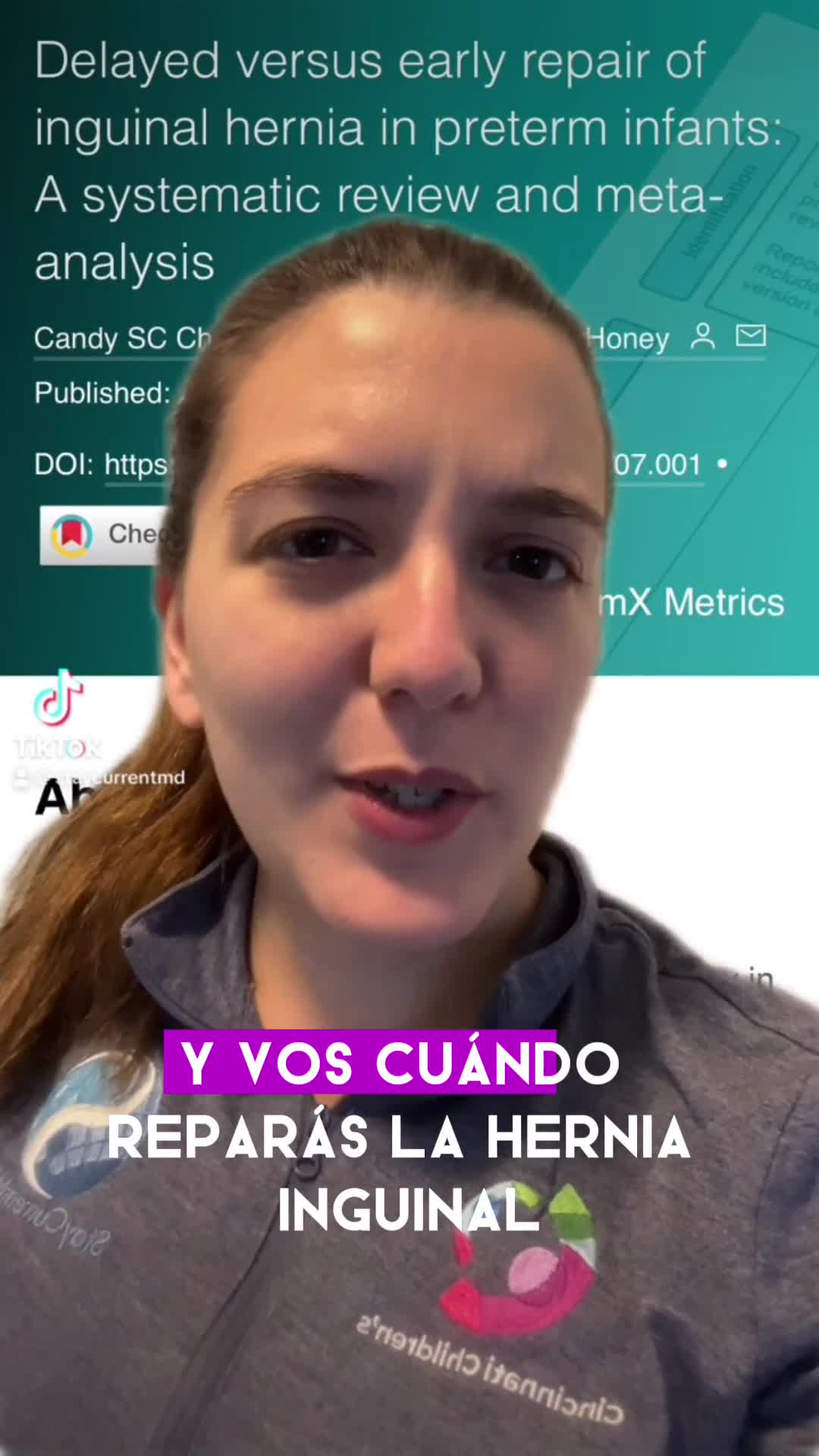
Reparación tardía versus temprana de la hernia inguinal en bebés prematuros
Published Nov 2023
Podcast
Case-Based Journal Review: Inguinal Hernia 2025
19 min · Published Apr 2025
Video
BOB Ped Surg 2023 - Jason Fraser, APSA - Presentation
Published Feb 2023
Only a few other public items share this expert — go deeper there →
Video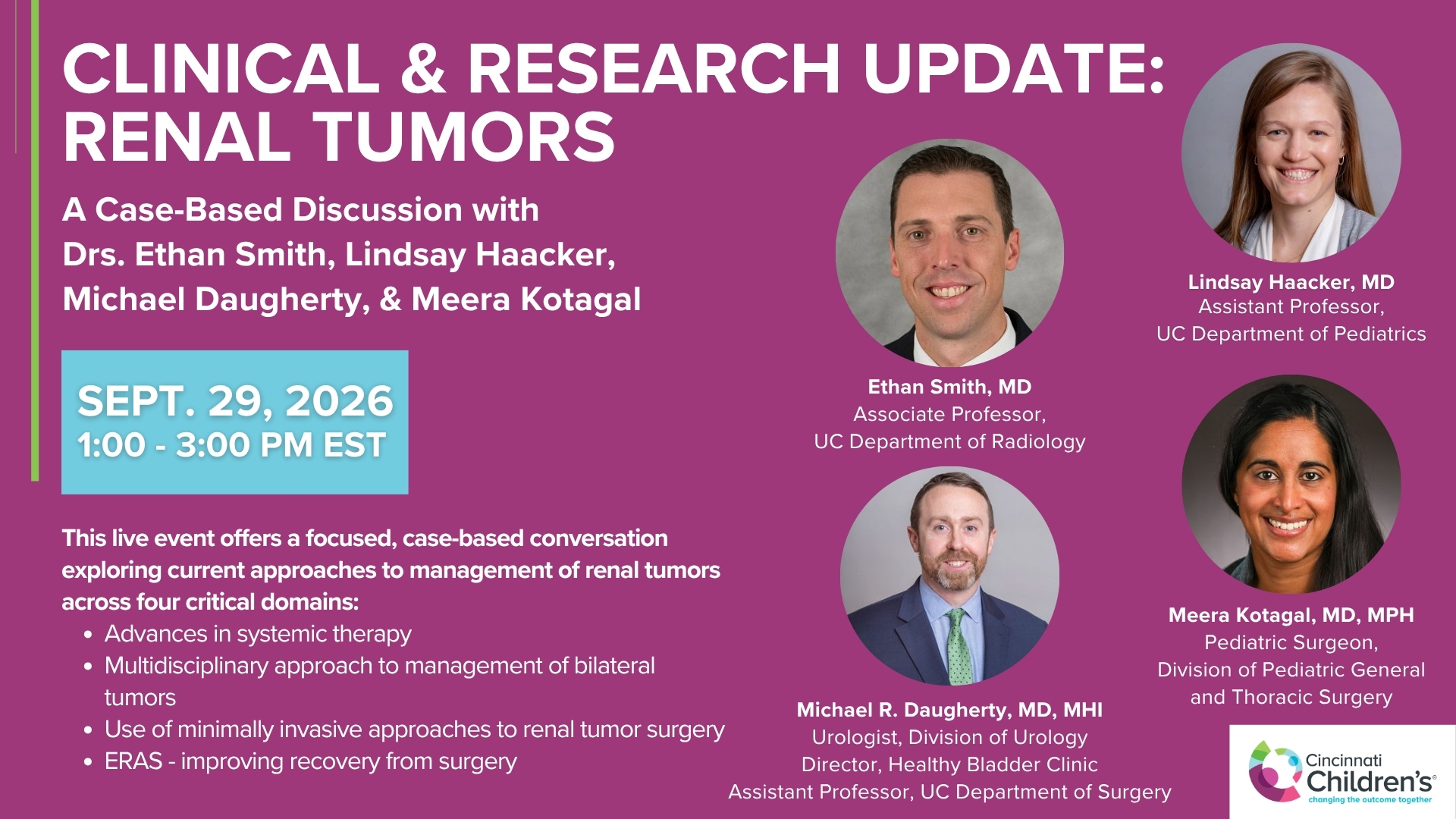
Clinical & Research Update: Renal Tumors with Drs. Ethan Smith, Lindsay Haacker, Michael Daugherty, and Meera Kotagal
71 min · Published Sep 2026
Video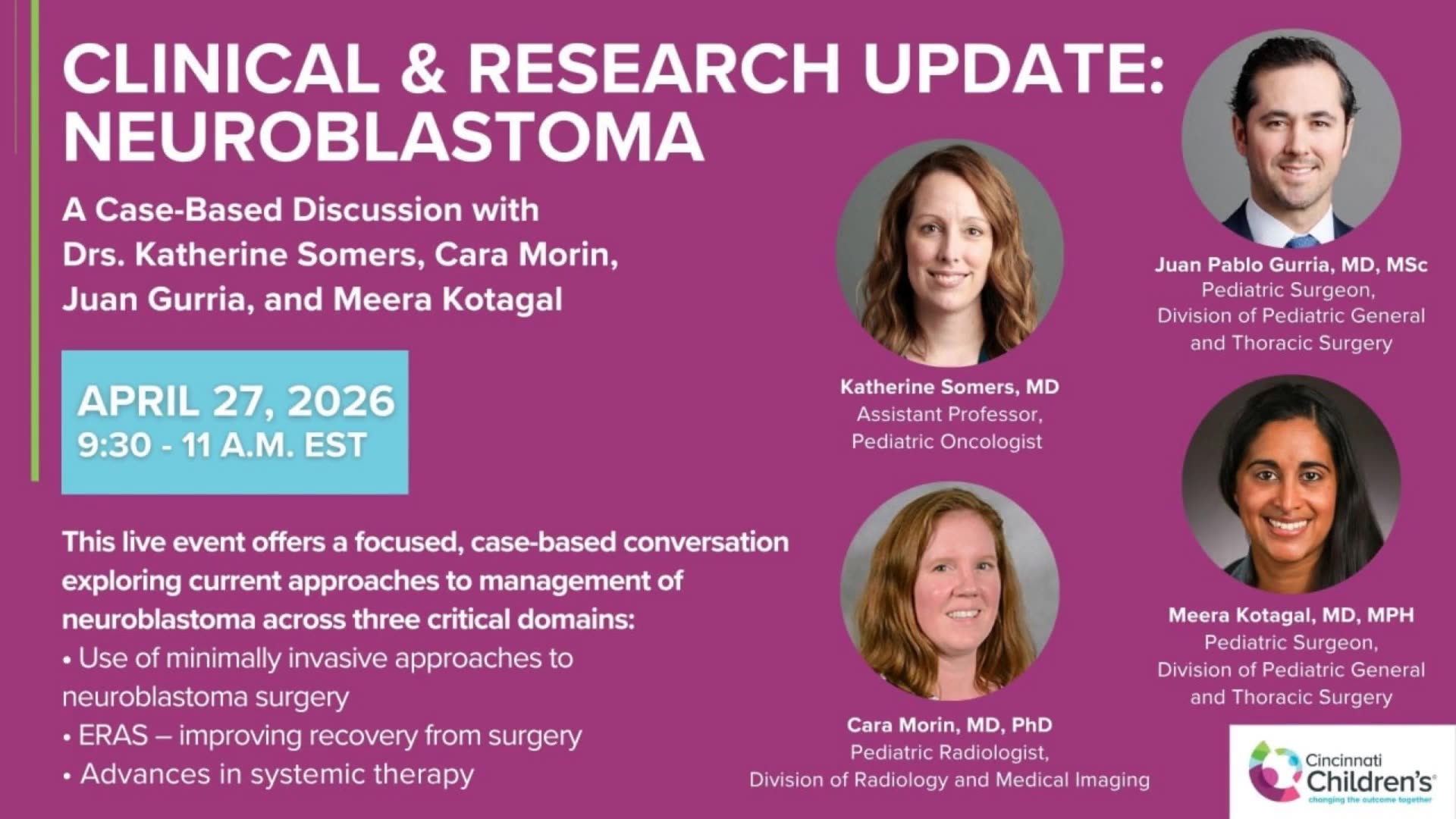
Clinical & Research Update: Neuroblastoma with Drs. Katherine Somers, Cara Morin, Juan Gurria, and Meera Kotagal
67 min · Published Sep 2026
Video
Clinical & Research Update: Sarcoma w/ Drs. Roshni Dasgupta, Joseph Pressey, Arthur Meyer, Luke Pater
66 min · Published Sep 2026
Video
2026 Laparoscopic Pediatric Hernia Repair
123 min · Published Jun 2026
Video
Beyond the Spectrum: Diagnosis, Myths & Management - Caitlin Couch & Leslie Lopez - APP Conference 2026
50 min · Published May 2026
Video
Dysautonomia: Navigating the Journey - Martha Willis - APP Conference 2026
55 min · Published May 2026
What the experts said
Opioids can have serious side effects and increase the risk for representation to the emergency department and future opioid misuse in pediatric surgical patients.
There are no procedure-specific guidelines for opiate use in pediatric patients like there are in adults.
The study included 150 pediatric patients who underwent inguinal hernia repair between May and December 2019 at Royal Children's Hospital Melbourne.
Patients were excluded if they underwent another procedure simultaneously or had an allergy or contraindication for opioids.
20% of patients received opioids intraoperatively, which was mostly fentanyl.
Post-operatively, 17% received opioids, which was mostly fentanyl in the PACU and oxycodone thereafter.
33% of patients received opioids during their entire hospital stay and were significantly older than patients who didn't receive opioids.
No patients received an opiate prescription at discharge.
Increasing age increased the risk for postoperative and total opiate use.
There was a significant association between female sex and total opioid use.
Preoperative paracetamol did not reduce opioid use, nor did it lower the doses in patients that did receive opioids.
Addition of regional blocks significantly lowered postoperative opiate use.
General anesthesia was found to be a risk for total, but not postoperative opioid use.
Opioids play a limited role in the pain regimens at the RCH contrary to other parts of the world.
There was wide variation in doses in patients that did receive opioids, which might be because pain assessment is difficult in young patients.
Patients with regional anesthesia only had much lower doses than patients with general anesthesia, with or without the addition of a regional.
Todd has seen a big change in practice over the last decade, from giving everybody narcotics after surgery to not prescribing narcotics at all.
The median length of stay was elevated due to premature infants and children already admitted to the hospital who had inguinal hernia surgery as one reason for admission.
Elective inguinal hernia patients are only admitted for a couple of hours and go home straight from the PACU.
General anesthesia was a risk factor for opioid use in general.
The institution is moving towards more spinals only for inguinal hernia repairs.
Matthew Mitchell in Akron has been doing cases under spinal anesthesia where patients are wide awake, don't move during surgery, don't need PACU, and go home immediately.
In very young children, spinal anesthesia is easier to perform because they don't experience the potentially traumatic aspects of being in the OR as older children might.
The median age of patients in the study was 3 months, making spinal anesthesia ideal, especially since caution with narcotics is important in young children.
All patients in the study were open inguinal hernia patients, not laparoscopic.
There was no association found between length of stay and opiate use, though this may be due to the small sample size of patients who received opioids.
The study was a retrospective audit, so groups (general anesthesia only, spinal only, or both) were determined by looking back at what patients received, not selected beforehand.
There was no institutional education around opioid prescription at the time of the study or before.
Two or three years before the study, the warnings around opioids and their classification level were changed in Australia, which may have influenced opioid use at RCH.
In older populations, the theory for gender differences in opioid requirements is that males are reluctant to report pain while females will ask for painkillers.
In the very young study population where there is no verbal communication about pain, it is especially interesting that females have higher opioid requirements, and the reason is unclear.