


From
Live Event Content
APSA - Is same day discharge possible following the Nuss repair for pectus excavatum - R. Luke Rettig
With Dr. Luke Reddick & Dr. Victor Garcia
Part of
Pectus Excavatum 58 items
Chapter 1 of 5 · Fundamentals
Introduction
Introduction and speaker identification
Expert statements on this page
No expert statements were drawn from this page.
Host summaries · secondary, not cited in answers
Educational content from recorded physician discussions — not medical advice. Talk to your (or your child's) care team about your situation.
Video
Cost and outcomes of intercostal nerve cryoablation versus thoracic epidural following the Nuss procedure
1 min · Published Oct 2023
Video
Six Years of Quality Improvement in Pectus Excavatum Repair: Implementation of Intercostal Nerve Cryoablation and ERAS Protocols for Patients Undergoing Nuss Procedure
51 s · Published Apr 2025
Video
Update Course Rewind: Cryoanalgesia in Pectus Cases 2024
7 min · Published Apr 2025
Video
Cryoablation in 350 Nuss procedures
56 s · Published Oct 2023
Video
Quick Literature Updates Episode 14
4 min · Published Dec 2023
Podcast
Journal of Pediatric Surgery Article REview: August Issue 2023
17 min · Published Feb 2024
Only a few other public items share this expert — go deeper there →
Video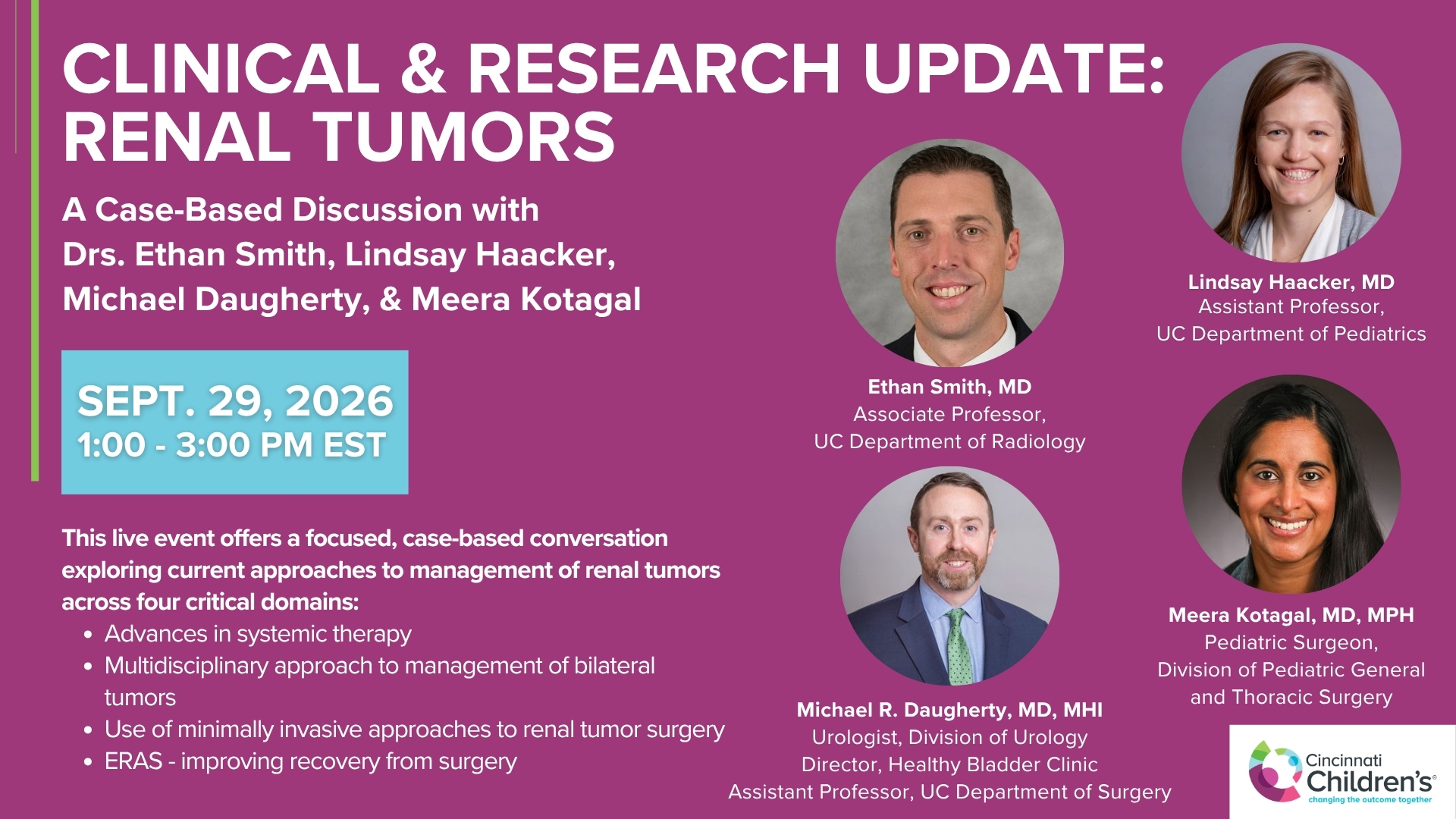
Clinical & Research Update: Renal Tumors with Drs. Ethan Smith, Lindsay Haacker, Michael Daugherty, and Meera Kotagal
71 min · Published Sep 2026
Video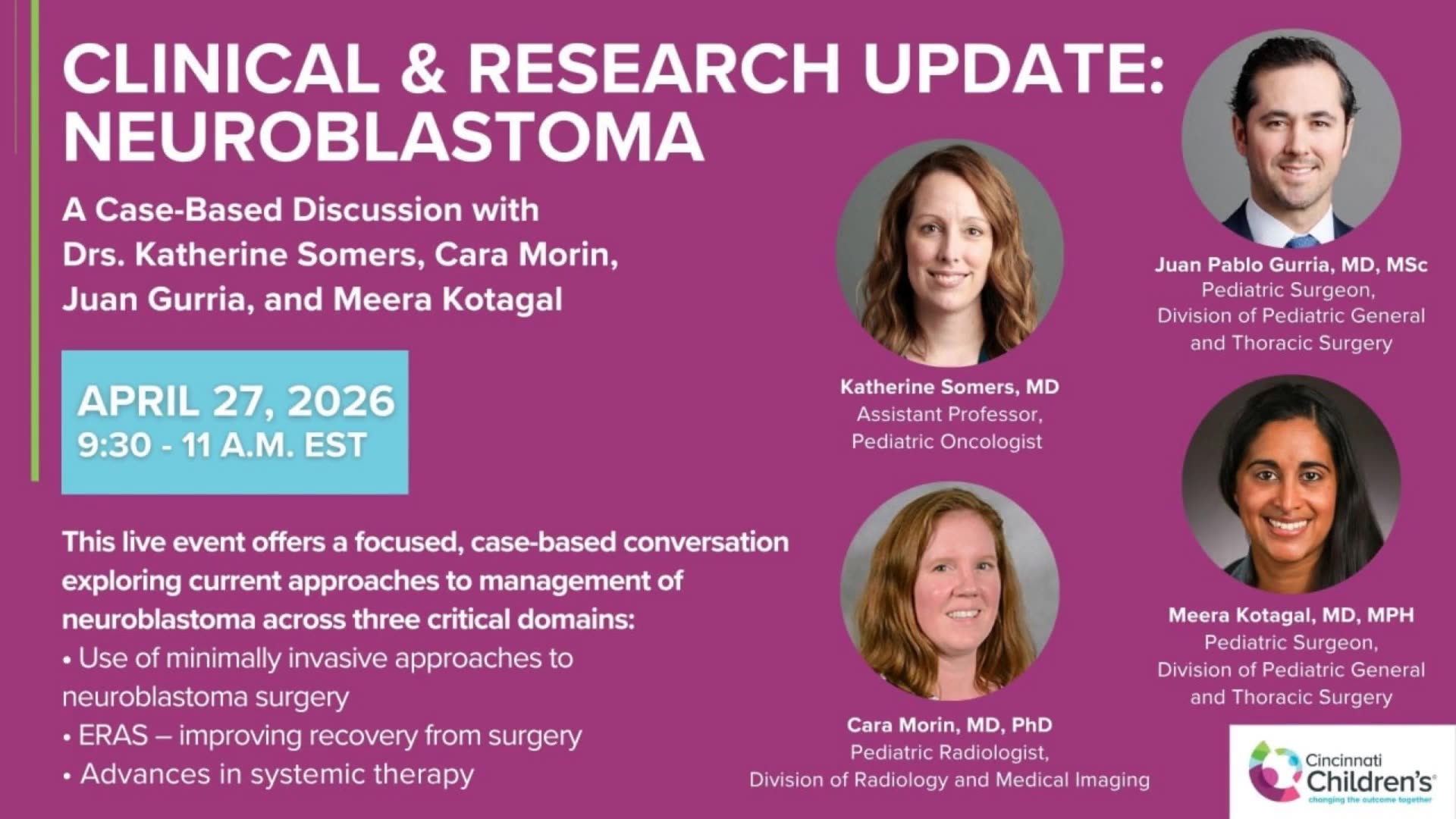
Clinical & Research Update: Neuroblastoma with Drs. Katherine Somers, Cara Morin, Juan Gurria, and Meera Kotagal
67 min · Published Sep 2026
Video
Clinical & Research Update: Sarcoma w/ Drs. Roshni Dasgupta, Joseph Pressey, Arthur Meyer, Luke Pater
66 min · Published Sep 2026
Video
2026 Laparoscopic Pediatric Hernia Repair
123 min · Published Jun 2026
Video
Beyond the Spectrum: Diagnosis, Myths & Management - Caitlin Couch & Leslie Lopez - APP Conference 2026
50 min · Published May 2026
Video
Dysautonomia: Navigating the Journey - Martha Willis - APP Conference 2026
55 min · Published May 2026
What the experts said
Pectus excavatum affects 1 in about 400 patients
Pectus excavatum has a male predominance at about a 4:1 ratio
The Nuss procedure is the gold standard for pectus excavatum fixation
Historically, the Nuss procedure has been associated with a significant amount of pain, leading to increased hospital lengths of stay and costs
Intercostal nerve cryoablation has helped patients with pain and decreased length of stay
Intercostal nerve cryoablation was performed at sites T3 through T7 on both sides of the chest
Patients have been in pain for about 24 hours after intercostal nerve cryoablation because it sometimes takes that long for the full effects to kick in
Bupivacaine was used proximal to the site of intercostal nerve cryoablation for perioperative pain control
10 out of 15 patients in the intervention group (INB) were discharged on postoperative day zero, with the remaining 5 discharged on postoperative day one
None of the patients in the control group (INC) were discharged prior to postoperative day 2
Length of stay was decreased in the intervention group at 12 hours compared to 58 hours in the control group
Cost was statistically significantly less in the intervention group compared to the control group
Opioid use was statistically significantly less in the intervention group than the control group
10 patients in the intervention group never used opioids after discharge, while the remaining 5 used them sparingly
There was no difference between groups in complications including Foley catheter removal/replacement, pneumothorax requiring chest tube, infections (surgical site and UTI), and returns to urgent care
Zero patients in the intervention group returned to the emergency department, whereas 4 in the control group returned to the ED
Medical devices typically are not subjected to the same rigorous, robust trials that drugs are
Many adverse consequences for medical devices are either underreported or not reported, as suggested by Kaiser Health News
The long-term consequences of cryoablation are unknown, particularly for children
There is concern about chronic neuropathic pain as a potential consequence of cryoablation
Long-term neuropathy rate following cryoablation is very low in the presenter's patient population
Before cryoablation, with thoracic epidurals, pectus patients would stay 7-9 days in the hospital
With introduction of intercostal nerve cryoablation, pectus patients were staying in the hospital for 3 days