


From
Live Event Content
Top Themes From The Stay Current App
Chapter 1 of 10 · Evidence & Research
Introduction to Stay Current App Review
Expert statements on this page
No expert statements were drawn from this page.
Host summaries · secondary, not cited in answers
Educational content from recorded physician discussions — not medical advice. Talk to your (or your child's) care team about your situation.
Video
Tricks - Imperforate Anus and Rectourethral Fistula
45 min · Published Nov 2018
Video
Quick Literature Updates Ep 23
4 min · Published Oct 2025
Video
Transitional Care in Anorectal Malformation and Hirschsprung's Disease
1 min · Published Jul 2024
Video
ERNICA Research Collaboration Webinar on Quality of Life
61 min · Published Nov 2023
Podcast
Colorectal Quiz Episode 17: Cloaca Part 1
27 min · Published Jul 2021
Video
Turnbull Stoma
4 min · Published Feb 2026
Video
Validation of an anorectal malformation trainer - Can a high-fidelity model simulate real life?
1 min · Published Jun 2026
Video
Complications and Long-Term Outcomes of Patients With Cloacal Malformation After Bowel Neovagina...
1 min · Published Jun 2026
Video
Safety and utility of long-acting steroid injection for management of post-operative stricture...
1 min · Published Jun 2026
Video
Association Between Social Determinants of Health and Choice of Urinary Reconstruction in Children
1 min · Published Jun 2026
Video
The Perineal Body Preserving PSARP (PPP)
11 min · Published Jun 2026
Video
Update Course Rewind 2025: Hirschsprung + ARM: Rare but Real
1 min · Published May 2026
Video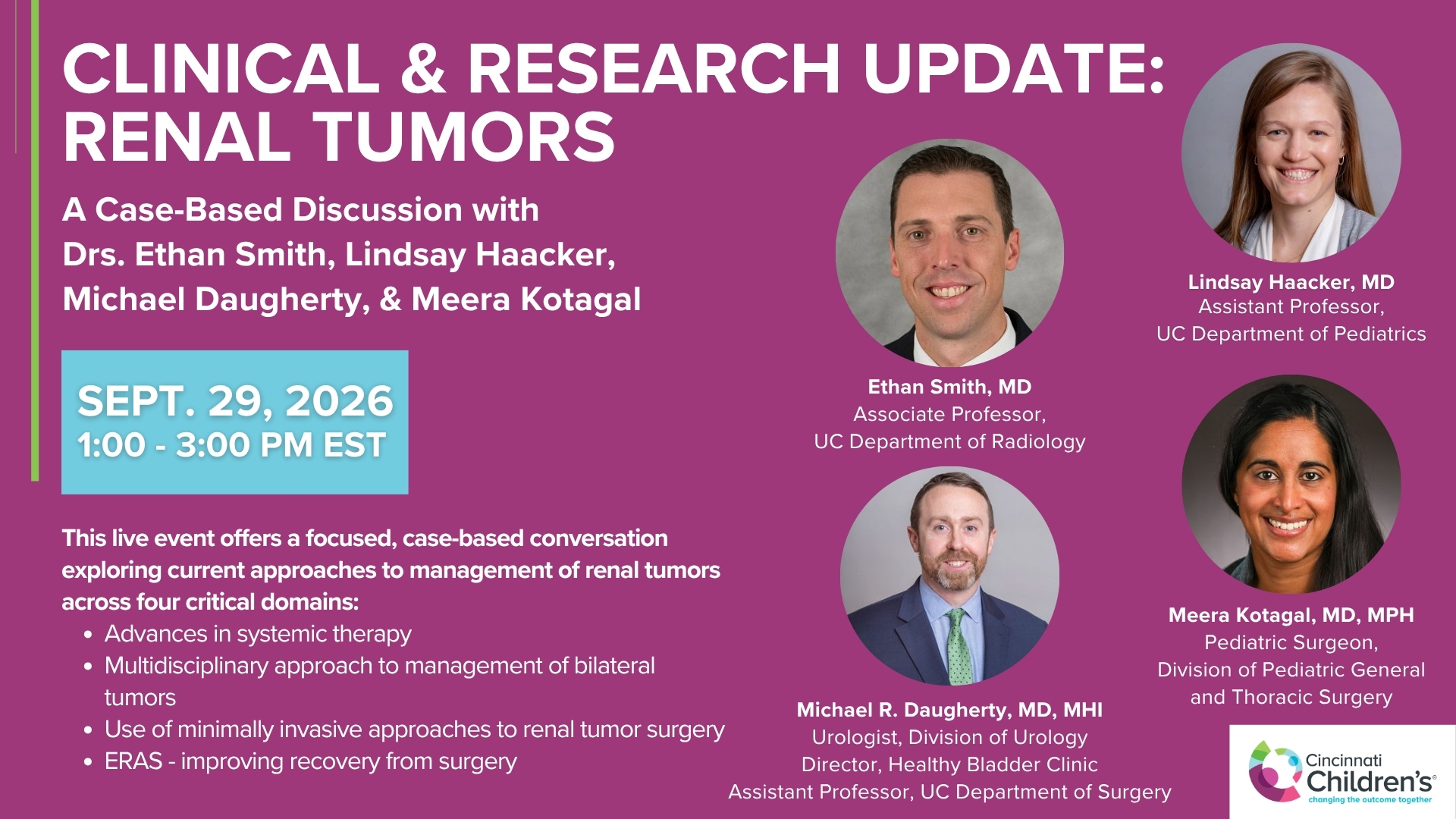
Clinical & Research Update: Renal Tumors with Drs. Ethan Smith, Lindsay Haacker, Michael Daugherty, and Meera Kotagal
71 min · Published Sep 2026
Video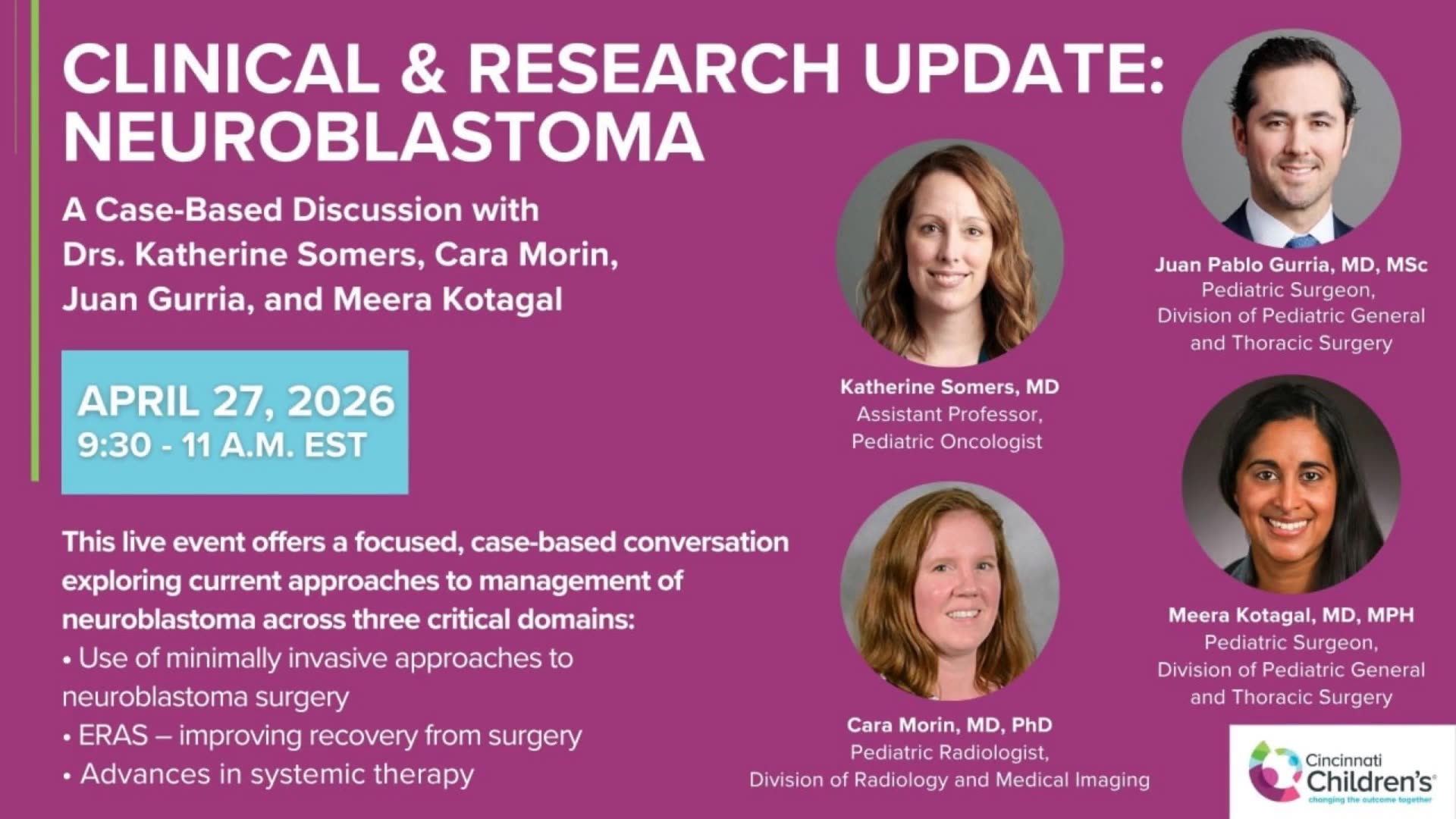
Clinical & Research Update: Neuroblastoma with Drs. Katherine Somers, Cara Morin, Juan Gurria, and Meera Kotagal
67 min · Published Sep 2026
Video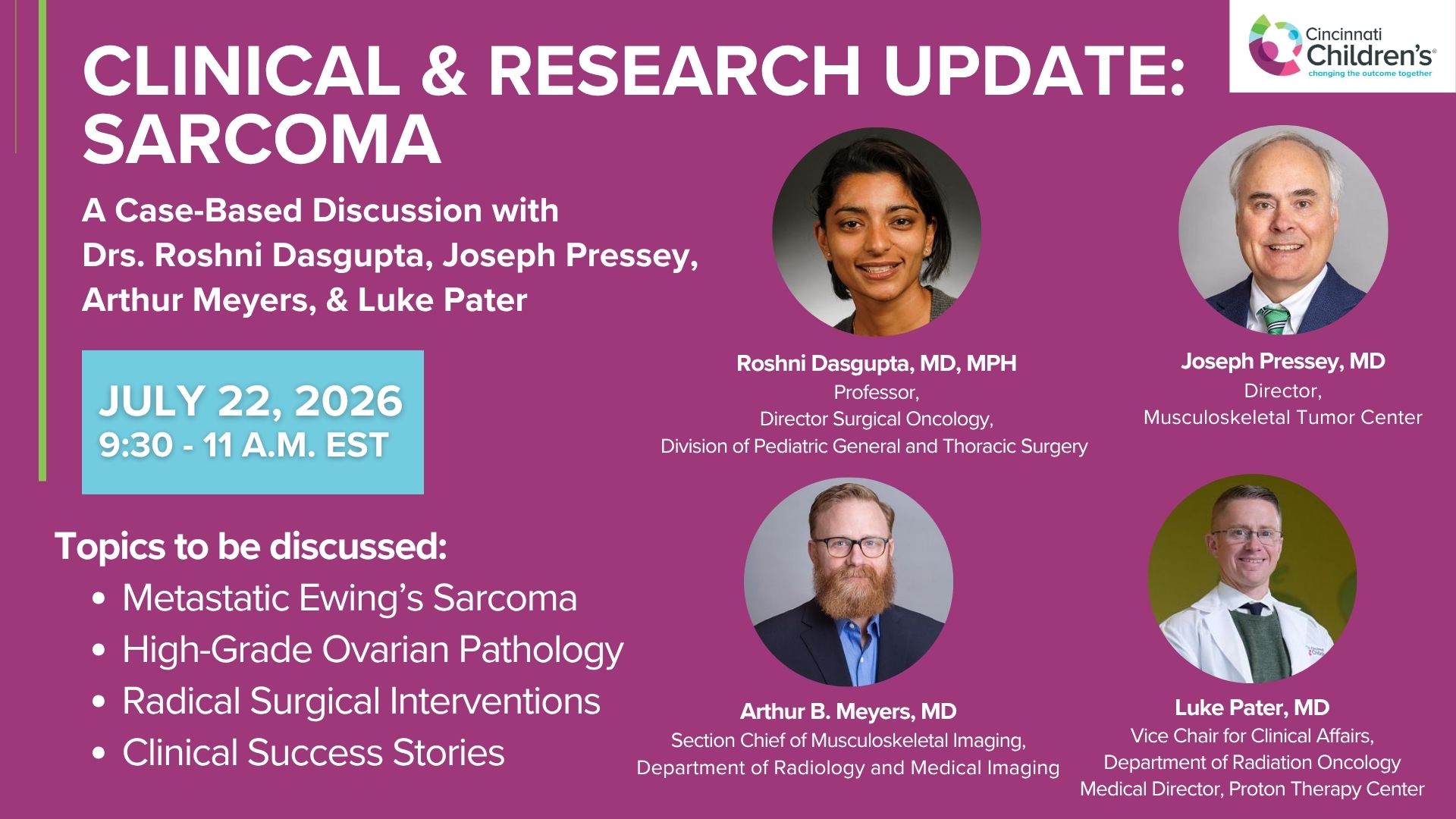
Clinical & Research Update: Sarcoma w/ Drs. Roshni Dasgupta, Joseph Pressey, Arthur Meyer, Luke Pater
66 min · Published Sep 2026
Video
2026 Laparoscopic Pediatric Hernia Repair
123 min · Published Jun 2026
Video
Beyond the Spectrum: Diagnosis, Myths & Management - Caitlin Couch & Leslie Lopez - APP Conference 2026
50 min · Published May 2026
Video
Dysautonomia: Navigating the Journey - Martha Willis - APP Conference 2026
55 min · Published May 2026
What the experts said
The Stay Current app is viewed by 6,000 pediatric surgeons
Stay Current is sponsored by Cincinnati and Kansas City
Stay Current Pediatric Surgery was released in February of 2019
Users have shared over 450 pieces of content approximately 1400 times
Digital anal dilation is safe if the digits are appropriately sized and if the families follow a strict protocol of dilations
Techniques for laparoscopic CDH treatment include utilizing a needle to decompress bowel laparoscopically
Creating a pneumothorax allows easier retraction of the hernia sac in laparoscopic CDH repair
A laparoscopic detectable magnet can be utilized for greater maneuverability of the hernia sac
The evidence supporting best practices for long gap esophageal atresia is currently low quality
Patients with long gap esophageal atresia should receive appropriate long-term follow-up
Workup, diagnosis, and treatment of GERD patients is complex
The latest recommendation for Nissen fundoplication involves minimal dissection at the GE junction
The Nissen wrap should be performed above the left gastric artery
Multiple randomized control trials have shown that ad lib feeds are superior or equivalent to protocolized feeds for pyloric stenosis
All infants less than 50 weeks post-conceptual age at the time of surgery need some level of observation for apnea monitoring
NPO guidelines include clears up to two hours preop and breast milk up to four hours preop
Clinicians tend to be too restrictive with NPO guidelines
Pre-op antibiotic prophylaxis must be administered within 60 minutes before incision
Redosing of antibiotics is needed for the duration of the operation
Generally, antibiotics are not needed after surgery unless the case determines otherwise
Hirschsprung's disease is the number one search topic on the app overall
The transition zone can vary widely depending on the extent of disease with numbers as high as 22 centimeters for total colonic Hirschsprung's disease
Coyle et al recommend resecting greater than 5 cm proximally to the normal biopsy to avoid transition zone pull through
Management of suspected Hirschsprung's associated enterocolitis includes prompt evaluation of the patient, rectal irrigations with normal saline, NPO, IV fluids, antibiotics and continuous monitoring
Patients with intussusception should go to the operating room if they have peritoneal signs or if they fail reduction after three attempts
Patients can be safely discharged home after four hours of observation after a successful intussusception reduction
Patients with intussusception can have the air enema repeated every hour up to three times as long as there are no signs of peritonitis before operative exploration
Patients who are asymptomatic for four hours after a successful intussusception reduction can be discharged from the emergency department
Non-operative management should be primarily considered in hemodynamically stable patients with blunt solid organ injuries
Angioembolization should be considered for ongoing or delayed bleeding, high grade injuries and early hemodynamic compromise before proceeding to the operating room