


From
StayCurrentMD
Update Course Rewind: Chest Wall Reconstruction 2024
With Dr. Margaret Mutch · hosted by Dr. Lizzie Lee
Chapter 1 of 4 · Case-Based Learning
Case presentation
Case presentation: 14-year-old with osteosarcoma and cord compression
Expert statements on this page
No expert statements were drawn from this page.
Host summaries · secondary, not cited in answers
Educational content from recorded physician discussions — not medical advice. Talk to your (or your child's) care team about your situation.
Video
Bailey Roberts, MD - Best of the Best in Pediatric Surgery 2024
Dr. Todd Ponsky · 8 min · Published Feb 2024
Video
Update Course Rewind: Lipiodol for Lung Metastases 2024
Published Jan 2025
Video
LLL for metastatic Osteosacoma
Dr. Steve Rothenberg · 6 min · Published May 2026
Video
Update Course Rewind: Thoracotomy vs VATS for Lung Metastases
Dr. Todd Ponsky · 9 min · Published Dec 2021
Video
8th Annual Pediatric Surgery Update Course
Dr. Todd Ponsky · 215 min · Published Jul 2020
Video
Update Course 2021: THORACOTOMY VS VATS FOR OSTEO METS
Published May 2022
Video
Oncology Tumor Board Showdown: Pediatric Oncology 5 Question Quiz
1 min · Published Oct 2026
Video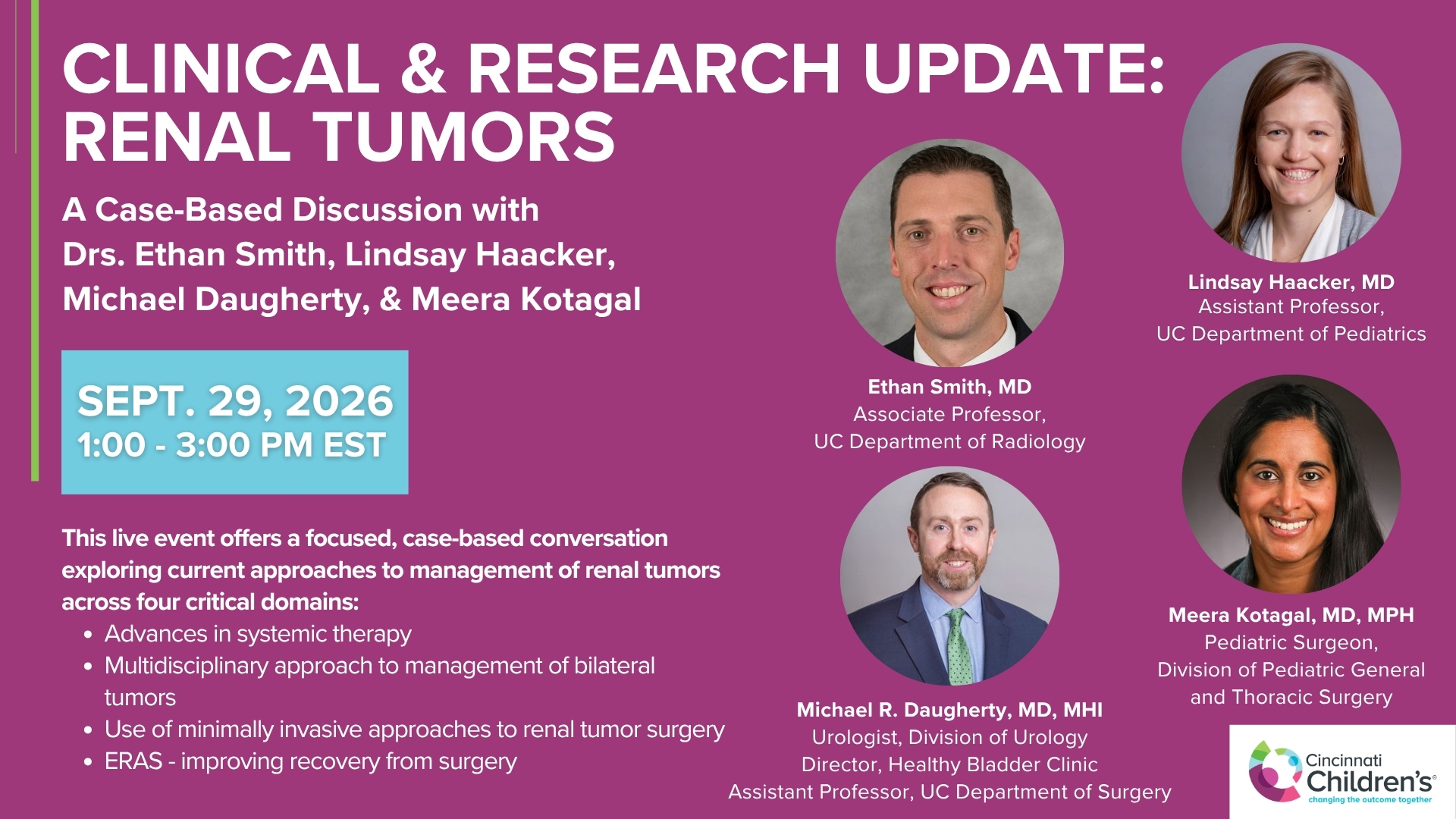
Clinical & Research Update: Renal Tumors with Drs. Ethan Smith, Lindsay Haacker, Michael Daugherty, and Meera Kotagal
71 min · Published Sep 2026
Video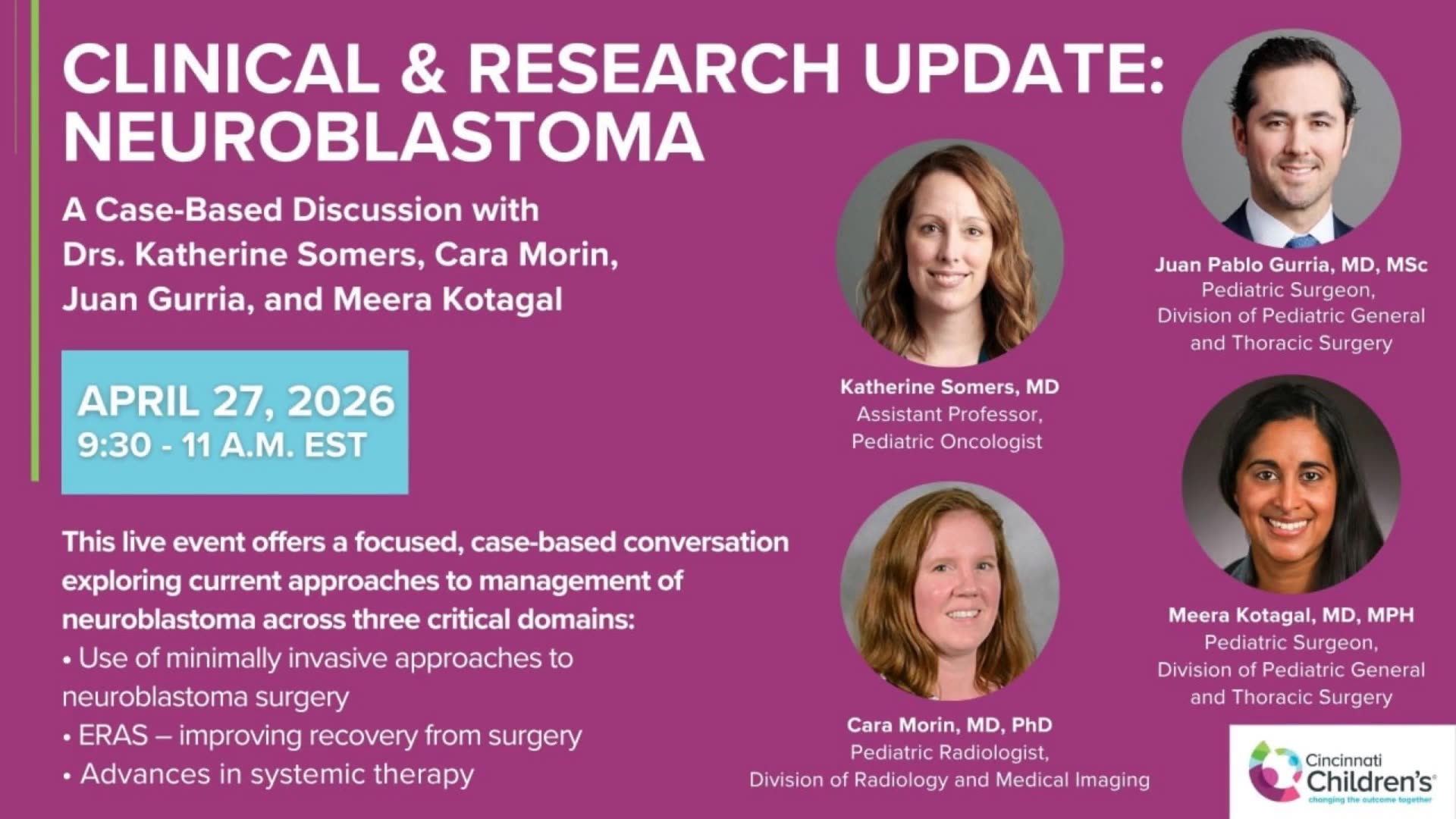
Clinical & Research Update: Neuroblastoma with Drs. Katherine Somers, Cara Morin, Juan Gurria, and Meera Kotagal
67 min · Published Sep 2026
Video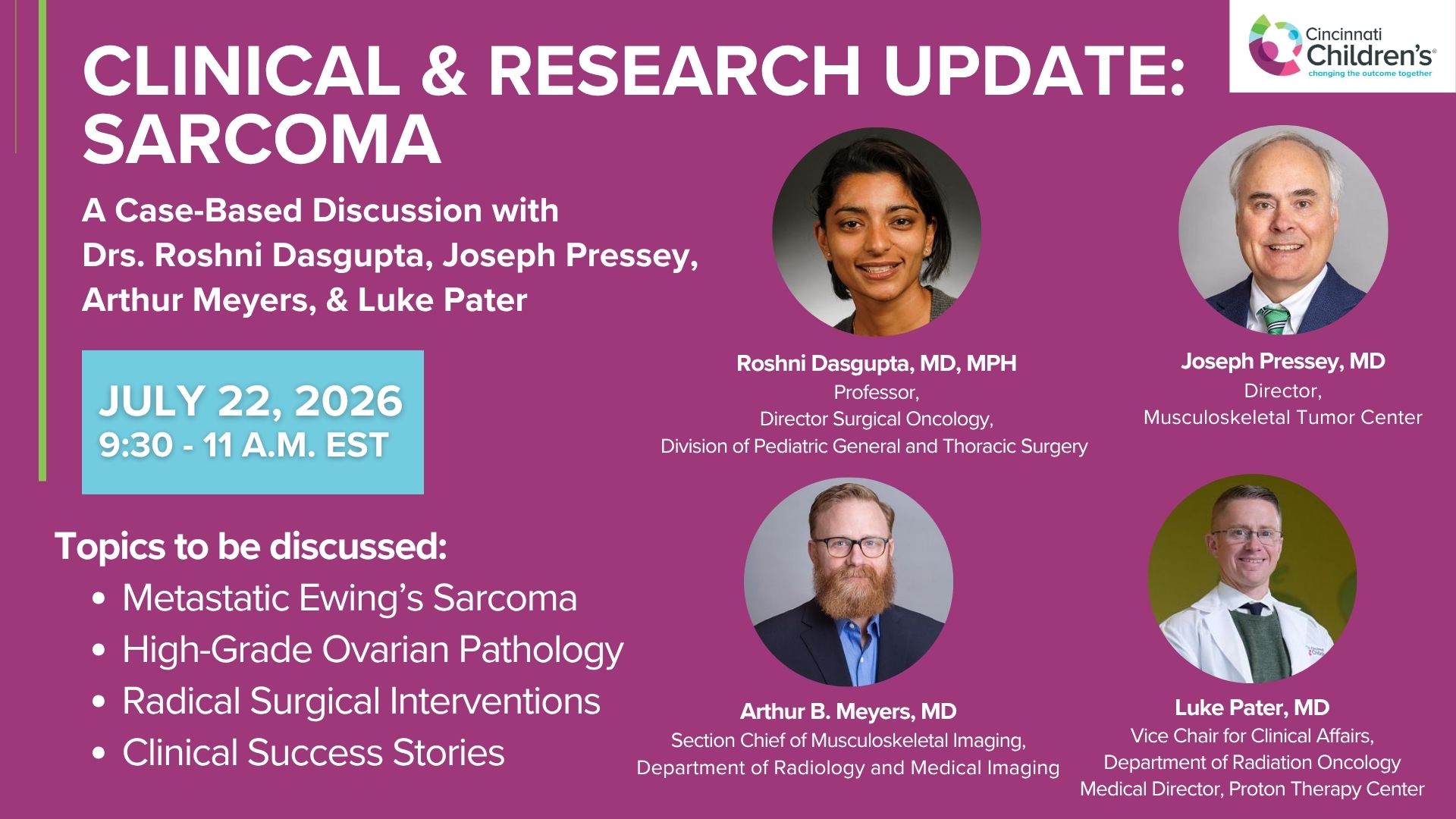
Clinical & Research Update: Sarcoma w/ Drs. Roshni Dasgupta, Joseph Pressey, Arthur Meyer, Luke Pater
66 min · Published Sep 2026
Video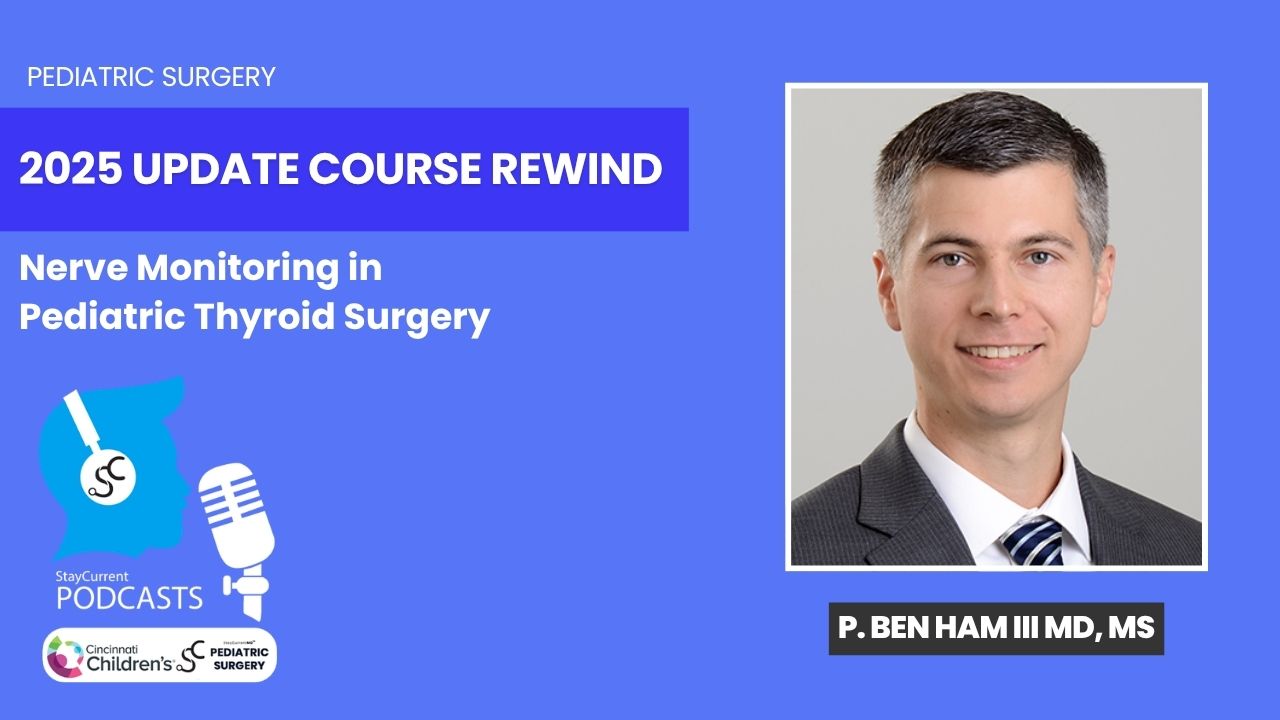
Update Course Rewind 2025: Nerve Monitoring in Pediatric Thyroid Surgery
6 min · Published Jul 2026
Video
Journal of Pediatric Surgery Article Review: June 2023, AAP Issue
Todd Ponsky · 13 min · Published Jul 2026
Only a few other public items share this expert — go deeper there →
Video
Intestinal Atresia Types Explained: Grossfeld Classification for Pediatric Surgery
1 min · Published Sep 2026
Video
Derivation and validation of the Pediatric Community-Acquired Pneumonia Severity (PedCAPS) score: A prospective cohort study
50 s · Published Sep 2026
Video
FETO for Late-Diagnosed Severe Congenital Diaphragmatic Hernia (CDH) at Cincinnati Children's with Dr. Beth Rymeski
4 min · Published Sep 2026
Video
Severe Congenital Diaphragmatic Hernia (CDH) Case: FETO Management & Unexpected Findings with Dr. Beth Rymeski
3 min · Published Sep 2026
Video
Fetoscopic Endoluminal Tracheal Occlusion (FETO) Procedure: Step-by-Step Guide with Dr. Beth Rymeski
4 min · Published Sep 2026
Video
Choledochal Cyst Types Explained: Pediatric Surgery Fundamentals
1 min · Published Sep 2026
What the experts said
Doctor Margaret Mutch's team has about 10 years of experience with chest wall reconstructions.
Examination revealed an incomplete cord injury with absent lower limb reflexes and altered motor and sensation below the level of T6.
The patient underwent an emergency posterior laminectomy and partial tumor debulking initially for cord decompression between the levels of T3 and T7.
PET scan showed a PET avid lesion on the right-hand side just next to the sternum.
Radio guided occult lesion localization using technetium 99 was performed, followed by anterior thoracotomy to remove the lesion, which confirmed aggressive osteosarcoma replacing a lymph node.
Most of the reconstruction needs to be tailored to the needs of each individual, location and size of defects, and the particular type of material used.
A lot of the literature on chest wall reconstruction is coming from adults.
The spinal surgeons removed all of the vertebral bodies between T4 and T7 and inserted a cage, and the thoracic team resected ribs 4 to 7.
During surgery, a tumor thrombus was found in the azygos, which extended into the SVC.
Doctor Mutch's team tends to use resorbable and biosynthetic materials to do the reconstruction.
In Australia, two systems are used for chest wall reconstruction: one by Stryker and one by KLS, using resorbable plates that are molded in a water bath to reconstruct the rigid part of the chest wall.
Following plate placement, Permacol is placed on top of the implant, and subsequently a muscular flap, in this case the latissimus dorsi, is used to cover the Permacol.
The delta plates or the sonic weld system are polylactide and polyglycolide and polylactide plates with a strength of 78% at 2 months and 50% at 6 months.
The patient had a relapse 18 months following surgery close to his sternum.
The patient is currently having adjuvant chemotherapy.
In the team's 10-year experience, there was early postoperative wound infection in one patient, which was treated with IV antibiotics.
There were sterile seromas in two patients in the early stages, one at 2 months and one at 8 months, both treated with IR drainage.
The histopathology report confirmed an aggressive osteosarcoma.
There is a lack of clear evidence-based guidelines for reconstructive materials, but the priority is long-term durability, aesthetics, function, and accommodating future growth.
Instead of using screws that came packaged with the plates, they used a K-wire drill to drill through the remaining ribs and then used Prolene sutures to secure the implant.
Permacol is a surgical implant made of a porcine dermal collagen matrix that allows device placement.
Doctor Mutch performed a further chest wall reconstruction where they excised the entire sternum, costochondral cartilages, and anterior ribs and replaced it with a cement mesh.
There was one case of minor scoliosis on follow-up, which is being followed by the spinal team and so far has not needed intervention.
Bioengineering of tissue replacement and 3D printing may be the way of the future in chest wall reconstructions.