
 Live Event Content
Congenital Aqueductal Stenosis
Everything in the library about congenital aqueductal stenosis — built automatically from the recorded discussions that name it
Educational content from recorded physician discussions — not medical advice. Always talk to your child's care team about your child's situation.
Content of this collection
Fundamentals
1 item
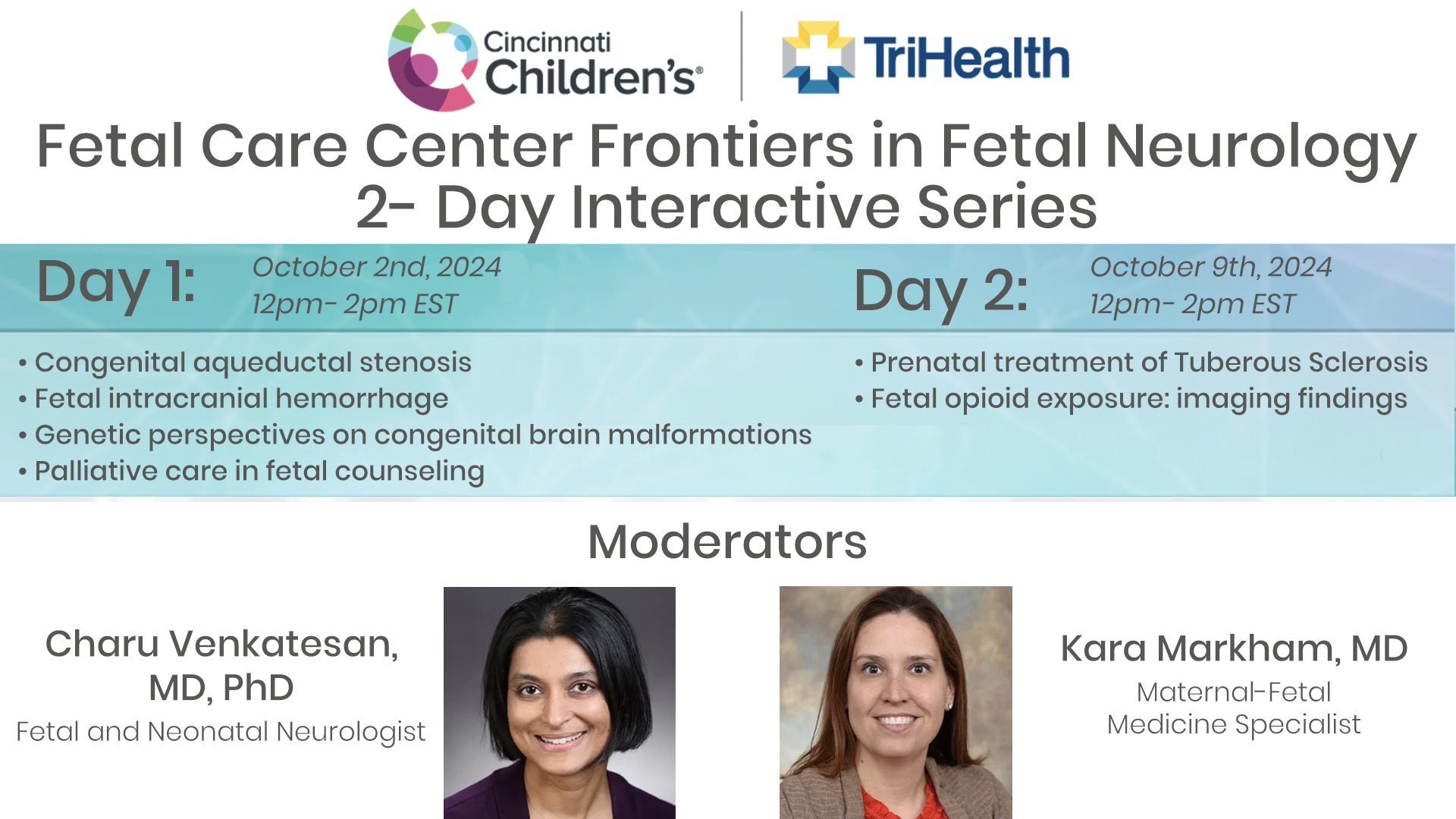
2024 Fetal Care Center Frontiers in Fetal Neurology Day 1 - Introduction
Watch →
Dr. Charu Venkatesen and Dr. Kara Markham opents Day 1 of the Frontiers in Fetal Neurology 2-day interactive webinar series.
video2:56 · Oct 2024
Surgical Management
1 item
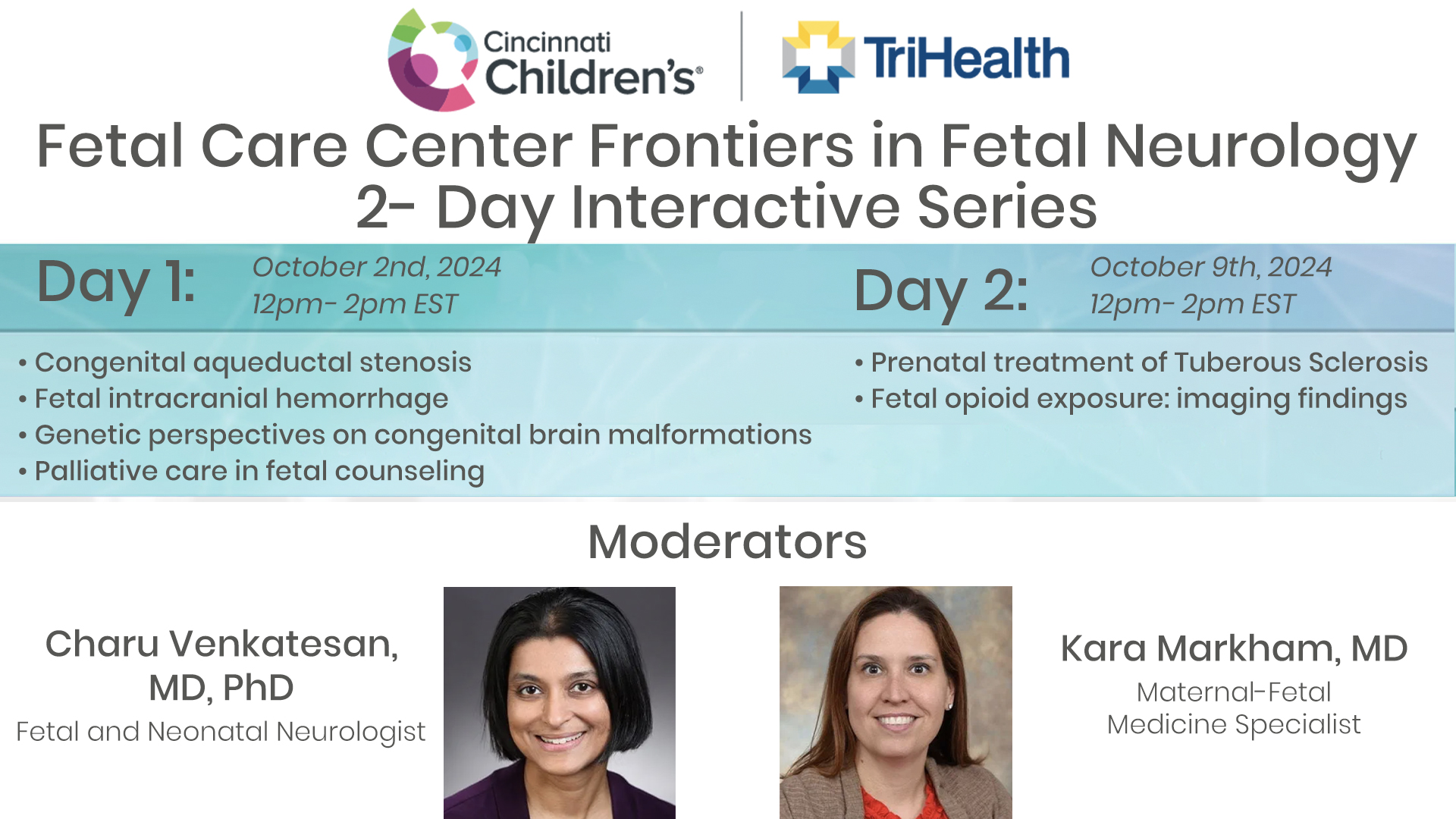
2024 Fetal Care Center Frontiers in Fetal Neurology Day 1 - Dr. Jesse Skoch
Watch →
Dr. Jesse Skoch speaks on the Surgical management of Congenital Aqueductal Stenosis on Day 1 of the Frontiers in Fetal Neurology 2-day interactive webinar series.
video19:51 · Oct 2024
Evidence & Research
1 item
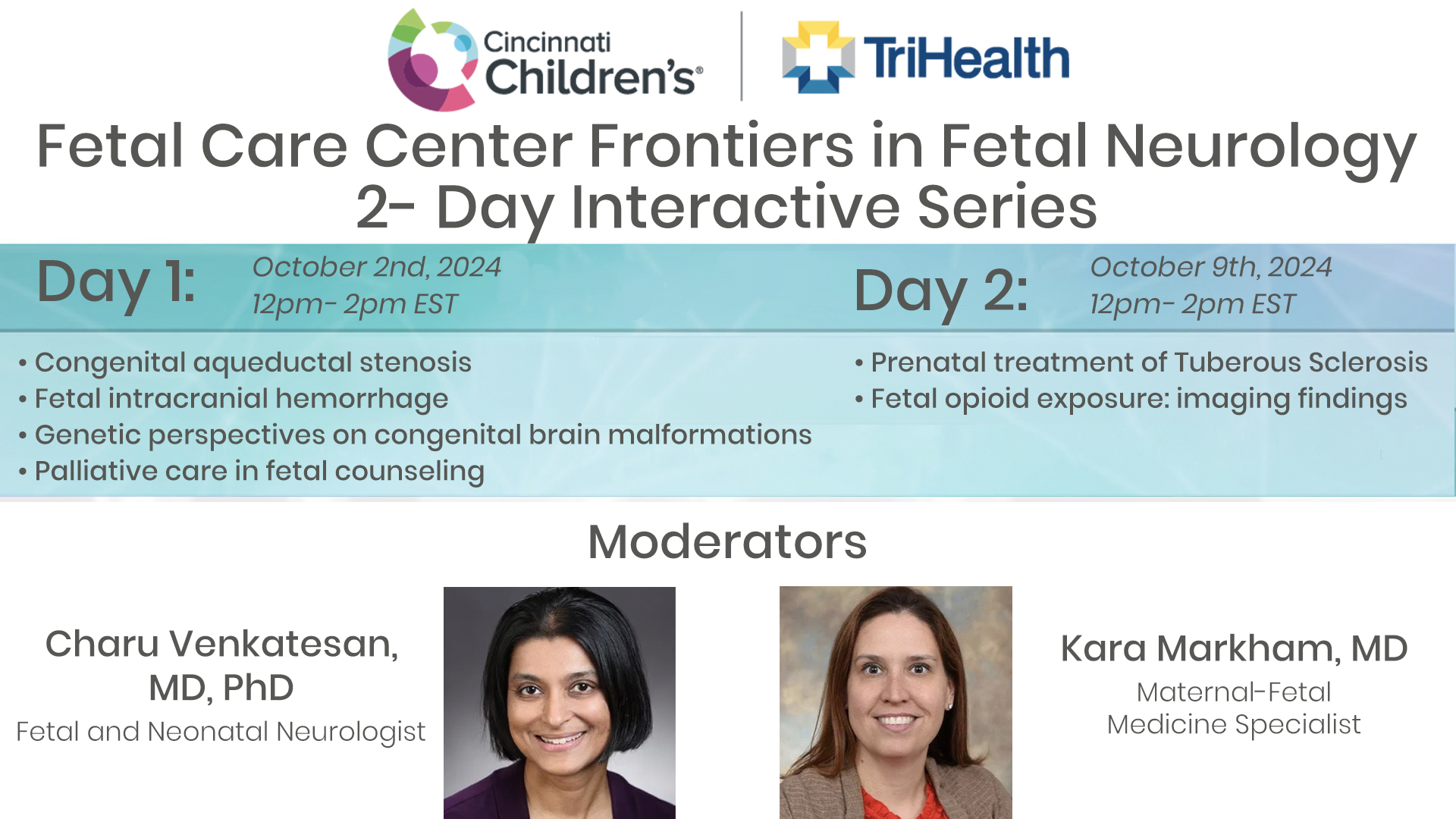
2024 Fetal Care Center Frontiers in Fetal Neurology Day 1 - Dr. Charu Venkatesen
Watch →
Dr. Charu Venkatesen speaks on the outcomes of patients with prenatal diagnosis of Congenital Aqueductal Stenosis on Day 1 of the Frontiers in Fetal Neurology 2-day interactive webinar series.
video12:51 · Oct 2024
Case-Based Learning
1 item
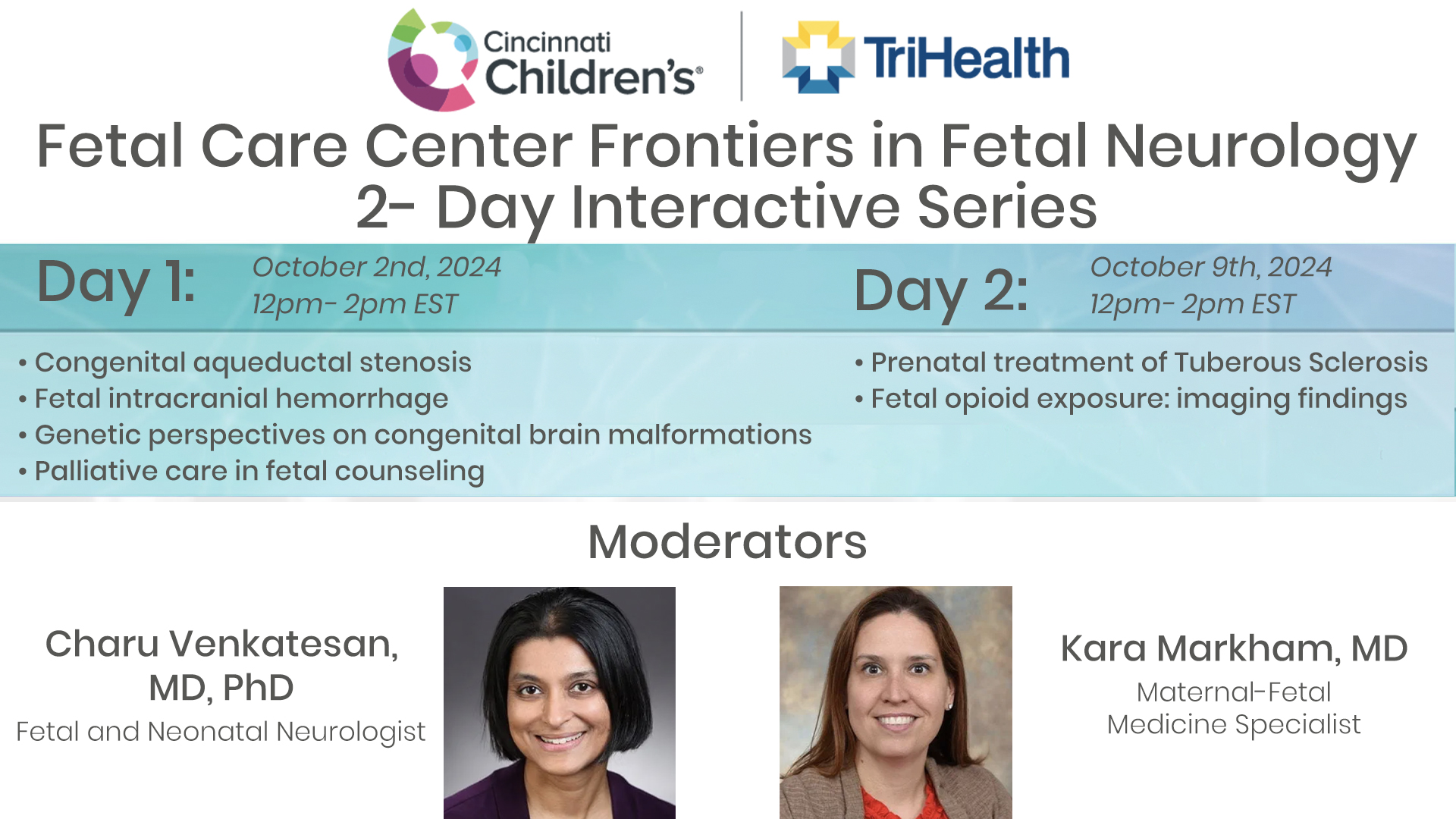
2024 Fetal Care Center Frontiers in Fetal Neurology Day 1 - Hour 1 Q&A
Watch →
Dr. Charu Venkatesen, Dr. Jesse Skoch, and. Dr. Jose Peiro discuss the hour 1 sessions and answers questions from the audience.
video9:06 · Oct 2024
Summaries and takeaways+ Show
The doctors in this collection+ Show
All expert statements+ Show
Every expert statement below comes from the recorded discussions, with its speaker and moment.
2024 Fetal Care Center Frontiers in Fetal Neurology Day 1 - Hour 1 Q&A
The complex category in the Children's Hospital study included any case with any other anomaly, including genetic anomalies (aneuploidies, trisomy 13/18), extracranial findings, and syndromic findings, creating a heterogeneous group.
clinical0:47 ↗
Current counseling practice tends to combine isolated aqueductal stenosis cases (without suspected genetic cause) with complex cases in a broad-strokes approach, which may not be the appropriate approach.
opinion0:47 ↗
Conventional endoscopes for ETV are usually about 6 millimeters in diameter.
clinical2:07 ↗
For fetal ETV cases, 2.4 millimeter scopes are being used in clinical studies.
host_summary2:07 ↗
The fetal ETV scope is a 2.4 mm sharp-tip fetoscope with a 1.3 mm camera and a working channel, the same equipment used for placing tracheal balloons in CDH fetuses.
clinical2:22 ↗
The proposed gestational age for fetal ETV in phase one human studies is 24-25 weeks, following diagnosis around 20-21 weeks and genetic workup, similar to timing for spina bifida repair.
clinical3:11 ↗
Intervention between 25 and 30 weeks gestational age is considered acceptable for cases with delayed diagnosis, allowing time for brain recovery in utero.
opinion3:11 ↗
The fetal ETV trial requires an FDA IND (Investigational New Drug application) because it is a risky procedure, even though no drug is used and no device is left behind.
guideline4:03 ↗
The goal is to begin a pilot study for safety and feasibility of fetal ETV next year, involving collaboration between fetal surgery and neurosurgery teams.
clinical4:03 ↗
Acetazolamide can reduce CSF production by approximately 15% at best.
clinical5:29 ↗
Acetazolamide may allow delaying intervention by one to two months in borderline, slowly progressing cases to reach a better category for ETV.
opinion5:29 ↗
Acetazolamide has sufficient safety experience and electrolyte monitoring protocols to be used as a temporizing measure in appropriate patients.
clinical5:29 ↗
Acetazolamide cannot be expected to be a game changer in rapidly progressing hydrocephalus cases.
opinion5:29 ↗
Early postnatal ETV has a high failure rate in newborns with congenital aqueductal stenosis.
clinical5:29 ↗
In a study by Rus, type 2 slowly progressive hydrocephalus patients treated with delayed ETV had the same neurologic outcomes as patients who were shunted earlier.
epidemiological5:29 ↗
For stable postnatal patients not showing signs of rapid progression, there is no convincing data that earlier intervention is always better in a linear fashion.
opinion5:29 ↗
For patients showing active progression with increasing pressure and damage, sooner intervention is better than waiting.
opinion5:29 ↗
The primary benefit of fetal ETV may be developmental changes rather than preventing procedure failure, as many fetal ETV patients may still experience postnatal failure.
opinion5:29 ↗
In postnatal treatment, the timing of intervention (earlier versus slightly later) is probably not as critical because the damage is already done and the condition is stable.
opinion8:12 ↗
In fetal cases, timing is very critical because early intervention can potentially avoid pressure and allow better brain development.
opinion8:12 ↗
The ETV fenestration can close in both neonates and fetuses, which is a concern for fetal intervention.
clinical8:12 ↗
Maintaining decompression for 6-7 weeks in utero without pressure is beneficial even if postnatal redo ETV or shunt placement is needed, because the brain will have developed better.
opinion8:12 ↗
The goal of fetal ETV is not to completely fix the hydrocephalus but to temporize and achieve better brain development, even if the intervention is temporary.
opinion8:12 ↗
2024 Fetal Care Center Frontiers in Fetal Neurology Day 1 - Introduction
Day 1 session 1 (12:00-1:00 PM) covers congenital aqueductal stenosis, including outcomes and fetal MRI findings
host_summaryCharivenka Tayson0:41 ↗
Day 1 session 2 (1:00-2:00 PM) addresses uncertainties in neurological diagnoses, including fetal intracranial hemorrhage, genetic conditions with brain malformations, and palliative care in fetal counseling
host_summaryCharivenka Tayson0:41 ↗
Day 2 (October 9th) will cover fetal therapeutics, treatment of tuberous sclerosis, and toxic/environmental exposures affecting brain development
host_summaryCharivenka Tayson0:41 ↗
Doctor Jessie Scotch will discuss fetal MRI findings for congenital aqueductal stenosis
host_summaryCharivenka Tayson0:41 ↗
Doctor Don Gano from UCSF will discuss fetal intracranial hemorrhage
host_summaryCharivenka Tayson0:41 ↗
Doctor Sonika Agarwal from CHOP will review genetic conditions and brain malformations
host_summaryCharivenka Tayson0:41 ↗
Doctor Donna Maria Corteso will review the role of palliative care in fetal counseling
host_summaryCharivenka Tayson0:41 ↗
What's new+ Show