10
Views
0
Likes
0
Shares
0
Comments
StayCurrentMD
View profile →
Abdominal Wall Defects with Dr. Jacob Langer
Published:
Topic overview
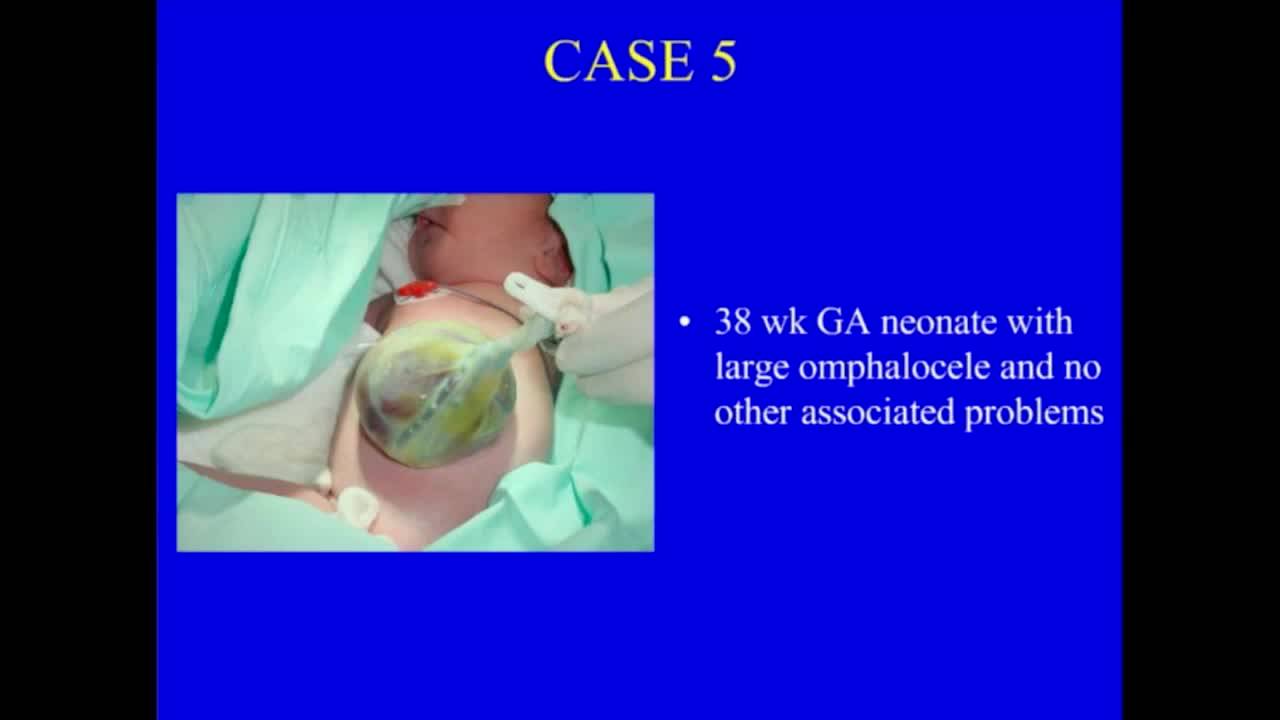
Expert discussion on managing abdominal wall defects (gastroschisis and omphalocele) with Dr. Jacob Langer, covering prenatal counseling, delivery timing controversies, and surgical approach decisions. Addresses key clinical questions about cesarean section necessity and optimal gestational age for delivery.
Timestops
0:00
Introduction and Guest Background
4:12
Gastroschisis Prenatal Diagnosis and Delivery Timing
9:55
Gastroschisis Initial Management and Reduction Techniques
18:46
Intestinal Atresia and Stoma Management
28:38
Omphalocele Classification and Prenatal Considerations
33:38
Omphalocele Surgical Repair and Closure Strategies
42:03
Escharotic Therapy and Delayed Closure Approaches
48:04
Associated Anomalies and Long-term Complications
Key takeaways
- Gastroschisis rarely has associated anomalies or chromosomal abnormalities, so routine karyotype analysis is often unnecessary.
- Routine cesarean section for gastroschisis is no longer recommended; early studies showing benefit likely reflected earlier delivery timing, not mode.
- Optimal timing of delivery for gastroschisis remains controversial with no large randomized trials to guide practice.
- Prenatal counseling should address four key questions: location, timing, and mode of delivery, plus potential for fetal intervention.
- Bowel damage in gastroschisis occurs progressively throughout fetal life, driving ongoing debate about early versus term delivery.
Keywords
Hashtags
Transcript
Click "Show Transcript" to view the full text (48740 characters)
Interestingly, the frequency and incidence of abdominal wall defects seems to be increasing, yet tons of controversies still exist on where should the parents deliver, timing of repair, technique of repair. So today we're going to talk about abdominal wall defects covering both phallocele and gastroschisis with Dr. Jack Langer. Stay Current is a multimedia publication designed to keep healthcare professionals up to date with standards of care and new emerging ideas. Stay Current is created and edited by Todd Ponsky, Ian Glenn, and Sophia Abdulhai and is recorded and produced at Akron Children's Hospital in Akron, Ohio. This is Todd Ponsky from Akron Children's Hospital, and today we're going to be doing a podcast on a topic that all of us see pretty frequently, and this is abdominal wall defects. We see this in the form of gastroschisis and omphalocele, and there are quite a few controversies. And with us today we have one of my favorite pediatric surgeons, Dr. Jack Langer, who is professor of surgery at the University of Toronto. He's a pediatric surgeon at the Hospital for Sick Children. And in the division of general and thoracic Surgery. Jack, thanks for joining us today. No problem. So Jack, I think we, we, uh, I don't know when we met, but I know that we've been working a lot over the years because you know you're my go to person for all the global cast in any event we have because you're always fun for stirring up controversy. Yeah, well, I try my best. You're not shy, but besides being truly one of the, the, the leaders in the field and and which is interesting, many areas of pediatric surgery, this has been one area that you've had a specific interest in. And before we get into this specific area of expertise, I wanted to highlight another area of expertise, and that is. You're a musician. Uh, can you tell me what you're doing now and, and what you've done recently with the in the music field? Well, I started playing music a long time ago when I was like 12 years old and, uh, I took it pretty seriously when I was a teenager and uh in university, wrote a lot of songs, played the coffee house circuit in Toronto where where I grew up. And then when I went to medical school and became a surgery resident, I didn't have much time for it anymore, so it disappeared from my life for about 30 years and, uh, recently I took a sabbatical and started playing again and And decided to make a CD. So, uh, that's just been, uh, released in the last month or two. and it's 10 songs that, that I wrote over the years. Um, I, I have a number of people who I've played with, uh, over the years, um, many of whom are professional musicians, some of whom are not, some of whom are actually members of my family, uh, who play on the CD, uh, with me. And, uh, it's been fantastic. So, if you're interested, uh, Go to www.jacob Langermusic.com and you can get more information. Perfect. What's the name of your album? The CD is called Return, which is the name of the title song on the, on the CD, but it also represents the fact that I've returned to making music after so many years. I love it, and that's probably the best lesson out of all of these uh podcasts is, uh, the fact that you've, uh, Taking control of the real things in life, and I think that's wonderful. So congratulations. Thanks. Diversification is not only important in your financial portfolio, it's also important in the rest of your life. Absolutely, that's true. All right, well, let's get back into some, uh, not as exciting stuff, but let's talk about abdominal wall defects. So, all right, Jack, let me ask you this. So you're. You're in your office and you're, you're about to walk into your, your pediatric surgery clinic and there's a patient waiting to see you and she's she's there to see you. It's a 30 year old woman who has a pregnancy and a prenatal diagnosis of gastroschisis. Talk to me about what goes into talking to these moms about what to expect and uh what advice do you give them and, and how do you manage them? Well, with, with gastroschisis, the, uh, main issue is that the bowel gets damaged through through fetal life. Um, most of these patients don't have any other associated anomalies. Um, and in fact, you know, a lot of times we don't even bother getting a karyotype analysis because it's, it's pretty rare, um, to have other anomalies or to have abnormal chromosomes with gastroschisis. And anytime there's a prenatal diagnosis of anything, I have a number of questions that I ask myself. Uh, will the diagnosis change the location of delivery? Uh, will the, will the diagnosis change the timing of delivery? Will the diagnosis change the mode of delivery? In other words, do you need a cesarean section? Um, and is there a role for some kind of fetal intervention? And in gastroschisis, um, there is some controversy about some of these issues. It used to be said that cesarean section should be done on every patient with gastroschisis, um, because of concern about damage to the intestine during delivery, during a vaginal delivery. And some of the early papers actually did show a benefit to cesarean section, uh, in these cases. But if you look closely at those papers, the, uh, cesarean sections were usually done early. They were usually done at 36 or 37 weeks. And, and that really raises the question of whether it's the timing and an earlier timing of delivery that, that gave that benefit rather than the cesarean section itself. There have been many, many studies done, um, that have failed to show an advantage to cesarean section. And I think most people nowadays. would not do routine cesarean section. The, the issue of preterm delivery for gastroschisis remains very controversial. Uh, there has not been Any, to my knowledge, any large randomized trial looking specifically at the issue of early delivery. And there are lots of retrospective studies, including some that we've published from Toronto, um, some of which show an advantage and some of which don't show an advantage. So, I think, um, at this point in time, uh, each individual institution needs to make a decision what their policy is going to be. Um, what we do in Toronto is we Uh, Deliver them at around 37 weeks, uh, unless they've already gone into spontaneous labor at that point. And we have actually shown that, that the normal or the mean, uh, gestational age of, uh, of onset of labor is a lot earlier in gastrosthesis pregnancies. Maybe because they're inflammatory mediators, uh, produced by the bowel that's inflamed, nobody's quite sure why this is. Um, and that's, that's how we, what we've found to be the best approach. The other thing is that we usually, uh, induce labor at 37 weeks, uh, which in gastroschisis pregnancies is successful most of the time. Um, many people feel if you try to induce labor at 37 weeks, you're not going to be successful in inducing labor. And that may be true in a regular pregnancy, but with gastroschisis, we can usually induce labor and do a vaginal delivery at 37 weeks. OK, so just to summarize, uh, no need for cesarean, but advisable to induce labor at around 37 weeks. Yeah, that's the approach we take, but, but it's not supported by strong evidence, and there are other centers that feel just as strongly that you should not induce labor at 37 weeks and you should just wait until they go into spontaneous labor and deliver them whenever that is. And I can't make a strong argument based on the data that That that's that that's wrong. So this is a dealer's choice. Dealer's choice, OK. What about where should they be delivered? Um, I, most of the evidence, including some, some that has been published to the CapsNet database, uh, has suggested that delivery in a perinatal center, uh, is beneficial. But again, those data are not supported by, you know, proper prospective randomized trials, um, and it depends to some extent what kind of neonatal support and expertise you have. in in the center that you're delivering them, so there are some Uh, some maternity centers, uh, that are not part of a children's hospital, uh, where they are excellent at, uh, at resuscitating these kids and protecting the bowel, and then they have a good system for transporting the kids to the children's hospital where it's going to be managed. And again, it would be hard to, it's not really an evidence-based thing to say that that that shouldn't happen. But I think in general, if you have a perinatal center where you can deliver them. In a place where there's a neonatal ICU that can take care of them and a pediatric surgeon that can take care of the child, that's, that's probably better. OK, so this mom that you talked to. The baby's born and uh they call you that the baby was delivered at an outside hospital. They wrapped the baby up and brought him over. It's 2 in the morning. How do you, how do you manage these kids? So, I, I would say the first thing is that, um, it's important for the baby to, during that whole transport procedure, it's important for the baby to be nursed on his side or her side, um, usually right side down. Um, we've had some kids who come from neonatal ICUs or from maternity units, uh, where they aren't that experienced and they put the baby on on his back. And the bowel sort of flops over and you can often get kinking of the mesentery and ischemia of the bowel during the transport. So that would be my first comment. And plus you need a nasogastric tube in every baby and you need to control the temperature of the environment and that's You know, pediatric surgeons take that for granted, but a lot of times, um, the people at 2 in the morning who are managing the newborn don't, don't appreciate those things. So that's number 1. So, once the baby arrives, um, and I have a look at him, my, my first choice is to do a bedside closure, if that's possible. If the, if the, uh, bowel is not too thickened and and there's not too much of a peel. Um, then it's often possible to put all of the bowel in right at the bedside in one, in one, shot. And, and that's been called the Bianchi approach because Adrian Bianchi, uh, first described a bedside closure. I don't do what Adrian Bianchi did, which is to use forceps at the bedside to uh push all the bowel back in because I tried that and in a couple of cases it actually we actually damaged the bowel, uh, trying to get it all in with a baby that's kind of squiggling around. So what I do now instead is use one of the pre-formed silos. Uh, I put that in and um then slowly push on it. Give the baby a little bit of, uh, of fentanyl or morphine, um, but without intubation and, uh, in an awake baby with some, you know, giving some dextrose, uh, to calm, calm him down. And if you take your time, you can often get the bowel back in with the silo. And then if that happens and the baby looks good and the legs are profused, um, sometimes we'll even measure intraabdominal pressure, um, and, uh, try not to get above a pressure of 20. So if we've got a good pressure and a good baby and everything's back in, then I take the silo off right there and then and put a dressing over it, use the umbilical cord stump, um, to cover the hole and then, uh, just put a big dressing on it with Duoderm. And leave it for about 5 days and then change it and, and, uh, and, and let it all kind of contract down and heal in. And when that works well, that that's to me the preferred technique because you never have to intubate the baby. You don't have to go to the operating room, you get it all in in one shot, and they seem to do quite well. So let me interject a few comments here. First of all, that was a great explanation of that approach. A few things that I do a little different that I want to highlight. First of all, Um, Bianchi, I think, described suturing the umbilical cord over the hole, and, uh, I, I, I, I know the person who taught me was Tony Sandler who. I wrote a paper called The Plastic closure, and it may be a little different than what you described, but in that approach, very similar, just no real need for suturing, just the sutureless closure. Is that, that's what you do. That's what we do, and that's actually based on on Anthony's experience. He actually trained in Toronto, but so we think he's great because he trained in. So, so, uh, he, he's, uh, you know, he's the first one other than Bianchi that that that championed this approach and uh. And I, and we agree that you don't need to suture that down. So it's interesting because Anthony trained me for the last 10 years. That's all I've done unless I needed to do something else. So, um, and it's worked fantastic, and there was a study, uh, Doctor, I believe it was Dr. Baird. Uh, who recently published a paper in JPS showing that actually comparatively, the patients that had what he calls the flap closure did better in every way than those who had a sutured fascial closure. Um, and surprisingly, even umbilical hernias, which is what you'd think would be the downside, is that, that when you let it close on its own, they actually did not need to go to the operating room as often to have an umbilical hernia repaired later on, um. Obviously they have an umbilical hernia initially, but I think that closes most of the time. It does, and if they don't, uh, if it doesn't close right away, then it generally closes just like any umbilical hernia. Most of them close by the time they're 2 or 3 years old, right? So, so I've gone the other direction where I've moved towards intubating, uh, even though everyone sort of says you don't have to, uh, and I I found, first of all, I think the morbidity of intubating them is low, but I've found it's, it's almost, I think, torturing them trying to shove the bowel in, and it's also harder and it takes longer because they're pushing against it. So maybe you can enlighten me on better techniques of non-intubating with sedation or how do you do it without them pushing all the bowel back out as you're fighting them pushing it in. Um, I think what we try and do is, is use, um, fentanyl or morphine judiciously and, um, dextrose, you know, giving them dextrose to suck on. And it's not always, uh, it's not always successful without intubation. I, I, I agree with that. And, and in fact, some of them. Come to us, um, intubated from the delivery room because somebody thought that that was a good idea. So I can't, you know, I can't make a uh again I can't make an evidence-based argument that they shouldn't be intubated. Um, and sometimes we do intubate them, um, and I what I've also find what I've also found is that Um, after reducing the bowel in these cases, sometimes they do become tachypnic and their legs look a little, you know, bluish, and, uh, so the neonatologist an hour or two later just intubates the kid because they're they're worried about them. And so maybe we should have just intubated that child before we reduced it. So, I don't, uh, I, I, I'm not sure that, um, that you're not correct. Um, it's, but there certainly are some kids that are just rock stable. And they, you know, if you give them some fentanyl, some dextrose to suck on, it's not too bad. What do you say to people who believe that every child should have a silo placed unless there's some, you know, bowel necrosis or some other complicating thing? I actually do put a silo on every kid. But I, but sometimes I'm able to take the silo off right away. Yeah, but that doesn't count. So if you, if you're, if you're asking me what, what do I say to people who say that, that every kid should have a staged closure, I would say that I don't think that's correct. Um, and I think that the disadvantage of leaving a silo on for 24, 48 hours, and in fact we do have some people in my group, uh, who do that routinely. Uh, the disadvantage is that the abdominal wall defect gets stretched out and gets bigger, and it takes longer for it to close, uh, if you do a plastic closure. Um, it gets, it's kind of stinky under there. There's more chance that the bowel will re-herniate out. Um, so I, I think that there are disadvantages to keeping a silo on for a longer time. And if you have a child who, uh, can tolerate, uh, one stage closure at the bedside. I think that's preferable. You know, the, the silos that we use, I think is what you use. We have the spring loaded. Silos and the Bentech ones is what we use, I think. And one interesting thing is because of the way they're designed where the spring goes on the inside, the pressure forces seem to go outward as you push down on the silo, and so the defect becomes larger and larger over time. This is what I'm saying. That's my point. So as you as you do that, even after 24 hours, you have a defect that's a lot bigger. And it's so it takes a lot longer for it to close on its own once you've reduced the bowel. Great. What do you tell the mom is the incidence of having an intestinal tresia? Uh, it's between 5 and 10%. Um, but I think it's important to differentiate, uh, two different kinds of intestinal atresia in gastroschisis. There, there are some babies with gastroschisis where the atresia occurs, I think very early on. And you can sometimes suspect that because, uh, as you follow the children by ultrasound. Uh, you can see the bowel gets very dilated, but it doesn't get really thick walled, um, and the baby seems otherwise well. And that's probably an early onset atresia, which is a different thing than the babies where the abdominal wall defect gets very small as the baby grows. And you get, uh, you get not only, um, atresia at that point, but you get ischemia. Of the exteriorized bowel. And in the worst-case scenarios, the, the majority of the small bowel actually becomes necrotic and disappears, and that's what's called vanishing gastroschisis. And that form of atresia is a completely, has a completely different prognosis than the early onset atresia, where the bowel is, is well profused, but there's just an atresia there. Mhm. And so what is the prognosis of someone with a closed gastroschisis or a vanishing gastroschisis? Well, those kids haven't have short bowel syndrome. So, um, you know, the, the prognosis for short bowel syndrome has improved dramatically over the last 10 or 15 years. Because of the development of of intestinal failure centers and teams and uh because of the use of better TPN that doesn't damage the liver as much and control of sepsis and all of those things. So, um, but still, short bowel is short bowel in a newborn and it's still. It's still a completely different kind of prognosis than a baby who has a healthy bowel, but the presence of an atresia. And, uh, there is controversy about how that should be managed. Um, you really have three choices. Uh, one is to repair the aresia at the time of abdominal wall closure. Uh, the second is to just bring out stomas, and the third is just to drop everything back in, not do anything with the atresia, put it back in, and then wait a couple of months and go in and repair the atresia. And there's really not a lot of good evidence, I guess because it's such a rare thing. There's no good evidence one way or the other, and I, I usually tell people to individualize. Usually when you say individualize, it means nobody knows what the right answer is. And, and that's the case, I think with atresias and gastroschisis. In general, my approach has been, uh, if the bowel looks pretty good and there's not much of a peel and it looks like it's pretty healthy, then I'll just go ahead and And repair it and, uh, and reduce the bowel at the same sitting. But if I have concern about it, then what I usually do is drop it back in. Uh, and sometimes it takes some time, and I'm sure we'll talk about the use of silos in a little while, but, uh, I'll, I'll put it back in without doing anything. I, I almost never bring out stomas. The only time I've really done that is when there's actually a piece of necrotic bowel there, which you have to resect. And uh if you have to do that and the bowel is Uh, not healthy enough to put together, then stomas are probably the right thing to do. Yeah, and I've had that happen to me a couple of times, and I know that's the controversy is where to bring out that stoma. I know some describe using the natural stoma hole, which is the umbilicus, and some bring it out to the side. What do you do? I, it depends on whether you can get the rest of the bowel in without too much of intraabdominal pressure. If, if you, if you can get all the bowel in and there's not. You know, it's not too tight, then I think the umbilicus is the best place to bring out a stoma. In fact, I tend to bring neonatal stomas out through the umbilicus as a matter of course. That's my preferred, my preferred site for. You don't find that they prolapse when you do that. I find they prolapse no matter what you do. So, and, you know, prolapse is something that you can usually deal with. Um, I, I like the umbilicus because, um, it, when you close it, you've, you've got a scar that would, would have been there anyway. And it's also a convenient place to put an appliance on a neonatal abdomen. It's right on the front and it's pretty easy to, to put a, put a, an appliance on. Um, if the, if the abdominal pressure is too high and you can't get it back in, then you then you've got a problem. And I, I have on a few occasions actually brought the stoma out through the through the silo. And, you know, left it for a few days until I could get everything back in and then, you know, re-operate on the baby and bring out a proper stoma. OK, all right, Jack, so you've, you've gotten everything closed and 3 weeks go by and the baby still has bile coming from the nasogastric tube and has yet to have a bowel movement, so they've never had meconium. What do you do? I'm making the assumption that you had a good look at the bowel before you reduced it to make sure that, well, the best you could. It was pretty matted and it was a big matted ball. Yeah. So, you know, the question is, is this just hypomotility or does this child have an atresia or a or a congenital stenosis associated with the gastroschisis. And at 3 weeks I probably wouldn't do anything. I usually give it 4 weeks of waiting because 3 weeks is kind of average for gastroschisis, you know, so I probably wouldn't start doing investigations at that stage. There is a question of whether using a prokinetic agent might improve the motility and decrease the period of time that you have to wait. Um, and we've, we've been using metoclopramide for, uh, for a long time, um, in these kids. Um, and there, there's actually evidence from, I think from a study in the UK that showed that using cisapride, um, Got the kids going more quickly, but cisapride isn't available anymore for anybody. The nice thing about metoclopramide is that it can be given intravenously. Um, you know, giving a prokinetic internally to a kid who's got a motility problem doesn't actually make a lot of sense. Um, you don't know how much it's getting absorbed, but because you can give metoclopramide, uh, or Reg's Reglan, um, IV, you know that they're getting it. But we don't know that it actually works and we're actually doing right now a randomized prospective randomized trial in our gastroschisis kits to see whether the use of intravenous metoclopramide, uh, can shorten the period of hypomotility. Now, let's say we get to 4 weeks and uh this kid still hasn't opened up. Um, I generally start by doing a contrast enema um and to see if there's any mechanical obstruction. Um, and sometimes, you know, you, you, you get through the colon and it gets up into dilated small bowel and you're, and you're not sure. So, you can also do an upper GI to, to try and get the same information. And sometimes if that shows you a clear obstruction, um, then you know what you have to do. You can go in there and you can deal with it. Um, unfortunately, a lot of the time it it still doesn't give you a clear answer. Um, you do an upper GI, it all kind of gets diluted in the dilated loops, and you, you can't be sure whether it's hypomotility or it's a, a mechanical problem. And in those kids, I've usually waited another couple of weeks, um, and at around 6 weeks, if I'm still, if I'm still struggling, the kid hasn't opened up, then I'll, then I'll usually do a laparotomy. And sometimes I'll find a mechanical obstruction and sometimes I won't. What I usually find is a bunch of adhesions, which we take down and sometimes that helps and sometimes it doesn't. So I don't really have a, you know, a definitive answer for that question, and it's a very challenging situation, especially the, you know, the parents and the nurses are, you know, you're out to 4 or 5 weeks and they're saying, come on, you got to do something, you got to do something. But, uh, you know, it's, I think going in too early on those kids is a mistake. Yeah, I agree, and actually that's part of my prenatal discussion, um, that that's a chance that that might be there, and I wouldn't do anything for 6 weeks. That's mine as well. And so really there's not necessarily a reason to even study them before 6 weeks. If you're not going to do anything. No, but if I, but, uh, if I study them at 4 weeks and I see a clear narrow area, then I, I would probably go in a little earlier. I see. OK. So Jack, you're going in there and you, you see all the bowels out and you see, uh, a testicle outside too. What do you do with that testicle? Um, it's usually the right testes and, um, and I just stick it, try and direct it down into the pelvis as best I can, although I have no idea whether it actually goes there. Um, just reduce it while I'm reducing all the, uh, all the bowel. And in about half the cases, it finds its way down into the scrotum, which is one of the most amazing things in the human body. Yeah, it's incredible. Let's move on to a different type of abdominal wall defect. So what do you tell the, the moms that come in with a prenatal diagnosis of phalocele? So the difference, uh, and there are many differences between thalocele and gastroschisis. But, uh, from a prenatal point of view, the main thing is that there's a much higher incidence of associated anomalies and Of chromosomal abnormalities, so I encourage the parents to get karyotype analysis done. Um, and we look very carefully for other associated defects. There's also, um, some, uh, some syndromes that we know are associated with thallocele, uh, that you can test for now, such as Beckwith Weedman. So we will routinely do Beckwith Weedman testing on those, uh, on thalloce patients as well. What do you tell them about delivery and what to expect when the baby is born? So again, you know, I ask, I always ask myself the same questions, mode of delivery, time of delivery, location of delivery. So with with um halocele, I think it's helpful to differentiate between small haloces which don't contain liver and larger onaloces that do contain liver because I think they're they're probably different entities. Um, the small haloces, uh, which is in a counterintuitive way, are actually more likely to be associated with abnormal chromosomes. Um, and so that those are the kids where I particularly encourage the parents to get a karyotype done and to look for other abnormalities. Um, but from a delivery point of view, uh, there's really no rationale for, uh, a routine cesarean section or delivery, um, at, uh, at a perinatal center. Uh, or, and there's no, no rationale for a, for a preterm delivery in those kids. Um, and from a surgical point of view, they're simple to, uh, to repair. So, you know, that's what I would tell the parents. I'd say, you know, the, the good news is that this is not likely going to be a problem from a surgical point of view. It'd be easy to fix. Um, but, uh, there is a higher risk of chromosomal abnormalities and so we need to make sure we Uh, figure that out before the baby's born. If it's a large thalocele, um, they still do have a higher risk of other anomalies. So you have to do an echo, you have to look carefully with a, with a high-level ultrasound for other abnormalities. Um, and we look at their karyotype as well. Um, but in the large phaloceles, especially, uh, what we call giant phaloceles, um, and there are lots of different definitions for giant onphalocele, usually based on how big the defect is, but I think any phalocele where there's a lot of liver out should be considered a giant onalocele. Uh, for those, I think, um, most of us would recommend a cesarean section, although that is not really evidence-based, um, but. To me, it just seems to make sense. So we usually do a cesarean section. We don't necessarily deliver them early. Uh, there really isn't much, uh, much evidence for that. Um, and they, I think they should be delivered at a perinatal center because they're clearly going to need a pediatric surgeon and they, they should be managed, um, by a team of neonatologists who has experience. One of the things that is associated with giant phalloces that is very difficult to diagnose prenatally is pulmonary hypoplasia. And that's something you have to talk to the family about. Nobody has really figured out a good way to make that diagnosis prenatally. And some of these kids have, uh, pretty severe pulmonary hypoplasia and require early intubation and respiratory support. So for that reason alone, I think it's important to deliver the medi tertiary care center. Um-hum. That's a great point actually, and it may be underappreciated prenatally. Yeah. All right, so the baby's born, um, let's say the baby's respiratorily stable, doing well, but has a giant umphalocele. How do you approach those? The goal is to get, uh, the viscera reduced without injuring the viscera, either injuring them by direct trauma during the reduction or injuring the viscera by virtue of increased intraabdominal pressure. And, uh, again, it's the same as with gastroschisis. If you can do a reduction. Um, in one stage, uh, without too much intraabdominal pressure, then that's the preferred way of doing it. And, um, it's, it's hard to know a priori whether you're going to be able to do that. So, uh, that's, this is a situation where intraabdominal pressure measurement, I think is very, very helpful. Um, there's lots of literature that, that, uh, suggests that intraabdominal pressure monitoring is, is helpful and, and, uh. If you start reducing it in the operating room and you get a, a pressure over 20, and that's, that's the guideline that, that, uh, Stuart Lacy put into the literature back in the 80s based on, uh, work in rabbits. It was, it was excellent work and then, and then took the numbers he developed in rabbits and, uh, and applied them to a prospective study in children with abdominal wall defects and showed an improved improvement in outcomes. So, I think that still holds now a pressure of 20. Um, and he also talked about an increase in central venous pressure of more than 4. and you can, you can measure intraabdominal pressure either through the nasogastric tube, which is what I tend to do just because it's easier, uh, and, or you can use the Foley and measure, uh, intravesicle pressure. Um, I think both of them are, are useful. And and also recognizing that that the the absolute number that you get on the pressure measurement isn't as important as the trend of the of the pressure. So as I'm slowly reducing the bowel. Uh, or the liver in an ophthalocele, you know, we're kind of watching the pressure, and if we clearly get up way over 2, then I, I back off. And so just I want to make sure I'm clear, you, you attempt reduction on everybody. No, um, I, I think if the baby is, is full term, uh, has no significant cardiac diseases, um, otherwise looks well, um, you know, no respiratory issues, no pulmonary hypoplasia. Um, then I, then I usually will, will attempt a, uh, a primary closure. Now there's lots of different ways of, of, of doing this. Uh, one way that the Montreal group first described is to actually use the phallohe sack as a silo, um, and you can sequentially ligate the sack over the first few days, and there's no rush to do this because the sack is if the sack is intact, then you You know, you're not really at any risk in terms of the viscera, the bowel, the liver. So if you can sequentially ligate the sac, um, and, and get, uh, some stretching of the abdominal wall, then sometimes you can go to the OR a few days later and, and accomplish a primary closure. Um, you need a sack that's thick enough and you need a sac where the where the umbilical cord comes off from the top of it rather than on the side of it. My approach is different, so I have some questions for you. So it seems to me that I've had Not the same experience with with a sack that was so robust that I would be able to start ligating it and tying it. It seems more of a jelly sort of texture until I eskerize it a little bit. So have you found that usually it's rugged enough that in the first few days you can start suturing it and ligating it? Usually we just use an umbilical tape to ligate it and it doesn't tear usually sometimes it's sometimes you can't and sometimes you can, you know, it's just, but then you've got a problem, no, because if you've tried to mess with the sack and you get a hole in it, how do you manage that? Then you have to take the kid to the OR and try and Try and reduce it or put a silo on it. Um, I actually haven't had that experience because, because I'm trying to, you know, I don't try to ligate the sack if it's not clearly going to be possible, you know what I mean? Yeah, I mean, I've never, this is just, this is great for me because this is something I've never done. I across the board, if a baby's born with a giant seal, I eskerize all of them and I wait till they're about a year of age and then I go back in and do a closure. So I've never tried to reduce an foalso, and I know a lot of people do, and I know uh what you've described, and I want you to do her comments on these others, but I know. Cristobal Abello in South America, he closes these by putting a Duoderm over the sack and sort of pushes it down over time. Have you tried other methods of trying to reduce it? You know, using the Duoderm is something I hadn't done much of, but some of my colleagues have started to do it, and I'm actually fairly impressed. That they they do seem to get it reduced more quickly. It's the same concept that really as ligating the sac, but you don't have to have a sac that's amenable to ligation. So that's something that I think, you know, may, may be a better way to do it than than the way I've been doing it. Professor Abelo, he's in Colombia, and he, he has a great video on YouTube where he shows exactly how he uses the Duoderm to close it. When you have you ever eskerized? Yeah, we, I mean, we've, we do that. So my indication for using escharotic therapy has been the child who's premature, the child who has bad cardiac disease, where you just can't think about increasing their abdominal pressure, the kid with pulmonary hypoplasia, or the kid who's got multiple other anomalies or bad chromosomes, where it's not possible to attempt. A closure. So in those kids we, we do, or sometimes the phalocele is just so giant that you just, you just look at it and you realize there's no way I'm going to get all this stuff in here. And also there's a group of kids that have almost a mushroom shaped onthalocele where the abdominal wall defect is not that big, but they've got everything out through it, and it looks like a mushroom and And those are also, you could just look at them and you say there's no way I'm going to get this all back in. That long list of of kids who who either are too sick and have medical problems that would prevent you from doing a primary closure or where the where the thallocele is so huge, you just realize that you're there's no way you're going to get it all in. We've used chaotic therapy. So Sigy Ein, who died a couple of years ago, had a very long experience using. Silver sulfadiazine, uh, which is, um, silvadene. It's uh, what's used for burn dressings. And, uh, he had been using that for many years and I adopted that practice because he was my teacher. And we published a long term follow up of those patients a few years ago, and basically we, it's like any other escharotic therapy, you, you, you paint the lymphalocele with it and it forms an escar and then it eventually epithelializes. And then once the child is in better shape to have it closed, then you can go back and repair it just like a, uh, like any other large ventral hernia repair. A couple of, a couple of things about that. So the, and by the way, that's what I do, yeah, yeah, and you said you wait till they're about a year, and I would say that the length of time I wait is entirely dependent on Um, the specifics of that child. So, there are some kids where the defect is quite large and as you, uh, as you're waiting for it to epithelialize, it, it actually, uh, reduces itself to a large extent. So, I've had some of them where I could go back in, uh, even at 6 or 8 months of age and do, do the repair. On the other side of it, I've had some kids who were premature, had bad hearts or whatever, where I've had to wait until they're, uh, much older, you know, 3 or 4 years of age, till their hearts have been fixed and their or their lungs have grown from their pulmonary hypoplasia. And, uh, and, and so it takes a lot longer. The other technical point about those kids is that The ones who have the mushroom shaped no thallocele, those will never reduce on their own. They just stay big. And so in, in some of those kids, what we've done is gone, gone in and enlarged the abdominal wall defect just as a first step. Um, just make an incision, uh, at the bottom, at the lower edge of it, and, uh, just open up the fascia. And then just close the skin again and allow it to do some more spontaneous reduction before we go in there to try and do something surgical. So and you do that at several months of age, once, once it's it's completely epithelialized. That's interesting. OK, yeah, I know I've seen a couple of those, not myself, but people have sent those pictures in and said, what do I do? So that's a good tip. It's a very challenging situation. Just one trick that I learned from Phil Gazzetta. Uh, when I do go in, uh, I think he calls it, I think there was even a paper that, that I should find the title and the author, but it's called the flip flop, which is somewhat, a modification of a component separation is at a year of age, I go in, I open the skin through the midline, I free up the, the lateral edges of the muscle, and I incise laterally. Going up and down, basically going superior to inferior, pretty lateral down, so you're basically dividing only the anterior sheath and then you can fold it over and so you're basically, you fold it over because it's attached to the lower, uh, the posterior sheath. So basically you divide laterally, you fold it over, so you, you sew it together and you have just one big posterior sheath you have nothing anteriorly and that's how I've closed them. That's interesting. I've never done that. I know there are some papers now, uh, about components like formal component separation like they do in adults. I've always been very, um, worried about doing that. I've, I've asked one of our plastic surgeons who used to be an adult surgeon who worked in a big trauma center, so he'd done tons of those. Ask him if he would help me do one in a smaller kit, and he said, nah, I don't think that's a good idea because, you know, it's a big operation and if, if it gets screwed up or devascularized or whatever, you're in a worse shape than before. But there are, I, I know there are people that are doing it and they've they've published it. So, uh, I think it's definitely an option. What I, what I find when you're closing these is that a lot of times the defect extends right up to the costal margin. Um, and You can't close that upper part of the defect, because you can't, you can't close the costal margin. So, in those patients, I usually close the inferior part of the defect and then I put a patch in the upper part. And I've used a number of different things for that patch. We, we used surgeesis for a long time. Um, but, uh, probably 50% of them, uh, it, it didn't really do the job and so I had to go back and, but, and, and, and it's not the worst thing in the world. You can go back and put a piece of prolene mesh or something non-absorbable in there. Um, what we've been using more recently is Stratus, and I, I'm not sure I have a long enough follow up yet to comment whether it's better than the surgisis. Yeah, you know this, I think that this whole topic of meshes and different materials, we need to have a separate podcast on because it's something that we don't do that often in kids and there's probably a lot of new meshes out there that we should be familiar with. Yeah, that's probably correct. There's the issue with omphaloceles, you know, sometimes it's part of It's part of the, uh, pentology of Cantrell. And, uh, you know, we've had some kids who, uh, who have some of who have may have, uh, missing pericardium or, um, probably the most common one is a fraen and Morgagni hernia associated with the, uh, with the phalocele. And those phaloceles tend to be the ones that are a little more superiorly placed. Um, so there's some controversy about what you should do about that. What's the best timing of repair of the Morgagny hernia. Um, and most of these pentology of Cantrell kids have some kind of cardiac problem as well. So what I've tended to do is, uh, treat them with escharotic therapy because they have a cardiac problem. And, um, when the, when the cardiac surgeons go in to fix the heart, uh, a lot of times we'll just put a patch in the diaphragm, uh, from above, uh, through the sternotomy. And then, and then later, once the child is recovered from the cardiac surgery and is optimized from an anesthetic point of view, then we'll go back and. And deal with the abdominal wall defect. Yeah, I think that's a safe approach. So now you have a child and you have not yet fixed their umphalocele. They have a large umphalocele and they have severe gastroesophageal reflux. How do you, how do you manage that? It's a very, it's a very difficult problem, uh, because, uh, reflux is very common in these kids, and, uh, a lot of them don't eat normally, especially if they've got a bad heart or they've got pulmonary hypoplasia. Uh, but putting a G tube in a kid with a giant omphalocele that's undergoing escharotic therapy can be pretty challenging. We are very lucky in our hospital that we have, uh, excellent interventional radiologists. So what we usually do with these kids is ask the radiologist to put a G tube in, um, under fluoroscopy, and they can usually find a window lateral to the defect. Um, they, they put an NG tube down into the stomach and blow it up with air, and they can usually find a spot, uh, laterally that they can put a G tube in. And then after that has matured, they'll, uh, put a GJ tube in so we can feed the child even though the child has bad reflux. So that's the way we've generally done it, and I, I think if you didn't have that kind of interventional radiology, you still could probably. Uh, surgically put a, a G tube in and do the same thing. Doing a funduplication in a child who's still got a big defect, um, I, I think is, is, is extremely difficult. The, the liver in omphalocele babies tends to be midline, and, uh, trying to get access to the hiatus, uh, is, is almost impossible in, in some of these babies, especially if they've got cardiac disease and, uh, you know, their liver's congested a lot of the time. It's just. It's just impossible to get back there. So I think in my opinion a GJ tube is a much better way of dealing with it in the short term. And then what I've, what I've often done when, when they finally get to the point where you're fixing their abdominal wall defect and they're medically optimized, and at that time as I'm fixing the defect I'll go in and do the funduplication. It's a great, I love that approach we've discussed that here a bunch and I think that's a, a, a great, uh, safe approach. Yeah. The other thing to, to, uh, to remember is that some of these babies with the big thallocele, because the mid, the liver is midline, sometimes the liver actually puts pressure on the duodenum or on the pylorus. And sometimes, so sometimes they actually have a, a mechanical obstruction to their gastric outlet, and that can be making the reflux a lot worse. Not not much you can do about it actually, but it's worth just Doing a contrast study to uh to make that diagnosis if make sure that that's that you know about it if it's there, right? Do you feel the need to do any sort of lads procedure for the non-rotation? No, I, um, I don't think non-rotation is a problem because, uh, it, it doesn't, it's not associated with the risk of midgut volvulus. So most of these kids do have non-rotation rather than malrotation. And, uh, I don't think you need to do anything about it. If you feel like it and you're in the neighborhood, then, you know, doing an inversion appendectomy, I guess would make some sense if you're a person. That does appendectomies in a lab procedure. Uh, and I have seen several children later in life who had an omphalocele, uh, and developed perforated appendicitis that was, uh, delayed in the diagnosis because of the, uh, abnormal location of the, of the appendix. So that does happen. And, uh, and so if you are there in the neighborhood and you see the appendix, uh, then you can do an inversion appendectomy without increasing the infection risk. And I, I, I'm a believer in that. With the proviso that if the child has any kind of renal abnormality, which onfalocele babies may certainly have, where they might need a metrofenoff, then leave the appendix in. Fair enough. When you go in to do your early reduction in a patient with the liver is out. Um, don't you find that you can get kinking of the hepatic vessels? I haven't had a problem with kinking of the hepatic vessels, but you, but they are very superficial. So if when you're doing the repair or even the dissection of the, of the fascia, uh, if you're not really careful, you can actually injure the hepatic veins because they're sitting right there under the fascia. So I always make a point when I'm doing one of these with the fellow of of watching carefully for those vessels. I haven't had a problem with uh with kinking of the hepatic veins during a reduction, and I think part of the reason for that is that I use intraabdominal pressure monitoring and, and, uh, you know, and I'm not too aggressive about trying to reduce it if I'm starting to get. Pressures above 20 then I, then I back off. And when you, I wanted to make sure we hit on this, when you do your immediate reduction, you usually can get the fascial edges together, uh, at the bottom, uh, yes, at the top, often not. And so I'll put a patch in. OK, and that's where you're talking about using surgesis, which fails half the time, or maybe, OK, yeah, and then, uh, or even, you know, I've had some where I can get it, get it partially, uh, reduced, and, uh, but it's, you know, there's still a bunch of liver at the top end that's sticking out. So what I'll sometimes do is just sew a, just sew a piece of, um, you know, Gore-Tex or something on there or a piece of silastic. Um, and close the skin over top of that and then go back in, you know, in a week or two, take out the piece of plastic, and then sometimes that by that time, you know, everything is, is, is in better and things have stretched out and you can, and you can close the fascia. I'm sure lots of different options for this, probably an entire podcast on just how to get that fascia closed, but this has been a very A thorough discussion of two very complicated disorders that That we see quite a bit and as always you handle, you enlighten us. So I love talking to you, Jack. I love that you participate in all these events and you share your knowledge with the rest of the world. It's a great pleasure. I always learn something myself. Alright Well, thank you very much and we'll hopefully be talking to you soon. Thanks so much take care. Bye bye. We hope you enjoyed this episode of Stay Current in Pediatric Surgery. You can listen, watch, or read all content by downloading the Stay Current and Surgery app. Please send questions or comments to us at staycurrent podcast@gmail.com. We'll see you next time.
Comments