9
Views
0
Likes
0
Shares
0
Comments
StayCurrentMD
View profile →
Appendicitis with Dr. Whit Holcomb
Published:
Topic overview
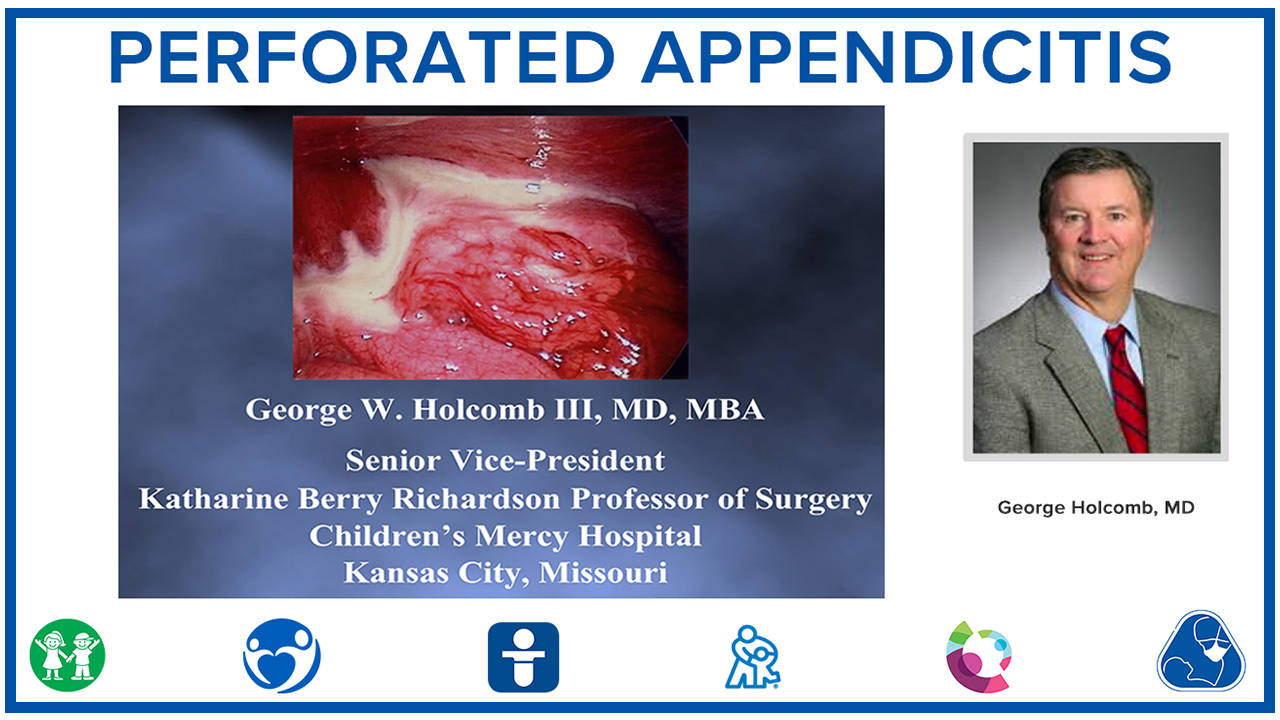
Dr. Whit Holcomb discusses evidence-based approaches to pediatric appendicitis, covering clinical presentation, imaging strategies, and surgical decision-making. Key topics include when to operate without imaging, interpreting ultrasound versus CT findings, and managing suspected perforation based on symptom duration.
Timestops
0:05
Introduction and Guest Background
2:31
Classic Appendicitis Presentation and Imaging
5:11
Atypical Cases and Ultrasound Approach
8:25
Antibiotic Selection and Dosing Protocols
16:10
Surgical Technique: Single vs Multi-Port
21:58
Defining and Managing Perforated Appendicitis
46:46
Non-Operative Management and Interval Appendectomy
58:02
Closing Remarks and Future Directions
Key takeaways
- Classic appendicitis (pain migration, McBurney's point tenderness, elevated WBC) can proceed directly to OR without imaging in pediatric patients.
- Symptom duration >24-36 hours raises concern for perforation; obtain imaging (ultrasound first, then CT if non-diagnostic) before surgery.
- Non-visualization of appendix on CT after 4 days of symptoms warrants looking for secondary signs of perforation (abscess, fluid, fat stranding).
- Ultrasound is first-line imaging for pediatric appendicitis when available; CT reserved for equivocal ultrasound or when US unavailable overnight.
- Gender does not change surgical decision-making in classic appendicitis presentation, even in adolescent females.
Keywords
Hashtags
Transcript
Click "Show Transcript" to view the full text (47676 characters)
Stay Current is an audio publication designed to keep healthcare professionals up to date with standards of care and new emerging ideas. These brief interactive podcasts are designed to keep healthcare professionals current while on their commute. Each episode will be hosted by key opinion leaders in the field. Stay Current is produced and edited by Nicholas Bruns, Mark Schwachter, Todd Ponsky, guest editors, Wit Holcomb and Dan Von Almen. Hi, this is Todd Ponsky. I am, uh, a pediatric surgeon at Akron Children's Hospital and one of the editors of Stay Current in Pediatric Surgery. And, uh, this is our first, uh, episode of Stay Current. And with us today, I have Doctor Whitt Holcomb from Kansas City. Doctor Holcomb, are you there? I am. Thank you. Welcome and thank you for doing this today. Um, before we get started, could you tell us a little bit about yourself and where you practice and what you do there? Sure. So, uh, I'm a pediatric surgeon at the Children's Mercy Hospital in Kansas City, Missouri. Uh, I've been here, uh, 16 years. I was previously at Vanderbilt Children's Hospital for 11 years. I am the surgeon in chief at Children's Mercy Hospital and one of 9 pediatric surgeons, uh, practicing here at the hospital. Perfect. And I know that you've, uh, I know today we're gonna be talking about appendicitis. Um, and I know that you've built a pretty robust research center there and, and it, I, I think that, uh, you've been doing quite a bit of, of outcomes research with appendicitis. Is that right? Yes, and I would like to acknowledge that much of this work has been done and certainly has been spearheaded by Dr. Sean St. Peter, who directs our Center for Prospective Clinical Trials, and it is through his efforts and his leadership that much of the information that we'll discuss today has come about. Perfect. Yeah, uh, Sean has, has been doing some great work and um I think that, uh, a lot of the stuff that's been coming out of there has changed the management around the country. So speaking of that, I wanna jump right in with and, uh, present to you a, a, a classic patient. So, how would you manage a 16 year old male that presents to your emergency department with a uh 1.5 day history of pain that started at his umbilicus and migrated to his right lower quadrant? He's had some nausea and some vomiting, no diarrhea. And uh the emergency room checked a white blood cell count which was 14 and a slightly elevated CRP at around 3. he has a low-grade fever. And that's, that's where he's at right now. Uh, you go down to examine the patient and he has a, a soft abdomen, but tender specifically at McBurney's point in the right lower quadrant. Um, his vital signs are stable. How would you approach a patient like this? Well, that's an interesting scenario because you, you really described the classic presentation for acute appendicitis. And so if that case came in and the emergency physicians had not already performed an imaging study, which would be ultrasound usually initially at least today, then we would take that patient to the operating room. And perform a laparoscopic appendectomy. And that is certainly the way things worked 1015 years ago before imaging studies became a fairly commonplace in, um, in children with abdominal pain. Now, having said that, I will say that at least in our hospital, often an imaging study will have been performed, but that is at the discretion of the emergency department physicians and not at the direction of the pediatric surgeons. So I think in this particular case if we were called. Initially, or if we saw the patient initially, we would just take that patient to the operating room without an imaging study. Perfect. Now, would that decision change if it was a girl? No, not in that, not in the description that you, uh, gave us. Perfect. OK. Now, um, let, let's take a patient that, um, maybe isn't so classic. Let's say they had a, uh, a 4-day history of symptoms. Everything else was about the same, but instead of 1212 to 24 hours, it's been 4 days. Would that change your management? So that patient has um a diagnosis that is probable appendicitis, uh, but with a 4-day history, you'd certainly be worried about uh uh perforation. In our hospital, we generally use 24, uh, even up to 36 hours thinking uh that symptom duration of that length does not have a perforation. But any, uh, symptom duration longer than that, uh, length, uh, uh, likely has perforation, assuming they have appendicitis. And so that patient, uh, would receive an imaging study and we would start with an ultrasound. OK. So let's say the, uh, let me ask you first before I get into the results of that ultrasound. If it's, um, One in the morning. Do you have ultrasound techs at your hospital at that time? Uh, yes, we do. OK. Um, if you didn't, cause I know a lot of hospitals don't necessarily have ultrasound techs 24 hours a day, would you get a CAT scan or wait until the morning? Well, in our particular situation, uh, at least in our experience, the ultrasound may not be completely accurate, for lack of a better way of saying it. And so, assuming there's any concern on the ultrasound, reading that patient would then proceed to getting a CAT scan. If the ultrasound is diagnostic of Of appendicitis, uh, then we would not proceed with a CAT scan. If we did not have an ultrasound at 1 in the morning, then yes, we would get a CAT scan. OK, so let's say you get the CAT scan, Witt, and I don't know about your institution, but at my institution, we frequently get the reading that uh there is no non-visualization of the appendix. Uh, they, they don't necessarily remark that they see a negative, a normal appendix, but non-visualization. How do you interpret that and what do you do with that result? Well, at 4 days, uh, I believe you should see a visualization of the appendix, but if you don't, then you should see secondary signs of um appendicitis and likely perforation. So if you do not see either of those signs, then I think the likelihood that they have appendicitis is low, although not zero. So I would personally Probably admit that child, give him some IV fluids, examining. Uh, 8 to 12 hours and see if the symptom complex changes. Great. And so that has absolutely been something that, that, uh, some of us do differently, uh, that the non-visualization in some patients may lead to a CAT scan, and then some of us, we admit and observe, uh, in lieu of a CAT scan. So, um, that's a, that's a, I like that, that approach. So, uh, the, the, the next, um, question I wanna ask you is Regarding your CAT scan, in a patient, you get a CAT scan and, do you use IV and oral contrast or even rectal contrast? We generally use IV contrast. Occasionally, oral contrast is given. We've tried to work on a protocol of using rectal contrast, and the ED physicians did not feel that it was the best way to go. So we have stopped or that protocol never really started. And so generally we use IV contrast. We also do. A limited CT scan, that is, we do a more focused CT scan looking for appendicitis as opposed to a general. Uh, CT scan, uh, and that's due to the fact that we're trying to minimize the radiation exposure. So you do your, uh, let's say you take the patient, they've had 3 days of symptoms, evidence on ultrasound of a perforated appendix, um, and, uh, just to, just to re-ask you the question again, a patient that had 3-day history of symptoms, uh, you don't, there's no rule you have about getting imaging on that patient. You may still take them straight to the OR. Well, yes, but practically speaking, that patient would have received an imaging study already. Uh, and I probably, if they had not, I probably would have gotten one because I would be interested to know if there was a perforation or not. I I, it helps me going in there with my mindset about whether or not there's a perforation or not. So I would probably at least try to get an ultrasound, although that likely would have already been done through our emergency department physicians. It's a great point. And, and to reiterate sort of a summary of what you've said, patient with 3 days, even if you see an abscess, you're still going to operate. So it may not change your management, but it gives you a heads up before going into the operating room. Right, I think it, we, yeah, I think it, and all of this isn't that important. It does give you the ability to counsel the family to a little bit on what you're going to expect, and an ultrasound is a relatively inexpensive study. Now I wouldn't get an ultrasound at one o'clock in the morning for that reason, uh, but I would get one if I, if possible before the operation. OK. Um, uh, the next thing I wanna get into is now we're gonna take that, that classic appendicitis patient to the operating room. Before I leave the first part of this discussion which was imaging and workup, was there anything that you wanted to add that we didn't touch on? Nothing except that once the diagnosis is made, then we would initiate antibiotics. And which antibiotics would you initiate as you may know, our center has written several papers and published and performed some studies looking at antibiotic administration for appendicitis. We have found that ceftriaxone. And metronidazole is the most cost effective antibiotic duo, and it also has similar efficacy to the so-called triple antibiotic regimens. I personally don't think that that everyone has to use ceftriaxone and metronidazole. But I do think that surgeons in their locale should try to figure out which antibiotic works best for them and use that for patients with appendicitis. So what that's interesting, um, we, there's been a recent publication, I believe, from the American College of Surgeons, uh, the Journal of American College of Surgeons that That looked at colon surgery, colorectal surgery in adults and did find that cephalosporin with metronidazole, uh seemed to be the most effective. And so you are applying that to appendicitis as well. Uh, correct. So we've been using that particular antibiotic regimen for over 10 years now, um, and, uh, and we, we generally use that for, um, colorectal surgery in general, but also for acute appendicitis in particular. And do you change that regimen if, depending on if they're perforated or not, or is it the same for all patients? No, if they're, if it's non-perforated disease as identified in the operating room, then the patients do not get another dose of antibiotics. Uh, so they just get their single preoperative dose. If it is perforated, then we have a separate protocol for that, but we use ceftriaxone and metronidazole for that protocol. OK, so the, the, the dosing may be different, but the antibiotic choice remains the same of ceftriaxone and metronidazole. That's correct. OK, so, uh, and, and if I may, if I may make just one point, Todd. The reasons, reasons we find that to be a good duo is that it's a once daily dosing. And if the patients go home, uh, uh, say they're perforated and they go home and for some reason need home health care, then it's an easy transition to home health care, although we don't do that a whole lot. Uh, but it's quite cost effective. It does not require serum levels as gentamicin might. does not have some of the some of the toxicities that gentamicin has, and it's a once daily dosing for each of them. So we find for those reasons, we find this to be a good antibiotic duo to use. So that's fascinating to me. I did not know that because typically the cephalosporins were given every 6 to 8 hours, but you just give it once a day. That's correct. Uh, so we, uh, we performed a prospective randomized trial, uh, comparing daily dosing of ceftriaxone and metronidazole to the standard triple antibiotic regimen. This was published in the Journal of Pediatric Surgery in 2008. And we found a very similar efficacy among 100 patients that were randomized, and there was no difference in abscess rate or wound infections between groups. Yet the ceftriaxone metronidazole group resulted in less antibiotic charges than the ampicillin and gentamicin and clindamycin group. So, I hate to put you on the spot, but do you happen to know the dosing for that? Or is it 50 per kilogram. Of um The uh ceftriaxone. And um. The metronidazole was, it was 50 mg per kilogram of the ceftriaxone and 30 mg per kilogram of the metronidazole. OK, so is that a different dosing than the standard ceftriaxone dosing you do when you give it every 6 or 8 hours, or is it the same dosing? Uh, it's, well, we actually don't, don't use ceftriaxone 6 or 8 hours. We give it once a day on, on all comers. I see, I see. OK. Uh, that's interesting. I, I'm, that's the first time I'm hearing that. That's, uh, I really, based on that study that you quoted, I, I think we'll actually present that with our group because we've give it every 6 to 8 hours. So that's great. Um, so. If you, um, you now take that, so you give that, you, you make the diagnosis of appendicitis by ultrasound or just by the, by physical exam, and you decide to take the patient to the OR, you give them the dose of ceftriaxone and Flagyl, you take them to the operating room. Can you talk to me about the different approaches that you might take or that others may take and how they've compared and what you've studied? Sure. So if, uh, if we think it is acute appendicitis without perforation, and the patient is relatively thin or lean, uh, then we would, uh, uh, we would try or we, we might try a, uh, single incision laparoscopic approach through the umbilicus. Or in some cases, we might do what I call a DILS approach, DILS, uh, double incision laparoscopic surgery where an incision is made in the umbilicus, but also a small 5 millimeter incision is made in the suprapubic region and the appendix mobilized using an instrument placed through that suprapubic port. And then the appendix exteriorized through the umbilicus and an extra corporeal appendectomy performed. So if that's assuming that the patient is thin and does not have perforation, so we do not use the single incision or even the sing or the double incision approach unless the patient is non-perforated. Got it. Um. I have a couple of comments and question for you. Um, let me make a comment about that extracorporeal approach. Um, I know that there's many ways of, of approaching that. Um, I myself have tried using an operative laparoscope where you can go in and grab the appendix and pull it out. Now, I put in a very small 5 millimeter port and, uh, and, and, and insert a, a 3 millimeter grasper just inferior. Um, to that fascial incision within the same skin incision, I insert a 3 millimeter grasper, grab the appendix, and then I divide the fascia between the grasper and the port and pull it up and do an extra corporeal appendectomy, um, that or the operative laparoscope. When you do the single approach, a single incision approach, not the DILs, but the single incision, is that how you do it? Yeah, so, um, Our single incision approach is very similar. We put a 5 millimeter port through the center or upper center aspect of the umbilical fascia and then make a stab incision below that or caudle to that 5 millimeter port and then place a grasping forcep or a Maryland dissector through that stab incision. Uh, in order to mobilize the appendix. Uh, sometimes it doesn't need mobilizing, but oftentimes there are attachments laterally and occasionally posteriorly that need to be liced in order for the appendix to be freed. And then the appendix is grasped, as you say, the bridge between those two sites is incised, which then creates about a 10 millimeter or so fascial defect in which to exteriorize the appendix. I will say that at least in my opinion, it's very important to use a locking grasper when you're bringing the appendix out through the abdominal cavity because If not, I've had several occasions where the appendix has slipped off the, the uh non-locking grasper, and so I think it's important to place a locking grasper to have a secure grasp of the appendix as it's being exteriorized. Well, I think that's a, a great point about uh not dropping the appendix. Um, uh, a couple of other points you mentioned that it's sometimes it's stuck. We found that if we grab right where the attachments are to the appendix and almost pull the appendix up to the liver, it just sort of peels that attachment away and allows you to pull it through. And the other point is you mentioned about the 10 millimeter fascial incision. We always make sure that we don't, um, we, we definitely aren't wimpy on that incision because a too small incision sometimes is, is difficult to bring it up through to get down to the base of the appendix. Would you agree with that? Yes, I would agree because rarely do you grab the tip of the appendix end on and usually you're grasping with at least a 5 millimeter. Uh, port. I think you may have said you use a 3 millimeter, but regardless, you rarely grab it end on, and so you grab it close to the end, but you create sort of a U-shaped configuration, which then lengthens the amount of incision you need to exteriorize. And so that's why I think a 10 millimeter, 12 millimeter. Incision is needed in order to exteriorize the appendix safely without dropping it. Great point. And by the way, specifically, we use now the This, uh, gator mini lap grasper is what we use to grab alongside the port. But, uh, so, uh, wait, you, you mentioned something, and I know that this is something that you've studied. Uh, you mentioned that you go in and you look at, and then if it's perforated, you then will do a three port, and if it's not perforated, you'll try the single or double incision. Tell me how you define what is perforated and what is not perforated. So there was a very nice study that again was initiated by Dr. Saint Peter, in which, uh, and this was around 2006 or 2007, uh, and in which he looked at using the definition of perforation as stool in the abdomen or a hole in the appendix. Now that is the definition that we had to come up with when we began our prospective trials on appendicitis, because one of the problems in looking at the literature for appendicitis is the word perforation. Some surgeons use the word gangrenous. Some look, say, necrotic. Others use perforated, and they all mean The same. So we had to come up with a definition of perforation. And again, we have chosen stool in the appendix, meaning a fecal lith in the, uh, excuse me, stool in the abdomen, meaning a fecal lith in the abdominal cavity or a visible hole in the appendix. If you do not have one of those two signs, then the patient does not have perforation. And so that's how we make the The distinction between perforated and non-perforated. Great. And I know that, uh, surgeons don't always agree without using those criteria. There's not much agreement, uh, about what is the definition. So that, uh, that was a huge, uh, advance for us to be able to finally have criteria. Um, well, as you, as you know, Todd, you, you, um, published a wonderful paper talking about inter-observer variation in the assessment of appendiceal perforation. Uh, in the Journal of Laparo Endoscopic and Advanced Surgical Techniques, and I thought it was a great, uh, a great study, and the, the take-home message was that in your paper, at least about 25%, there was only agreement among attending surgeons looking at the pictures that there was 25% agreement on whether there was perforation or not. And so, I think the take home message is that you can't really assess perforation visually without a well-defined criteria and that different surgeons will view perforation in a different fashion. Absolutely. And, and not only your technique, and we're gonna get into this, but also I'm assuming your postoperative management changes based on, uh, the finding of stool in the abdomen or a hole in the appendix. Is that correct? That's correct. So, um. Uh, in the last year or so, we have been sending our non-perforated appendix patients home the same day. Now that's assuming that it's not 1 in the morning or something like that, but as a general statement, we do not do appendectomies past 7 or 8 o'clock at night. And so if it's done around 3 or 4 in the afternoon, then they will be sent home that same evening. Now if we do them at around 8 o'clock at night, they'll likely stay overnight just for practical purposes. But anyway, the point is that we're trying to send the non-perforated patients home within around 6 hours of having their appendectomy. And yet our, our standard protocol is that a perforation or a patient with perforated disease, many of them need 4 to 5 days of antibiotic therapy at least. So Witt, I, I definitely wanna pursue the the perforated patient. But uh the title of this uh podcast is, is called Stay Current and I am absolutely not current uh after what you just described. So I wanna dig a little more deep into that. Um, we, we, I typically admit my patients overnight and send them home the next day. I know we've been toying with the idea of early discharge. Can you, have you studied this yet? Uh, the outcomes of, of sending them home shortly after surgery? No, that's, uh, well, the data has not been published yet, uh, and I'm not sure if one of my colleagues has looked at that. I know that there are plans to look at that when we get a reasonable enough volume, but I would say we're we're over 100 patients, I'm sure that have been managed in that direction. And at least from what I know, I don't know of many, if any, that have returned with a problem. Again, we, we do not give them antibiotics after the operation. We just give them antibiotics before the operation, so they don't need to stay for antibiotics. We, we put local anesthesia in the incisions and send them home with pain medicines, and most of the children want to get home and obviously most of the parents want to get home, so. So far, so good in terms of our, uh, our outcomes, but the data have not been analyzed, so I, I can't answer that question definitively. Well, um, knowing your institution, the study will be out shortly, and that's something that we're all eagerly awaiting because I think that will be one of the bigger changes in the management of appendicitis if we see that there's not a big bounce back rate. And right, well, one of the, one of the Well, there are several impetuses for this. One is patient satisfaction. Two is to open beds up in the hospital for patients who need to be in the hospital. And 3 is, at least in my mind, the fact that there are reports that some patients may be managed appropriately with antibiotics. And so I can see down the line. A nice randomized trial of antibiotics versus day surgery appendicitis, if you will, for acute appendicitis. And so we're sort of gearing up for, you know, things like that and trying to make sure that we minimize the hospitalization if they don't, uh, if they don't really need it. Great point there and Before we leave the surgical technique, um, you mentioned the different options. Um, have you, uh, looked at the outcomes of comparing single incision to standard three-port laparoscopy? Right. So, uh we uh published a paper uh in October in 2011 in the Annals of Surgery that was published at the American Surgical Association meeting. Uh, the study period was from August of 009 to November of 2010. There were 360 patients who were randomized. There were no differences in their patient characteristics pre-operatively. And after the operation, there was no difference in wound infection rate, time to regular diet, length of hospitalization, or time to return to full activity between the two groups. Interestingly, the operative time, doses of narcotics, surgical difficulty as defined by the operating surgeons, and hospital charges were greater for the single site approach. And the mean operative time was 5 minutes longer. I don't think 5 minutes longer is clinically relevant, but it was statistically significant in this study. Now it's important to remember that this is only for non-perforated appendicitis patients. If the patients were perforated, then they were not part of this particular study. But at least in, in this study, There was no difference in wound infection rate, which we were concerned about because the appendix is being exteriorized through the umbilicus, and there, but there was also no difference in time to returning to full activity or regular diet and other postoperative variables. So that's the key thing, and I, I know that my partners anecdotally are guessing that I have a higher wound infection rate, and it may be related to technique. I know that in your study, which is what I always quote, there was no difference. There was a 3.3% infection rate in the 180 patients undergoing the single incision approach, and there was a 1.7% difference. In patients undergoing the three port approach, the P value for that was 0.5, so there was no difference statistically between those two groups. That's interesting, and I would guess that my numbers are the same. So, so maybe that is about right. About 3 out of 100 patients will get a wound infection versus 1 to 1.5 in the 3 port. Um, and I, and I think it's an important distinction that you, uh, did not use the perforated because we do all comers and so that may have explained it as well. Um, speaking of that, with, um, in your, uh, when you do a three-port laparoscopy for a perforated appendix, um, do you close the skin? Right, so my personal um. You, um, the question was about 3 port, yeah, or let's do both. Well, for the single incision, I put interrupted, we closed the fashion. We put interrupted plain sutures in the umbilical skin. For the three port, we do the same for the umbilical incision and then we close the skin of the other 25 millimeter sites with a 50 vicral suture placed in a U-type fashion. So when you do the interrupted sutures, I'm sorry, how do you dress that wound? How we dress it, we, so we've got the plain sutures in there and then we place, um, we round up a piece of gauze and put a Tegaderm over it. OK, OK, um, so you don't leave it. The idea being that. If a wound infection does occur, it will drain through the interrupted sutures. Yet we do not have to remove the plain sutures because of their short, uh, half-life. Uh-huh. OK, got it. So that's a nice, uh, way to approach that, and I probably will start doing that as well. Um, uh, before we leave technique, uh, there's a couple of other questions. What are your thoughts, um, if you go in and, and you see some murky fluid? What are your thoughts on irrigation? Have you looked at that? Right. So again, Dr. St. Peter spearheaded a study in which we looked at the need for irrigation at the time of management of perforated appendicitis. So, one group received irrigation as well as suctioning. The other group just received suctioning, and interestingly enough, there was no difference in abscess rate or abscess location. Between the two groups, they were both about 20% postoperative abscess development. Now again, it's important to realize that the definition, we used a strict definition of a hole in the appendix or afecolith in the abdomen as opposed to just a distended or angry looking appendix or a necrotic or gangrenous or anything like that. So I think we're dealing with definitely with Perforation rather than just a bad acute appendicitis. But anyway, in this study, there was no difference between the use of irrigation and the use of suction without irrigation. I think, I think it's also an interesting way to look at it is there was no detriment to using irrigation as well if folks wanted to continue to use irrigation. But at least there's no advantage to using irrigation, so we thought it was a pretty useful study. Yeah, and, and I know that uh at our hospital we quote that study quite frequently, um, and just to reiterate, you, uh, tell your patients preoperatively for those that you believe are perforated that their risk of getting an abscess is about 20%. Right. In, in all of our uh appendectomy studies, and I think they're probably 6 or 7 now, uh, for perforated appendicitis, our abscess rate has been between 15 and 20% in every study for perforated disease. And so I tell families 20%, uh, and I think that's a pretty good ballpark for the, the, um Development of an abscess. Now I will say that a lot of surgeons will say their abscess rate is, is not that high for perforation. And my counterpoint would be that I think that you're, you're treating patients with gangrenous appendicitis, um, or a necrotic appendix, i.e., it's not perforated and you're lumping them into your group that are perforated. So therefore that would lower the abscess rate development. That's a great point, thus reiterating the importance of the study that you did defining that, right. Um, I, one last comment about the technique. I know that some use staplers, uh, some use an endo loop with cauterization of the meso appendix. Some use energy devices. Are you aware of any study that has, uh, compared any of those techniques? Uh, no, I'm not aware of any study that actually looks at the, the actual technique of removing the appendix. I think it's, I think it's really surgeon preference. Um, I will say that in our institution, we have probably a different billing mechanism than many institutions, and that is we bill by the minute of operating room usage. So as an example, if a stapler car and the current billing rate is $225 a minute. So, but we don't then charge for, you know, sponges and, and instruments other than some uh large disposables and things like that. So, um, Um, But the point is if a stapler costs $600 and it saves you 3 minutes, then it's cost effective in terms of patient charges. So at least in our center we, we use the stapler for both the meso appendix and the appendix because at least it can be justified as being cost effective. Does anyone in your institution staple across both at the same time? I don't, I do not think that's the case. I think most of us, uh, would staple uh the meso appendix or the appendix first and then the other one. Also, generally speaking, we use different loads. Uh, we generally would use A standard load for the appendix and a vascular load for the mesal appendix. So that would be another reason not to staple across both of them at the same time. I see. OK. I know I use a vascular load for both, uh, and sometimes I, I will use a, an endo loop and I cauterize the mesopendix if it's very stuck down and sometimes difficult to mobilize. I will cauterize and we, we did a uh a study, a retrospective study looking at over 700 cases of using electrocautery. This is with Steve Rothenberg and found that there was almost no cases of bleeding. There was one patient that had a coagulopathy, a factor 8 deficiency that had some bleeding, but other than that, it seemed fairly safe. And so I think probably any of these techniques are probably appropriate in whatever the surgeon feels comfortable with. Would you agree? Yes, I would agree. I will tell you that um early on in the development of laparoscopy and laparoscopic appendectomy, um, when I was still at Vanderbilt, there were 3 children who were brought in, this is in the early 1990s. There were 3 children brought in who had had a cautery used and there were adjacent injuries or secondary injuries to the small bowel. that it required operation. And so because of that, I, I got a little aversion to using cautery for, for appendicitis. And the reason for that, I think, is that you've got to be very careful that you're not having an arc of electricity go to adjacent loops of small bowel. Um, and that it's easy to do when you're focused on the appendix and you're not really watching what's going on, you know, on the left side of the abdomen. And so if you do use cautery, I think it's important to be sure to watch everything that's going on. It's a, it's a great point. And a random question of something I wish I had asked before, when you do the single incision approach and you see a non-perforated appendix, but a belly full of murky fluid. How do you get that out with the single incision approach, or do you not care about getting it out? Right. So, I, I guess the best way to answer that is if I, that, that would be a very unusual finding, um, at least in our experience with non-perforated disease. Yes, you can see some fluid, uh, in the, uh, some cloudy fluid, I would say in the pelvis, uh, which we would try to uh suction out, uh, although that can be difficult. Um, murky fluid would cause me concern, and I would probably put another port in to get a better view, and put another instrument in through that port in order to get a better view of where the murky fluid might be coming from because you'd have to worry about other things going on. And so murky fluid to me would be an unusual finding, and I would investigate that further. Um, having said that, if you do, if you, if you try, when you try to suction the pelvis out using the single incision technique, um, it's important to suction it out before you create, you incise that common bridge between the two small umbilical fascial defects because you won't be able to suction it out very easily once you've taken the appendix out. Mhm. Um, that's a great point. Um, the Uh, the, the, the point of putting the suction and you're sort of doing that blindly without the camera helping you. And I, and I like your point about putting in another, uh, port. Let me ask you, if you go in and find a normal appendix, do you then put 3 ports, 2 more ports in and run the bowel or what's your protocol for that situation? Well, that's a good question, and the short answer is, uh, we usually take a look, but it's different. If we've had an imaging study, then we, we oftentimes don't do a full look of the small bowel. If we've not had an imaging study, then yes, I would do a full look of the small bowel. OK, very good, because the imaging study by and large is going to give you ideas about other problems going on. Yeah, right, good point. Um, though that patient you've operated on 3-day history, they have a perforated appendix. You do a three-port appendectomy. Tell me your post-operative protocol and how do you know when to send them home? Right. So, uh, when we began our, our foray into prospective randomized trials with appendicitis, our first, uh, one, was the, uh, one I mentioned earlier about comparing ceftriaxone and metronidazole to ampicillin, gentamicin, and clindamycin. And in performing that trial, we had to come up with a protocol. We came up with a protocol of 5 days' worth of antibiotics um uh post-operative for, uh, for perforated appendicitis. And uh we thought that was very, um, a very reasonable dosing, uh, length for antibiotics, but we had to come up with a, a protocol for that. And um indications for going. Home were that if the white, that we drew a white blood cell count on day 5, if that was normal, the patient was not febrile, and the patient was tolerating a regular diet, then they were discharged home without oral antibiotics. So that's on day 5 of perforated appendicitis. If a leukocytosis was found, the patient received 2 additional days of antibiotics and another white count was performed. If the white count was elevated, they received another 3 days of antibiotics, and a CT scan was then obtained to look for the presence of an abscess. In our experience, almost all, not all, but almost all of the patients who develop an abscess postoperatively develop it in the hospital. So we have not, we've had very few patients actually go home and come back with the development of a, uh, of an abscess. So the, the, we, we then followed that study up with a study looking at, well, do all patients need the minimum 5 days of intravenous antibiotics or can they go home earlier than that. And so we did a study randomizing 50 patients to 5 days for sure versus 50 patients who could go home if they met those same discharge criteria as I mentioned. And they would be discharged to home on oral Augmentin if they were tolerating a regular diet to complete a total of 7 days. So if they went home on day 3, they would be given 4 more days of Augmentin. If they went home on day 4, they'd be given 3 more days on Augmentin. And what we found was that there was no difference in the postoperative abscess rate between these two treatment groups. But we also found that it was possible to discharge patients before day 5 and 40% of the patients in what we call the IV and POR. And so, my take-home message is about 40% of patients can go home before that 5-day period with those criteria that I, um, that I just discussed being uh afebrile. And um a normal white count and um tolerating a regular diet. That's interesting. I think maybe uh your next study might be doing the same study but with no homegoing antibiotics. Right, right. No, I, I agree, um, and, um, uh, at the, at the same time, going home with a few days of oral antibiotics is not, not too terribly bad if you can get them in the hospital earlier. I agree. I agree. Um, let's talk about the patient that presents to your emergency department, and they had a four-day history of symptoms and you got your ultrasound, and it shows, uh, a suggestion of a perforated appendix with a wall-off abscess. How do you manage that patient? Right, so. That's kind of a, that, we, we would generally, if there's, if there's a well-defined, we, I, I like to use the word well-defined. Uh, if there's a well-defined abscess, uh, and the duration is probably at least Uh, let's say it's 5 or 6 days, 4 days, uh, we might go ahead and operate and I, and it might be that it's not as well defined. Uh, so you're still in the, you're in the walled-off area, but it's not a well-defined abscess. Um, but if it's well defined and it's 5 or 6 days, then, uh, there are really two options. One option is to go ahead and operate on that patient, and the other option. is to treat that patient non-operatively. Now, uh, we did a study looking at initial laparoscopic appendectomy versus initial non-operative management and interval appendectomy for a well-defined abscess from perforated appendicitis. This was published in the Journal of Pediatric Surgery in 2000. And 10, we used a sample size of 40 patients, and there was no difference between the two groups regarding their age, their body mass, gender distribution, leukocyte count, number of abscesses, or the greatest two dimensional area of the abscess. So regarding outcomes, there was no difference in length of total hospitalization, recurrent abscess rates, or overall charges. It took longer to do the operation as you would expect, uh, with an initial, with the initial appendectomy taking 61 minutes versus 42 minutes for the interval appendectomy. So the way we interpreted this study really is that you can do either way. It's surgeon preference. If you prefer to go ahead and operate on the patients and accept the potential complications from a difficult operation, that's fine. If you'd rather treat the patient initially non-operatively with drainage and antibiotics and come back for a Uh, interval appendectomy, then that's fine as well. And my personal take-home message was that I prefer the latter one. I prefer the initial non-operative, excuse me, I prefer the initial non-operative management with antibiotics and a return for an interval appendectomy. The main reasons are that having done a number of these operations, they can be quite difficult. The patients are in the hospital seemingly for a long time, although at least in our study, there was no real difference in total length of hospitalization between the two groups. They have often a bad ileus, sometimes need a nasogastric tube, although we rarely put nasogastric tubes in. And, um, and then there's, you know, complications of recurrent abscess, and to me it's easier on the patient and it's easier on the surgeon. To treat them non-operatively and then allow the inflammation to quiet down and return 8 to 10 weeks later for an interval laparoscopic appendectomy, which again is becoming a day surgery procedure. So, uh, a couple of points. First of all, I think that study is so important because it does give the surgeon the option based on the patient, the family, and the situation about what to do. Uh, I personally agree with you, Witt. I, I prefer that approach, but I have two questions, um, about two potential things that may affect my decision and I'm wondering how they might affect yours. One is the presence of a fecolith within the perineal space, uh, uh, on evidence on CT scan or ultrasound. And the other uh would be the duration of their symptoms. Does, do either of those change your decision on early versus interval appendectomy? Well, I'll ask the second question first in that, uh, and I preface some of my early remarks when you were describing the case. I think 3 or 4 days we would operate on the patient. I think. You know, 6 or 7 days, I would call that a well, they likely have a well-defined abscess and so therefore, I would treat them non-operatively. So yes, the the answer to that is yes, if 3 or 4 days I'd probably operate, 6 or 7 days, I wouldn't, and then 5 days is kind of the transition zone where you have to figure out, um, you know, which one you want to do. The fecal lith is an interesting question for me. I do not know any data, and I certainly don't know from our study that we actually looked at that, but I don't know of any data to show That that should make a difference. Now, you would think that, that it would be those patients with a fecal lift would be less likely to resolve their abscess initially and then get through 8 to 10 weeks. I don't know if there's data for that, but that would be the initial thinking. Having said that, my approach would be to treat them non-operatively initially and even if you can get Uh, 2 weeks out, to me, that operation is a lot easier than going right in there early, early on and um trying to take the appendix out uh in a sea of dense inflammation and pure material. Perfect. I, um, I think that's a great, uh, great summary of that. Um, the last question I want to ask you is just something that you had touched on before and I wanted you to give me your thoughts on This new, uh, exciting topic of non-operative appendicitis. Right. Well, the, there are a number of uh reports, retrospective reports in the adult literature talking about uh management of patients with uh appendicitis without the need for an operation. And as a general statement, I would say 2/3 of those patients are treated without the need for an operation, and about 1/3 require an operation. And as you know, there's been some good work performed through our colleagues at Nationwide Children's Hospital who have looked at the same, the same question and are continuing to look at it. And then there's some work that's been done. In Finland and other European countries on this matter as well. There's a prospective randomized trial that's being organized or is being performed at nationwide, and there's another one being in the planning stages. with another group of hospitals. And so my summary of the data at this time is that it is likely possible that 50 to 60% of patients could probably be managed non-operatively with antibiotics. Now the devil will be in the details for this. That is, how long does the patient really need to be in the hospital for IV antibiotics versus having an operation and going home that same day. All of these patients, I'm assuming. Uh, will be patients with, uh, will likely be patients with non excuse me, with non-perforated appendicitis. Uh, Although it is possible also, we know from a, a nice study by Marty Blakely that we can treat some patients with perforated disease, uh, non-operatively as well. And so I think that there'll be some really good high quality studies coming out in the next 5 years that will probably tell us that we can treat a good percentage of patients without the need for an operation. It will be interesting though to follow those patients and figure out whether or not they develop appendicitis 3 years later, 8 years later, 25 years later. And so do they eventually develop appendicitis because you could make a good argument that the inflammation surrounding the infection causes scarring in the appendix, which then leads to a closed loop obstruction, which then leads to recurrent appendicitis. So we won't know this answer for sure, I don't think, for 25 or 30 years, but we'll have a better handle on the short term outcome, short term outcome data. In the next 5 years, so until this data is out, I'm assuming you're sticking, you're still taking these children to the operating room right right now. I don't think the data is nearly mature enough to say that we don't, we shouldn't operate on these patients and especially if we can. Operate on them and get them home the same day and then get them back to their routine activities. It'll be pretty hard to, um, to find um data that is more powerful or, or that will justify the need for not doing that and, and for the next 5 years. Perfect. Well, Whitt, uh, I think that was a very, very good, uh, summary of some of the new current. Themes of management of appendicitis. Most of the literature which has come out of your institution, uh, definitely some big changes over the last 10 to 15 years, and I appreciate you giving us a very good summary of that. Um, is there anything else that I didn't hit on before we conclude that you wanted to touch on? Right, I would, I would just like to touch, and this sort of, uh, follows up with that last question. About the need for interval appendectomy for perforated disease that's initially managed non-operatively, and the data as I understand it, shows that if you, uh, in one study from Los Angeles that if patients were initially managed non-operatively and did not have an interval appendectomy performed, then about 10% of them subsequently came back for an for another appendectomy for recurrent appendicitis. Uh, the problem with that particular study is that it was the, the uh follow-up period, as I recall, was only a year or a year and a half maybe, or relatively short term. And again, I think that we need to, to get longer term data to see. If those patients come back, you know, again in 5 years, 10 years, 20 years, because if they do, then that to me justifies taking the appendix out when they're young, so they don't need to come back and have an operation when they're older. So until that data comes out, am I assuming that you're still operating on all these patients, right? So our feeling is that we ought to proceed with an interval laparoscopic appendectomy. And frankly, the families would like that as well because they do not want their child coming back for another bout of appendicitis. So, uh, so far we're proceeding with the laparoscopic interval appendectomy. Perfect. Any other, um, major points that we've missed? No, I think that's great, Todd. Well, wait, I appreciate your time. I think this was very helpful for me and I'm sure it will be helpful for, for everyone else listening to this, so. Have a great day today and hopefully we'll talk to you soon about another topic. Hey, great. Listen, I'm glad to talk and maybe we can talk about, um, uh, hernia disease next time. Perfect. We'll talk to you then. All right, thanks. OK. All right, bye-bye. All right, bye.
Comments