4
Views
0
Likes
0
Shares
0
Comments
StayCurrentMD
View profile →
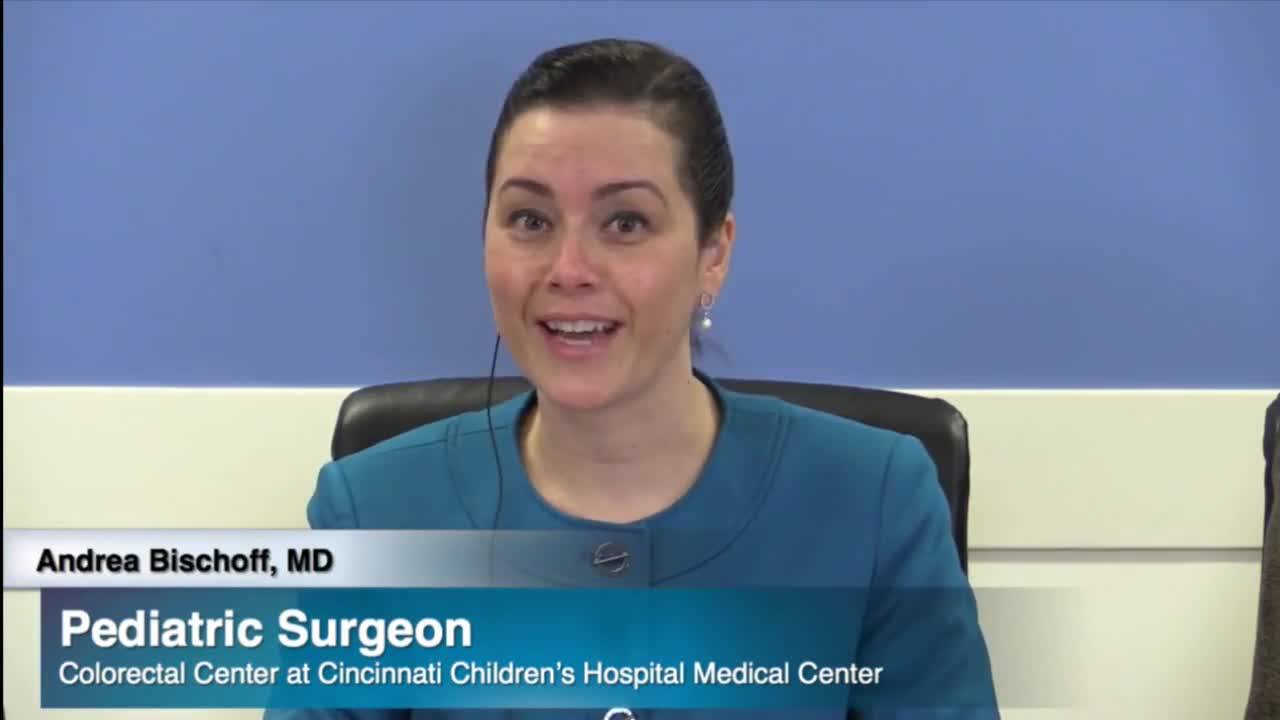
Anorectal Malformations with Dr. Andrea Bischoff
Published:
Topic overview
Dr. Andrea Bischoff discusses the evaluation and management of anorectal malformations in newborns, emphasizing proper perineal examination to distinguish rectal perineal fistulas from normal anatomy. She outlines the critical associated anomalies to screen for in the first 24 hours, including cardiac, spinal, and urological defects, and explains prognostic indicators like sacral ratio and sphincter anatomy.
Timestops
0:00
Introduction to Anorectal Malformations
1:19
Initial Physical Examination and Classification
4:46
Diagnostic Workup and Associated Anomalies
10:22
Colostomy Indications and Technique
19:43
Distal Colostogram and Surgical Approach
24:12
Female Malformations and Cloaca Management
27:43
Prognosis and Bowel Control Expectations
30:07
Bowel Management Program and Enema Protocol
Key takeaways
- Use Hegar #12 dilator to assess newborn anus caliber; perineal fistulas have small caliber and incomplete sphincter coverage (horseshoe pattern).
- Rule out VACTERL associations in first 24 hours: esophageal atresia (8%), cardiac defects (30%), renal anomalies (50%), tethered cord (25%).
- Sacral ratio on lateral X-ray correlates with bowel control prognosis; hemisacrum suggests presacral mass risk.
- Re-examine at 24 hours if fistula unclear—meconium passage through tiny opening requires time for rectal distension and pressure buildup.
- Well-formed buttocks with midline groove predict good prognosis; flat bottom without clear dimple suggests poor bowel control outcomes.
Keywords
Hashtags
Transcript
Click "Show Transcript" to view the full text (40663 characters)
Stay Current is an audio publication designed to keep healthcare professionals up to date with standards of care and new emerging ideas. These podcasts are designed to keep healthcare professionals current while on their commute. Stay Current is created and edited by Todd Ponsky and Nicholas Bruns in partnership with Globalcast MD and is recorded and produced at Akron Children's Hospital in Akron, Ohio. Welcome to Stay Current in Pediatric Surgery. Today we're going to be talking about anorectal malformations, a common problem that all of us have to deal with and sometimes can be quite tricky. And today we have a definite expert in the field, Dr. Andrea Bischoff, who is a pediatric surgeon at University of Cincinnati, Cincinnati Children's Hospital and a member of the Alberto Pena Colorectal Center. She's assistant professor at University of Cincinnati, and Andrea, we want to definitely welcome you to help shed some light on this difficult topic. Thanks for joining us. Thank you very much. I'm very excited. So let's dig right into it, Andrea, and I want to give you a case and tell me how you'd handle this. So you're called to the neonatal intensive care unit because there's a male baby that was born and they either cannot see the anus or they believe that the anus is just too small or maybe they're saying that it's maybe anterior anteriorly located. How do you manage that patient? So your first mission is to go to the neonatal intensive care unit and carefully examine the perineum to determine if the patient indeed has an anorectal malformation or not. Patients with anorectal malformation with good prognosis for bowel control, they will have a well-formed buttocks with a good midline groove and a good anal dimple. Patients with malformations with bad prognosis for bowel control will have a flat bottom and not clear delineation of the anal dimple. If we are dealing with a male patient, it's very important to remember that there are different manifestations of a rectal perineal fistula. And in some cases the hole is extremely small, and if you don't suspect and carefully look for it, it can't be missed. Concerning the size to determine if it's a small anus or if it's a normal caliber anus, it is important to remember that in a newborn baby one should be able to accommodate a number 12 Hager. dilator that would be a normal anus. So once you determine that the baby has an anorectal malformation, a rectal perineal fistula, then you should concentrate in ruling out important associated defects during the 1st 24 hours before even thinking about taking the patient to the operating room. How do you determine That an anus is anterior. Besides the dimple, is there a measurement trick you can use? So we don't even say anterior because we don't like the term anterior anus because it goes with what's the definition of an anus. An anus has to have a normal caliber. What I just mentioned that in a newborn would be a number 12, Hager. But it should also be surrounded completely by a sphincter mechanism, and that's not what we see in a perineal fistula. In a perineal fistula, it's a small caliber and it's not completely surrounded by a sphincter, just by Looking at the discoloration of the skin, you can see that the sphincter mechanism in a rectal perineal fistula, it's like in a horseshoe shape, so the posterior and lateral portions have a sphincter, but the anterior does not have sphincter. OK, so you're looking at, and I'm glad you corrected me, and I want to say that again. That it's not an anterior ectopic anus. It is actually a perineal fistula. And, and you look at really how it looks on the outside. You're not. I was once taught to measure the distance between the tip of the coccyx and the bottom of the, of the, the scrotum. Is that not really a good measurement trick? I think it's unnecessary. OK, OK, good. That's, that's really actually pretty enlightening for me, um. All right, Andrea, so talk to me about you go to see this child and you're, you are concerned that there's a perineal fistula. What other malformations do you have to rule out and look for, and then what sort of studies would you order? Perfect. So in all honorectal malformations we have to rule out the associated common anomalies. So esophage atresia would be one, and it can be ruled out by trying to place a nasogastric tube, remembering that 8% of patients with anorectal malformation will have oesophage atresia. It is also important to rule out cardiac anomalies, and you can do that with an echocardiogram if you have it available, or with a good physical examination looking for murmurs. 30% of the patients with anorectal malformation will have cardiac anomalies, but in only 10% of them, these anomalies are hemodynamically significant. A babygram, that's a radiograph of the entire body looking for abnormalities of the spine like hemivertebrae, extra ribs, a double bubble sign representing a duodenal atresia, kidney ultrasound to rule out. Hydronephrosis, 50% of patients with anorectal malformation have associated urological defects. Spinal ultrasound to rule out tetracord, 25% of patients have tetracord. And last but not least, a radiograph of the sacrum, anterior, posterior, and lateral. With that, you want to rule out a hemisacrum that is associated with a presacral mass, and you also want to calculate the sacral ratio that correlates with future functional prognosis for bowel control. If during the first examination one could not identify the fistula, the patient should be re-examined after 24 hours. It takes time for the air to travel distally to the rectum to become distended to increase the intraluminal pressure, overcoming the muscle tone of the surrounding sphincter mechanism. It also requires a significant pressure for the meconium to pass through a tiny or Uthra, a tiny perineal or urethral fistula. Now if no meconium is seen in the perineum, then you can order a cross-stable lateral film with the pelvis elevated to try to identify the distal air representing the rectum. This study should never be done before 24 hours of life because it will give the false impression of a quote unquote high malformation due to the muscle tone that I just mentioned. OK. So I want to ask a question. You did say in the beginning. You can get an echo or a good physical exam looking for murmurs, so I know that we discussed that a lot here. If you hear no murmurs. Are you sometimes satisfied with that? If it's a newborn and I'm here at Cincinnati Children's and I'm thinking about putting the patient under anesthesia, I order an echocardiogram, but if I am in a place where I don't have one available and the patient is completely stable and the physical exam is completely normal, I think you're safe too. Put him under anesthesia without an echocardiogram. OK, and that's a good point to make. And the other question is, you mentioned the spinal ultrasound to rule out tethered cord. Um, how, at what age do you have to start getting MRI? 3 months. If the baby is less than 3 months, it's good enough to see with a spinal ultrasound. After that, because of the ossification process, you will need an MRI to correctly see the tetrachord. And when do you, let's say there is a tethered cord, how do you time that out with your repair, and what do you do first? That's a very controversial subject, tetrachord. Once we detect the tetrachord, our general guideline for the parents is that from our observations, tetrachord has more influence in the urinary tract rather than in the Gastrointestinal tract, meaning in terms of prognosis, tetrachord usually affects more the urinary tract. We would not delay our repair based on tetrachord. Normally we repair the malformation and then the neurosurgeon sees the patient. If there is a large myelomeningocele defect, then it's a different scenario, right? Got it. OK. Well, what if you find a hemisacrum? If you find a hemisacrum, you are obligated to rule out a presaccrum mass, and in this case, an MRI would be indicated to see the presaccrum mass and also to determine its relationship with the spinal canal and better prepare you for surgery, meaning if you should have a neurosurgeon with you or not. At the time of the rectal repair, the presacral mass should also be addressed and removed. And the significance of finding a presacral mass is that it usually changes the prognosis for bowel and urinary control, remembering that those presacral masses, they are most commonly found in malformations with good prognosis such as Rectal perineal fistula, rectal vestibular fistula, and rectal atresia. But when the presacral mass is present, then the prognosis changes. OK, great. Thanks, Andrea. So now 24 hours have passed and You've got the results of your tests. You found that there's no abnormalities. Now what do you do with this patient after 24 hours? It comes the moment to decide between primary repair that can be done immediate or electively or colostomy with a delayed repair. And to decide which way to go, you should take into consideration many factors including the surgeon's experience on newborn repair, the condition of the patient, and the local circumstances surrounding the patient and the surgeon. For example, if we are dealing with a baby that is too small, a preemie, have a cardiac problem, and a rectal perineal fistula, there is no urgency in repairing the anorectal malformation. If the patient is stooling satisfactorily, you can wait until the patient is stable enough to tolerate the operation. If the patient is having some trouble to pass stool, a gentle dilation can be done just to allow for the stool to be evacuated. In this case, you're not truly dilating the patient. You just want the stool to be evacuated without difficulty. So a 67, or a 8 Hager is more than enough for that goal to be achieved. If the surgeon is experienced with the newborn repair, the hospital has a good anesthesiologist with experience in dealing with newborns. There is total parenteral nutrition available, then a primary repair could be done. The advantage of a primary newborn repair is that a bowel preparation is not required since the meconion is considered sterile. The last scenario is a surgeon that does not have experience with primary repair and decides to do a colostomy. There is nothing wrong in doing a colostomy, and it is for sure the safest way to approach an anorectal malformation. It is actually better to open a colostomy and have a perfect operation than to do a primary repair, have a complication such as the hissing retraction that requires a re-operation. We like to say that patients with an anorectal malformation have one chance to have the right operation. Secondary operations or re-operations usually change the prognosis for bowel control in these patients. All right, Andrea, so what if, and, and I know that that I'm going to have a question for you later about the specifics of the colostomy, but let's take a different track here. Let's say. Uh, the baby's born, but it's a female. What would be different in what you've already told us about these patients? In females, it is also important to pull the labia in order to clearly see the urethra and the vagina as two separate orifices. It is important to make sure that the patient actually has a vagina. You don't want that to be a surprise in the operating room. If you think that there is a vestibular fistula present, it will be exactly in the midline, immediately posterior of the vagina. You should try to use a 8 French feeding tube to catheterize the fistula if you cannot see it. Just remember, vestibular fistula is the most common type of anomaly. If you're examining a patient. A female patient and you cannot see the fistula, try to probe it with a 8 French feeding tube. Most likely you will be able to find a recto vestibular fistula. Yeah, that's a great point. I'm glad you mentioned that. So let's go to a different scenario now, Andrea. So a baby's born and nobody noticed that there was anything wrong with the anus. Uh, but you receive a call from the pediatrician asking you to give a second opinion about the child that has a rectal perineal or recto vestibular fistula but is growing, eating, and pooping but suffers from constipation. So this is a baby that it wasn't detected immediately, but it was detected later on, and he's doing OK, growing, eating, and pooping, but he is having some constipation. How do you manage that? So unfortunately in our dream world we would dream that this would never happen, that all patients would have their diagnosis correctly at birth, and the reason is the scenario that you just gave me the patient is doing well, which is great, it's not a big deal, but we have seen patients that were not diagnosed and they almost perforate and they almost die from this misdiagnosis. So in the scenario that you gave me, there is absolutely no rush. I would see this patient in clinic, examine the perineum, confirm the diagnosis of an anorectal malformation, explain to the parents what it is and how the operation is going to be, and while we are looking to electively book the case, I would order studies to rule out associated anomalies. In this case, some of the Associated anomalies you don't have to rule out because they have been already ruled out. So we're going to get a sacral X-ray, AP and lateral, kidney ultrasound, spinal ultrasound if the baby is less than 3 months of age, or a spinal MRI if the baby is more than 3 months of age. In this case, because the baby's already home eating, we'll need a complete bowel preparation prior to surgery. OK, what kind of bowel prep do you do? We do go lightly, so we admit the patient the day before with a nasal gastric tube, and we run 25 mL per kilo per hour in cycles of 4 hours until the patient is completely clean. OK, great. So, let's go back to what we were talking about before. And now, the, you know, the baby's in the NICU, um, and there, you examine the perineum and you cannot identify a rectal perineal fistula. You see nothing there. 24 hours go by. You go back and there's no signs of meconium still in the perineum. There is actually, uh, an impression that there is a meconium mixed with the urine, uh, by the nurses and when you've gone by as well. So now, what do you do in this situation? It looks like there might be a fistula. OK, so we're talking again about a male newborn that the anus was not identified. So the screening for associated defects should be the same as we just described in the first scenario. And now we are dealing with a male patient, possibly with a rectal urethral bar fistula. Rectal urethral prosthetic or rectal bladder necks, we would only know for sure the type of malformation that we are dealing with after opening a colostomy and doing what we consider the most important study for male patients that is called the high pressure distalcholostrogram. The opening of the colostomy is an operation frequently underestimated by many surgeons, but it should be taken as seriously as the main repair. A round colostomy opening might have serious future consequences. So this is actually something that I learned from the course when I went to Dr. Pena's course when I was a resident. And I, I still remember it and still use it to this day. Can you go and explain to us, go through and explain to us what would be an ideal colostomy? OK. The ideal colostomy should be a totally diverting one, since in the majority of the cases we want to avoid contamination of the urinary tract with stool. It should be located in the descending colon to leave enough distal bowel for the poo through and to avoid prolapse of the proximal stoma, since the descending colon is fixed to the abdominal wall. The location of the proximal stoma in the abdomen should be in the center of a triangle formed by the left rib, the umbilicus, and the iliac crest to be sure that the stoma is surrounded by normal skin for to apply the stoma bag. The distance between the two stoma, the proximal and the distal, should be enough to allow for the stoma bag to cover only the proximal stoma. The distal stoma or the mucous fistula should be made small to also avoid prolapse. And during the colostomy creation, all the distal bowel should be irrigated with plenty of normal saline to remove all the meconium. If you follow those steps, you have the perfect colostomy. OK, and that's a great trick, and I think that, that, uh, from what I've seen in, in some of your and Alberto's presentations, some people definitely, uh, have, have made some stomas that lead to difficulty in the future. So this is a really important thing to keep in mind, um, so then I, I'm assuming you're gonna then get your distal claustrogram. Uh, how, how do you do that? The technique for the distal colostomy is actually pretty simple. The patient has to be in the fluoroscopy suite. We insert a Foley caster in the mucous fistula, and the size of the Foley cater will depend on the size of the mucous fistula. Just to give you an idea, since we make a tiny mucous fistula, we normally use the number 8 French folic cater. We inflate the balloon of the folly and pull it back so it can act as a plug to avoid leakage of the contrast. The patient should be supine. The contrast material should be hydrosoluble, and you have to place a radio opaque anal marker at the anal impression. So as I just mentioned, the initial images are taken with the patient laying supine on the table. You start injecting contrast and you see the colon being filled with the contrast material. It's important to have this AP view so you can see how redundant is the column that will help you decide if you have enough bowel available for the pull through. Once the contrast fills the entire distal bowel, you should turn the patient in perfect lateral position with the knees making a 90 degree angle and one femur exactly in front of the other femur. At this position, you want to make sure that the radiologist shows all your points of reference. That are the mucous fistula side where the folly balloon will be, the sacrum and the anal marker. Most radiologists, they are obsessed about making the field smaller and sometimes they cut the sacrum. They cut where and you as a surgeon need to see everything. So you keep injecting contrast until you overcome the muscle tone. You identify the fistula site. The contrast will normally fill the bladder, and you keep injecting until the patient voids. Then you have the image that you need. Showing the fistula, showing the amount of bowel that you have for the poo through, show the bladder field and the relationship with the urethra. That's what you need and you should never approach a patient without having the study done correctly. OK, um, that was a a great review and I think that, um, I'm hoping that we can get this, uh, in the hands of the radiologist as well so they can, um, review what you just said because I think it's important. Um This is kind of a broad question, but I think that this is something that I would like clarification on. Can you go through the different types of malformations and what the operation would be based on the different malformations? Sure, so let's suppose that the distalcholostogram showed a rectal urethral bulbar fistula. First of all, in all male patients, you must have a Foley catheter in place for the surgical repair. So in a rectal urethral buper fistula, the rectum will be reachable posterior sagitally, and the most important portion of the operation will be the separation between the rectum and the long common wall with the urethra. The mobilization of the rectum will be minimal because it's already very low in the pelvis. In a rectal urethral prosthetic fistula, you can also repair it posterior sagittally. The common wall with the urethra is shorter than when compared with a rectal urethral bar fistula, but you will need more rectal dissection in order to gain length for the rectum to reach the perineum without tension. Depending on the case, this type of anomaly can be repaired laparoscopically when the surgeon has experience with that and when you are dealing with a high rectal prostatic fistula. In cases of rectal bladder neck fistula, then you need laparoscopy or a laparotomy. The good thing is that the rectum joins the urinary tract in a T fashion, and after the ligation of the fistula, the ligation of the fistula is actually the easy portion. The challenge in this case is how to gain enough length to reach the perineum. And preserve good blood supply to the rectum. The way to achieve that is by selectively ligating mesenteric vessels, but preserving a good blood supply. Mhm. And that can, that, uh, selective ligation of the mesenteric vessels can sometimes be a little, uh, nerve-wracking, hoping you don't cause ischemia to the, to the bowel, but, uh, yeah. So, all right, let's go back to the NICU. So what if we have a female patient with a single perineal orifice? So what would, what, how do you approach this? What does this mean? OK, so just with your description, you made the diagnosis of a cloaa. The diagnosis of a cloaca is a clinical one. In most patients, the single orifice will be located at the normal urethral site. In some patients, it is located at the tip of a prominent pseudohaus, and if I can make a plea to pediatric surgeons, I would ask them to disagree strongly when the neonatologist labels a cloaca patient as a disorder of sexual differentiation. In the past, also known as ambiguous genitalia or intersex, as you can imagine, this is a significant unnecessary burden to the family. If the patient has a single orifice, you palpate the pseudophalo and it is skin. There's no corpora. This is a cloaca, and we have never seen a cloaca with disorder of sexual differentiation. They are all females. Normal ovaries, but unfortunately we have seen many patients that received this diagnosis and were even started on steroids due to this erroneous diagnosis. So let's go back to the cloaca diagnosis. What is special in the newborn screening is to add a pelvic ultrasound to rule out hydrocopos, a very dilated vagina filled with fluid. When you ask the radiologist for an ultrasound, you have to tell him, please look for a cystic mass behind the bladder. If a hydrocorpus is present, it should be permanently drained with a transabdominal indwelling tube until the main repair. The colostomy recommended is the same one that I just described, and at the time of the colostomy creation, the hydrocarpus should be drained. Now, prior to the repair, it is important to have, besides the distalcholostogram, a determination. about the length of the common channel. We can do it either in fluoroscopy. We have here a 3D cloacogram that we inject contrast in all the cavities, or you can do with the use of a cystoscope just to measure. If it is a cloaca with a common channel lens less than 3 centimeters, it can be repaired posterior surgitally with a total eurogenital mobilization. Cloacas with more than 3 centimeter common channel require a surgical decision making algorithm that it's a little more complicated to discuss it without images, and I think they should be referred to surgeons with experience in dealing with these complex malformations. Yeah, that's a key point to make is know when to refer for these complex patients. Um, can, can we predict the future a little bit and discuss what is expected for each patient based on the type of anorectal malformation? So thank you so much for asking this question. I think this is a very important subject, Todd. We actually believe that parents should have this information about how the future is going to be in terms of prognosis for bowel control as early as possible in life to correctly adjust their expectations. So thanks to Dr. Pena's large database, we can now tell early in life what is the future prognosis for bowel control based on the type of honorectal malformation. For example, in a rectal perineal fistula, provided they have a normal sacrum and no tetrachord, they have a 100% chance of bowel control. But in all malformations, the ones with better prognosis for bowel control are the ones that will suffer from more constipation. So rectal perineal fistula expect that they will have severe constipation, and this constipation should be managed early in life with the correct amount of laxatives. Rectal vestibular fistula, provided again they have a normal sacrum and no tetrachord, they have 95% chance of bowel control. Again, they will also suffer from constipation and should be managed early in life with laxatives. Rectal urethral bular fistula, they have 85% chance of bowel control. On a erectal malformation without fistula, they have 80% chance of bowel control. Rectal urethroprostatic fistula, they have 60% chance of bowel control. Rectal bladder neck fistula, they have 20% chance of bowel control. So this is not a good malformation in terms of future prognosis. Cloaca, it's a little harder to characterize them. If it's a common channel less than 3 centimeters. They have no normal sacrum. In Note record, we would say generally speaking about 70% chance of bowel control. So then in a patient, for example, that you, you think has a high chance of lack of bowel control, um, so let's say maybe the rectal bladder neck fistula patients, is it indicated then at that point that you should just keep the colostomy? So we think that the only indication to keep a colostomy would be incapacity to form solid stool. So most patients with anorectal malformation, they will have a normal colon. They will be able to form solid stool, and they will respond to our bowel management program and be clean in the underwear. So formally we don't consider patients with anorectal malformation even when the prognosis is poor for bowel control. We do not consider an indication for permanent colostomy because we have seen that patients prefer the quality of life of a pull through with bowel management rather than with a colostomy. So we believe that all children with anorectal malformations, they should be out of diapers at the same age that other children are normally out of diapers. Here in the United States, it's usually at 3 years of age. Before 3 years of age, the parents and the surgeon should just avoid the constipation because all children will be in diapers. It makes no difference, and try to establish regularity as much as possible in terms of meals and bowel movements. After 3 years of age, if the child has not potty trained, we recommend to start the formal bowel management with enemas for children with bad prognosis for bowel control, with enemas on a temporary basis for children with borderline bowel control, and then every year we can try to test if they can be stopped on the enemas and with laxatives for children with bowel control and constipation. The bowel management for children with bad prognosis for bowel control consists in finding the enema that completely cleans the colon and allows for the child to be clean of stew in the underwear for 24 hours. It is an artificial way to keep them clean in the underwear. So we consider again that the only indication for a permanent colostomy is incapacity to form solid stool, and that would be. Extremely rare in a patient with anorectal malformation. Now I know Dr. Pena will be discussing cloacal atrophy. Then he will go into the details about patients that have short colon or absent colon. Yeah, and, uh, I think that's gonna be a great discussion and that's a nice little teaser so that uh the listening audience knows that uh uh to keep you in suspense, there will be a, a, a great discussion on political atrophy with Doctor Pena coming soon. Uh, so. All right Andrea, what is the magic recipe for the enema then? Well, unfortunately there is not a magic formula or recipe. Determining which enema works for each child is a trial and error process, and it takes us usually about one week to find out the precise enema for each child. I can give you some general guidelines on how we do it. So the first step is to get a contrast enema with hydrosoluble material without bowel preparation. With the image we can divide patients that are fecally incontinent in two groups those with a dilated colon and tendency for constipation, and those with a non-dilated colon and tendency for diarrhea. For the first group, dilated hypomotto colon, we need a large and concentrated enema to clean the colon. But the good thing is that after the enema, provided we clean the column properly, we do not have to worry about it because the colon will have the natural tendency not to produce bowel movements. Now, in the second group, the non-ilated, the hypermotral column, we need a small enema. Cleaning the column is very easy, sometimes just with normal saline without irritants to clean it. But the challenge is how are we going to keep this colon from moving in between enemas. Usually in these patients, we need to add a constipating diet with 3 meals per day and medication to slow down the colon. So what I just heard you say is that, uh, I heard you say normal saline. Is that, is that it, just normal saline, or do you use soap suds or other things? So normal saline is the base of the enema, and we usually use between 200 to 1000 mLs. Now in order to increase the concentration to make it more irritant, we add liquid glycerin between 10 and 40 mLs. We can also add castile soap, that's a mild hand soap that is also glycerin based, and each package has 9 mLs, so we use between 9 and 27 mLs, and fleet. The sodium phosphate that we use according to the patient's age. So if the patient is between 2 and 4 years of age, we only use 33 mLs of a fleet. That's half of a pediatric fleet. If the patient is between 7 and 10 years of age, we use a pediatric fleet, that's 66 mLs. And if the patient is more than 10 years of age, then we can use an adult fleet that is 133 mLs, OK. So you don't ever give someone just, you usually don't just give just saline, you add the glycerin or the soap or you do fleets, is that right? For the patients that have a distended colon, we always use saline plus additives, so glycerin, soap, or fleet for the patients that have a non-ilated, a hypermodal, we start just with normal saline. OK, you know, I wanna ask you, so, so I know that we have, uh, started a bowel management program here at Akron Children's now that Erin Garrison's here, and we have been very much, uh, um, asking your advice as this process has been developing before Aaron got here even, uh, and how do we start the bowel management program. I know in fact our nurse, uh, Shelly Baig actually went down and spent a lot of time, uh, in, in, in your, uh. Uh, clinic, uh, to try to better understand how to start a bowel management program. What's the, what's the most common question you get from people starting to, to, to start these programs? So, besides the logistics and one great advice that we always say is just come spend a week with us. We, every month, we have a bowel management week. So if you're thinking about starting a program, a good idea is to come here with your own nurse. And spend the week with us, but in terms of the question that we get most often and what's the difficulty portion, I feel that most pediatric surgeons in the beginning, they have difficulty in guessing what's going to be the first enema. And I always say don't be afraid because you have the entire week to find out if you get if you select one that doesn't work, you will be adjusting. But just as a hint, you can also look at the contrast enema and see how much volume the radiologists use to fill the entire column, and you can use a little less than that because during your enema you're not expecting to fill the entire column. You're mainly concentrating. Training in cleaning the rectum and the left column as we expect that the stool in the right column will take 24 hours to reach the rectum. So for example, if the radiologists use 500 mLs during the contrast enema, you can start your enema, your first one is 400 mL, and some irritant like glycerin, for example, 20 mL of glycerin. And the key to succeed on the bowel management is to adjust the enema on a daily basis, and we adjust it based on the parents or patient report and also looking at the abdominal radiograph. That's the only objective way to know if the enema indeed cleaned the colon or not. So you mentioned that the, the parents or the patient report back to you. Obviously the communication is important, but what do you want them to report to you? So the enema should be done at the same time every day, and the entire process, enema administration, holding time, and evacuation should last for one hour. In the report, we want to know how did the child tolerate the enema. How long the entire process lasted, if the child is clean in the underwear or if the child is having accidents, we call accidents when there is passage of stool in the underwear. If there were accidents, we want to know the characteristics of it, how much, at what time or times after the enema if it was real stool or just clear. Liquid and based on the report and the radiograph, we make change for the next day. For example, if the child had real stool accident and the abdominal radiograph is not clean, that means that the enema that I prescribed did not clean the colon enough. Therefore, I should increase the concentration, for example, increase the amount of glycerin. Not the, you don't increase the volume or the frequency, you increase the concentration of the glycerin, the frequency never. It's always just once a day. OK, that's great. So, OK, you, you, you finally, you found the perfect enema for the child and the child is completely clean in the underwear with daily enemas. So now what? So that's the question that the parents ask us all the time. Is that it? Are we doing that for all life? So if we determine that the child is truly fecally incontinent, no bowel control, and will need enemas for life, we already succeeded with bowel management program through the rectum. And now the child is growing and he or she doesn't like that the mother or the father is doing the enema. They want to become more independent. That's when we offered them the Malone procedure as an integrated way to give the enema. It is very important to emphasize that the Malone procedure or appendicostomy is not the treatment for the fecal incontinence. The treatment for the fecal incontinence is finding the enema that works for the child. The appendicostomy will just give More independence. So normally we do it when the child asks for it, when we know that the child wants to do the enema by himself or by herself. The other scenario is a child that has borderline bowel control. In that case, we found the enema. It works. Family goes home, spend a year, and we tell them to every year during a summer vacation, for example, come back so we can try to stop enemas and test if the child has bowel control or not. If the child succeeds to stop the enemas, great, that's it. If the child is enema dependent, then again we'll follow the same pathway and offer an appendicostomy. This has been so far a really great review of anorectal malformations and really the bowel management, uh, which I love listening to because I know that we have a lot of angst about it and our time is almost up, but before we finish, can you just quickly tell us about the bowel management for constipation? In a child that does have bowel control. Perfect. So again, same process. It takes us one week to find out the amount of laxative that a child needs on a daily basis in order to adequately empty his or her colon. Very important, radiologically demonstrated. The first step also consists in getting a contrast enema to try to evaluate the magnitude of the constipation that we are dealing with. Many of our children, they come to us fcally impacted. So before trying to determine the laxative dosage, it's very important to disinfect them, otherwise they will have the worst cramp of their lives and they will probably not come back. So our disinfection protocol consists of 3 enemas per. Day for 3 days and I can tell you most of the children, they are disinfected after day 3. After day 3, we get an abdominal X-ray to prove that the patient is disinfected. If not, then we admit them, place a nasal gastric tube, and run Golightly for 2 days besides the enema. If they are still impacted, then we do disinfection under anesthesia. This is extremely unusual. I can tell you that probably in the last 8 years, I think we have disinfected under anesthesia 4 children at the most, so the majority of them get disinfected at the first portion of the protocol with the 3 enemas per day for 3 days. So once the radiograph is clean, Then we empirically choose an amount of laxative. Our preference is a Senna-based one, and for the next 24 hours, the child should be observed. So let's suppose that 24 hours goes by and the child has no bowel movements. So that means that the dose that I selected was not enough. In that case, I'm going to give an enema to get rid of the stool that the child produced that day because you don't want her or him to get infected again. And then we're going to increase the dose of laxative at the same time. The other scenario is that 24 hours went by and the child had multiple diarrhea-like bowel movements. That means that the laxative dosage that I chose was too much, so we're going to decrease the dose for the next day. And throughout the week we get the report from the parents about number of bowel movements, consistency of bowel movements, and also we look at the abdominal X-ray film because we Want to compare and be sure that the amount of stool between one day and the next is not increasing. If the amount of stool is increasing, that means the laxative dosage must be also increased. So Andrea, you mentioned Senna, and I know this might be a tough question, but can you give me an idea, maybe based on size or age or just maybe it's the same for everyone, how you start, what is it? Once a day is what's the usual dose is it we always do once a day. Normally we prefer at the end of the day like 60 p.m., so it will produce a bowel movement in the next day. The dosage again is trial and error, so we go from, and I can, I can tell you our range, so it's from 8.8 mg of Senna up to 175 mg of Senna. So that's. It's, it can be very high amount. So do you start with 8. I mean, do you start with the lowest dose first, or no, we look at the contrast enema and based on the contrast enema we empirically decide how much we're going to start with and I guess as someone starts a bowel management program they'll get a better, more comfortable with an idea of where to start as they get used to seeing. Absolutely, absolutely. Well, Andrea, this has been very helpful for me. I, I, uh, I, I love your answers because it's something that I think I'm going to be going back to and listening every time I have a patient. I hope it's not before bedtime. No, it'll, this is, uh, this will keep me awake instead of putting me to sleep. This has been really, really helpful, and I, and I actually tell you I think this is going to be helpful for not just pediatric surgeons but for the whole management team. I think the nurses, the mid-levels, the pediatricians, the neonatologists, and the radiologists would really love to listen to this, and, and, uh, I think it's been a huge help, so. I want to thank you for taking time out of your day to explain to me and the rest of the world about how to manage these difficult problems. Thank you so much, Todd. It has been a pleasure. And if there are many questions or any questions, don't hesitate to contact me. Perfect. Actually. I may ask you if you can tell us, is there a number or an email that pediatric surgeons or pediatricians can contact your center or you personally to get information? Absolutely. So my personal email, it's Andrea. Bischoff B I S C H O F F at CCHMC.org. And the Colorectal Center email is the same, it's colorectal Center at CCHMC.org. That's perfect, uh. Andrea, thank you so much, and I hope you have a great rest of the day. Thank you very much. We hope you enjoyed this episode of Stay Current in Pediatric Surgery. You can listen to Stay Current in Pediatric Surgery by subscribing on the iTunes Store or by downloading the Globalcast MD podcast app. Please send questions or comments to us at staycurrent podcast@gmail.com. We'll see you next time.
Comments