7
Views
0
Likes
0
Shares
0
Comments
StayCurrentMD
View profile →
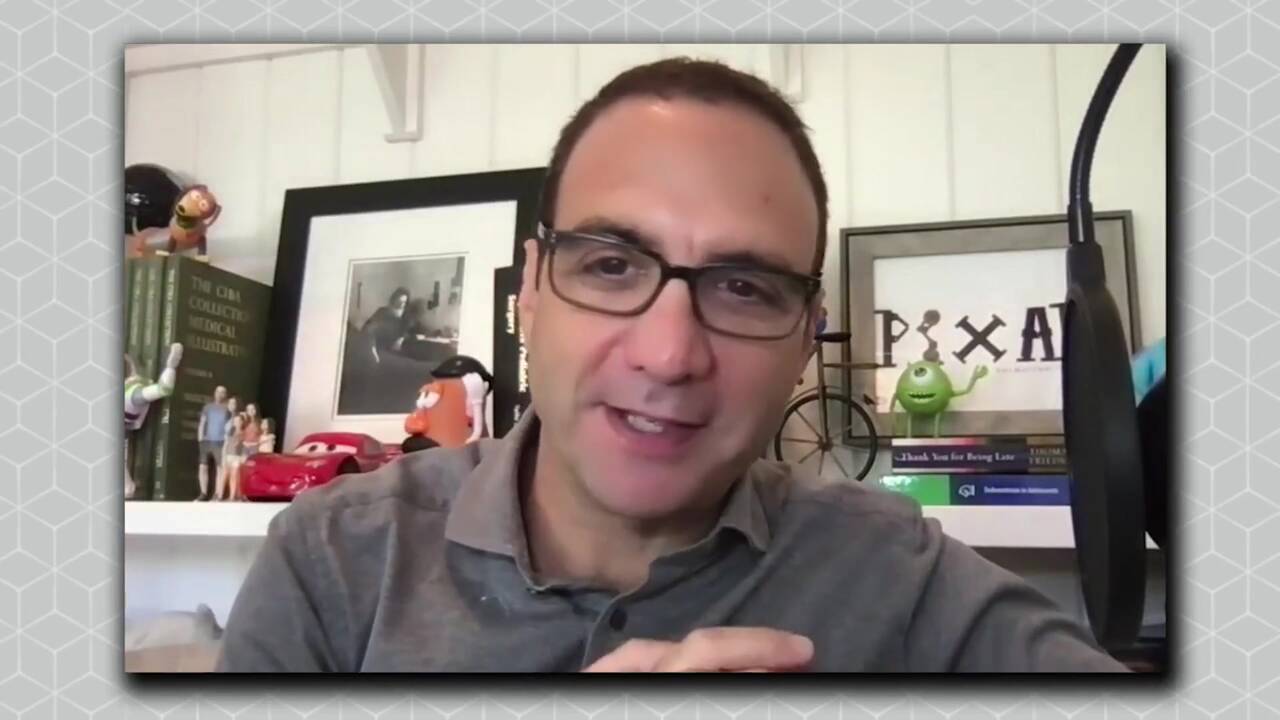
Empyema with Dr. Shawn St. Peter
Published:
Topic overview
Dr. Shawn St. Peter discusses evidence-based management of pediatric empyema, comparing traditional VATS approaches with fibrinolytic therapy using tPA. He covers clinical decision-making for pleural effusions, including when to tap versus treat, ultrasound criteria for intervention, and the landmark prospective trial that shifted practice toward medical management.
Timestops
0:00
Introduction to Pediatric Empyema Management
2:06
Defining Empyema and Treatment Pathways
8:21
VATS versus Fibrinolysis Trial Design
15:15
Fibrinolysis Protocol and Administration Technique
20:53
Treatment Failure and Second-Line Options
26:52
Role of CT and Pulmonary Necrosis
32:06
Peripheral Abscesses and IR Drainage
35:24
Future Directions and DNase Research
Key takeaways
- Treat empyema when symptomatic (typically >1/3 chest with respiratory distress), not just for presence of effusion alone.
- Ultrasound showing septations or solid material indicates empyema requiring VATs or fibrinolysis, not simple aspiration.
- Pleural fluid with >10,000 WBC count meets empyema criteria and warrants definitive treatment per prospective trial data.
- Free-flowing effusions can be initially managed with therapeutic tap; failure to improve suggests parenchymal disease predominates.
- Clinical judgment trumps arbitrary size cutoffs—assess symptom burden and ultrasound characteristics together.
Keywords
Hashtags
Transcript
Click "Show Transcript" to view the full text (36122 characters)
Stay Current is an audio publication designed to keep healthcare professionals up to date with standards of care and new emerging ideas. These podcasts are designed to keep healthcare professionals current while on their commute. Stay Current is created and edited by Todd Ponsky and Nicholas Bruns in partnership with Globalcast MD and is recorded and produced at Akron Children's Hospital in Akron, Ohio. Welcome to Stay Current in Pediatric Surgery. Today we're going to be talking about Empyima, and with us we have Doctor Sean Saint Peter, who is, I'm sure very well known to all of you. Sean is director of research at Children's Mercy Hospital in Kansas City. He's also the director of the Center of Prospective Trials. He's the director of the pediatric surgery training program, and he's director of the Surgery scholars Program, uh, where they have general surgery residents coming to do research there. And for those of you who don't know, uh, Sean has really been the leader in, in the world, actually, I was gonna say the country, but probably no one comes close to really, uh, the work you've done, Sean, in Getting pediatric surgery on the map and doing real research, prospective trials before you came along, we were doing a lot of case reports and experiential data, but uh uh you've sort of gotten us going on doing real research and prospective trials there at the Children's Mercy Hospital, and you're certainly who we call when we want to get a prospective trial going. So, Sean, thank you for joining us today. Well, thanks for having me, Todd. So Sean, the reason that we're going to talk about Empyima with you is that some of the work you've done has radically changed sort of the paradigm of how we manage Empanhia. I remember I was giving a lecture at the fellows course on Eyima, and I stood up there and my first slide starts talking about. A doing a vat and everyone in the audience was shaking their heads at me saying you're old news, man. We don't do that stuff anymore. And I said, What are you talking about? They said, Well, haven't you seen the paper out of Kansas City where they showed the whole new management using TPA. So that was when I first found out about it. And over several years I've finally been convinced, and we have switched over at our hospital. And so we're going to get deep into how we deal with these very common and complicated patients sometimes. Um Let me first start out with a patient who, let's say it's a 3 year old. It's in the winter months. He comes in with symptoms of pneumonia and has a chest X-ray that even shows early pneumonia. He's not in the intensive care unit. He's on the floor. He's having some very mild respiratory illness and fevers, and an X-ray shows evidence of an effusion. And uh how do you manage that patient? Well, there's several centers and authors that have advocated not treating an effusion for the sake of the effusion, but only when it becomes symptomatic. Defining that can be a difficult thing, and it takes, I, I think, um, some, some clinical acuity to try to figure out how much of this is being driven by their parenchymal disease versus their pleural disease. But typically once it gets to be greater than 1/3 of the chest and you're having severe respiratory symptoms, it's the typical logic that at that point when you have what you would define as a moderate or large pleural effusion, that they would clinically improve fromaspirating that. And in a situation where you have an ultrasound that shows that it's free flowing fluid. And it's large enough that you believe that it's symptomatic and that they would benefit from tapping it, then we would start with a tap, and that will answer the question as to whether or not it looks like ayema in the form of Frank Pus. Now if your ultrasound shows that there's solid material or septations. You've got it pinned down. You know that you have a clinically relevant pleural effusion that has solid material. Now we're going to treat it like ayema and go down the VATs versus fibrinolysis pathway, which we'll discuss in a bit. If they have greater than 10,000 white blood cells on their tap, which was one of the entry criteria for our trial of VATs versus fiberanalysis. They really do have an ye and at the time we were developing the trial, one of our infectious disease doctors had recommended, and it was Mary Anne Jackson who recommended that entry criteria. And we thought that might be a little too soft, but it turned out to be completely correct that when you get that tap and it's 30,000 white cells, in the patients who randomized to that, you put a scope in and it looks like any other case of emphyema that you've done. So those patients really do have emphyema. So, let me back up and clarify a few things that you said. First, I want to talk about the 1/3 of the chest, and I know that's somewhat arbitrary, but maybe not. No, it's entirely arbitrary, and there's, there's a pretty elaborate algorithm that was proposed by the folks in Seattle led by Ted Carter. He's a pulmonologist, and they had looked at calling it small, less than 25%, large or moderate, from 25% to 5, large, greater than 5. So that's just, that's just one. But even then under each of those boxes you have the branch of symptomatic asymptomatic. So it's not something I would want to be quoted as pinning a number on or a percentage or anything else. I think I would just stick with it it's a large pleural effusion that you clinically think is making an impact on how they're doing right now. And in the case of a free flowing fluid collection, I think your threshold can be a little bit lower for tapping it because you don't lose a whole bunch for trying it. So if you tap it and it is free fluid and it looks clear and it. It doesn't make them better. You've answered the question, OK. This is somebody who's suffering from parenchymal disease, and then if they have a recurrence of their pleural effusion, you'll have a higher threshold for treating it the next time around since you know it didn't help them the first time you tapped it. Got it. So you, so, and again, obviously, you know, for the listeners out there, we're going to be getting into this new algorithm, and I'm gonna want to explain the, I want you to explain the trial you've done and all of that and the algorithm, but, but just to start with, I think this part is, is, is great to know. That you get the X-ray, you see a moderate to large effusion in a patient who's symptomatic. Getting a tap is probably a good idea, not only for treatment, but also for diagnosis to help guide you on what you're going to be doing next with that patient. Is that right, Sean, there was a number you threw out, and I want to make sure I heard it correctly. The number of white blood cells in the effusion should be what? 10,000 greater than 10,000. Yeah, that's that's what we defined as an Eyema as an enrollment criteria for the trial. So that doesn't mean that that number is right, that we haven't studied that particular parameter, just that that's what we used as a yes or no. Can they be in the study? And of the patients who had that criteria who randomized to that, I can tell you it looked like just a regular emphyema once you put the scope in. OK, so let's say you have this patient. Because it sounds like study or not, these patients are going to get an X-ray that shows a large effusion that are going to get tapped. Tell me your algorithm and tell me about the study that you did to come up with this algorithm. So if they have septations that are seen. In the plural space on somebody that has significant pleural space disease on a on a para pneumonic effusion or a tap that shows greater than 10,000 white cells, then now they're defined as yemma, and the study that we did was a randomized trial comparing primary vats to primary fiber analysis. At the time there were several papers that said if you just go straight to fiber analysis, they'll do better than chest tube alone, and papers that said if you just go straight to vats, once you have a diagnosis of ayema, you'll do better than having a chest tube and waiting to see if that fails before going to vats. But what we didn't know is that versus fibroanalysis at the time you make the diagnosis. The data seemed clearer. Do chemical debridement, fibrinolysis, or mechanical debridement, that's as soon as you have a diagnosis, but the comparison between the two wasn't known. We looked at our own retrospective data and we had a difference of over 2 days in the hospital in favor of that. So we couldn't really come forward with that data because they were managed by two completely different services at the time. If you had fibro analysis in our hospital, you were going to IR and the pediatricians were managing your chest tube. The surgeons were managing their own chest tubes after bats. So there's a whole different clock and level of comfort for pulling the chest tubes, of course, whether they're on the medicine service or the surgery service. So this again argues why you need to be doing prospective trials. Yes, so that's kind of how it turned out as we designed the trial. We, the surgeons were under the assumption that bats would win and win by a landslide, which is kind of a funny thing that I think the public perception, and I certainly hear this a lot, is that I have some strong bias toward fibroanalysis and that I'm I'm biased and that I'm not approaching this as As an unbiased thoughtful person and it actually was entirely the opposite. My only bias was that I knew that was better than fiber analysis, and it wasn't until we started the randomized trial and another thing that comes up is the sample size. The reason the sample size was so small is because the difference was so big going. Into the trial design it was it was designed fairly. We weren't doing any gamesmanship for for making it doable. We were just taking the numbers that we had and the numbers that we had were on average 2 days less in the hospital plus a pretty small standard deviation. We were consistent. They were consistent, so that gave us a small sample size. And once we started enrolling in the trial and all the patients were managed on the surgery service with the exact same protocol, it was really powerful to see with, with your eyeballs, um, exactly how these patients were doing, and it was toward the end of the study that one of the fellows asked me what I would do if my daughter came in with an emphysema, and I said I would just do the fibro analysis. I don't think I'd enroll in the trial because it really struck me that none of those kids got sicker. Yeah, I didn't even have the data yet, but what I did know is that sometimes you do a vat and with the barrel trauma to the to the good lung and beating up the bad lung, they fly pretty close to the treetop sometimes after the operation, but nobody gets sicker with the fibrinolysis. I have to tell you, Sean, after I did my first one, I walked in the next morning in the ICU. He was so sick that we transferred him to the ICU the night before. He was sitting up in bed smiling, gives me the thumbs up. I said, Can I take a photograph? This is a photographic memory of what it looks like, my first TPA patient. So I found the same thing. Um, so, and I want to clarify something that you mentioned just to say it again. At least what we do know before this trial even is that chest tube alone is not adequate, correct? Right. OK, that's pretty clear. OK, now Sean, you had mentioned that. You know, let's say the patient has persistent fever, uh, but is doing respiratorily OK, so you, and they're eating OK, so you let them go home on, on, I'm assuming IV, maybe even oral antibiotics. Um, what's the end point there? That's a really interesting question because, um, when we had worked on the community acquired pneumonia guidelines, um, with the, uh, IDSA group, um, The expert recommendation, and this is just infectious disease doctors saying, OK, there's literally nothing out there, so we're just going to have to throw out a number that we think is reasonable and prudent, and that was 10 days, which was a grade D recommendation based on no data whatsoever. And so that got us to thinking, well, what are we doing in our own hospital, you know, if we're if we're following these protocols, what happens once we're done. And so, um, we looked at our own experience and found that we had a shocking average of 19 days of antibiotics after being afebrile. Now, the, the recommendation from the IDSA guidelines was that you would do 10 days after afebrile, that didn't define the other criteria. So we, we had an average overall of 25 days with 19 being after afebrile. And 40% of the patients had complications from their antibiotic therapy ranging from diarrhea to fungal superinfections. So with that being the case, we clearly had a problem. So we took the data. Reviewed it with the rest of our ID group and came up with a prospective protocol moving forward to try to truncate the antibiotic therapy and the protocol that we now use that we put into place last fall in order to measure our results prospectively. This isn't something we can randomize around because we have no event rate. Historically we have no recurrent Eyema, and you know that once you get it treated, your chances of having another emyhima is next to none because it's typically a cement space. It's it's typically gone, but with a zero event rate there'd be nothing to randomize around. So instead we just truncate the investment and in our case we said 7 days after meeting all the following criteria. You've completed your fibroanalysis. You're off oxygen and afebrile at that 0.7 more days of antibiotics. Some people are afebrile before they even complete their fibroanalysis. That's not part of their disease, so they have to at least complete the fibroanalysis. And if they are afebrile and they've completed their fibroanalysis, but they're still requiring oxygen, that would be another criteria to not start the clock yet. Once all those three criteria are met. Then they can start their 7 day course and they can go to orals if they're a candidate. Now sometimes you're dealing with, you know, little babies that aren't going to be taking the medicines and they just get a PICC line, but that's a clinical decision. That's not part of the algorithm. The point is having an algorithm to guide the care so that it's not a simple matter of just continuing antibiotics for any subjective period of time, which is clearly what had happened in our past because. We had protracted courses that were highly variable and so there was clearly no thought going into um I mean there was no systematic thought. There was lots of thinking, but it was lots of different people coming up with different conclusions as opposed to saying, well, let's just at least establish some hard criteria for stopping antibiotics. So now you've got, let, let me hear how this all happened. So now you've got this patient. 3 years old, has a pneumonia, has an X-ray that shows a moderate to large effusion. He's having, he's some tachypnea. He's on a little bit of oxygen, and I'm assuming then you would get an ultrasound, is that right? Yeah, that's where it was starting. OK. You get the ultrasound and not a CAT scan. Right, there's plenty of data to say that looking at Eyema, trying to diagnose pleural disease and identifying stranding, um, the ultrasound has no disadvantage to CT, and there's been one prospective study that put the ultrasound in front of the CT as an automatic protocol, and they found that they decreased their CT utilization but didn't change their outcome, sort of like you find whenever you put ultrasound in front of CT for appendicitis. You just, you decrease your CT rates, but. Um, you don't really change a whole lot else. Great. OK, so now you, you get an ultrasound and we talked about the fact that if it's, uh, either way, if it's free, if it shows an effusion, free flowing or not, um, you're gonna just tell me what you do then. Well, if it's free flowing, that's when you would go to the tap and make a decision. If it, if it shows that you've got septations and solid material within the pleural space and you think that you have enough disease to warrant treatment in the plural space, you're on the Ampyema pathway. And so then they would get typically a 12 French style chest tube and 3 rounds of TPA and what we had used in our initial protocol. Was 4 mg of TPA mixed into 40 mL of normal saline. Sometimes the pharmacy sends up the mix, sometimes they just send up the powder and we mix it, uh, right there, and then that's put into the chest tube and allowed to sit for 1 hour with a clamp on the chest tube, so a dwell time of 1 hour, and then put it back to suction to, to get it back. That's done at the time of diagnosis at 24 and at 48 hours, so 3 doses over the course of 48 hours. And and that's, and that's that. Who, who puts in the TPAs, it the nurses or the physicians? It's the physicians and so the surgery fellows do it. They typically teach the junior residents how to do it early on so that they don't have to do it. And if interventional radiology does it, then they've got nurse practitioners that come up to the floor to do it, OK. So 12 French catheters placed, TPA is put in immediately. You don't wait hours or days to put it in. You put it in right after you put in the catheter and let it dwell for an hour, drain it, and then repeat that 24 hours later, right? And to get back to the data, you know, the trial that we did showed that there was no difference in length of stay, and There was a 1 in 6 failure rate, so 16% in our study. And at the time, just recently published out of Great Ormond Street by Sannapa et al. they had found the same thing that there was no difference in length of stay and a 1 in 6 failure rate. They had more patients. They had enrolled 60. So at this point we had a lot more patients than just the 36 we randomized. We had effectively 100 patients randomized between us and Greenorm Street. And their protocol was the exact same as ours except they used urokinase instead of TPA. They had a 4 hour dwell time instead of a 1 hour dwell time, but otherwise the study was set up almost exactly the same. And with both of those studies being that concurrent and to agree completely across the board, not only was there no difference in length of stay, the actual raw days were very similar between our study and theirs, and we found that the charges were higher with that, and so did they. And again, the difference was very similar, but what came out of that and the reason that we moved forward with such confidence in our conclusions was that Now with those two studies together, You can safely say that you're not getting an advantage from an operation when you're comparing an operation to not an operation, so the two aren't an equal comparison by any means. So if you're getting equal results without requiring an operation, then there's no way you can recommend the operation, and there's really no way. A parent would sign up for that. You say, Well, we can take you to the operating room and do this, or we cannot, and the results are the same. Everyone's going to say, let's do the knot. And then just in the past couple of months, I think it was in the fall, the paper came out of Spain where they had done a randomized trial in 100 patients also using urokinase, and they found the exact same thing. There was no difference in length of stay, and they had a 15% failure rate, so Uh, now with 3 randomized trials all showing the exact same thing in 200 patients randomized, um, I think we, we feel pretty good that, that that data is real and we don't have an observation error because of the small sample size that we had in our study. And, uh, after we finished that study, then we carried on with that protocol in place, and after treating 100 consecutive patients. We reported that experience at DAAP, that's now in the Journal of Pediatric Surgery, and in those 100 patients, the results were the same, that we had a 15% failure rate and the length of stay was staying about the same. And the interesting thing was one of the concerns about fibroanalysis is that you would make the subsequent operation harder. We didn't find that to be true. There was no difference in operative time or blood loss in the patients who had a subsequent operation as opposed to a primary operation. OK. So I want to address some semantics just because this used to be my argument and I've heard others say the same. I know that I believe that at Kansas City you do a lot of this at the bedside, but I know that there are some institutions that put in these catheters in the operating room if they need sedation, that they don't have sedation available in the in the in the patient's bedside or in a sedation unit. So then they would say, OK, well you're going to the operating room, you're giving sedation either way. One is you put in a trochar and the other one is you put in a catheter. Is there really that much difference between the two? I completely empathize with institutions who are going to require what is considered a general anesthetic. We had a baby during the trial, and now it seems that we almost never have the situation because our sedation teams is good, but they wouldn't, they wouldn't sedate on the floor because it was a baby and it was soaked kidney and sick, and we went to the operating room and we didn't intubate and use positive pressure ventilation, so we did sedate and then slipped in a 12 French bell chest tube and then they go down that course. I I empathize with the logic. Go ahead and put in one pore, do a limited debridement, and then leave a chest tube. The downside, now that I've thought about that more, is that you're nullifying some of your advantages. You're still creating that mechanical debridement and you're going to kick up their serum response and you're you're putting them on the ventilator with positive pressure ventilation to the other lungs, so you still end up. Going down that pathway. So if, if I'm in the situation that he, we're going to have to go to the operating room, I'm going to employ an anesthesiologist. I'm going to ask that we don't intubate and I'm going to put in the needle guided 12 French style, which is really innocuous. I mean, it's, it's, I think it's less of a to do than putting in a PICC line just because of the amount of time it takes of mucking around to get a PICC line in when you can literally do this in less than a minute, right, right, and Uh, I think that's, that's a helpful argument on, on doing the fibrinolysis, um, and the. The argument, um, about the, um, doing the sedation at the bedside, you know, the hard part is that our hospital and others when they're sick enough that they need this done, they're usually pretty tachypnic they're usually pretty sick and they usually don't qualify for bedside or sedation unit sedation, so. In an older kid we won't even bother with the sedation. We just, and we've done this several times where you just say, you know, we're going to inject this with local anesthetic. It's going to burn for a second and then that'll be that, yep, OK, OK. Um So I think we've got the algorithm pretty clear, but one of the things I, I wanted to understand, do you get a chest X-ray every, do you need to get a chest X-ray every day? No, and it's, it's not going to change anything. It's gonna look pretty bad for quite a while, even, even after you finish your course. I don't think it's terribly helpful in discerning whether or not they're a candidate for bats after what you would consider a favor favor or a failed fiber analysis. Uh, the chest X-ray is not going to look that different, so. It's not terribly useful. All right, so now you've given your third dose of TPA. You wait another 20, you wait, you know, you let it drain after that hour. You wait 24 hours, I'm assuming, and you get a chest X-ray at this time. No, no, I wouldn't. You just take it. What do you do then? You just watch. Now you just look at the patient. Now it's just strictly clinical observation and uh we did not specifically set, um, a failure criteria, but what we practiced was 3 to 4 days, uh, in, in the study. The Great Ormond Street did define that as 4 days of continuing fevers was going to be their criteria for failure. Since we've completed the trial and this came out a little bit in our paper on the 100 consecutive patients, we've become more patient with fevers. We realize that they're going to continue on their antibiotic therapy anyway, whether regardless because of their parenchymal disease that started the whole process. So with that being the case, The fever shouldn't be the determining factor for considering that it would be not able to get out of the hospital, so requiring oxygen, not eating well. So in other words, they are still sick. Those are the patients that we would begin to consider a failure, and typically about 4 days is when we would start to think about it. And so at 4+ days, they're still sick, then we start with imaging a parole space and start with an ultrasound, and if you see that you have parole space disease, then you'd be a candidate for that. And the question of frequently comes up, what about a second round of fibroanalysis. If there's nothing to explain why the first round failed, then A second round isn't indicated. We do see sometimes that I'm sorry, a second round is or is not indicated. It is not indicated, right? So if, if your tube is, is in the right spot, there's still all this pearl space to see that's in continuity with where your tube is, then I wouldn't recommend a second round. Um, what we do when we do recommend a second round is when. You see that you have your chest tube is not putting out much. It's effectively walled off, and you see a big collection somewhere else in the chest, we would pull that tube, put a tube, an image guided tube into the walled off collection that's not in continuity with a space that seems to have been cleared out by your initial tube, and then do a second round of fibro analysis because you've got to. A temporal explanation for failure that's regional as opposed to you see that you have a very similar looking Eyima, but. Your fibroanalysis didn't work and so that doesn't happen very often. So most of the patients in the situation that they have severe pleural space disease after fibroanalysis and they still are clinically ill after 4 or 5 days, then they would go to that and clinically ill is having trouble with oxygenation or feeding, but not fever. Fever is not, yeah, OK. Um, is there a patient who should not go to vets after an apparent failure of fib analysis? Yeah, um, the patient that has extensive pulmonary necrosis, so sometimes you'll get an ultrasound, it's not too terribly impressive, and they're quite ill, and then you, you can move to a CT and if you see extensive pulmonary necrosis, then those are the patients that I think you, you risk hurting a lot more than helping by manipulating the lung at all. Um, we. Um, have all seen those patients from the experience when primary, uh, surgery was the, was the way to manage emyema that ended up with these really protracted courses of bronchopleural fistulas and ended up with those Heimlich valves for months, months on end. Um, the, the only way you can get into that bad of a situation is if you're getting into the proximal lung, um, the peripheral lung lesions heal, and that, that's only going to happen if you're operating in the field of necrosis and, and debriding that necrosis, so. That's somebody that we would not touch and just continue antibiotic therapy in perpetuity. Let me, let me really, I just want to make sure I understand this correctly, so. You have a patient who qualified to get fibroanalysis. You do the fibro analysis, and after the end they're still in respiratory, not I don't want to say distress, but they're ill, and you get a repeat ultrasound which shows fluid. Um, I want to make sure I understand this. Do you always get a CAT scan first or only if you don't see fluid, so that if you see fluid you go to VATs, but if you don't see fluid, you get a CAT scan. If you don't see, if you don't see fluid, you may want to get a CAT scan to further figure out what's going on because, um, even though you typically will see an abscess if it has an air fluid level, you might find a peripheral well formed abscess that doesn't have an air fluid level, um, on the CT. But that's sort of a judgment call. The patient that probably doesn't need a CT is somebody who gets an ultrasound that looks just like your first ultrasound did, where you have fluid, septations, and you've got, you've got room. So even if you have some parenchymal necrosis in that circumstance, you have a plural space to work on. So you, you are still going to follow the basic principles of a vat, which is to kind of leave the lung alone. And you're going, you're going to clean out that pleural space. Yeah. But if you see that the plural space. Unimpressive and it's not adding up with their clinical picture, that's when you may want to go onto a CT scan to figure out what's going on, OK? And if you do the vats and the lung looks really nasty, black lung looks necrotic, do you, do you touch it or leave it alone? Leave it alone, OK. And if the patient who didn't have much pleural fluid on the ultrasound gets a CAT scan and sees pulmonary necrosis, but he's ill, Sean, I mean this kid is on the ventilator and is having super high fevers and a white count and is very sick but doesn't have much pleural fluid but has necrotic lung. Would you still sit tight on that patient? Absolutely. There was a patient that had complete pulmonary necrosis, severe chest wall abnormality, multiple other problems. So there was one hemithorax that was very small to begin with and one that was normal sized, and the small size ended up with this diffuse necrosis. It just looked on CT like there was just no viable lung there at all. And persistently ill, the surgical recommendation was absolutely don't touch it. So we talked with our cardiac surgeons. We all looked at this. We agreed that you could try to do an intrapericardial pneumonectomy, and it would still be incredibly risky, but that would be a last step after many months of antibiotics. And so we started down this many months of antibiotic pathway, and it was the suggestion to get a needle biopsy. To try to help identify the bug at a more peripheral level, and with the needle biopsy that patient died, exsanguinated out of the wound and into the, into the bronchi. So I think that patient drowned more than exsanguinated, but the point was that lung does not tolerate being touched in that situation. Got it. And you know, one other situation that we've seen is that sometimes it's so bad, the lung disease, the parenchymal disease, that they're actually, as you said, drowning, not on blood but on pus, that they just cannot keep up with the secretions and then sometimes some believe that that's an indication to go in. Yeah, so we had a gal last winter that was 3 years old, as I recall, and went on to VV ECMO because of bilateral pulmonary necrosis, so severe necrotizing pneumonia on both sides. Already had chest tubes on both sides, not putting anything out, not plural disease. Stayed on ECMO for almost a month, even though the CT showed hardly any viable lung on either side. And we did not operate. We didn't touch that lung, and she came off ECMO and did fine, and I'm convinced that she would have not survived if anybody would have tried to operate on that lung in either side, OK. So, um, we talked about necrosis. What about, you did mention a pulmonary abscess. How do you manage those there in Kansas City? Well, it's been reported in a handful of reports that a well-defined peripheral abscess can be drained, and we would follow that same line of thinking. But in general, multifocal abscesses, complex abscesses, can be treated like necrosis and just sit tight. Even the fields of abscesses in patients with underlying disease will typically heal up by just being patient. OK, so do you recommend any maneuvers to help drain the abscess, postural drainage or anything like that, or just time? Again, those things have been reported, but I think you would just have to look at the clinical situation to see if it's a Proximal enough lesion that you think postural drainage would help, but if it's, if it's well seated in the parenchyma, it's kind of farfetched to think that's going to make a difference. So you would never place a drain into a pulmonary abscess. Yeah, so that has been reported for a well defined peripheral lesion, but I think those two criteria would have to be pretty clear. I would like to see that it's Well out into the lung parenchyma and it's got a thick rind to it so that you know you're not going to be getting into airway, you're going to be just getting into abscess, OK. Um, when, when that would be drained, would you, would you ever, I've actually never done that, but if you did, would you leave a catheter or just aspirate the fluid? So the, the, the situation that we've had where we've gone that IR pathway, uh, we have left a drain a little JP and took it out and treated it like any other and they didn't get a broncho pleural fistula. No, that one worked good. Sean, I have a few quickies, a few quick questions for you. Um, number one, in these patients that, uh, have this pulmonary necrosis, they get better, uh. And they're doing OK. Have you ever gone back to resect the lung later? No, um, that's been the remarkable thing is that that lung heals. It's really, it really is a remarkable thing and the extreme example that I gave, I, I really, not myself, but literally everybody on our team felt that there was no chance of survival after two weeks of ECMO and, and no viable lung on either side. And uh that kid left the hospital without oxygen so the the the lung does figure it out and you talk about TPA. Is there, is there any, and you did mention neurokkinase in Europe. What other options do we have in the United States or worldwide? worldwide at this point with streptokinase coming off the market is urokkinase or TPA, and since urokkinase isn't available in the US, then it's just TPA. And so there was a randomized trial done in adults that suggested you could get more rapid clearance by adding Dornase or DNase to the mix. So we looked at trying to start a randomized trial here, and it's not approved for intrapleural use. So we got an IMD, and once it becomes an IMD, then. You require funding in order to get that, so that's a study we haven't started yet, but What's I there's um, oh, an investigational drug, yeah, and you get a, get a clearance so we are now in a position that um we would still like to do that study but without something changing in the FDA. Uh, in the near future, then we'll have to think of some other way to manage it. Now apparently you can just go ahead and start using it clinically, and, and that's something that you, that's that's a consideration. Well Shawn, this has been very helpful for me. It uh answers all the questions that I had um was there something that I didn't bring up or mention that you wanted to touch on? Yeah, that feels pretty thorough. OK, well, Sean, thanks for taking a big chunk of time out of your day, and I think we'll be calling on you again for subsequent topics, but I appreciate the work you're doing in all the clinical trials and getting us up to speed on the new standards of care. So thanks for joining us today. All right, thanks a lot, Tom. Thanks. Bye bye. We hope you enjoyed this episode of Stay Current in Pediatric Surgery. You can listen to Stay Current in Pediatric Surgery by subscribing on the iTunes Store or by downloading the Globalcast MD podcast app. Please send questions or comments to us at staycurrent podcast@gmail.com. We'll see you next time.
Comments