


From
StayCurrentMD
Case-Based Journal Review: Cholelithiasis 2024
With Dr. Jose Campos · hosted by Dr. Cecilia Gigena & Dr. Em Gootee & Dr. Todd Ponsky
Chapter 1 of 6 · Case-Based Learning
Introduction
Introduction and case presentation
Expert statements on this page
No expert statements were drawn from this page.
Host summaries · secondary, not cited in answers
Educational content from recorded physician discussions — not medical advice. Talk to your (or your child's) care team about your situation.
Podcast
Choledocholithiasis with Drs. David Vitale & Lucas Neff
15 min · Published Jul 2024
Video
2025 Pediatric Surgery Update Course - Updates in Lap Chole and Cholecystitis Management
18 min · Published Aug 2025
Video
Update Course Rewind: Pediatric Biliary Stones - Surgery First Mindset 2024
Dr. Todd Ponsky · 7 min · Published Jul 2025
Podcast
Choledochal Cyst Podcast
22 min · Published Nov 2020
Podcast
Acute Cholecystitis
Jeffrey Ponsky · 32 min · Published Jun 2016
Video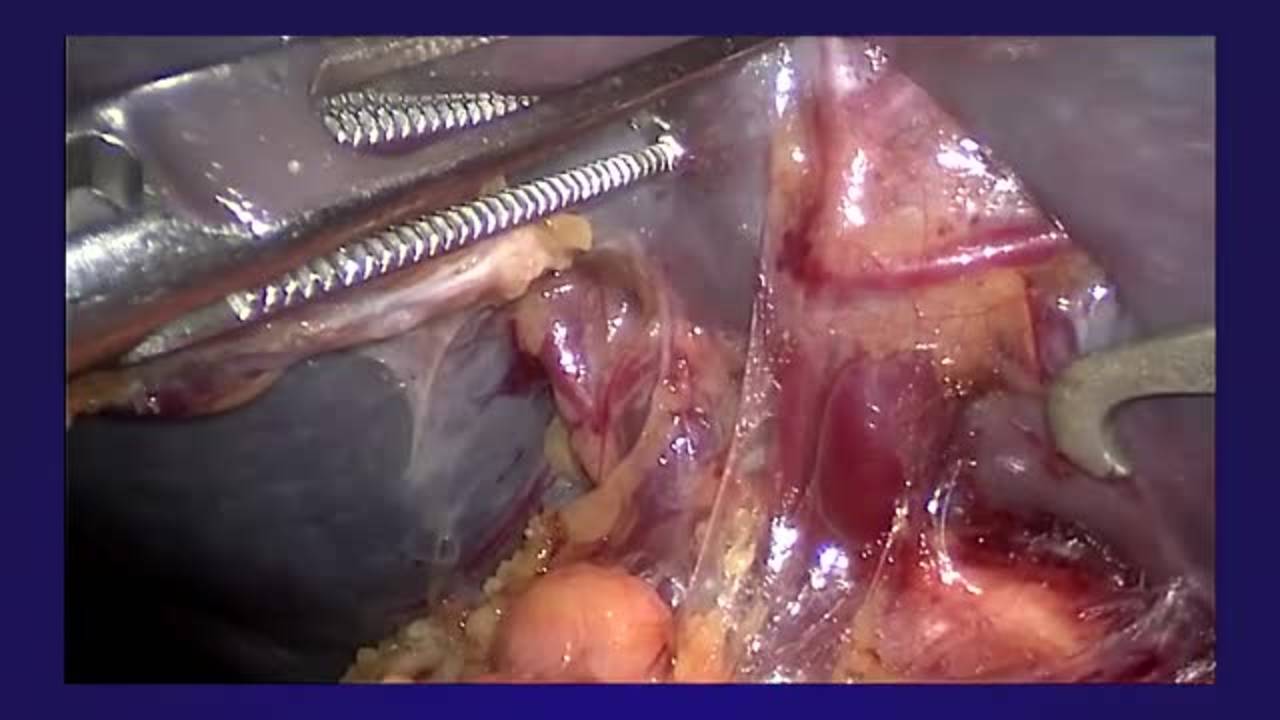
Laparoscopic Splenectomy and Cholecystectomy for Spherocytosis
8 min · Published Feb 2020
Video
Overview of the Surgical Management of Acute and Chronic Pancreatitis in Children with Dr. Juan Gurria
66 min · Published Apr 2026
Video
Pancreatitis in pediatric patients with pancreatic solid pseudopapillary neoplasms- a single center experience
59 s · Published Apr 2026
Podcast
Update Course Rewind: Pediatric Biliary Stones - Preventing Gallstone Pancreatitis 2024
Jeffrey Ponsky · 3 min · Published Aug 2025
Video
Multi-Institutional Analysis of Choledocholithiasis in Pediatric vs Adult Patients
59 s · Published Mar 2025
Video
Total pancreatectomy with islet autotransplantation (TPIAT) - Cincinnati Children's Pancreas Care Center
CCHMC Pediatric Surgery · 10 min · Published Dec 2024
Video
Chronic Pancreatitis - Pancreatic Pathologies by Cincinnati Children's Pancreas Care Center
CCHMC Pediatric Surgery · 8 min · Published Nov 2024
Video
2025 Pediatric Surgery Update Course - Updates in Pediatric Surgery feat. non-JPS Journals
Dr. Todd Ponsky · 22 min · Published Aug 2025
Podcast
Case-Based Journal Review: Inguinal Hernia 2025
19 min · Published Apr 2025
Podcast
Case-Based Journal Review: G-Tube & Fundoplication for GERD 2023
18 min · Published Sep 2023
Video
Update Course 2022 - TOP PUBLICATIONS IN NON- PED SURG JOURNALS - Jose Campos
27 min · Published Sep 2022
Podcast
Case Based Journal Review: Esophageal Atresia in 2022
17 min · Published Aug 2022
Podcast
Case Based Journal Review - CPAM in 2022
12 min · Published Apr 2022
Video
Intestinal Atresia Types Explained: Grossfeld Classification for Pediatric Surgery
1 min · Published Sep 2026
Video
Derivation and validation of the Pediatric Community-Acquired Pneumonia Severity (PedCAPS) score: A prospective cohort study
50 s · Published Sep 2026
Video
FETO for Late-Diagnosed Severe Congenital Diaphragmatic Hernia (CDH) at Cincinnati Children's with Dr. Beth Rymeski
4 min · Published Sep 2026
Video
Severe Congenital Diaphragmatic Hernia (CDH) Case: FETO Management & Unexpected Findings with Dr. Beth Rymeski
3 min · Published Sep 2026
Video
Fetoscopic Endoluminal Tracheal Occlusion (FETO) Procedure: Step-by-Step Guide with Dr. Beth Rymeski
4 min · Published Sep 2026
Video
Choledochal Cyst Types Explained: Pediatric Surgery Fundamentals
1 min · Published Sep 2026
What the experts said
Chile has the highest rate of cholelithiasis globally
Even in patients with no stones remaining, 2% will get recurrent pancreatitis from the initial insult
When patients present with gallstone pancreatitis, most pain and elevated enzymes occur as the stone is passing, and symptoms often resolve overnight as the stone passes
If laboratory values normalize after gallstone pancreatitis, ERCP is not indicated, but intraoperative cholangiogram should be performed to check for additional stones
For patients with impacted stone, rising lipase, and worsening jaundice, ERCP is preferred because surgeon confidence in retrieving impacted stones intraoperatively is lower
The ICG study compared different time periods rather than contemporaneous groups, confounding the comparison with improvements in surgical skill and instruments over time
The ICG study combined all complications without separately reporting common bile duct injuries, and bleeding complications are unlikely attributable to presence or absence of ICG
A complication rate of zero in any surgical series raises methodological concerns
ICG can be administered intravenously, eliminating the need for instrumentation required by traditional intraoperative cholangiogram
The ICG study compared ICG to simple visualization without any imaging technique, not to intraoperative cholangiogram, making improved visualization an expected rather than surprising finding
In a multi-center study of 167 early cholecystectomy patients versus 79 delayed, early cholecystectomy had 2% recurrence of pancreatitis compared to 22% in delayed surgery
When cholecystectomy was delayed more than 6 weeks after gallstone pancreatitis, recurrence rate increased to 60%
Patients who underwent early cholecystectomy did not have more biliary complications than delayed surgery patients
A Western Pediatric Surgery Research Consortium machine learning algorithm based on 1600 patients from 10 centers (2016-2019) can predict common bile duct stones using nine clinical factors, with 20% of patients having CBD stones
The machine learning algorithm for predicting CBD stones has a negative predictive value of 98%, meaning only 2% chance of missing stones when algorithm predicts low risk
The previous algorithm for predicting CBD stones was based on 300-400 patients, compared to 1600 in the new algorithm
In a multi-center study of 252 patients with choledocholithiasis, 156 underwent OR-first approach (laparoscopic cholecystectomy with intraoperative cholangiogram) and 96 underwent ERCP-first approach
Patients who underwent intraoperative cholangiogram first had fewer complications and shorter length of stay than ERCP-first patients, and 86% needed only the surgery without subsequent ERCP
The laparoscopic common bile duct exploration study included 4 centers with a broad range of surgeons, demonstrating feasibility beyond single expert centers
Of patients who had ERCP after failed laparoscopic CBD exploration (14% of OR-first group), outcomes were good without increased bile duct leak or complications
In the stepwise laparoscopic CBD exploration approach, 84% of patients had stones cleared with saline flush through a ureteral catheter alone
In a study of 173 laparoscopic cholecystectomies over 10 years (2013-2023), 83 used standard technique and 90 used ICG fluorescence
The ICG study showed perioperative complication rate of 12% in standard technique versus 0% with ICG, with significantly shorter operative times and better biliary visualization in the ICG group