


From
StayCurrentMD
Abdominal Wall Defects with Dr. Jacob Langer
With Dr. Jack Langer · hosted by Dr. Todd Ponsky
Chapter 1 of 9 · Fundamentals
Introduction
Introduction and Background
Expert statements on this page
No expert statements were drawn from this page.
Host summaries · secondary, not cited in answers
Educational content from recorded physician discussions — not medical advice. Talk to your (or your child's) care team about your situation.
Video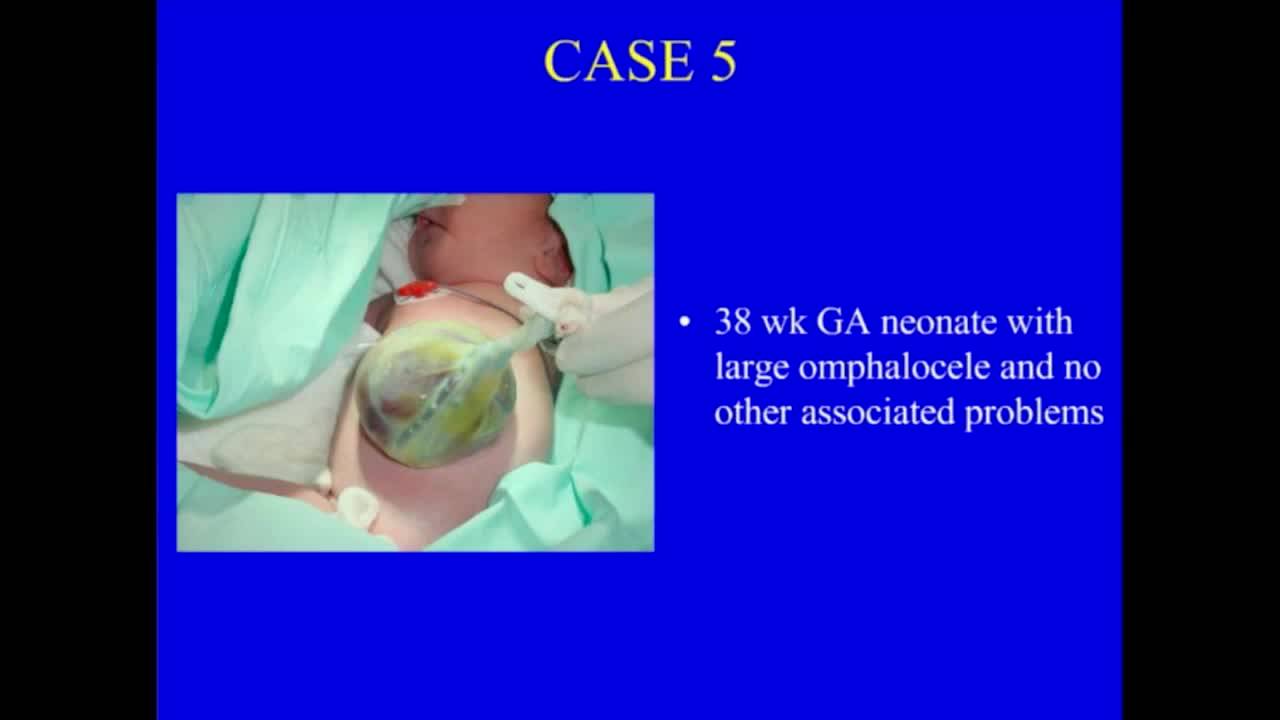
Abdominal Wall Defects
37 min · Published Nov 2018
Video
Abdominal Wall Defects: Update Course 2013
37 min · Published Sep 2013
Video
Gastroschisis - Clinical Practice Updates
Published Sep 2020
Podcast
Malrotation with Dr. Meera Kotagal
13 min · Published May 2023
Podcast
Update Course Rewind: Omphalocele & Gastroschisis 2020
Miguel Guelfand · 15 min · Published Jul 2026
Podcast
Intestinal Rehabilitation, Episode 1: What is intestinal rehabilitation?
14 min · Published Dec 2021
Video
Impact of social determinants of health on outcomes in pediatric short bowel syndrome...
43 s · Published Aug 2026
Video
Advancements in Pediatric Intestinal Failure: Innovative Therapies and Improved Outcomes
17 min · Published Aug 2026
Video
Update Course Rewind 2025: Updates in NEC Management
11 min · Published Jul 2026
Video
Availability, utilization, and barriers to bowel ultrasound for necrotizing enterocolitis...
55 s · Published Jul 2026
Video
Malrotation and Volvulus with Trinity
Dr. Steve Rothenberg · 8 min · Published May 2026
Video
Malrotation Infant
Dr. Steve Rothenberg · 9 min · Published May 2026
Podcast
The Full Story on CPAMs
56 min · Published Sep 2021
Video
Should We Resect Asymptomatic CPAM Flake vs Langer
Dr. Steve Rothenberg · 14 min · Published May 2019
Video
Tricks - Thoracoscopic-Assisted Partial Rib Resection - Jack Langer
9 min · Published Nov 2018
Video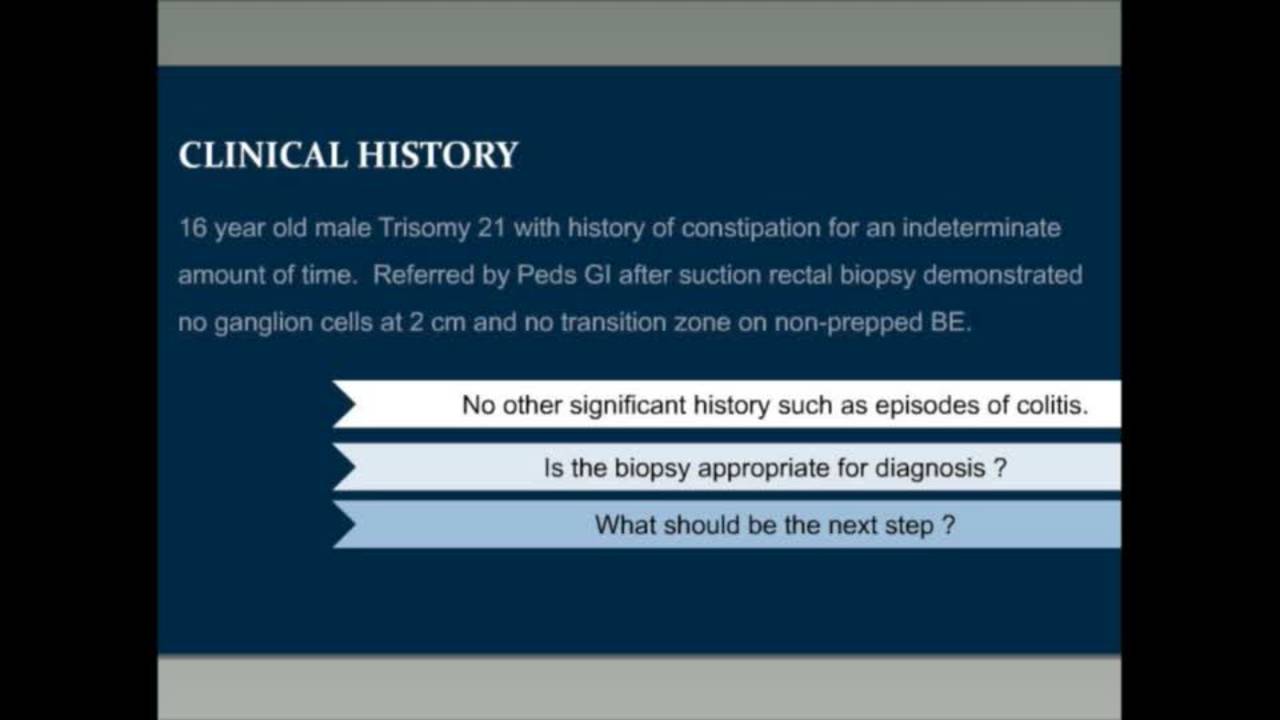
Tricks - Ultrashort Segment Hirschsprungs - Kristine Thayer
17 min · Published Nov 2018
Video
Cloaca - Prental Imaging & Diagnosis - Counseling
Dr. Todd Ponsky · 36 min · Published Nov 2018
Video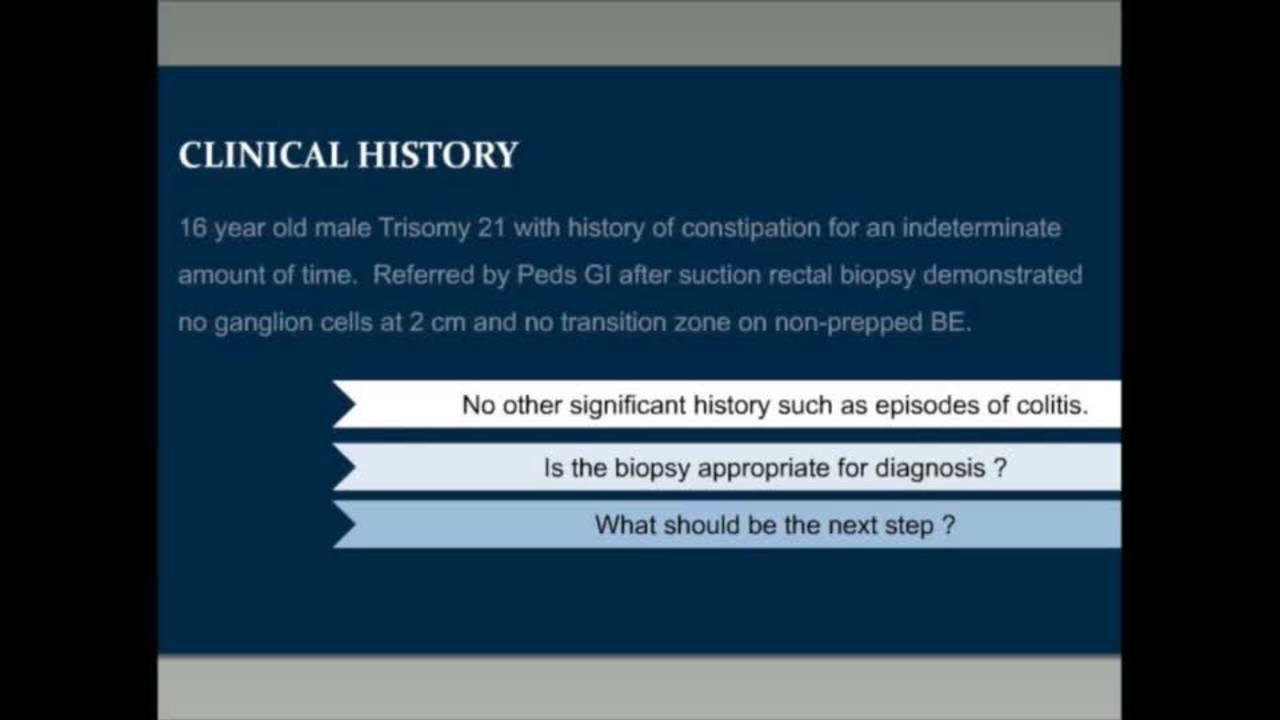
Ultra-Short Segment Hirschsprung Disease: Difficult Cases
17 min · Published Oct 2018
Video
Intestinal Atresia Types Explained: Grossfeld Classification for Pediatric Surgery
1 min · Published Sep 2026
Video
Derivation and validation of the Pediatric Community-Acquired Pneumonia Severity (PedCAPS) score: A prospective cohort study
50 s · Published Sep 2026
Video
FETO for Late-Diagnosed Severe Congenital Diaphragmatic Hernia (CDH) at Cincinnati Children's with Dr. Beth Rymeski
4 min · Published Sep 2026
Video
Severe Congenital Diaphragmatic Hernia (CDH) Case: FETO Management & Unexpected Findings with Dr. Beth Rymeski
3 min · Published Sep 2026
Video
Fetoscopic Endoluminal Tracheal Occlusion (FETO) Procedure: Step-by-Step Guide with Dr. Beth Rymeski
4 min · Published Sep 2026
Video
Choledochal Cyst Types Explained: Pediatric Surgery Fundamentals
1 min · Published Sep 2026
What the experts said
With gastroschisis, the main issue is that the bowel gets damaged through fetal life
Most gastroschisis patients don't have any other associated anomalies, and it's pretty rare to have abnormal chromosomes
Early papers showed a benefit to cesarean section in gastroschisis, but cesarean sections were usually done early at 36 or 37 weeks, raising the question of whether timing rather than cesarean section itself gave the benefit
Many studies have failed to show an advantage to cesarean section, and most people nowadays would not do routine cesarean section for gastroschisis
There has not been any large randomized trial looking specifically at the issue of early delivery in gastroschisis
Toronto's approach is to deliver gastroschisis patients at around 37 weeks unless they've already gone into spontaneous labor
The mean gestational age of onset of labor is a lot earlier in gastroschisis pregnancies, possibly because of inflammatory mediators produced by the inflamed bowel
In gastroschisis pregnancies, labor can usually be successfully induced at 37 weeks, unlike regular pregnancies
Most evidence, including from the CapsNet database, suggests that delivery in a perinatal center is beneficial for gastroschisis
During transport of gastroschisis patients, it's important for the baby to be nursed on his or her side, usually right side down, to prevent kinking of the mesentery and ischemia of the bowel
For gastroschisis, bedside closure is the first choice if the bowel is not too thickened and there's not too much peel
Adrian Bianchi first described bedside closure for gastroschisis
Using forceps at the bedside to push bowel back in can damage the bowel in a squiggling baby
The current approach uses pre-formed silos, slowly pushing on them with fentanyl or morphine sedation in an awake baby, aiming to keep intraabdominal pressure below 20
If reduction is successful with good pressure and perfusion, the silo can be removed immediately and the umbilical cord stump used to cover the hole with a Duoderm dressing left for about 5 days
Umbilical hernias from plastic closure generally close by age 2 or 3 years, just like any umbilical hernia
Some gastroschisis patients become tachypneic with bluish legs after reduction and require intubation by neonatologists an hour or two later
The disadvantage of leaving a silo on for 24-48 hours is that the abdominal wall defect gets stretched out and bigger, taking longer to close with plastic closure
Spring-loaded silos apply pressure outward as you push down, making the defect larger over time
The incidence of intestinal atresia in gastroschisis is between 5 and 10%
There are two types of intestinal atresia in gastroschisis: early-onset atresia where bowel gets very dilated but not thick-walled, and late atresia where the abdominal wall defect becomes very small causing ischemia and potentially vanishing gastroschisis
The prognosis for short bowel syndrome has improved dramatically over the last 10-15 years because of intestinal failure centers, better TPN that doesn't damage the liver as much, and control of sepsis
For atresia in gastroschisis, there are three management choices: repair at time of closure, bring out stomas, or drop everything back in and repair the atresia later
There's no good evidence for optimal management of atresia in gastroschisis because it's such a rare occurrence
If bowel looks good without much peel, primary repair of atresia at initial closure is appropriate; if there's concern, drop it back in and repair later
Stomas are brought out only when there's necrotic bowel requiring resection and the bowel is not healthy enough to anastomose
The umbilicus is the preferred site for neonatal stomas because it results in a scar that would have been there anyway and is convenient for appliance placement
Neonatal stomas prolapse no matter where they are placed
Three weeks is average time to bowel function in gastroschisis, so investigations typically aren't started until 4 weeks
Metoclopramide (Reglan) can be given intravenously for gastroschisis hypomotility, unlike oral prokinetics where absorption is uncertain
A UK study showed cisapride helped gastroschisis patients achieve bowel function more quickly, but cisapride is no longer available
A randomized prospective trial is currently underway to determine if intravenous metoclopramide can shorten the period of hypomotility in gastroschisis
At 4 weeks without bowel function, contrast enema is performed to look for mechanical obstruction, sometimes followed by upper GI if enema is inconclusive
If still no bowel function at 6 weeks, laparotomy is typically performed, often finding adhesions which are taken down
Going in too early on gastroschisis patients with prolonged ileus is a mistake
In gastroschisis, it's usually the right testis that is extruded, and in about half the cases it finds its way down into the scrotum after being reduced
Omphalocele has a much higher incidence of associated anomalies and chromosomal abnormalities compared to gastroschisis
Karyotype analysis and testing for Beckwith-Wiedemann syndrome are routinely performed for omphalocele patients
Small omphaloceles without liver are more likely to be associated with abnormal chromosomes than large omphaloceles
For small omphaloceles, there's no rationale for routine cesarean section, delivery at a perinatal center, or preterm delivery
Small omphaloceles are simple to repair surgically
For giant omphaloceles (defined as any omphalocele with a lot of liver out), most surgeons recommend cesarean section, though this is not evidence-based
Giant omphaloceles should be delivered at a perinatal center because they need a pediatric surgeon and experienced neonatologists
Pulmonary hypoplasia is associated with giant omphaloceles and is very difficult to diagnose prenatally
Some giant omphalocele patients have severe pulmonary hypoplasia requiring early intubation and respiratory support
The goal in omphalocele management is to reduce viscera without injury from direct trauma or increased intraabdominal pressure
Intraabdominal pressure monitoring is very helpful in omphalocele management
Stuart Lacy established the guideline of keeping intraabdominal pressure below 20 mmHg based on rabbit studies in the 1980s, which showed improved outcomes in a prospective study in children
Lacy also described an increase in central venous pressure of more than 4 as a concerning threshold
Intraabdominal pressure can be measured through the nasogastric tube or via Foley catheter measuring intravesical pressure
The trend of pressure is more important than the absolute number during reduction
Primary closure is attempted for full-term omphalocele patients without significant cardiac disease, respiratory issues, or pulmonary hypoplasia
The Montreal group described using the omphalocele sac as a silo by sequentially ligating it over several days to allow abdominal wall stretching
Sequential sac ligation requires a thick enough sac and umbilical cord insertion at the top rather than the side
Using Duoderm to gradually reduce omphaloceles appears to achieve reduction more quickly than sac ligation
Indications for escharotic therapy include prematurity, severe cardiac disease, pulmonary hypoplasia, multiple anomalies, chromosomal abnormalities, or giant omphaloceles where reduction is not feasible
Mushroom-shaped omphaloceles have a small abdominal wall defect but large external contents, making reduction impossible
Sigy Ein had long experience using silver sulfadiazine (Silvadene) for escharotic therapy in omphaloceles
With escharotic therapy, the omphalocele is painted with the agent, forms an eschar, eventually epithelializes, and is later repaired like a large ventral hernia
Timing of definitive omphalocele repair after escharotic therapy depends on the individual child, ranging from 6-8 months to 3-4 years depending on defect size and medical comorbidities