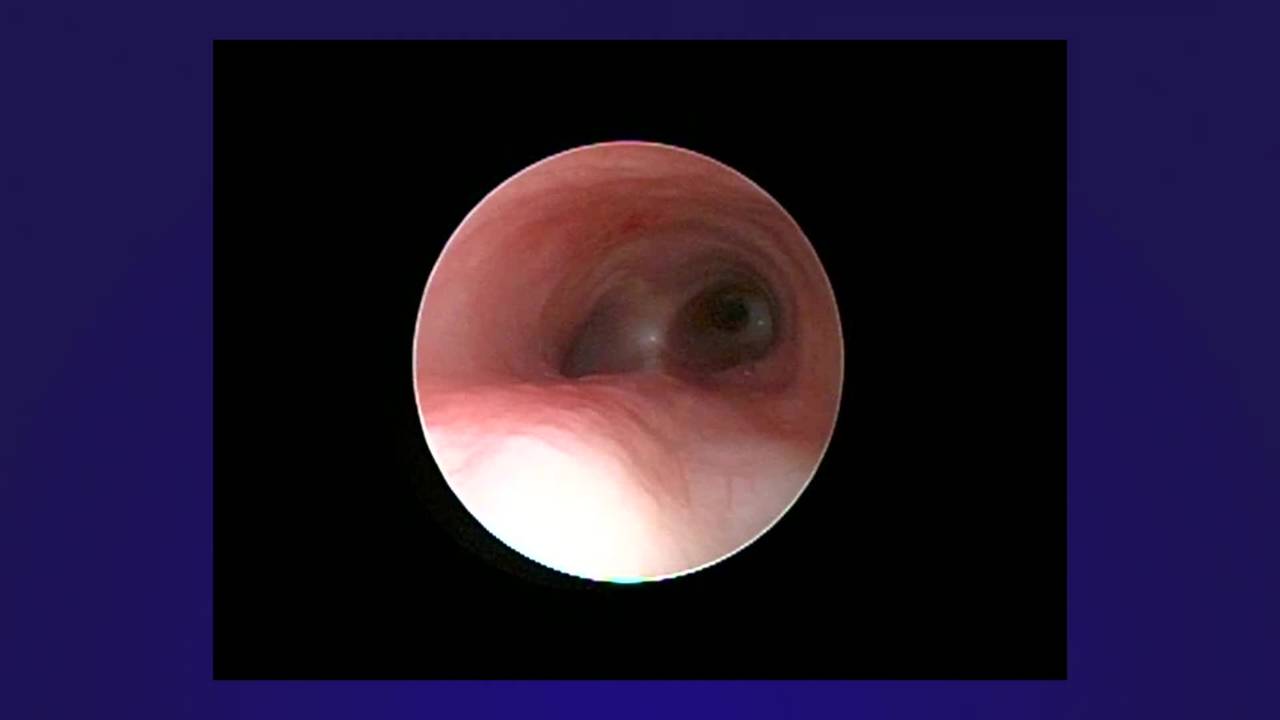
Hi everyone. Welcome back to the Stay Current podcast. I'm Ellen Ancisco and I'm Anton Bash. We're research fellows at Cincinnati Children's Hospital Medical Center. We're back doing a format we've done before. This is a case-based literature review and we're joined by our friend, Dr. Jose Campos from Chile. So in this format, we have a bunch of articles about a particular condition. And we're going to review them by going through a case. And we're going to do so with Todd and Jose. We're going to take them through some scenarios. We're going to grill Todd, get their opinions on how they would manage a patient, and then we're going to review articles from the last few years that can help answer some of these clinical questions. And we're going to take you, the listener, along with us. And this is Stay Cured in Pediatric Surgery podcast. Also here in this podcast, we're featuring Rod Gerardo. We recorded this episode just before he left to go back to general surgery residency, so we're excited to have him here with us. And today, spoiler alert, we're talking about esophageal atresia. If you're listening or watching us on YouTube, you can scroll down on the media player, click on the link and open it and you could read along with us while you're listening. If you have ideas for other articles that may answer some of Todd's questions, you can leave those in a comment if you're listening on the state current pediatric surgery app. So here's the situation, Todd. You're taking a trainee through their first oesophageal atresia case. You have a neonate with an antenatal diagnosis of oesophageal atresia. They weigh 3 kg. They're Completely stable, no other anomalies. We already did the workup. They have a type C esophageal atresia. Let's say we start through our right thoracotomy, and we've developed the extra pleural plane. The azygous vein is right in my face here. And then I look at you across the table and I say, do you want me to divide this? What are you gonna tell me? So I would divide the azyous, but that's purely because that's how I was trained. It's usually right there in the way of where the anastomosis is gonna be. That's why I divide it, but I could be convinced to not do it. Jose, what are you gonna say if Rob looked across the table and ask you, hey, do you want me to take this? I would divide it as well, the same reasons I was told to divide it. It's just kind of the classical approach to it, especially if I'm taking a trainee. So both of you have been trained to just take the ass against Spain. Well, that leads us to our first article that Jose has brought to us. This is called the Impact of Preservation of the azygous vein during surgical repair of esophageal resia, tracheoesophageal fistula. Systematic review and meta-analysis. This came out of Pediatric Surgery International in last year, almost a year ago, 2021. And they systematically looked back through the database from December 2020. And they looked at anestematic complications, thoracic infections between neonates who either had their azyous vein preserved or not preserved, and then they looked at the outcome postoperatively. So almost 700 neonates were included in the study, and the significant finding was that if they preserved the azyous vein, meaning they left it alone. There was a significantly lower chance of postoperative pneumonitis in that group of patients, but there was no significant difference in the leak rate for the anastomosis, nor was there a difference in the rate of stricture postoperatively. The theory behind this is that the azygous vein will drain the bronchi and the trachea. Uh, as well as the esophagus, which would lead to an impaired function postoperatively and impaired clearance of mucus and debris from the tracheobronchial tree. But it seems like preserving or not preserving the esophagus doesn't really affect that. I'm not sure if I'm gonna change my management right away after reading this, but I would be very interested in seeing more prospective data on this, on, on people who have preserved the ASIOs and see how they're doing. What, what do you think, Todd? So, a few things. Let me start off by saying, I could definitely be convinced to stop dividing it. I Never like dividing it. You're in this tiny little space and you're cauterizing a vein that you kind of know you don't need to be doing because you could probably still do the operation without doing it. There's a definitely a chance that you could cause bleeding. So for all of those reasons, I think it's great to know that maybe we shouldn't be dividing. Now, I'll tell you what's not convincing me, this paper. Oh why not? They took a bunch of papers and compare the outcomes. Were those papers designed to look at the difference. Between division and non-division of the Azagis, or were they taking papers that had different endpoints and they, they looked at that coexistingly to see because there's so many other factors. The articles were made to pick up a difference between divided and undivided, but the endpoint of chest infection, it's not clearly defined in all of these papers, so some of them just said chest infection, some of them said. Pneumonitis, some of them said pneumonia, so that's not a very homogeneous endpoint. That's not a metric. They have to look and figure out why they're having chest infections. That's a bigger question. OK, that's a good point. I am willing to explore this possibility of not dividing it. I don't need someone to prove to me that dividing it hurts the patient. I need someone to prove to me that you don't need to divide it. It's worth to continue to look into this, and I would look forward to more prospective data. All right, next question. So we finished the posterior part of the anastomosis, and the trainee asks for a 6 French feeding tube to put down. What would you say to that? I would say absolutely put it down, but then take it out at the end of the case. It's good to have it in there when you're doing the interior wall, so you don't get the back wall, but then take it out. And what about you, Jose? So, I would put one in, yeah, I would leave it at the end of the case. We'll see if I change my my opinion after listening to the article. OK, so the article that Jose helped us find to address this question is called Effect of Trans-astomotic Feeding Tubes on Anastomotic Strictures in Patients with esophageal atresia and tracheoesophageal fistula, The Quebec Experience. And this is published in JPS this year, actually, 2022. This is a retrospective review from three hospitals in Quebec. They looked at type C and type D esophageal atresias undergoing primary repair between 1993 and 2018. They divided patients between two groups, those who have a trans anastomatic tube placed and those who does not. Now the primary outcome was whether or not they developed a stricture within a year, and the secondary outcome was the duration of the post-operative TPN use for the patients. OK, so here they looked at 244. Patients. The anastomotic stricture rate overall for all the patients at one year was 30%. They put transastomotic tubes down in 61% of patients, and 36% of those who had the transastomotic tubes in developed a stricture compared to 19% of patients without a trans anastomotic tube, and that was even true after multivariable analysis. Patients with the transastomotic tubes had a 2.72 times higher odds of developing a stricture compared to those without transastomotic tubes. And their conclusion was trans anastomatic tubes are not recommended from their perspective rate. So what do you all think about that? Well, I would like to change my management. So far I've been leaving transana automatic tube, but I'll be very happy to change that management based on this article. I think this article is well done. They actually adjusted for gestational earthquake leak the. Length of the gap, the tension, everything. After adjusting for everything else, they still got almost 3 more stricture rates. The other thing that is I was leaving this tube in my hope to feed the child early, so I'm a big fan of ERAS protocols on early feeds. Patients with the transcendastomatic tubes started feeding on day 2. Versus the other newborns started on day 10, but early feeding did not lead to less TPN. The duration of TPN on both groups were exactly the same, 9 days. And did we get them home earlier? No. So even if you don't believe that the trans anastomatic tube is giving you more strictures, there's no benefit at all in leaving one. I think we should get rid of it, and it's going to take a while for people to be brave and change their practice, but I think this one's a no-brainer for me. Todd, you said you already take the tube out before you leave the operating room. Is this kind of in line with what your thoughts were? Yeah, we're finally getting good data in pediatric surgery. I historically always left tubes. In fact, I went the opposite direction. I used to theorize that you should leave a huge tube across the anastomosis, and that would keep it stented open and it would heal wide open. Boy was I wrong. This is clearly showing that Having a foreign body in there does not stent it open, and in fact makes it stricture. So once I read the Midwest Pediatric Surgical Consortium article, he stopped using trans anastomotic tubes. And for anyone out there listening, it's hard to do. That's been your safety line, and to let go of it is a little scary, but it certainly did not impact. Uh, any of our outcomes. In fact, it's probably been better, and now this is just another paper to support that. And both you and Jose said that you were trained by people who were like, you place a tube, you leave it, that way you could feed them afterwards. There were 3 reasons to have a tube. One is it helps with your anterior anastomosis. 2 is people believed that it was like safe to have a stent across an anastomosis in case there was a leak. To maintain some continuity. And then the third thing is that you could feed after surgery. Esophageal stenosis is associated with esophageal atricia from 7% to 10% of cases, and most of them are diagnosed really late. Some of them are diagnosed after your anastomosis blows up. So one of the maneuvers you can do is just pass this tube and see if there's any resistance in passing into the stomach, and that will give you some idea if the distal esophagus is. Tight or not. That's a great idea. Push it through, make sure it passes. That's happened to me before where I found that it didn't pass into the stomach and there was an esophageal stenosis. In fact, that was one of our previous articles we talked about. As I say, congenital oesophageal stenosis. If you guys wanna listen to that, then you can scroll back a few episodes. Let's say you're gonna close the chest here, and we're getting done, and then suddenly then Rod's across the table and he asks for a chest tube. It's gonna help in the post-op management. What size chest tube should I live in, Todd? Yeah, I look across the table, I say, hey, Tosh, what size chest tube do you want me to put in here? What are you gonna say? Usually I put in like a 12 French chest tube. Oh, you do, Jose, what do you do? Yeah, I was told to leave a, a chest drain in. A few of my first cases, I did it routinely. We tend to be dogmatic. I'm, I was just trying to be safe at the beginning, like being an inexperienced surgeon, doing whatever they gave the baby security, but I quickly moved away from it. If there's a lot of tension, difficulty on the anastomosis, or if it's a long gap, I think I would be more convinced to leave a chest drain, but I do not do it routinely. Todd, do you leave a chest tube every time? I do, that if there's a leak, it could drain the leak, right? I could be very much convinced to stop doing it because number 1, if there's a leak, it doesn't always just come right out through the chest tube. Number 2 is I believe that the chest tube. May injure or suck on or even increase your chance of disruption of your anastomosis. And number 3, they're painful. So I could absolutely be convinced to stop leaving them. The journal article we're gonna talk about here to address this question is from last year actually, from 2021. This is again out of JPS and this is called Weather. Prophylactic intraoperative chest drain insertion in esophageal resia, tracheoesophageal fistula is an evidence-based practice or just a prejudice, a systematic review and meta-analysis. The authors here out of India, they looked at patients who were either received a chest drain for the post-operative period or did not get one. And then they looked back retrospectively on the, the outcomes of them perioperatively. So it ended up with about 500 newborns. They didn't have any significant difference in the occurrence of the leak, or the pneumothorax or the mortality rate based on whether or not they placed a drain. But there was a significantly higher chance that the group that got a chest drain would have to go back to the operating room. Basically suggesting that you may not need a routine chest drain every time because it doesn't appear to prevent complications. And probably for a lot of things that you and Todd are mentioning, it's not necessarily gonna drain the leak. I'm a bit conflicted by this evidence because the authors don't mention an explanation on why the group that had a routine chest drain insertion had higher re-operation rates. They don't mention the indications for those operations, but here's one thing that is convincing me not to leave a chest drain, at least routinely. If you put a chest drain. The chances that you're gonna get another one is just the same. OK, final question. So we're finishing up the case and Rod asks if postoperatively, we should continue perioperative antibiotics for more than 24 hours. And should we put the patient on an acid suppressor, like a PPI or an H2 blocker? I have moved away from both of those. I used to do both on everybody. Regarding the antibiotics, I just don't give it after a 24 hour perioperative dose, and our neonatologists are concerned that giving acid suppression. To a neonate increases the risk of necrotizing entercolitis. In the neonatal period, we try to uh give less of it, although this is debated. And Jose, same thing. Is this what you were taught? How does it changed over time and where are you at now? No, I don't. Don't do antibiotics post-operatively. One of the reasons it's not indicated. I want to detect a complication early. I don't want to have them on antibiotics kind of covering a complication, and acid suppression is a difficult one for me because I do give acid suppression. Giving PPIs to neonates also can increase pneumonia in different populations, but I think that risk is pretty, pretty low. It's very, very minimal. All right, so what did the article show? OK, so the article we're looking at here looks at a bunch of different things related to esophageal atresia, and the title of the article is Challenging Surgical Dogma and the Management of Proximal esophageal atresia with distal tracheoesophageal fistula. Outcomes from the Midwest Pediatric Surgery Consortium. This article is published in JPS in 2017. As far as the questions about postoperative antibiotics and postoperative Acid suppression. The paper outlines that antibiotics for more than 24 hours and acid suppression essentially showed no difference in strictures or leaks. It's an important article. It's a good article. Yeah, it's a great summary article looking at a bunch of different outcomes in esophageal atresia. I feel like we covered a lot today. To summarize then, so we decided that when you're doing esophageal treatsia, tracheoesophageal fistula repair on the neonate, you guys are still on the fence about taking the azyous vein or not, but you could be convinced. As far as a feeding tube, you guys are both thinking maybe more people should stop leaving feeding tubes postoperatively, right? And then as far as the chest tube goes, Todd, you leave one, Jose, you selectively, OK. And then the last question we were saying, antibiotics and acid suppression. So Todd doesn't do that postoperatively, but Jose, you're still kind of maybe holding on to the acid suppression part. I'm not ready to give up acid suppression. Sorry. If I were to give a summary of today's selection of articles, the theme is less is more. It keeps seeming that articles that are coming out more and more are showing us things we don't need to do anymore. And so, I think I agree with that concept and If I felt like chest tubes hurt the operation or the anastomosis or a patient, I could be convinced to stop using them. It's a little scary, but I think it's probably heading in that direction. I think it's difficult as a trainee or as a young surgeon to challenge the very same people who has taught you to do something. But with this new evidence, I feel that we can find common ground. It's not uh a crazy idea, less is more, it's something that it's been proven and it's been safe so that's how you can respectfully challenge. What you've been taught to and to improve the outcome for your patients. Yeah, definitely. OK. Awesome discussion. Thanks so much to Todd, Jose, and Rod for joining us. If you like this podcast, if you like this content, leave us a review on Apple. Podcasts or Spotify, wherever you're listening. Subscribe to our YouTube channel. Let us know what you think there. And don't forget to download the Stay Current in Pediatric Surgery app where we have a lot more content like this with podcasts, videos, articles. Take a look and download it. And as a reminder, don't forget, we have another virtual event coming up soon in the end of August. What's the virtual event, M? It's 10th annual pediatric surgery update course. Todd's been doing this for 10 years now. It's a huge milestone. We'll have it in person in Cleveland with some of our experts, and anyone can watch virtually. It's happening on Tuesday, August 30th, starting at 9:00 a.m. Eastern Standard Time. Check out the link in the description below. Until next time, I'm Ellen. I'm Em. And remember, knowledge should be free.
Comments