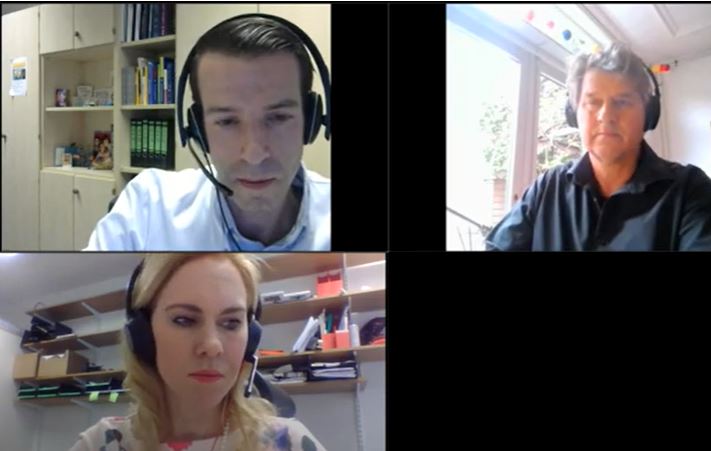
All right. Welcome back. This is the January episode of our series on the Journal of Pediatric Surgery article review. Uh, we highlight articles chosen by the editors of JPS and then we talked to the editor, we talked to the authors. This episode is special because Society issue for APSA, the American Pediatric Surgical Association, we have some really great articles chosen by Doctor Kelleher. I'm Casey Kelleher. I'm a pediatric surgeon at Mass General for Children in Boston. I am the chair of the ABSA Publications Committee. I'm Rod Gerardo. I'm Ellen Ancisco. I'm Em Tombash, and Em is another junior research fellow. The team is growing, and she's been behind the scenes editing stuff for several months now, and I think we finally convinced her to put her voice on the podcast here. Thanks for joining us, Em, and we're gonna jump right in with the first. Article. If you want to read along with us, scroll down under the media player, click on the link, we're gonna give you the links to all of these articles so you can read them. So, the first article is called Development of an Academic RBU System to promote Pediatric surgical academic Productivity. This one's out of Nationwide Children's Hospital. Yeah, and we were lucky enough to talk to the senior author, Doctor Gail Bessner. I'm Gail Bessner. I'm the chief of pediatric surgery at Nationwide Children's Hospital in Columbus, Ohio. I think a lot of pediatric surgeons are inherently academic surgeons as well. So academic hospitals then. are pressured to figure out ways to compensate these surgeons in variable ways. Historically, surgeons of all types have been incentivized based on their work or views, and it's certainly important for clinical productivity and clinical program building, but it's really important to take advantage of other strengths that surgeons have. Because some of them are operating around the clock, and they don't do a whole lot of research. Some of them are doing research around the clock, and they maybe don't operate as much. And both parties seem to think, I am the one financially holding up this institution. Doctor Bessner wanted to look at an idea that has been used in other surgical subspecialties in the past. The Question is, how do we promote academic productivity amongst our partners? Partners, if we're only incentivizing them for clinical productivity, this idea of an academic RVU or a reimbursement value unit, is that what it's called? Relative, totally wrong, relative value unit. But the, the concept is simple. You have a, a type of RVU for academic work. You have a type of RVU for clinical surgical work, and she talks about how they implemented that at nationwide and And the results. The concept of academic RVUs was probably first put out there about 12 or 13 years ago, but it wasn't described how to incentivize people for that. So, one of the first things that we did was to come up with a point-based academic RVU system whereby people can accumulate points based on the number of publications that They have the same for presentations, and the same for all of the academic pursuits that we're involved in. We kept work RVUs as part of the incentivization plan, and there are also other goals. And I really believe that these types of goals and these types of incentives have to be achievable. Then to figure out the balance. Yeah, it sounds like overall very positive results they had. An increase in the number of presentations and peer-reviewed publications, uh, and they had an increase in the external federal funding for research. Right, like they go from $750,000 to $5.7 million. That's a 7.7-fold increase. Super impressive. They have this table that they show exactly how they at Nationwide broke down the RVUs. Anyone can pull this table and use for their hospitals because the most The important thing is to find some way how to credit your surgeons for their academic work. I think that a lot of people are trying to figure out just how to weight productivity that's not clinical. Like, how do we look at grant support? How do we look at publications? How do we look at teaching? Like, how do those things come out and how do we be transparent about the way we pay people for those things? Because historically, people just got a salary and it wasn't really based on anything, it was based on how the chief, if the chief liked you or if you worked hard. In addition to Having some sort of value assigned to your academic work so that it doesn't just get end up on the back burner. It's also nice to have this for the transparency. Todd has been a pediatric surgeon at 5 different hospitals, and here were his thoughts. In Akron, Bob Perry, the way that he structured the bonus was that the entire group has to get a certain RVU, not a single person. So if the whole group gets to this RVU, you all get 50% of your bonus just because the group. That way, there was no competition like trying to steal cases and stuff, because the whole group rose as a group. And then everyone had to have their project and depending on how well you did in your project, you would get incentivized part of your bonus. It just said you have to add value to the group in something other than just clinical. The next one is implementing a standardized gastroschisis protocol significantly increases the rate of primary sutureless closure. Without compromising closure, success, or early clinical outcomes. And this was a retrospective review of patients between 2008 and 2019 where they compared the outcomes before and after the implementation of a protocol in 2012. And we were able to talk with the first author of this article. I'm Charza Jaharifard. I'm a pediatric surgeon and assistant clinical professor of surgery at BC Children's Hospital in Vancouver. Canada. I thought this is cool because here, they are giving you not only the outcomes, but they're giving you the actual protocol that they use to hopefully increase the number of sutureless closure that your institution could do for gastroschisis. The thing that they did really well, which we don't always see in other protocol papers, is that they really explained what the protocol was, and they measured a before and after period very well and were very specific. Specific and candid about the things that they measured, the things that they would have done differently. So I think the neat thing about training in general, um, in surgical training is that you get to experience several different institutions and several different ways of doing things. Um, so when I was at Saint Justin as a fellow, there were 3 of us fellows, and what we began to realize quite quickly in, in our training was that the way that gastroschisis was treated at Saint Justin was very different from other places that we collectively had trained. And what made it different was that there was very Low use of silos, whereas in other institutions where we trained, um, the majority of patients were placed in a silo and then serially reduced, um, until they had their ultimate closure. Whereas at Saint Justin, pretty much every single patient had an attempt at an immediate bedside sutures closure, and as we began to look into it, we understood that, uh, several years before a protocol had been developed and so that led to the idea of examining how practice had changed and how outcomes had changed before and after the implementation of the protocol. The outcomes were encouraging. Um, so most people will argue that a silo is safer and gentler, um, and that most babies can't be closed immediately because of extrinsic causes, you know, bowel dilatation or matting or whatever. But we found before and after protocol implementation that about 75% of babies can be closed immediately. Now, whether that was in the OR pre-implementation with fascial closure or at the bedside post, that's a pretty astonishing number. You know, maybe the protocol here isn't exactly what All institutions do, but having a protocol that theoretically all surgeons in the group follow is really one of the more valuable pieces of this, aside from the specific components of that protocol. First of all, it's a little less scary for the parents, to be honest. Um, if you have a newborn with gastroschisis and for 56 days, you're looking at their intestines through a silo, I think for those of us in pediatric surgery, that might not really seem like a big deal, but from the parents' perspective, that's a really big deal. And you can't hold your baby for that period until the the silo is completely reduced, versus if you close them immediately and then they're, you know, even if they're intubated, they're extubated within 48 hours, that means you can hold them within 48 hours. And of course, if you manage to do this without intubation at all, that means you can hold them immediately. Two main points. One, it seems like sutures closure for gastroschisis does not only seem to be good for the patient, but also seems to be very attainable if you follow a guideline like this. Anyway, so the last one, this is A long-term safety evaluation of placental mesenchymal stromal cells for in utero repair of myelomeningocele in a novel ovine model. And we got to talk to the first author, Doctor Sarah Stokes. She's a general surgery resident. My name is Sarah Stokes, and I am a PGY 6 resident at University of California, Davis. So this is a, a little bit different from a lot of the articles we've been reviewing on the podcast. This is a basic science paper. This one, I think, is really Pertinent to fetal care and that is something that I think we all wish we were better at. So I think that there are lots of people who wish we could intervene earlier and know that if we could intervene earlier on myelomeningocele and CDH and um maybe bowel atresias or Hirschsprung's disease, that babies have an amazing ability to heal and, and it might, you know, we might be able to cure disease rather than just temporize symptoms like we do in a lot of these things. And this is kind of a stepping stone. Paper. So they in a prior study shown that this treatment is efficacious in animal models. In all of the prior studies when we've been looking at the efficacy of placental mesenchymal stem cells for in utero repair of MMC, and here Dr. Stokes tells us how they did it. We had done two surgeries in these lambs. First, we did surgery where we created the defect, and then we did a surgery where we repaired the defect. Both were in utero, and when the repair was done, we used the PMSCs to repair them. MMC defect. In this study, we did a single operation around a gestational age of 100 days when these lambs were in utero. We created and repaired the defects simultaneously, and we put the PMSCs directly onto the spinal cord. They did laminectomies on these fetal lambs, then they basically put these stem cells onto the spinal cord and waited. You know, this was showing the safety of The intervention. Then when the babies were born, and they followed them for a few months, they got imaging on them, and then they tested the spinal cord in the brain of the lambs. Our results were pretty much what we expected. We found that the PMSCs did not persist in the placentas, in the uteri, or in the lambs at 3 months. Um, we also found that there was no histological evidence of any abnormal growth or tumor development. It sounds like they saw what they were expecting to find is that those Cells, there was no trace of those cells or that DNA, and they did not see tumor. And so that is one step forward in, in bringing them to the point of using these cells in human trials. And we have now started with our first two patients, um, and we'll be continuing to use this for more patients over this year. This is so cool. As an aspiring fetal surgeon, seeing those translational research come into real life and can be used in human trials is fascinating. The thing about this article is. That we on this podcast really focus on clinical research and it was really refreshing, get a basic science article, uh, that is way over my head. I'm not smart enough to understand this stuff, but we're happy to share this with, um, with you, with the listener. The articles this month were varied in terms of their scope, right? We had the administrative sort of article about academic RBUs, then we had the more clinical Practice article about a gastroschisis protocol for sutureless closure, and then we have this basic science article about addressing the repair of myeloma meningocele in fetuses. And that's APSA, baby, the diversity of the academic surgeon. If you like this episode, then make sure that you follow us on social media, subscribe to our YouTube channel, Download the Stay Current pediatric Surgery app. It's in the Apple App Store, it's in the Google Play Store. But until next time, I'm Rod, I'm Ellen, and I'm Em. Remember, knowledge should be free.
Comments