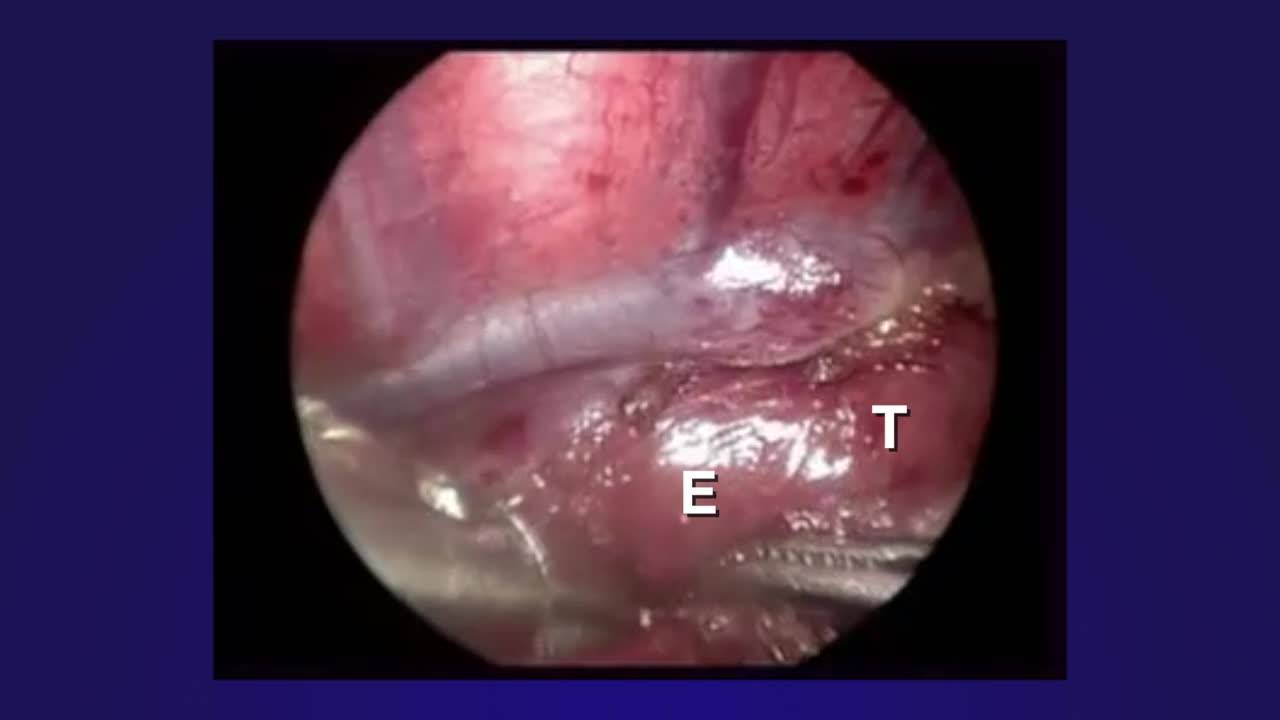
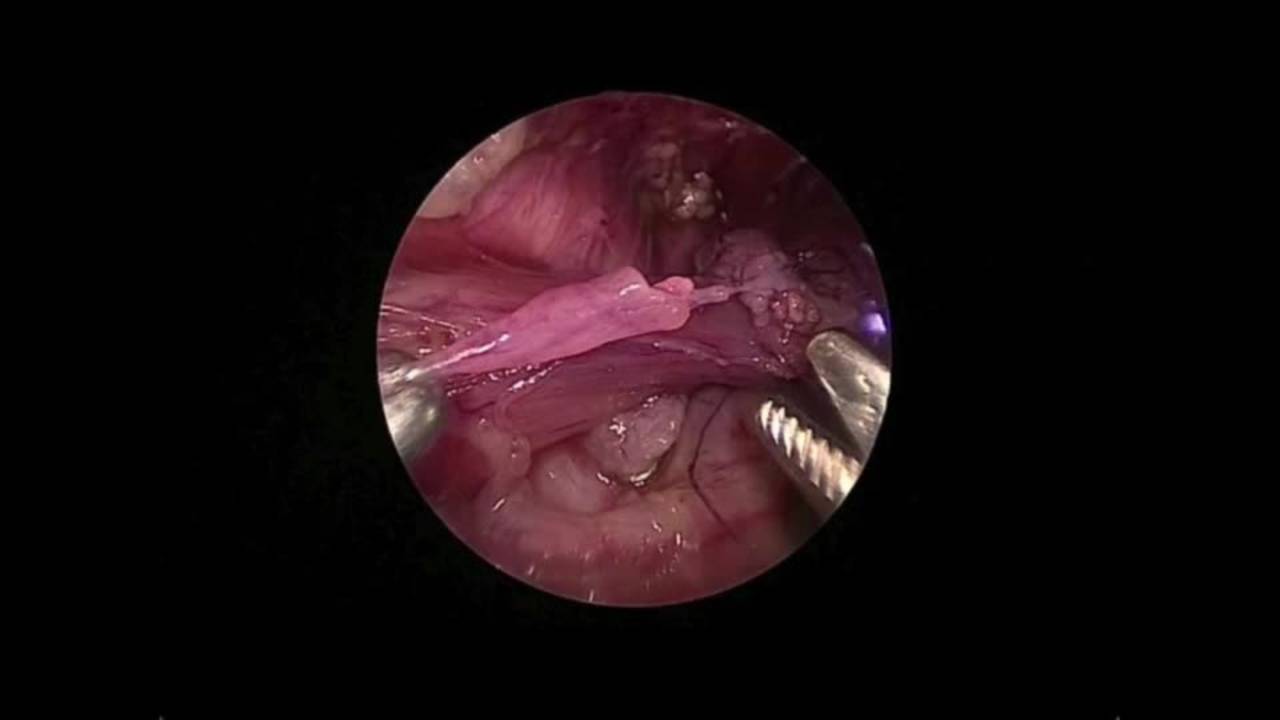
If you missed our stay current pediatric surgery update course, don't worry, because we're gonna summarize our favorite sessions right here on this podcast. In today's episode, it's all about oesophageal atresia. We've talked on this podcast. About various surgical treatments for esophageal atresia, but in this episode, we're going to tell you all about one of the newest options, magnet therapy. I'm Rod Gerardo and I'm Ellen Ancisco. We're research residents at Cincinnati Children's Hospital. And this is the Stay Current Pediatric Surgery podcast. First, Doctor Bethany Slater from the University of Chicago Comer Children's Hospital Department of Pediatric Surgery shares her case. 3 month old male who has a history of a cardiac anomaly with a type A esophageal atresia or a pure esophageal atresia, who had a gastrostomy placed after birth, and then had a gap study at again, about 3 months of age, demonstrating a 3 centimeter gap between the proximal and distal esophagus. What would be the next step for an operative plan? So, I think, you know, the question is, what would people use as a criteria to say it's time to go back. Here's What I would consider at this point, I would try to go in and do it surgically. If I go in to try to do it and get the two ends together after dissection proximally and distally, and I could not get them together, then at that point I would do an internal lengthening procedure like the Vanderzee procedure. That's Dr. Todd Ponsky. He's a pediatric surgeon at Cincinnati Children's Hospital Medical Center. You don't lose anything by trying to go in and do the dissection to see if you can get them together. That's fair. 3 centimeters is overcomeable. So I would try that thoracoscopically, get those two ends together, and if you needed to do something different in the middle of the case, you could do that. That's Dr. Matt Harmon. He's the chief of pediatric surgery at Oshai Children's Hospital in Buffalo. Magnets have actually been used for many years for oesophageal atresia. However, they can be used as a non-surgical alternative for esophageal anastomosis, and they're able to promote lengthening and approximation of the proximal and distal end of the esophagus. And then it uses compression and. Stomosis to create continuity of the esophagus. And there's an FDA approved commercially available device called the Flourish device. It's a catheter-based magnet system. How does the flourish device work? Magnets are placed in the proximal and distal ends of the esophagus. They attract one another and cause the esophagus to lengthen. Then once the magnets are nearly together, compression anastomosis happens as a result of ischemia in the tissue at the two ends. I see, so that's how the anastomosis is created. Wow. OK, so what does this thing look like? It has both the oesophageal and gastric catheters that have inner bullet-shaped magnets on each end. Also, an important note, it does taper down to a 10 French pumling surface. Proximal catheter does have a suction port, so that can be used to suction saliva from the patient while it's being used. And the gastric port has a portion for. Or feeds as well. What about eligibility, both for the study and for the placement of these magnets? Dr. Slater, could you explain a little bit, please? So there needs to be a gap length of less than 4 centimeters. Lengths are greater than that. The magnets will not attract one another, so they can't be used. And an important thing here, there should be no fistula. Or if there is a fistula. You have to repair that first. And the patients do require a gastrostomy that can accommodate an 18 French catheter because that is the diameter of the gastric portion of the catheter. Gotcha. When we start learning these things, the second phase is, OK, great, we can do it. Second half is, when do we do it? So it's not to replace esophageal resia repair, it's that now you have another tool. And your armamentarium. Particularly patients who have cardiac disease or have had previous operations that might make them less of a candidate for a reoperative surgery or an increased risk of the anesthetic for whatever reason. This patient then falls into this for multiple reasons then, right? Because the gap is, is 3 centimeters, so the size criteria fits. This patient doesn't have a fistula, so that's great. They have the gap. gastrostomy track that was made shortly after birth. And then on top of that, this patient has a cardiac anomaly. So then the concern for uh high risk for reoperation, then that kind of goes out the window when you look towards a magnet therapy approach instead of a thoracoscopic approach or or other surgical management. Of course, with any device, it's important to note the indications of use and proceed with caution, keeping in mind the recommendations from the device company. That'll create a safer option for surgeons as well as for their patients. Just to say at the beginning, I'm not convinced that there's not a role for magnets in this, but I thought it important to people be aware of some of the issues. That's Doctor Steven Rothenberg. He's the chief of pediatric surgery at Rocky Mountain Hospital for Children. So this was a full term male who was born with pure esophageal atresia. He had a gastrostomy placed at birth, about 6 weeks of age. He had a gap study that showed a 3.5 centimeter gap. A little over 6 weeks later, so 3 months of age, the patient had another gap study which showed a gap of 2.6 centimeters. At this point, the decision was made. To use the flourish device. After placing the magnets, they had to reposition them once. 4 days later, the patient had an acute decompensation. He was transferred to another local children's center, and they eventually ended up deciding to come to our institution. And when I did an esophagram of the upper pouch, it showed that there was an upper pouch fistula which had not. Previously been diagnosed. Now the question is whether it's a true fistula or a traumatic fistula. And when I scoped the patient, it was a true upper pouch fistula, as Dr. Slater said before, one of the contraindications for using the flourish device is the presence of a fistula. So now we know there's an upper pouch fistula and a 5 centimeter gap. So, What do we do next? Normally I would fix that upper pouch fistula through thoracoscopy. We ligate all our upper pouch fistulas and H-type fistulas now thoracoscopically because I think the view is excellent. We get good control, but because this child's chest was a mess, I did a dissection, went in and ligated that fistula. I also found a traumatic fistula which I ligated with a 5 millimeter stapler. I dissected out its lower pouch. Which there was still a persistent fistula we divided, and then I was actually able to mobilize the two ends together and get them together. I think it was quite lucky. So what about after surgery? What does his recovery look like? He's done quite well. He does have a stricture which is we're dilating about once a month, and he's now learning to eat. I have to wonder, were there any other options for Dr. Rothenberg? So he was in the hospital the first almost 6 months of his life. And my basic comment here is this child had a gap at one point of 2.5 centimeters that I think whether you did it thoracoscopically or open could have fixed. By classification of the International esophageal atres Group, you have to have a gap of at least 4 centimeters to be considered a long gap. The indications for the magnet is you have to have a gap of less than 4 centimeters, and you're getting an incredibly high stricture rate in multiple strictures. And so I have some concerns. I'm Not completely against magnets, but I would argue that a patient who's got less than a 4 centimeter gap should be amenable to a primary anastomosis, and we would of course do it thoracoscopically. Yeah, the reason I think it was so great that Steve presented this, especially me, I'm very excited about new technology, and I get all excited and I tell everybody about it, but it's nice to have some cautionary tales as well as new technology comes out. Additionally, Magnets have been used sometimes for a staged repair rather than using internal traction sutures. There is also a possibility of trying to get the two ends together closer surgically and then using a magnet just for the anastomosis portion as a possibility. Magnets are a great innovation, but they're no joke, and they need to be taken seriously. So just because you have experience with esophageal atresia doesn't mean you have experience with using the magnets. What Roth. en ber g was suggesting is that if you're at an institution where you have what looks like a relatively long gap that you want to get together and you personally don't know if you would be able to get it together in your experience, in your hands, the next step is not to do magnets. The next step would be to send that to a center that could do it, open, thoracoscopic, whatever. It's not meant to like make esophageal atresia. Care more accessible to everyone, if that makes sense. I love that statement. If you don't feel like you can get it together through a surgical approach, and you have no experience using magnets, that should not be your next step. That's like the moral story of this case, I think. There are emerging new technologies that are very exciting, and I think they hold a lot of promise because the root of this technology is trying to solve is there are two pieces of an organ that need to be connected. And they're not. Here is a less invasive way to connect them. That is a very basic rudimentary surgical concept. I think oftentimes when we see these new techniques, it seems almost easier than the uh traditional operation because it looks like, oh, you put magnets in and you're done. And sometimes these easy solutions are actually not easier. Right, exactly. So we just have to remember to be cautious and thinking about kind of the decision pathway. And if you're not comfortable managing the esophageal atresia, you know, yourself, thoracoscopically or via an open procedure, then think about consulting with the center who is more experienced. So, there you have it, our 2021 update course session on magnet therapy for esophageal treatment. Now, if you loved this episode, go ahead and like and subscribe to our YouTube channel. Follow us on social media. If you're listening to the audio version of this podcast, please leave us a rating and a review. And be sure to download the Sacred in pediatric Surgery app. It's in the Apple App Store and in the Google Play Store. But until next time, I'm Todd, I'm Rod, and I'm Ellen. And remember, knowledge should be free.
Comments