104
Views
0
Likes
0
Shares
0
Comments
StayCurrentMD
View profile →
The Full Story on CPAMs
Published:
Topic overview
Comprehensive educational discussion of congenital pulmonary airway malformations (CPAMs), covering prenatal diagnosis, embryology, and differential diagnosis of fetal lung masses. Reviews Stocker classification system and distinguishes CPAMs from other pulmonary anomalies including bronchopulmonary sequestration and bronchogenic cysts.
Timestops
0:08
CPAM Case Introduction and Differential
5:47
CPAM Embryology and Classification Types
8:43
Prenatal Monitoring and CVR Assessment
12:51
Fetal Interventions for High-Risk CPAM
22:18
Postnatal Evaluation and Management Decisions
28:13
Malignancy Risk and Surveillance Strategy
33:30
Thoracoscopic Lobectomy Surgical Technique
51:15
Postoperative Care and Key Takeaways
Key takeaways
- CPAMs are abnormally developed lung tissue with cystic lesions that cannot participate in gas exchange, arising from bronchial airways.
- Stocker classification (types 0-4) categorizes CPAMs by location in bronchial tree; type 1 (distal bronchi) is most common at 60-70%.
- Fetal ultrasound shows CPAMs as heterogeneous hypoechoic tissue with multiple cysts of varying sizes, distinguishing them from other lung masses.
- Key differential includes BPS (systemic blood supply, sequestered from airways), CLE (overinflated lung), and bronchogenic cyst (single central mass).
- CPAMs result from overgrowth of bronchioles with poor alveolar development, occurring anywhere in tracheobronchial tree during fetal lung development.
Keywords
Hashtags
Transcript
Click "Show Transcript" to view the full text (52429 characters)
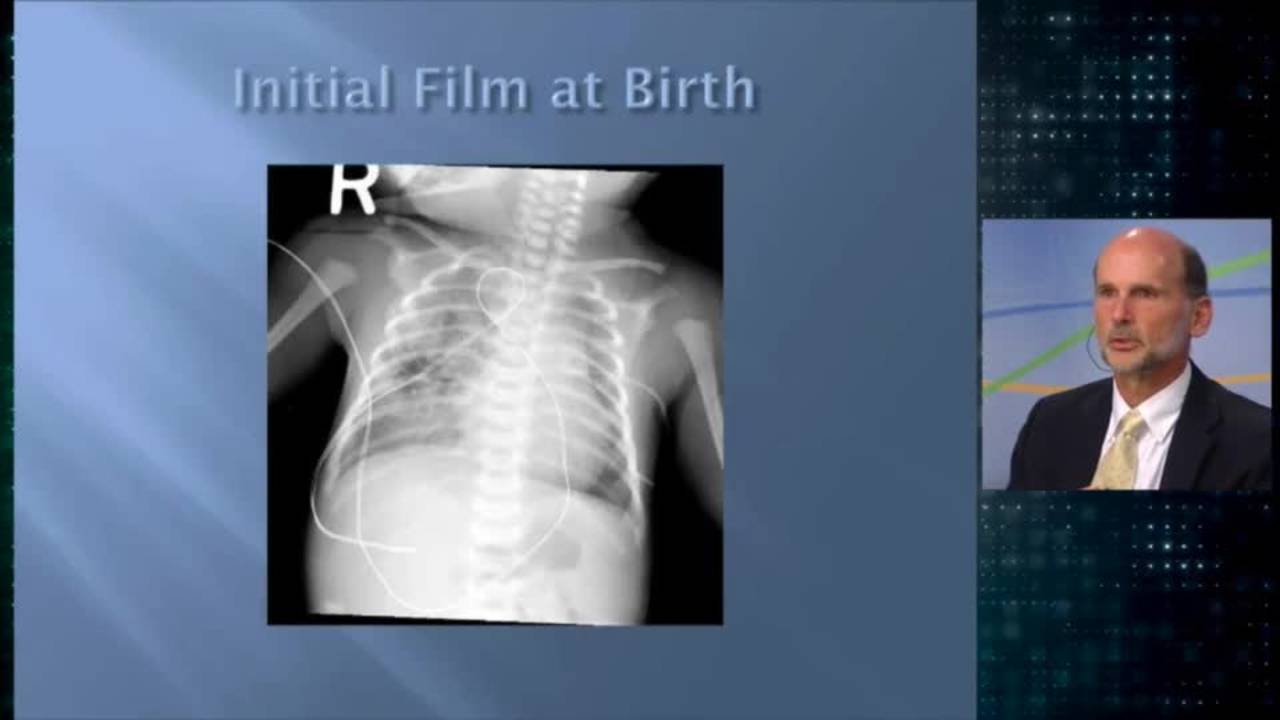
Hey, I'm Rod Gerardo, research resident at Cincinnati Children's Hospital. And I'm Ellen Ancisco, also a research resident at Cincinnati Children's Hospital. While we have a lot of content on the Stay Current Pediatric Surgery app that many fresh, bright, bushy-tailed attendings have told us, hey, we use this to study for our pediatric surgery boards. Well, it turns out there's a big chunk of content missing, isn't there? Yep, and we want to fill some gaps. So we're starting a new series. We're gonna try and do a whole comprehensive chapter of a pediatric surgical topic. Here's the thing is I don't know anything about it. Luckily, Ellen does. So she's gonna walk me through a case, and today we're talking about what? CPAs, for congenital pulmonary airway malformations. So this is gonna be like. This is maybe like an hour-long comprehensive podcast, which sounds really daunting and you're probably not doing an hour-long commute to the hospital, but it's broken up into chapters, so you can skip to the part that you want to listen to. Some segments have more basic content than others. Parts are more advanced, so if you use the stay current app, you can skip around to what you want to hear. All right, so let's get started with the story. Here's Dr. Pam Choi, pediatric surgeon in San Diego. Yeah, it was really interesting. I got a um 33 year old otherwise healthy female, uh, G2P1, who presented to me after her uh 24th week ultrasound, which showed a left lung mass. And so she came into the clinic for us to uh discuss what this meant and what she had to do next. I would have that question as well because like we said, I know next to nothing about CPAs, so what did she do? Yeah, so, so I think the first question is, you know, what, what could this lung lesion be? And it just so happens when I was visiting Doctor Choi, she had a resident with her. And she started pimping her resident. So, Brand, what's the differential diagnosis of a prenatally diagnosed lung mass? Well, Doctor Choi, the differential diagnosis for a lung mass noted on a prenatal ultrasound includes things like CPAM, BPS. Alan, help me. This sounds like alphabet soup. What does this all mean? OK, let's start over. CPA, congenital pulmonary airway malformation, BPS, bronchopulmonary sequestration, a hybrid of CPAM BPS, CLE, congenital lobar emphysema, BC, bronchogenic cyst, or even CDH, and congenital diaphragmatic hernia. That's, that's what it could have been or what, you know, she talked to the family about the differential. And so the ultrasound interestingly showed it appeared like a heterogeneous massive cyst. And so I told her that most likely this was probably a CPAP. Wait, so Ellen, is there like something on the ultrasound that would clue you in to CAAs versus anything else on that differential? Yeah. So, on the fetal ultrasound, um, the CPM is going to be kind of like what Doctor Tor described. You know, we'll see some hypoechoic heterogeneous tissue with multiple hypoechoic cysts, and those cysts can be different sizes. They could be either large or small, which we, which we'll get into. And the other, other differential diagnosis we talked about, uh, would probably look a little bit different and we won't get into all the specifics, but definitely, we start to have uh some suspicion for, for what the lesion is based on what we see on the fetal ultrasound. And so she explained the kind of the general principles behind a CPAM in this way. So, a CPAM is essentially just an abnormally developed lung, um, which doesn't really participate in gas exchange. Wait, repeat that. So basically, CAMs are groups of benign cystic pulmonary lesions, and they can have either large cysts or small cysts, like I mentioned before. Um, and the point is that the abnormally developed lung comes off of the normal bronchial airways, but doesn't have normal alveoli and therefore can't really participate in normal gas exchange. Can you remind me about the embryology of the lung? So for the purposes of this discussion, I would say that the main thing to remember is that the human lung develops over the course of 5 stages. As a reminder, those are the embryonic, pseudoglandular, canalicular, saccular, and alveolar stages, and, you know, it develops from proximal to distal, starting with the, the bronchial tree and moving out towards the alveoli. And with C pms, they basically have, or it's thought that there's an overgrowth of the bronchioles, and you don't have good development of the alveoli. And it could occur anywhere in the uh tracheal bronchial tree. Um, most of the time, it's commonly in the um distal bronchi or proximal bronchioles. And so that would be known as a type one in the stalker classification. And as a reminder that stalker classification is how we classify Cpams, they go from type 0 to type 4 as we move from proximal to distal in the bronchial tree. So type 0 would be the most proximal and is tracheobronchial in its location. Type 1, which we just said is a more distal, bronchi, and proximal bronchial. This is the most common and we see it in 60 to 70% of the cases. Type 2 is bronchiolar, that is second most common. Type 3 is distal bronchioles and alveoli, and then type 4 is the distal ascinae. Uh, type 4 and type 0 are both pretty rare. Wait, so how is a CPAM different from the other alphabet soup that we listed? Briefly, the bronchopulmonary sequestration or BPS is another anomaly that has mostly non-functioning lung tissue, but the difference is that it is sequestered from the normal bronchial airway, and it gets its blood supply from the systemic system, like from the aorta. Congenital lobar emphysema is essentially where lung becomes, or part of the lung becomes overinflated, and then the bronchogenic cyst is really just a single or a unilocular mass, typically more centrally located where CPAs are usually more peripherally located. And what's interesting with DPs as far as, you know, that I asked Doctor Choi about how these lesions progress and, you know, kind of what their typical course is. And she said that they typically grow in the 1st 20 to 25 weeks or around 20 to 25 weeks, you know, you recognize, recognize them on ultrasound at around the time that, that they did, and then they typically start to plateau in their growth around week 28. OK, so you said that they should be able to see this on the prenatal ultrasound. Somewhere around like the mid 20 something weeks. Mhm. But are there other things on the ultrasound that she's looking for? Yes. First of all, the size of it is important. The other things I look for is related to size is that, is there any signs of a medialstinal shift, polyhydramnios, or eyedrops. So, Brand, what are eye drops? Hydrops are abnormal fluid buildup. In two or more body areas of a fetus like ascites, pleural or pericardial effusions. And what does hydrops have to do with a lung mass? Well, if there's a lung mass that gets really big, it can cause compression on the heart and even impaired venous return, essentially leading to heart failure. This can lead to other problems like fluid accumulation. So the presence of hydrops is the strongest prognostic indicator of mortality in these patients. No, I guess that makes sense cause then if the CPPM is so big, it's pushing on something else, then you don't have adequate flow of your other fluids. So then they build up in places where they're not supposed to. So that kind of makes sense. Yeah, exactly. There's actually a number we can use to see how severe this might get. And again, here, Doctor Choi asked Brandt. Yeah, I'm glad she's not asking me. Well, is there anything that can predict if the baby is going to get eye drops? Well, yeah, things like CVR or CPAM volume ratio. It's the CPAM's length times the width times the height times 0.52 divided by the head circumference. Basically, it is a ratio comparing the volume of this lung lesion to the baby's head circumference. And we compare those, the main number we want to remember is 1.6. OK, so you want it smaller than 1.6. Correct. Um, and so when we're less than 1.6, you know, we're, we're in a good spot. When it's greater than 1.6, then we get worried because they found that Over 1.6, there's an increased risk of developing developing high drops and then having a poor outcome. Gotcha. Specifically, in patients with CVRs over 1.6, it's estimated that 75% develop high drops. Unfortunately, for Doctor Choi's patient, the CVR wasn't too high. On her ultrasound, it found that the CVR was 1. OK, so that's good. Yeah, exactly. So, I guess. That's good. So what do we do now? Um, so as far as what we do next really is kind of provider dependent. Typically we would get serial ultrasounds and follow this closely. Looking at the size and the CVR and seeing how it changes. In Doctor Choi's practice, they elected to get repeat ultrasounds weekly at that point and then they also decided to get a fetal MRI. How do we characterize CPAs based on imaging? Well, CAMs can be differentiated as microcystic, which is less than 5 millimeters, or macrocystic, which is larger than 5 millimeters. Fetal MRI demonstrated that the mass looked microcystic. So, a couple of weeks later, um, the CVR actually increased to 2. Well, good thing that we kept checking on it. Yeah, definitely. And, and, you know, this is not an ideal situation. Fortunately, there's something we can do here. We can give prenatal steroids. Because steroid treatment has been shown to resolve high drops and reduce the size of lesion such that the CVR can actually decrease. OK. So, we're gonna give steroids. How much steroids are we gonna give? We're giving two doses, 12 mg of betamethasone 24 hours apart. Cool. Then, after we do that, we'll increase the frequency of ultrasounds and start getting them twice a week instead of once a week. And here, when we, you know, continue monitoring, fortunately, and it's often the case after giving steroids, we actually had a good outcome and the CVR decreased. Cool, that's good. Then they did what they're supposed to. Yeah, it worked out great. OK. So it shrunk like it was supposed to. So what do we do? Yeah, now we just watch and wait. You know, the other thing to mention here is that if we had findings of high drops, and you know, we were concerned in getting more frequent ultrasounds, the other thing we might get is a fetal echocardiogram. OK, so we're gonna get an echo, but what are you looking for on that ultrasound? Findings that would be worrisome for us and would be abnormal on the video echocardiogram would be things like increased or decreased cardiac output, ventricular hypertrophy, atrial or ventricular chamber dilation, cardiomegaly, significant valvular regurgitation, diastolic dysfunction. Or other findings of heart failure. But like I said, fortunately, Doctor Choi's patient did not have these problems. Fortunately, um, we now could just continue monitoring with uh serial ultrasounds. Um, she, because her, uh, CVR decreased and now that the mass looked like it was stable, um, with a CVR of about 1.4. Um, we could just watch it. And in fact, she could just undergo a, uh, spontaneous delivery at our, uh, tertiary care center. Uh, she did not need a, uh, C-section. Hopefully, an uneventful delivery. Yes. OK. So what if the steroids didn't work? Then what do you do? Yeah, so there's actually a lot of other things that we can do. First of all, you would want to refer the patient to a specialty fetal care center. I talked to another pediatric fetal surgeon. My name is BethRomesky. I'm a pediatric and fetal surgeon at Cincinnati Children's Hospital. And she had a lot more information about what to do in the most severe cases. So, first of all, we talked about this before, the difference between microcystic and macrocystic. If it's macrocystic, again, meaning that it's more than 5 millimeters, and they're, you know, have a high CVR, maybe they're showing signs of signs of eye drops, we can actually do something called a thoraco amniotic shunt. Wait. Dorico amniotic shunt. What is that? The shunt basically kind of looks like a pigtail catheter on either side, uh, and is placed so that half of the shunt is inside the fetal chest and the other half is in the amniotic space, which will then allow egress of the fluid from the fetal chest into the amniotic space and and continue that decompression throughout the pregnancy. So we just kind of like deflate the CPA out into the amniotic space. Exactly. You can even put in multiple, like if they have multiple large cysts, you can put in a couple. That's talent. What's also cool is that they do this in clinic. And they even have to think about, you know, where they placed the shunt so that the fetus doesn't grab it and pull it out. So it's typically a procedure that's actually done by the maternal fetal medicine, uh, fetal specialists. They do it either in the office or in like a procedure room, uh, with just local, uh, and ultrasound. Uh, they try to, if possible, go through the. Posterior rib spaces. And the reason that they try for the posterior rib spaces is because anything that's anterior or on the side, the fetus may grab and dislodge. OK, Alan, so let's say we're not at 28 weeks yet, so we really can't deliver. Maybe we tried the thoracoamniotic shunt and it's still not working, or it wasn't a macrocytic lesion, so we didn't even try it in the first place. I mean, I'm, are, are we running out of options or is there anything else we could do? So, the other thing we can do, which I think is even crazier, is fetal surgery. There is something called a, like fetal resection. So where you actually, uh, basically partially deliver the baby fetus, uh, do a thoracotomy, remove that part of the lung, and then try to place the fetus back in the uterus and carry on with the pregnancy. And as you might imagine, this is a pretty high risk and complex surgery to do on a fetus. You know, you're doing a thoracotomy on a baby where you're having to find the tiny blood vessels and bronchi, and so really it's a last resort. sort of option between 24 and 27 weeks when you're not really ready to deliver, but the baby is showing signs of distress, you're worried about intrauterine demise, and even after you do the surgery, Doctor Emeki told us that the mom might go into labor right then or shortly thereafter. Another thing we might see is something called mirror syndrome. Um, did you say mirror syndrome, like looking in a mirror? Yeah. And mirror's syndrome really just means that the mom is now showing evidence of what the baby has going on. So the mom can develop pretty significant edema very, very quickly. Um, they can actually develop a pleural effusion. They can, you know, have all these things happen to them. So when we start to see moms developing those kind of symptoms, that means we have to do something. Um, before either mom gets really sick and loses the baby or both. You know, when we see evidence of Mirror's syndrome, the best course of action is to just deliver, to try to avoid fetal mortality and maternal morbidity. The other thing we can do is, you know, if we are to the point Where we could deliver, you know, we're at that 28 weeks. The other thing we can do is something called an exit to resection. So exit to resection really means that you're doing an exit procedure. So an exit procedure means that the baby is going to remain attached to mom through the umbilical cord. Uh, you're gonna make an incision on the uterus and partially, again, partially deliver the baby, keeping as much of the baby inside as possible. Um, and you're gonna go ahead and do a thoracotomy and resection while still connected to umbilical blood flow. So this gives us the advantage of the fetus not having to transition to the outside world right away, which is especially helpful when they have Evidence of a large CPA that might still cause some respiratory distress when they are born. But, you know, when we're doing this procedure, while they're still attached to the umbilical cord, we don't actually have a lot of time to do it. Surgeons understand that thoracotomy is not something you can typically do in 15 minutes. Um, and so you have a certain amount of time to get an exit procedure done, and that's not a definite predictable amount of time. It depends on, uh, how well mom is handling it. So when you do an exit procedure, mom is under general anesthesia to allow for complete relaxation of the uterus. Uh, there are a number of medications being given to try to prevent contractions and to keep the uterus relaxed because as soon as, you know, that, that uterus starts to contract again, what's gonna naturally happen is the placenta is gonna want to separate from the uterine wall. And as soon as that placenta starts to separate, you then lose, obviously, your profusion of the, of the baby and you have to deliver. So you can have sometimes maybe only a couple of minutes, 15 minutes for an exit before you start to see issues with the placental separation or sometimes you might be able to have an hour. You know, you're rarely gonna have longer than an hour. So it's something that you need to move fairly quickly, um, and you may be able to do the resection, uh, intubate and deliver the infant. Uh, prior to, uh, completely coming off the, the placental blood flow and sort of avoiding a period of hypoxia if you're really concerned. So that's what an exit resection is. It's pretty uncommon again that, that, that kind of thing needs to be done, but there are certain situations in which you might Consider that kind of a delivery. And a situation she's referring to might be one where the fetus has a large Cpam that may or may not have responded to steroids at some point in the pregnancy, but is still large and might be causing mass effect like tracheal deviation. And some sort of change that would make it difficult for the baby to breathe once they are born. One thing that we see is something called air trapping, where as the infant breathes in, air enters the area of the CPA, but it doesn't come out as easily. So you have progressive hyperinflation of that lobe that really does not functioning in terms of lung tissue. So you can cause, it can cause pretty rapid progressive respiratory distress. OK, so let's take a hypothetical baby. So you get the fetal ultrasound, you get the MRI to assess for the CPAP, and then you get the CVR and then that's gonna determine what. So that determines the severity of the lesion. OK. But then, I guess it also depends on how old this fetus is. Yes, so if you're at a deliverable age, you know, of more than 28 weeks, more than 32 weeks, you can deliver, and within that, if, you know, there's no mediastinal shift or issues that would, or findings that would be an issue after birth, you can just deliver. If there's mediastinal shift. That what might cause issues after birth, then considered the exit to resection. OK, so if they're high risk, and their CDR is greater than 1.6, or they have high drops, and you can deliver, then that's kind of the treatment for the CPAM. Right. OK. What if you can't deliver? Yeah, so if you're too young uh to try to deliver, then we give, we can try the steroids like we talked about. And then depending on if it's microcystic or macrocystic, we can do something different. So if it's macrocystic triathhoraco amniotic shunt, if That doesn't help, we're still not able to deliver, then consider fetal surgery. If it's microcystic, so you, you know, a thorac amniotic shunt wouldn't help, then consider fetal surgery. Yeah, it's really confusing. So if you really want to dive deep into this algorithm, we're gonna give you the link to it below the media player. So we kinda, we went on quite a tangent here. Can we go back to the patient that Doctor Choi originally presented? Yeah. So her patient, fortunately did not need any of these things, had a normal vaginal delivery, delivered a healthy baby boy. Congratulations. Is there anything we gotta do to this baby, like right when it's born? When we know that they have one of these lesions, the first thing we do after uh they're born is first, you know, assess them. Make sure they're not any other sort of respiratory distress, and then we'll get a chest x-ray. And the chest x-ray actually didn't show anything. We couldn't see any lung mass on the chest X-ray. So it, so it's gone, right? Well, not necessarily. We can't really see these lesions great on chest x-rays. Ah, you're killing me smalls. The other thing that can happen is that these lesions can actually regress or get smaller over time. Um, so as long as the baby does well, doesn't develop any sort of respiratory distress or anything while in the hospital, we can just send them on home and see them back again, depending on the provider, but in one or a few months. And at that point, we'll get a CT scan. Ah, OK. So we wait till the baby is one month old before we get the CT scan. Yup. Did they just get like any normal CT? No, there are a few things we want on the CT scan to really characterize the lesion well. It has to be with contrast because what we're looking for is to see if there's any, um, the absence or presence of feeding vessels. And so we also get inspiratory and expiratory phases on the CT scan. Um, because now the baby is breathing air like we normally would, whereas before when it was a fetus, it was, you know, in an aqueous environment. Um, we also look for its location on the bronchial tree and how it might be connected to the airway. We look at the characteristics of the lesion itself, like is it cystic? Is it solid? Is it hybrid? What size are the cysts? Um, is there fluid in the cysts? And then like Doctor Choi said, we look at the vascularization of the lesion. And then we look at the surrounding tissues around the lesion, you know, to see if maybe it's having mass effect like mediastinal shift or anything like that. So, it was actually very consistent with what we had seen prenatally, um, in that it looked like a CPAM, you know, multiple, um, a cystic lesion in the left lower lobe and uh Um, there did not appear to be any feeding vessel, uh, that we could, you, you know, that we could discern. So, in other words, it looked, and it looked like it was within the left lower lobe. So when she got the CT scan, took a look at everything, then Doctor Choi talked to the family about planning for surgery. Wait, Ellen, hold on. You said they're not having symptoms, right? Yes. Well, then, why are we going to surgery? That's a great question, and there's actually a lot of disagreement amongst pediatric surgeons. Here in the United States, most surgeons resect the CPAs even if they're asymptomatic, which we'll go through the reasons. Elsewhere, like in Europe and Canada, sometimes they choose to monitor the lesions if they're asymptomatic and avoid doing a surgery. So in Canada, they might not even operate on this at all. That's right. I actually talked to another surgeon. He's up there, Doctor Jack Langer from sick kids in Toronto. And he talked to us about his process in these lesions. And this is where Todd asked, Why is the divide, I mean, why is it regional based? Why is it Canada versus United States? I, I don't understand why that is. You know, my feeling is that any kid that comes with a lesion, I'm taking it out. I would never think of leaving a lesion in. Uh, for proponents of operating earlier, the main reasons for doing so are that one, Um, there is a risk of malignancy both in the mass at the time of resection, and then there's a risk of malignant transformation down the road. The second reason is that there's a risk of infection that ultimately will make surgery more difficult if we do so after an infection. And then last, um, It's that there will be better compensatory lung growth if we go ahead and operate sooner in life rather than waiting later. On the other side of the argument, there is the consideration that, you know, the thoracoscopic lobectomy is not a small operation, and there are risks involved, you know, including bleeding, prolonged post-op mechanical ventilation, infections, air leak, pneumothorax, nerve injury, and even mortality is possible. So here's Doctor Langer. I don't think you can underestimate. The fact that you're that, you know, you're taking an, an asymptomatic child and subjecting them to an operation that is associated with potential risk. And those risks are not, the, the severe risks are not very common, but, but they do occur. I think you have to, you have to sit down with the family and say there isn't a clear right answer on this one. And these are the risks of doing the surgery. These are the benefits of doing the surgery. These are the risks of waiting, and these are the benefits of waiting. Doctor Langer, this sounds like a difficult conversation with parents. I mean, how do they respond to this? In my experience, some of the families, it depends on their, you know, the, the way they calculate those risks, uh, and the way they prioritize those risks. So, uh, some families will say, Under no circumstances do I want my child to have an operation unless it's absolutely necessary, and I'm willing to take the risks of waiting. And um some families say, you know what, I don't wanna worry every single day that my kid's gonna get an infection for the rest of his life, so I'm willing to accept the risks of that operation. I understand them and go ahead. And to go back to that malignancy risk we talked about before, the particular malignant malignancy associated with CPAM is something called pleuropulmonary blastoma or PPB, and there is a risk that the lesion at the time of birth already has a malignancy growing in it. And then like I said, there is the risk that it can transform into a malignancy over the course of a person's life. So, at the time of that CT scan we first get after the baby is born, Doctor Lange takes a look at it to see if there are features that might be concerning for malignancy at that time. And the things that suggest a higher risk of PPB are if it's in more than one lobe, if it's um in more than one lung, um, if there's an associated pneumothorax, um, And Dicer one, that's a, a genetic mutation that's often associated with PPB. So if I'm worried about it, then I'll get a Dicer one mutation analysis done as well. And um if, if the child has some, some or one of those features, then I'd be a little bit more um likely to just recommend resection. And the uh the features that That suggests a very low risk of PPB are um a feeding vessel. And a prenatal diagnosis. Are you saying, so you're talking about at that time, the lesion would show features of a PPB at that time? But what about the fact that it's more likely that it's a risk of cancer in the future? The other cancer risk is the long-term cancer risk, and there are case reports of uh various types of adult lung cancer um that have formed in an otherwise unrecognized um CPA. Um, but my, my feeling is that those are extremely rare and that that doesn't Uh, and, and in some of the papers actually, the, the lung cancer wasn't even in the cystic lung lesion. It was in another part of that lobe. So, you know, taking out or another part of that lung and and taking out that CPAP wouldn't necessarily prevented that lung cancer from, from, uh, occurring in the future. So. So, of the two cancer risks, the one I'm most really concerned about at the, uh, in the newborn period is, is whether it's a PPD or not. You know, we heard about a recent study from Doctor Emeky, uh, that was just published in April of 2021, where they found that no prenatally diagnosed lesions had this malignancy, but there are 10% of patients who are diagnosed postnatally. Had this malignancy in their resected mass. And that article is linked below under the media player. So, if you need to brush up on it, like I do, open up the link. So we asked Doctor Langer how he follows these patients over time to monitor them. Um, I, I usually, uh, follow them with regular chest X-rays for the 1st 2 years or so with the, um, understanding that if it was a PPB then I would expect to see something new on the chest X-ray. Um, and I, I base that on experience with, I mean, PPBs are very rare, but we do have some experience with them, and the experience has been if you look at serial chest X-rays on a child who has a PPB that's going, going from type 1 to type 2, then, then there are changes on that chest X-ray. Um, But um after that, I think, you know, it's, it's much less likely that, that it will have turned out to be a PPB um and after that, I usually just um follow them clinically. And like we said, the other major risk we have to watch out for is infection. I tell them that if the child develops fever, cough, any of the clinical features of pneumonia, then they need to get a chest X-ray and if the chest x-ray looks like there's infection in, in the part of the lung where we know the lung lesion is, then they need to get that treated with IV antibiotics and Um, and then at that point, if, if we think that it's become infected, then you settle it down and then I would recommend that it be removed. The argument is that by the time you've waited for it to get infected, you've lost your opportunity for an easy operation. And that in a clean field is like nice plains. Once it gets infected, it's a much more challenging procedure. Yeah, and I think that there's, there's actually good evidence that shows that. Um, there's a few papers that have looked at the morbidity of the lobectomy, uh, if it had been previously infected or not. And, and there's no question in my mind that there, that it's a harder operation. You probably have more blood loss, you may have more complications. But does that mean that every single child with an asymptomatic secan should be um subjected to a lobectomy so that you make your operation easier for yourself? I, I don't think so. Um, and you have to recognize that, uh, lobectomy, whether it's thoracoscopic or open, um, is associated with risks and included in those risks is the risk of death. OK. So we went on another informative tangent there. Let's get back to Doctor Choi and her patient. I would recommend um that we do a thoracoscopic uh left lower lobectomy. All right, Ellen, so what are the risks and the benefits of doing this surgery? Great question. So, we talked a little bit about the risks when we were talking. To Doctor Langer, and those would include things like bleeding, risk of pneumothorax and air leak, risk of infection after surgery, and the risk of death, like he said. The benefits are again, to avoid infection, avoid the risk of malignant transformation, and You know, take out space occupying lesion. Alan, what are the actual indications for doing the surgery? You know, again, that's something we discussed with Doctor Linger, you know, the discussion we can have as far as indications. One of the things we didn't say explicitly yet is that after birth, if the infant is symptomatic at any point, you know, signs of respiratory distress, then that's an indication to go to the operating room and resect the lesion. Otherwise, if they become infected, then we'd wait and take them out. If, you know, we have concern for malignancy, then we take them out. Allen, are there any contraindications to doing the surgery? Yeah, so if the patient has other significant comorbidities like say, major cardiac defects that would put them at increased risk for surgery, we wouldn't necessarily choose to operate right away. Uh, we might try to get those other comorbidities under control first. The other reason we wouldn't operate right away is if they have an active infection like a pneumonia or an abscess, we'd wait and treat that medically and then go to the operating room later. Typically, we would wait 6 to 8 weeks after the infection for operating. And last, you know, if there are Multiple lesions, like you'd have to take out multiple sections and really decrease the pulmonary function of the patient, then we'd have a discussion and see what what would be best for them. Uh, so how should we prepare for the surgery? As far as the timing of surgery, if the patient isn't symptomatic right after birth and needs needing surgery right then. Um, the timing for when surgeons typically operate varies based on preferences, um, but some of them, you know, typically will operate within the 1st 6 months. To get some more information on the technical aspects of this operation, we went back to a prior episode of this podcast where Todd talked to Doctor Steve Rothenberg, a pediatric surgeon in Colorado. And he has some of the most experience in doing thoracoscopic lobectomies for medical students or beginning learners, this next part may be more advanced. So if you want to skip ahead, you can and move to the next section. We do always type and cross blood for the surgery. The only labs we get are a CBC. We have the pre um preoperative CT scan. And we get blood available. The other important thing that we need to do is to talk to our friends at the head of the bed. So I think that, you know, it's important to have an anesthesiologist who's comfortable doing this with you. Most kids, especially those kids who are asymptomatic and are on room air, will tolerate single lung ventilation. I think if you can get single lung ventilation for these cases. It's preferable. You can do these cases quite well if you just insufflate CO2 and collapse the lung by creating a mild tension pneumothorax, but I think for most people they're probably a little more comfortable if they can get single lung ventilation. And the way we obtain that is by doing a main stem innovation of the contralateral bronchus, and that just prevents the lung getting, um, you know, overinflated and kind of popping up in your face during the case when you're maybe dissecting out a A key vessel or structure. If you can't do it or the child doesn't tolerate it, then, you know, I would just pull the endotracheal tube back into the trachea and use CO2 insufflation to help collapse the lobe. And if the anesthesiologist is aware and doesn't overventilate, usually that gives you enough collapse to work. OK. How, how do you, how do you do the surgery? The key is, the key is the setup of the case. If you don't have the right setup, then you need a bigger space. But if you approach the lobe with the right port placement and the, and the right setup, then you have plenty of room. And, and I think that's where people struggle and have difficulties. OK, so here's how Dr. Rosenberg sets it all up. Basically, for all lobectomies, we keep the patient in a pure lateral decubitus position. Um, I tend to move them. These tend to be small children, so I tend to move them to the edge of the table. So the surgeon and the assistant stand at the front of the child. People don't like doing that sometimes because they think, well, if I need to convert, I need to have a surgeon on both sides. Um, but the truth is, if you need to move the child to the middle of the table, you can do that quite easily, even while they're sterile. So then Dr. Rosenberg and other surgeons we talked to. Pointed out that port placement is key for this procedure. In terms of port placement, it depends a little bit on the lobe, but it's, it's relatively consistent, and I think that, again, the surgeon and the assistant are standing at the child's front, and I do that because I feel there's more room from the front of the chest towards the hilum of the lung than there is if you're standing at the patient's back. The scope port, um, it's always a guess initially, but, but I try to put the scope port over the major fissure. Um, and so if we're doing a lower lobe, that means it's going to be in the 5th or 6th inner space, and then that port is anterior to the tip of the scapula, not posterior, and the reason for that, that scope port really is more in the mid axillary line, and the reason for that is that I like to work from front to back and so we'll start basically in the front of the fissure and work towards the back. If you put the scope posteriorly or behind the tip of the scapula, then you end up having to look back at your instruments and you're working in a paradox. And then my working ports end up being more in the anterior axillary line, um, and my left hand port is usually just about under the camera port. So again in the in the 5th or 6th inner space and, and then right hand port if, if you're in the left chest ends up being. In the 8th or 9th inner space just above the diaphragm, and I'd look um from inside to where the diaphragm is to position that port. If we're going in the, in the right chest, everything's flipped, but it's still, you know, the, the right hand just under the scope port and the left hand down close to the diaphragm. OK, so once we have our ports placed, this is how Doctor Rosenberg does a left lower lobe lobectomy. I mean, briefly, left lower lobe, the first thing I always do is I take down the inferior pulmonary ligament because I want. One, I want to make sure my energy source is using whatever I'm using and I'm comfortable with it, and that's a relatively avascular plane. And the other thing is to check for that systemic vessel to even, you know, so if you saw it on CT scan, great, you know to go look for it and get it, and the first thing you want to do is get control of that vessel and then, and then divide it. If you didn't see it, that doesn't necessarily mean it's not there occasionally it's missed and so this way you go look for it. And you take down the inferior pulmonary ligament up to the inferior pulmonary vein, and I expose the vein so that if I do have a problem at any point, I'll already have exposure there, so I can take it. So then we turn into the major fissure, and the key question here is, how complete is the fissure. The fissure is very complete, complete, and you're just looking at the pulmonary artery as it traverses through the fissure to the lower lobe. That's great. Life is very easy. But we heard from everyone we talked to, you know, Dr. Choi and Dr. Emeski, that when the fissure is incomplete, the operation is a lot more difficult. This is really the key, and so I like using the same vessel sealing technology to complete the fissure. And basically what you do is you kind of go through it a layer at a time. It's almost like finger fracturing. Um, during a liver lobectomy, but you start at the front and you start to work into the fissure in the plane that you believe it's going, and you just go in and you, you kind of dissect in a little bit, and then you grab the tissue and you seal, and you cut in the middle of the seal, or you can make two seals and cut between them, and you gradually work your way um posteriorly and down the fissure until you expose the pulmonary artery. And then once you find a branch of the pulmonary artery, you know that everything that is anterior to that, so coming up towards the chest wall, is going to be safe, and then you can be a little bit more aggressive in completing the fissure, but you're basically unroofing the pulmonary artery. So then here's what you'll see next. In the lower lobe, you're going to find usually a main trunk that then bifurcates into four branches to the basal segments. And then there's going to be a branch that comes off a little bit higher and a little more posterior, and that's going to be the superior segmental branch. So then once we see the artery and we found the trunk, then Dr. Rosenberg will complete the fissure. And then I will dissect out that superior segmental branch and seal it, you know, make two seals on it and divide it. So here we should bring up a critical point that Dr. Rosenberg mentioned, and that's about vascular control. Vascular control in these cases is everything. Um, you really want to maximize the downside, and so, um, the way I've done that is, uh, to dissect out the vessels and get enough length on the vessel that I can make a seal. Um, approximately on the vessel and then distally on the vessel, and then I can cut between the two seals and as I, and I just cut partway because if you cut all the way across and it starts to bleed, you can't get control, but if you cut just a little bit till you see a lumen and then there's no bleeding, then you know it's safe. If you get into the lumen and you start to see some bleeding, you have the ability to compensate and recover. You can get control of the vessel. You can, you know, seal it again with vessel sealing. You can put a clip on it. You can put a tie on it, but you have control. You only lose control once you've completely divided the vessel. OK, so we dissect out and divide the superior segmental branch, and that just gives me more access to the, to the main trunk to the basal segments. And then once we have that, I'll dissect, I'll get underneath the, the trunk to the basal segments, and, and the advantage you have here is that the bronchus sits right underneath the artery, it's always there. And so you can actually feel the bronchus and use that to help you dissect behind the artery. Um, and get control of that. And so then you have a decision to make. If you have a good length on the main trunk and you feel like you have control of it, then you can take it at that trunk. Or if you want to be more conservative, you can dissect out into the segmental basal branches and identify each basal segment branch separately. And seal and divide those so that you're dealing with smaller vessels. When I've gotten that basal segment and I have a nice trunk and I feel like I have good length, even if that vessel's a bit big for the vessel sealer, I'll, I've started to use the 5 millimeter stapler on that because it just quickens the operation as opposed to isolating four different vessels. I can now take the main trunk. Um, but if you're going to do that, I always make sure that I have enough of the vessel approximately that I can have a clamp on it in case there's a problem with the stapler, so that once you fire the stapler, if there's any bleeding at all or anything from the suit, the staple line. You've got proximal control. But again, if you don't feel comfortable with that or maybe you don't have enough length on the trunk, then what you can do is just divide out the basal segment branches and individually isolate them with the sealer, and then use Doctor Rothenberg's technique for safely dividing the vessels, which is to seal. Twice with some space in between and then cut in between. And that's probably the safest thing in terms of vascular control. The next step in the left lower lobe is now we've divided the artery, and it used to be that then I would go take the vein because that's what we did open. But in fact, when I think about doing a lobectomy thoracoscopically, I often talk to people about the fact that it's kind of like reading a book and turning a page at a time. I now basically go from front to back straight through the fissure, and so the next thing I do is the bronchus is sitting right there and I treat the bronchus very much the same way as I did. Um, the artery, depending on the size of the child, so, um, the first thing I'll probably do is. Isolate that segmental bronchus, superior segmental bronchus, um, and either, um, use clips or or a 5 millimeter stapler on it and divide that. And then that gives me good access to the main trunk of the bronchus to the lower lobe of the basal segments, and I'll isolate that. And the key here is that as you dissect behind that, you have to remember that the pulmonary vein is right behind that. You just have to very carefully, just as when you dissected behind the artery and you used, you could feel the bronchus, now you have to stay hard on the backside of the bronchus and be aware that the pulmonary veins there. But once you get through that, you can then again um use a stapler or clips. In most cases you can then divide the bronchus at that at that main trunk and completely open that up. And if you're in a bigger child like. 10 to 15 kg, then you won't necessarily be able to use a 5 millimeter stapler or clips. What you'll probably have to do and will be able to do now is use a 12 millimeter stapler. And then once you've divided the bronchus, you're looking at the inferior pulmonary vein, um, and you can usually what I'll do is I'll dissect up into the lung enough to the first bifurcation. Um, I'll take the smaller branch, which is usually inferior. I'll usually do that with vessel sealing to get a little more length on that trunk, and then when I'm sure that I've got enough length on that trunk that I can put the stapler across the trunk and I have and I can get my, my left hand. Um, with an atraumatic grasper on the, on the base of the trunk, I'll just take the, the pulmonary vein at that level. And again, if I have any problems, I've got vascular control because I've got a clamp on it proximally, and it gives me a chance to recover. And again, if you don't want to just take the whole trunk there, what you can do is to dissect into the lung, isolate all of the smaller branches, and then divide those using Doc Rothenberg's previously described technique of Two seals and cut in between. But the key thing, whether you're doing an infant, uh, uh, you know, a 1 year old or a 15-year-old, is you cannot take, do not take the trunk near the pericardium, because if, if your device fails, whatever it is, whether you tie, whether you clip, whether you staple, it'll retract into the pericardium and the child will bleed to death before you can do anything. So you need to make sure that you've got enough length away from the pericardium. That you can get proximal control if whatever device you're using fails. OK, let's repeat that critical point. Uh, make sure you have good length on the pulmonary vein before you divide it, because if you divide too close the pericardium, then you can have catastrophic consequences when it retracts in and you can't control the bleeding. Again, I think it's just be methodical, have a good picture in your mind of the anatomy so that you're comfortable. You know, working in one plane, I think, I think it's just if you start trying to flip the lung back and forth and going around, and sometimes you can't help but do that, but if you, if you can avoid doing that. Um, it really helps you and so you just have to have a comfort level of where that artery is going to be in the fissure so that you trust yourself to work in that plane. Another tip from Dr. Rosenberg is if you have very large macrocysts that are just making it difficult for you to see in the chest, use the sealing device to pop the cysts, to basically decompress them. All right, so those are the key tips and tricks on how to do a left lower lobectomy. From Dr. Rothenberg. One thing Doctor Emeki emphasized with us is that if you need to, you shouldn't be afraid to convert to an open thoracotomy, and the reasons to convert would be, you know, if you can't see, uh, if the if the baby's not tolerating the anesthesia for some reason, uh, if you're having trouble with your lung isolation and, and that's somehow being impacted by the, the insufflation of the chest. Or obviously if you encounter bleeding or other issues that you need to open, it's OK to open if you need to open. If you want to hear a lot more detail and go through the other types of lobectomies, then you can check out the podcast from a couple of years ago on the Stayer app. We also have videos of Dr. Rothenberg doing all of the different lobectomies. So now let's get back to Dr. Choi and her patient who underwent a Microscopic left lower lobectomy. How did it go? What happened? It went well. Um, so, we were able to, um, take out the mass, um, do the dissection and take out the mass thoracoscopically. Is there anything that we have to do postoperatively for these patients? Yeah, so postoperatively, they'll be inpatient, you know, monitored. Um, they'll all have a chest tube in place. I think all surgeons place a chest tube, and so Monitor that for air leak and for bleeding. Um, the chest tube, uh, was in there, uh, for about 1 day, and we took it out about 24 hours after surgery, and the baby went home on post-operative day 2. All right, Ellen, how do we follow these patients? Most surgeons will see their patients about 3 to 4 weeks after surgery with a chest X-ray. Here's Doctor Choi again. Uh, so, we just did a follow-up, um, In 4 weeks after surgery, um, with a chest X-ray and um there was nothing concerning. Uh, lung looked well expanded. There was no um uh collection or effusion there. The other thing we need to do in follow up is check on their pathology report because as we talked about, there might be a finding of malignancy in the lesion that we took out. Doctor Choi's patient's pathology report showed that the lesion they took out was consistent with CPAP and there were no findings of pleurop pulmonary blastoma. OK, Ellen, awesome. Awesome case. Can you go back and remind me all the important things I need to know? For sure. So how common are sea pans? Yeah, the incidence is estimated, at least in one paper, to be about 1 in every 8000 to 35,000 births, and it's actually more common than I thought. Yeah, it's actually the most common of the lung lesions we talked about. 60% of prenatally diagnosed lung lesions are CPMs. So these lesions are first identified prenatally on ultrasound. They are oftentimes asymptomatic. An important measure for them is called the CVR. Yes, the CPAM volume ratio. Do you remember what the number is that's important? Uh, 1.6. Right. And then you said the size cutoff for micro or macrocystic is 5 millimeters. That's right. The classification is based on where the CPAM is and the histology. If we're developing prenatal eye drops, we can try a course of maternal betamethasone. Remember the dose for that is 12 mg, delivered twice, 24 hours apart. Another key point is that if it's a macrocystic lesion, again, developing high drops, next, we can try a thoraco amniotic shunt. If all of that fails, we can't deliver yet because we're too, you know, too early in the gestational age, we can try fetal surgery, which as you'll recall, is pretty high risk. If we make It's a term and we are ready to deliver, we can either do a normal vaginal delivery or if we anticipate having issues post-op, we can do what's called an exit to resection. And then you said that the geography of the patient may determine whether or not they even undergo um surgery as a newborn, correct? Right. But some of those reasons that the Canadian and European colleagues may opt for non-operative therapy is because of the complications. that patients could see postoperatively. Like bleeding, air leak, yeah, abscess, and some of these can even be pretty bad and there is a risk of death. And then when you're actually doing a thoracoscopic lobectomy, remember to think about where you're placing your ports, know your anatomy ahead of time, be methodical. Don't be afraid to open if you need to, and always make sure you have good vascular control. And then I guess, I guess you got to follow these kids, huh? Cause it could be, there's, there is a non-zero chance that the lesion could be malignant. Correct. So you got also make, make sure to check your path report. Cool. All right. Ellen, thank you so much. I feel like I know everything I need to know about Zcams now. Good. That was my hope. But if you want to learn something else, Where can they go? They can check out our stay current pediatric surgery app. You can find it on the Apple App Store or the Google Play Store. Also, let us know what you thought of this new podcast format. Yeah, that's a good point. I don't know where you're listening to this. If you're in Apple Podcasts, Stitcher, Spotify, SoundCloud, or you're in the state current pediatric surgery app, no matter where you are, you can leave a comment, leave a rating, and let us know what you think, and we'll give you more or less of these. Yeah, we want to make what, what you want to hear. So, once again, I'm Rod from Cincinnati Children's. I'm Ellen, also from Cincinnati Children's. And remember, knowledge should be free. Nice.
Comments