


From
Dr. Alberto Tozzi
Season Two Launch: Reflecting on Pediatric Healthcare Innovation Conversations
With Dr. Alberto Tozzi · hosted by Dr. David Cole & Dr. Hannah Cole
Chapter 1 of 14
Season intro
Introduction and Season One Reflections
Expert statements on this page
No expert statements were drawn from this page.
Host summaries · secondary, not cited in answers
Educational content from recorded physician discussions — not medical advice. Talk to your (or your child's) care team about your situation.
Video
Manish Raiji, MD - 2024 Pediatric Bariatric Surgery Update Course
15 min · Published Feb 2024
Podcast
Unconscious Bias
58 min · Published Mar 2019
Video
Dr. Ramy Shaaban - Best of the Best in Pediatric Surgery 2025
Dr. Todd Ponsky · 9 min · Published Mar 2025
Video
Off the grid: how I got off the grid & you can too | Lee Ponsky | TEDxCLE
Dr. Lee Ponsky · 20 min · Published Jul 2015
Video
Dr. Timothy B. Lautz - Best of the Best in Pediatric Surgery 2025
Dr. Todd Ponsky · 10 min · Published Mar 2025
Video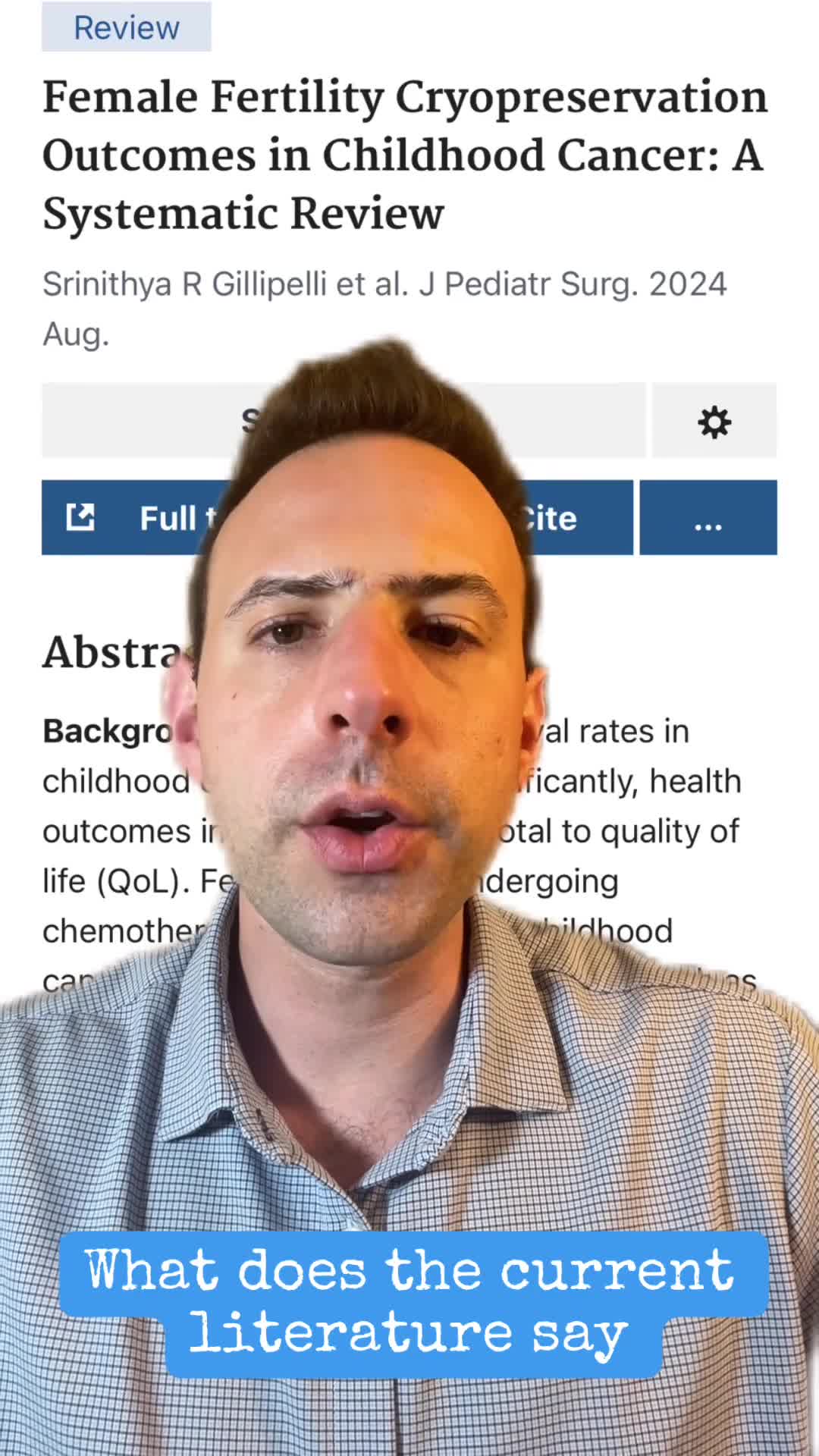
Female Fertility Cryopreservation Outcomes in Childhood Cancer: A Systematic Review
56 s · Published Dec 2024
More from this expert
Dr. Alberto TozziPodcast
Evidence-based medicine and artificial intelligence in pediatric healthcare
Alberto Tozzi · 18 min · Published Oct 2026
Podcast
Data requirements and infrastructure for artificial intelligence in healthcare
Alberto Tozzi · 14 min · Published Oct 2026
Podcast
Healthcare innovation requires cultural change beyond technology adoption
Alberto Tozzi · 21 min · Published Oct 2026
Podcast
Using AI to Read Scientific Publications in Healthcare Research
Alberto Tozzi · 21 min · Published Oct 2026
Podcast
Digital Twins in Healthcare: Virtual Models for Personalized Medicine
Alberto Tozzi · 16 min · Published Oct 2026
Podcast
Le funzioni e gli usi dell'intelligenza artificiale per la salute
Alberto Tozzi · 14 min · Published Oct 2026
What the experts said
David Cole and Hannah Cole are co-founders of children's charity Thinking of Oscar.
The aim of Thinking of Oscar is to bring the future of healthcare to children.
Collaboration in practice is difficult despite good intentions due to roles, responsibilities, metrics, and data governance constraints.
Simulation training at Oxford University Hospitals Trust focused on practicing clear and effective communication in high-risk, high-stress situations involving children.
Governments need to model the potential impact of preventative pediatric interventions to understand their long-term benefits.
There is insufficient interest among junior doctors and nurses in specializing in pediatrics in the UK.
During Oscar's hospitalization, the Coles brought nutritious food from home and were conscious that proper nutrition and sleep helped them make better decisions and stay alert.
Alder Hey Children's Hospital has kitchens on every ward, which initially seemed like a luxury but proved to be a cost saving by providing children with food they wanted when they wanted it, reducing waste and supporting the healing process.
Pediatrics represents a relatively small market segment, which makes industry less interested in investing, creating tension between building a business case and doing the right thing.
Many guests' answers to what they would change were process-oriented, data-oriented, or focused on legislation rather than purely clinical interventions.
The Thinking of Oscar cookbook was inspired by the care and compassion the Coles received after Oscar died, when friends brought food including bread and shepherd's pie.
The Thinking of Oscar cookbook sold the first 1,000 copies in about the first 6 weeks.
Springhood is the only organization known worldwide that exclusively invests in pediatric and child health startups.
Career serendipity was a common theme among podcast guests—many did not have a clear path to their current roles when they started.
Scale was a common motivation for guests choosing their career paths—working in research or leadership development allows impact on more lives than individual clinical practice.
Patient empowerment—including children in treatment processes and designing hospital environments that feel like home—was discussed in nearly every conversation.
Flexibility in pediatric care means engaging with children when they are ready rather than adhering to rigid appointment schedules.
Neil at Great Ormond Street said that waiting for everything to be perfect before starting an initiative may mean never starting—it's better to begin and iterate.
Pediatric healthcare is an exceptionally collaborative space, with academics, scientists, and clinicians working closely together.
Neil at Great Ormond Street emphasized the need for more standard ways of communicating, particularly around diagnostic labels, to reduce misunderstanding.
The Formula One pit-stop model for patient care involves all specialists meeting with the child simultaneously rather than the child moving through sequential appointments, fostering cross-disciplinary collaboration and a child-centric journey.
Alberto talked about thinking big and thinking small at the same time—doing what's needed in the short term while keeping one eye on the horizon to prepare for the future.
Paul's work focuses on preventing diseases that manifest in adulthood by targeting factors during childhood.
Michelle's Zero Childhood Cancer program represents a bold ambition being worked toward incrementally.
Damien and Tessa share the philosophy that education exists to be shared, and they work to make complex medical insights digestible for busy clinicians.
Don't Forget the Bubbles creates blog-style posts that can be read in 5-6 minutes, translating complex research into practical knowledge for interested professionals.
Ian at Alder Hey and Neil at Great Ormond Street both emphasized the importance of positive support from C-level leadership in achieving their initiatives.
Nick described mental health, obesity, and safeguarding as intractable problems often bound up with poverty, disadvantage, or societal inequality, with no easy solutions.
Ian Hennessy's answer to what he would change in child health was to take pain away from children.
Funding for pediatric healthcare and child health was a key theme when guests were asked what they would change.
Michelle said that if she could change one thing, it would be to increase partnerships, collaboration, and funding within the overall spectrum of pediatric healthcare, which she described as utopia.