

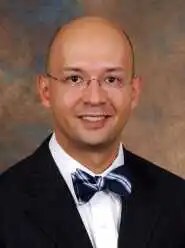
Screening and treatment of MRSA colonization in pediatric airway surgery patients
With Dr. Alessandro de Alarcon · hosted by Dr. Jan Engmeyer
Chapter 1 of 5 · Fundamentals
Introduction
Introduction and Study Context
Expert statements on this page
No expert statements were drawn from this page.
Host summaries · secondary, not cited in answers
Educational content from recorded physician discussions — not medical advice. Talk to your (or your child's) care team about your situation.
Podcast
Preventing MRSA infections in pediatric airway surgery through preoperative screening
Alessandro de Alarcon · 8 min · Published Oct 2026
Podcast
Combined cervical and thoracic approach for esophageal atresia with tracheopexy
Alessandro de Alarcon · 5 min · Published Dec 2023
Video
QUAD #1: Cervical Tracheopexy with Dr. Alessandro de Alarcon
Dr. Todd Ponsky · 5 min · Published Dec 2023
Video
Inside Tract: Bilateral Vocal Fold Paralysis | Cincinnati Children's
Alessandro de Alarcon · 2 min · Published Mar 2020
What the experts said
MRSA (methicillin-resistant Staph aureus) can cause serious infections in the skin and wound sites after surgery.
Studies in the last decade show an increasing number of MRSA infections both in the community and during surgical procedures globally.
The increase in resistant bacterial strains is thought to be due to more frequent antibiotic use than in the past.
At Cincinnati Children's, several patients had severe MRSA infections that led to failure of their airway reconstruction.
Cincinnati Children's protocol screens patients for MRSA prior to airway surgery and treats colonized patients before and during surgery with appropriate antibiotics.
MRSA surgical site infections can increase the cost of admission by up to approximately $62,000.
MRSA infections can cause rib grafts used in airway reconstructions to die, leading to complete surgical failure.
A typical airway reconstruction runs around $90,000 in hospital charges.
Hospital stays for airway reconstruction range from a couple of weeks to about a month.
Surgical site infections have historically been looked at as accidents or something not preventable.
Cincinnati Children's is working on protocols to reduce or eliminate surgical site infections by identifying preventable harm.
About one-third of children with tracheostomies screened at Cincinnati Children's are colonized with MRSA.
Other surgical practices typically define high-risk patient populations as having 8 to 10% MRSA colonization rates.
Robin Cotton is one of the forefathers of airway reconstruction in children.
Cincinnati Children's airway surgery program focuses on improving outcomes beyond tracheostomy removal, including voice outcomes and long-term quality of life.
Many children with tracheostomies will be MRSA positive from the tracheostomy site or an additional site.
The study design could not prove that Cincinnati Children's protocol is the perfect protocol.
The study showed no increase in MRSA infections in patients who were MRSA positive and treated according to the protocol.
Centers performing significant airway reconstruction should have a clinical protocol for MRSA screening before surgery and treatment.