
QUAD #25: Medical Management of Minor Laryngeal Clefts with Dr. Greg Burg
With Dr. Greg Burg · hosted by Dr. Em Gootee · StayCurrentMD
Cued at 5:19 · stops at 6:04 · press play
Educational content from recorded physician discussions — not medical advice. Talk to your (or your child's) care team about your situation.
Video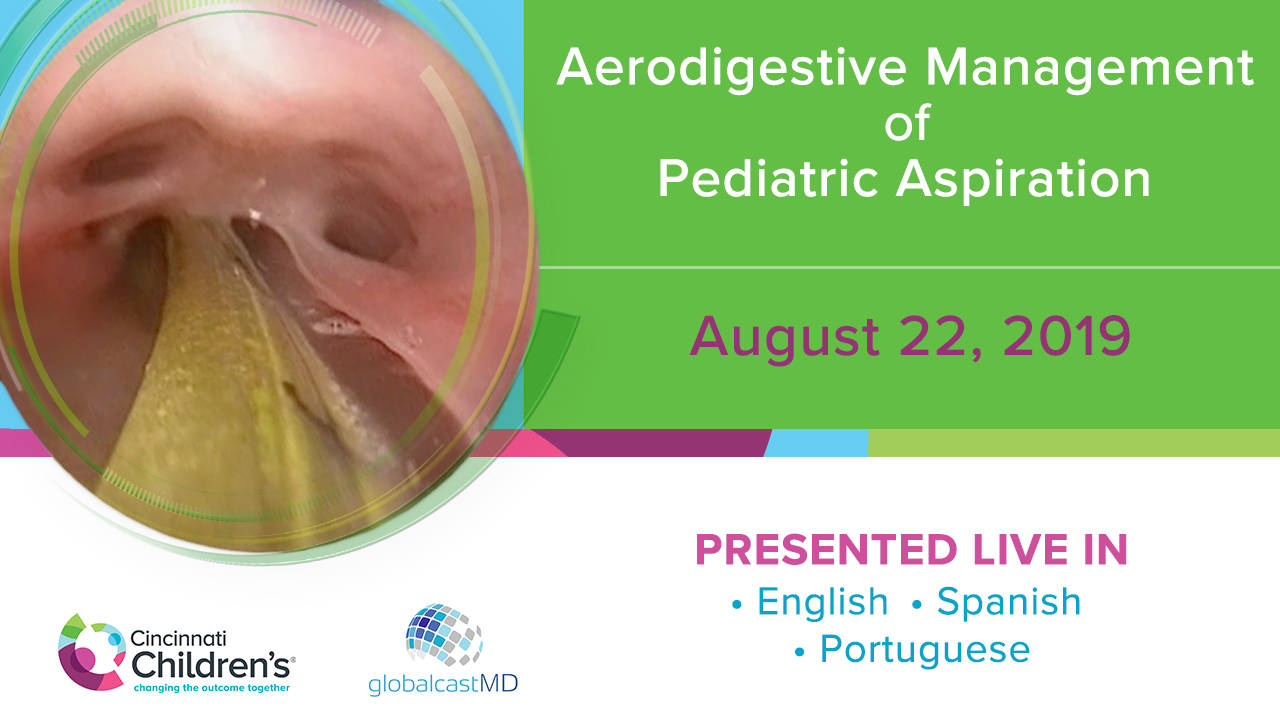
Aerodigestive Management of Pediatric Aspiration - FULL SHOW
CCHMC Pediatric Surgery · 157 min · Published Jul 2020
Video
Aerodigestive & Esophageal Surgery - Difficult Tracheal Esophageal Fistula
Dr. Todd Ponsky · 120 min · Published Nov 2018
Video
Laryngeal Clefts
CCHMC Pediatric Surgery · 14 min · Published Jun 2021
Video
QUAD #20: Endoscopic Repair of Minor Laryngeal Clefts with Dr. Catherine Hart
CCHMC Pediatric Surgery · 6 min · Published Nov 2024
Video
TEF Presentations (Extended): Aerodigestive & Esophageal Surgery
108 min · Published Dec 2014
Video
Aerodigestive & Esophageal Surgery: Aspiration in TEFs
5 min · Published Dec 2014
Only a few other public items share this expert — go deeper there →
Video
Pediatric Surgical Oncology Research Collaborative (PSORC): Studying Rare Pediatric Tumors
56 s · Published May 2026
Video
Update Course Rewind 2025: Hirschsprung + ARM: Rare but Real
1 min · Published May 2026
Video
Update Course Rewind 2025: Hirschsprung + ARM: Rare but Real
1 min · Published May 2026
Video
Pooling Patients to Study Rare Pediatric Tumors: An Introduction to PSORC
56 s · Published May 2026
Video
The fetal frontier: A review of current and emerging fetal therapies for genetic diseases
44 s · Published May 2026
Video
Indocyanine green assists with sentinel lymph node mapping in pediatric and adolescent patients
1 min · Published May 2026
What the experts said
The case patient had a very inflammatory pattern on bronchoalveolar lavage but did not have lipid-laden macrophages despite being orally fed.
Management of laryngeal clefts depends heavily on the degree of aspiration.
Patients with significant tracheobronchomalacia or upper airway obstruction from tonsils and adenoids may generate greater respiratory forces that push more air across the glottis and can increase aspiration risk.
BAL analysis examines inflammatory cell types, culture results, and macrophage contents.
Parental report of choking and coughing with water intake raises suspicion for a minor cleft.
A child with a deepened interarytenoid notch plus evidence of aspiration on BAL or other assessments plus bronchiectasis on imaging warrants consideration for surgical repair.
For patients with an interarytenoid notch and genetic components with concern for central swallowing control, brain MRI may be checked to assess neurologic and functional comorbidities.
Safe swallowing techniques include thickening, pacing, and volume modification.
Aspiration can occur from three locations: things that start in the upper airway, things put in the upper airway, and things that come up from the GI system.
Medical management addresses excessive drooling and esophageal or GI motility issues that increase vomiting and reflux aspiration risk.
Pulmonary therapies are mostly considered reactive band-aids.
Inhaled steroids may be tried to reduce inflammation.
Albuterol may be used for bronchodilation if there is a reactive airway component to aspiration pneumonitis.
Airway clearance augmentation is needed for neurodevelopmentally limited or musculoskeletally limited patients who lack effective cough or airway clearance ability.
Health maintenance for aspiration-risk patients includes vaccination against respiratory illnesses and reducing environmental hazards including smoke exposure.
For non-operative monitoring, pulmonologists track clinical symptoms, hospitalization frequency, response to interventions, and may repeat bronchoscopy and swallow assessments to guide further management.
Flexible bronchoscopy is quite limited in evaluating a cleft unless it's a major cleft.
A deep interarytenoid notch is considered a minor cleft by Dr. Burg's team.
Respiratory culture showed predominantly upper airway flora and two Candida species in the mucopurulent bronchitis.
Clinical assessment includes evaluating frequency of coughing, sick visits, emergency room visits, and hospitalizations.
Bronchoscopic assessment looks for airway edema, visibility of tracheal rings, mucus plugging, and secretions.
Chest CT is the most important differential imaging study, used to look for chronic changes related to aspiration.
G-tubes and NG-tubes are used as needed for nutritional intake.
Chronic macrolide therapy can be used as an anti-neutrophilic agent, derived from cystic fibrosis literature.
Saline is used to thin out secretions.
For patients with significant tracheomalacia, ipratropium may be used over albuterol.