
BOB Ped Surg 2023 - Andrew Fleming, AAP - Presentation
With Dr. Andrew Fleming · Live Event Content
Cued at 6:00 · stops at 6:45 · press play
Educational content from recorded physician discussions — not medical advice. Talk to your (or your child's) care team about your situation.
Video
Quality of Life Outcomes for Patients Who Underwent Conventional Resection and Liver Transplantation for Locally Advanced Hepatoblastoma
1 min · Published Jan 2026
Video
Retreatment with Cisplatin May Provide a Survival Advantage for Children with Relapsed/Refractory Hepatoblastoma: An Institutional Experience
1 min · Published Jan 2026
Video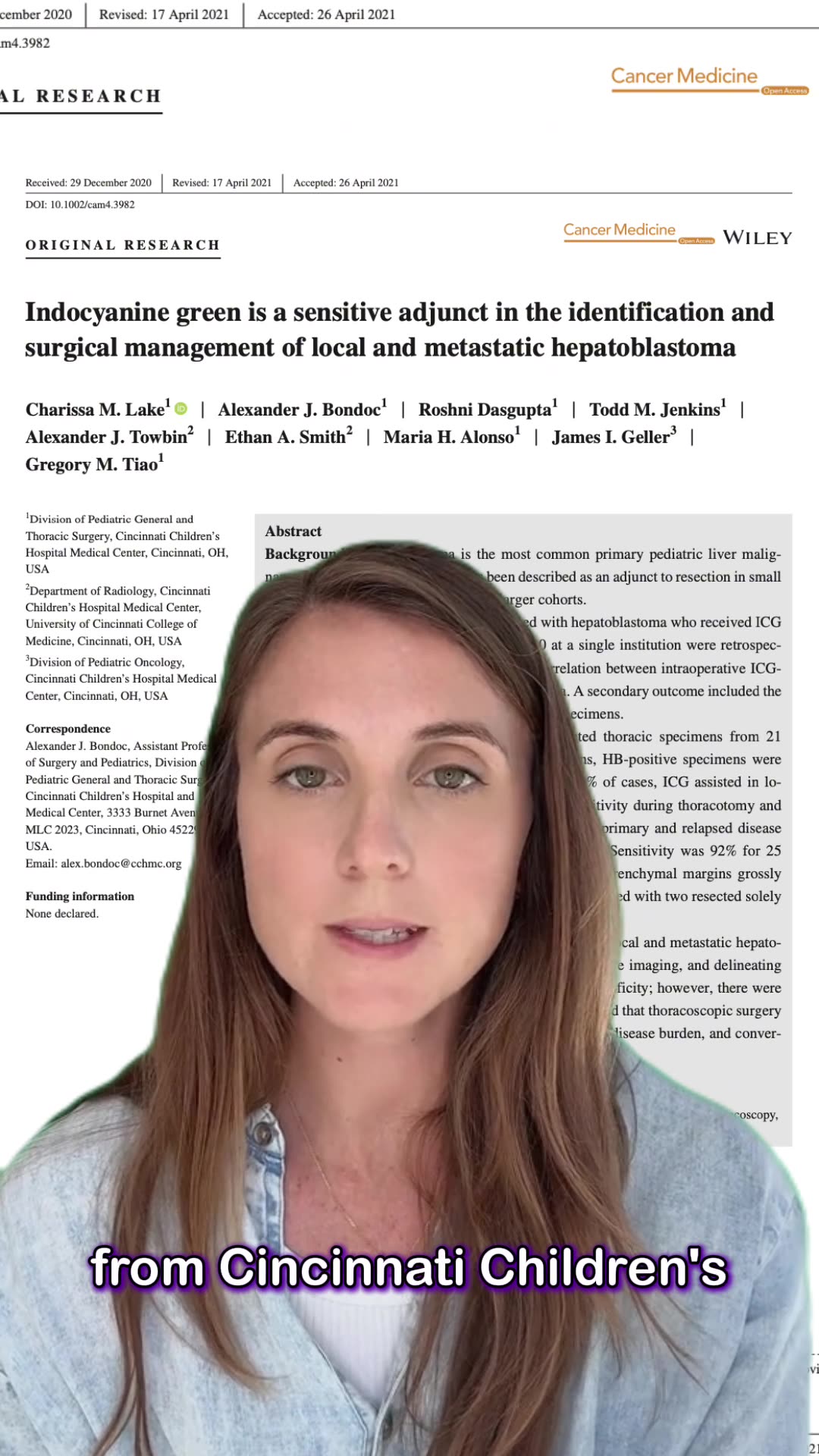
Indocyanine green is a sensitive adjunct in the identification and surgical management of local and metastatic hepatoblastoma
1 min · Published Jan 2026
Video
Aggressive Pursuit of No Evidence of Disease Status in Hepatoblastoma Improves Survival
Published Jun 2023
Video
Social Determinants of Health Influence on Survival in Wilms Tumor, Neuroblastoma, and Hepatoblastoma
1 min · Published Jan 2026
Video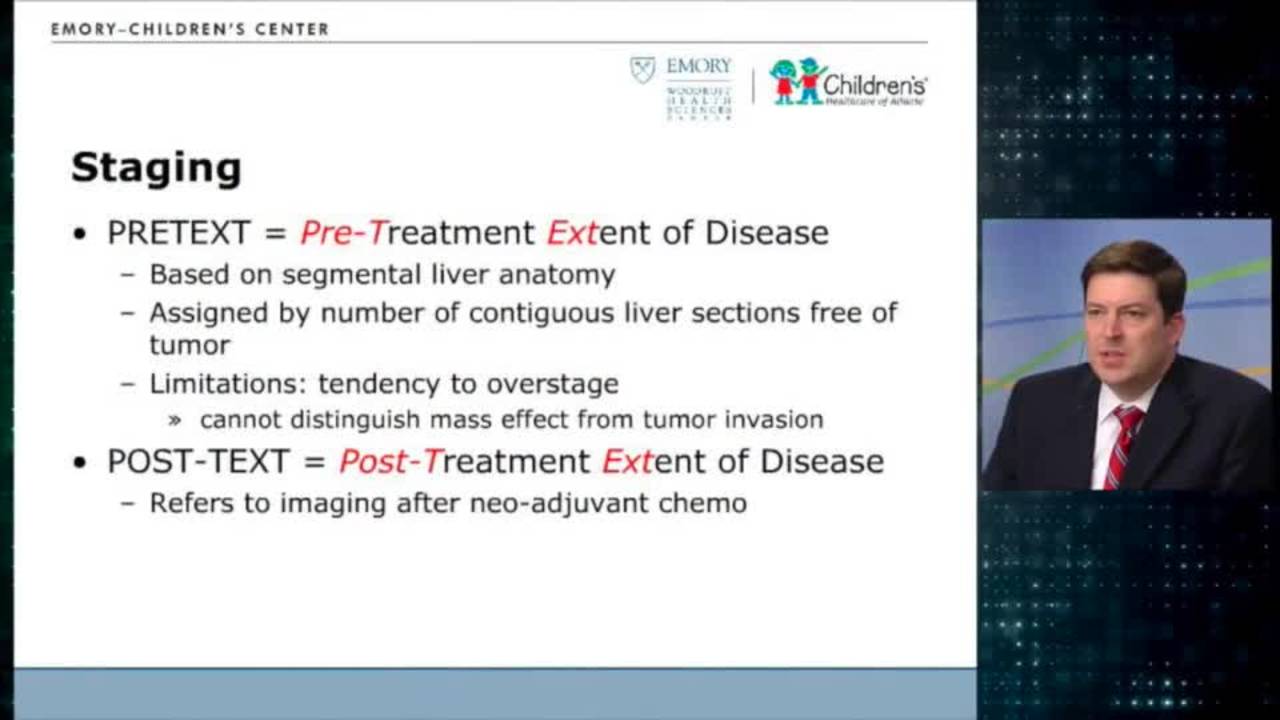
Hepatoblastoma: Update Course 2014
24 min · Published Nov 2018
Only a few other public items share this expert — go deeper there →
Video
Mental Health and Gun Safety in Pediatrics - Catherine Neyer - APP Conference 2026
48 min · Published May 2026
Video
Overview of the Surgical Management of Acute and Chronic Pancreatitis in Children with Dr. Juan Gurria
66 min · Published Apr 2026
Video
Clinical & Research Update: Pediatric Liver Tumors - A Case-Based Discussion with Drs. Katherine Somers & Alex Bondoc
69 min · Published Apr 2026
Video
Beyond ChatGPT_ AI Tools You’re Not Using (But Should) - Vail, CO
Dr. Todd Ponsky · 97 min · Published Jan 2026
Video
Beyond ChatGPT: AI Tools You’re Not Using (But Should)
Dr. Todd Ponsky · 109 min · Published Oct 2025
Video
2025 Pediatric Surgery Update Course - Updates in Lap Chole and Cholecystitis Management
18 min · Published Aug 2025
What the experts said
Hepatoblastoma is the most common pediatric liver cancer
The number of contiguous hepatic sections uninvolved by tumor can be used radiographically to determine the pre-treatment extent of disease, making the PRETEXT group
PRETEXT group in combination with presence/absence of metastatic disease, alpha fetoprotein at diagnosis, PRETEXT modifiers, patient age and resectability at diagnosis can be used to risk stratify patients according to the AHEAD 1531 clinical trial
Complete surgical resection has been determined to be necessary for patient survival
Cisplatin based chemotherapies have improved rates of resectability and subsequently survival for hepatoblastoma patients
The reported survival benefits of pulmonary metastasectomy for hepatoblastoma have varied in the literature
No evidence of disease is defined as a normal AFP and the absence of detectable radiographic disease on interval surveillance imaging
Among 50 patients included for analysis, 24 were determined to be high risk
All patients received chemotherapy and 41 patients were successfully able to be rendered no evidence of disease status
14 patients underwent a total of 31 pulmonary procedures, having a median of four nodules resected per patient
Median of three nodules per patient contained pathologically confirmed viable hepatoblastoma, confirming a high degree of concordance between radiographic evidence of disease and pathological confirmation of disease
On logistic regression for three-year mortality, only achieving no evidence of disease was associated with a significant decrease in patient mortality
The overall survival of the entire cohort is quite high
The event-free survival is lower than overall survival due to relapse events after achieving no evidence of disease
The overall survival and event-free survival of the group in whom we were unable to render them no evidence of disease is significantly lower, with no patients in these cohorts surviving past two years
The overall survival is similar between high risk and not high risk patients who were able to be rendered no evidence of disease status
The event-free survival remains significantly lower for the high-risk no evidence of disease group due to five high-risk patients who relapsed
Three of five high-risk patients who relapsed were successfully salvaged using a combination of chemotherapy and further pulmonary resections
No evidence of disease status is necessary for survival in patients with hepatoblastoma
Repeated pulmonary metastasectomy and/or complex local control strategies to obtain no evidence of disease benefit high risk patients