
Quick Literature Updates Ep 24
With Dr. Carlos Colunga · hosted by Dr. Em Gootee & Dr. Lizzie Lee & Dr. Cecilia Gigena · StayCurrentMD
Cued at 2:14 · stops at 2:59 · press play
Educational content from recorded physician discussions — not medical advice. Talk to your (or your child's) care team about your situation.
Video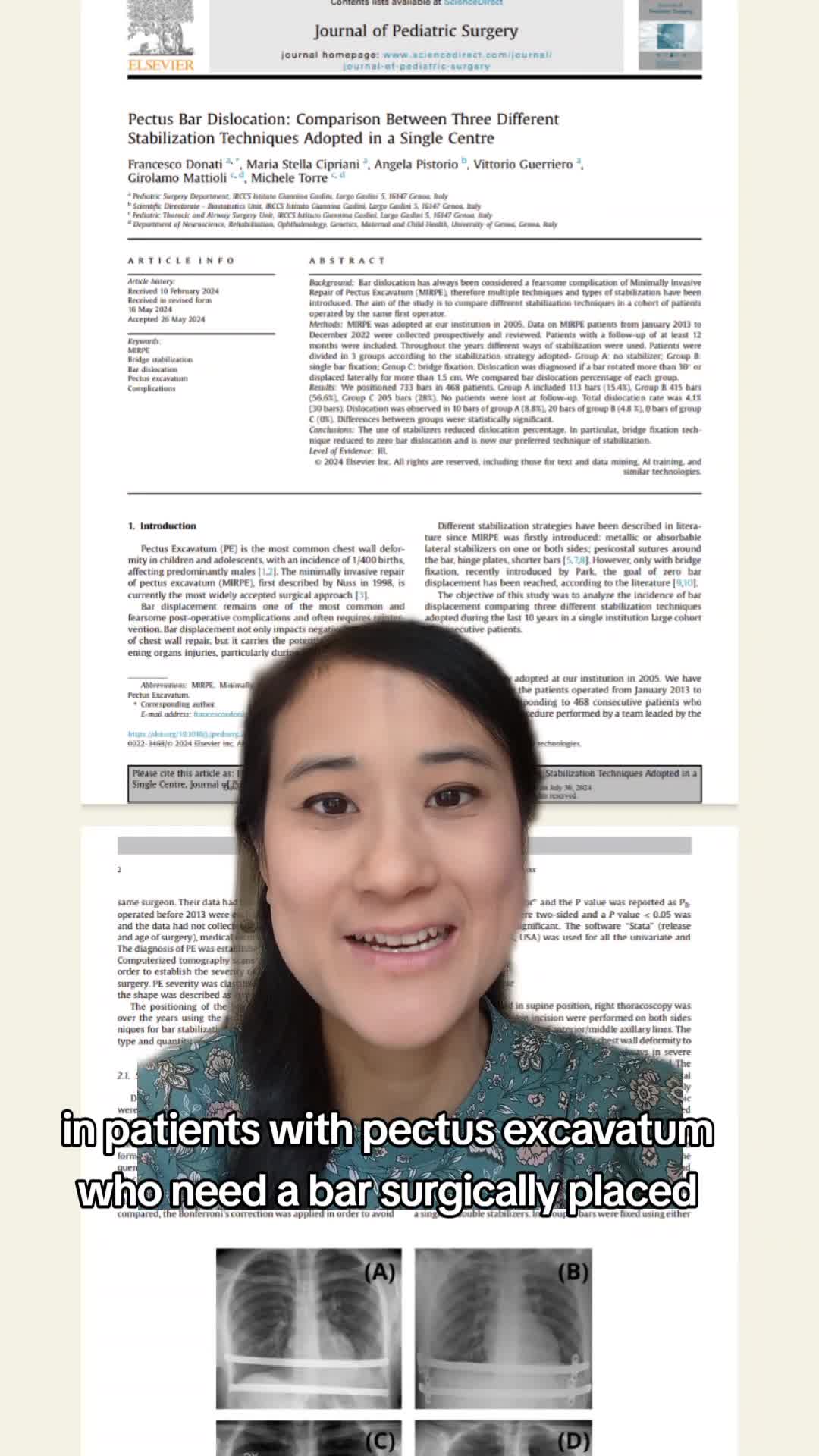
Pectus Bar Dislocation: Comparison Between Three Different Stabilization Techniques Adopted in a Single Centre
1 min · Published Sep 2024
Video
Criteria for Pectus Repair: Update Course 2015
55 s · Published Nov 2015
Video
Vacuum Bell Therapy for Pectus Excavatum: Long-term Experience at a Single Center
58 s · Published Apr 2025
Video
Novel index to estimate the cephalocaudal extent of the excavation in pectus excavatum - JPS article
1 min · Published May 2023
Video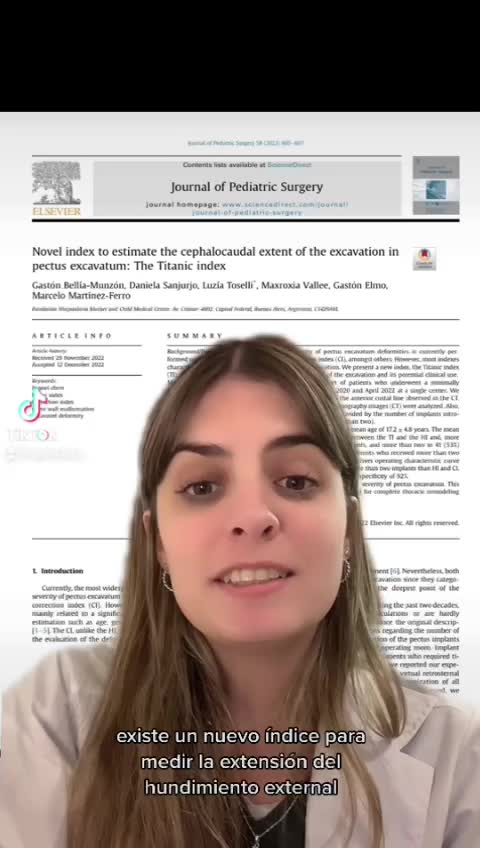
Novedoso indice para estimar la extensión cefalocaudal del hundimiento esternal en el pectus excavatum: El Índice Titanic
Published May 2023
Video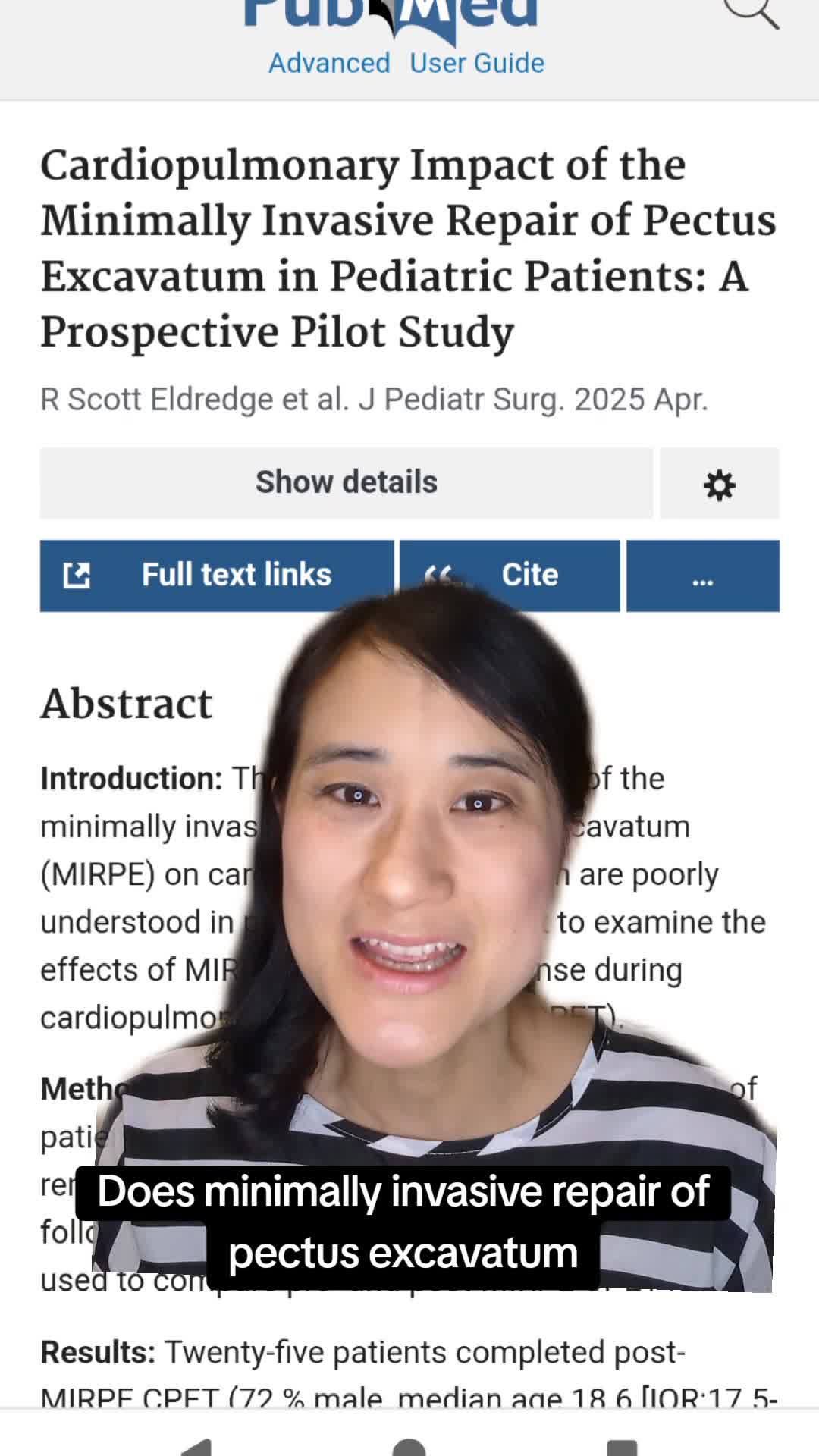
Cardiopulmonary Impact of the Minimally Invasive Repair of Pectus Excavatum in Pediatric Patients: A Prospective Pilot Study
55 s · Published Apr 2025
Only a few other public items share this expert — go deeper there →
Video
Pediatric Surgical Oncology Research Collaborative (PSORC): Studying Rare Pediatric Tumors
56 s · Published May 2026
Video
Update Course Rewind 2025: Hirschsprung + ARM: Rare but Real
1 min · Published May 2026
Video
Update Course Rewind 2025: Hirschsprung + ARM: Rare but Real
1 min · Published May 2026
Video
Pooling Patients to Study Rare Pediatric Tumors: An Introduction to PSORC
56 s · Published May 2026
Video
The fetal frontier: A review of current and emerging fetal therapies for genetic diseases
44 s · Published May 2026
Video
Indocyanine green assists with sentinel lymph node mapping in pediatric and adolescent patients
1 min · Published May 2026
What the experts said
The Donnati et al. study was an observational prospective study in Italy from 2013 to 2022 on 468 patients around 15 years old.
Surgeons placed 733 pectus bars total across the 468 patients in the Donnati study.
Bar dislocation is defined as when a pectus bar rotates more than 30 degrees out of place.
Bridge fixation was significantly more stable than single bar fixation for pectus repair.
None of the patients with bridge fixation had dislocated bars compared to those who underwent the single bar technique.
Bridge fixation is the best technique for preventing bar dislocation in pectus excavatum patients.
University of Split researchers developed a machine learning model to accurately identify appendicitis cases while minimizing unnecessary surgery.
The machine learning model was trained using data from 551 pediatric patients who underwent appendectomy, using their clinical, laboratory, and anthropometric information.
The best performing machine learning model achieved 99.7% sensitivity in identifying appendicitis cases.
The machine learning model has specificity that could potentially help reduce up to 17% of negative appendectomies in high risk patients.
The machine learning model can differentiate between complicated and uncomplicated appendicitis with a high degree of accuracy.
The machine learning model uses readily available clinical and lab data without using any advanced imaging.
The Rao et al. study is a multi-center retrospective study done in the US from 2018 to 2022.
The Rao study compared patients with suspected choledocholithiasis who underwent transcystic laparoscopic common bile duct exploration versus those who underwent ERCP first.
The Rao study included 252 patients total: 156 in the transcystic laparoscopic common bile duct exploration group and 96 in the ERCP-first group.
Patients who underwent transcystic laparoscopic common bile duct exploration had significantly less complication rates compared to ERCP-first patients.
Patients who underwent transcystic laparoscopic common bile duct exploration had lower length of stay compared to ERCP-first patients.
Attempting a transcystic laparoscopic common bile duct exploration may benefit pediatric choledocholithiasis patients.