
Educational content from recorded physician discussions — not medical advice. Always talk to your child's care team about your child's situation.
Content of this collection
Academic Leadership
3 items


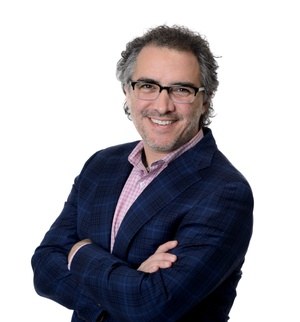
Dr. Lee Ponsky
Watch →
To schedule an appointment with Dr. Ponsky, click here: https://bit.ly/DrPonsky
University Hospitals is one of the nation’s leading health care systems, providing patient-centered care that meets the highest standards for quality and patie
video1:23 · Jul 2026
UH Urology: Hot Ones with Dr. Lee Ponsky- Chairman
Watch →
Our first installment of Hot Ones UH Urology. Our new chairman Dr. Lee Ponsky shares his thoughts, insights, vision and ability to handle hot sauce.
video28:04 · Jul 2026
Episode 9: Lee Ponsky, MD
Listen →
Dr. Lee Ponsky is the Chair of the Department of Urology at University Hospitals who is fellowship-trained in Oncologic Urology and Advanced Laparoscopy. He als
podcast · Jul 2026
Career Development & Innovation
1 item

S02EP22: Beyond Our Surgical Day Job with Dr. Lee Ponsky
Listen →
In this episode of The Intentional Surgeon Podcast, Dr. Lee Ponsky, Chair of Urology, shares his journey of pushing boundaries within academic medicine, finding
podcast · Jul 2026
Life Beyond Medicine
1 item

Off the grid: how I got off the grid & you can too | Lee Ponsky | TEDxCLE
Watch →
Chief of the Department of Urologic Oncology at University Hospitals in Cleveland, Ohio Lee Ponsky meets patients daily that "live with regret." His interactions with these individuals & his own family inspired him to take a year, get off t
video20:01 · Jul 2026
Summaries and takeaways+ Show
Summary of this collection+ Show
Key points, with the moment each was said+ Show
Featured picks for families are being prepared — the summaries above are written for you.
Takeaways+ Show
Leadership development in urology increasingly recognizes the tension between clinical excellence and administrative capability: medical leadership selection often takes clinically busy, academically accomplished physicians and asks them to run departments requiring entirely different skill sets. Institutional support and strategic recruitment are critical—one academic program recruited over 7 people in a single year while planning to more than double departmental size, prioritizing leaders with passion and vision for teaching and innovation over mere coverage needs.[e13654-c16,e13654-c19,e13654-c21] Sabbaticals, offered by up to 24% of U.S. employers, represent an underutilized professional development tool. One urologist's year-long Australian sabbatical yielded transformative MRI research that changed clinical practice, secured R01 funding, and established enduring international collaborations—demonstrating how strategic career breaks can catalyze academic productivity rather than interrupt it.[e13654-c8,e13654-c9,e13654-c10] Culture-building emerges as the paramount leadership priority: creating supportive, non-hierarchical environments where idealism persists beyond training, contrasted with traditional intimidating models.[e13654-c22,e13654-c4] The most successful programs balance clinical demands with protected time for innovation, explicitly rejecting the "wait until retirement" paradigm in favor of interspersing renewal throughout working years.
- Medical leadership requires skill sets distinct from clinical excellence; selection processes often fail to account for this gap between patient care achievement and departmental management capability.[e13654-c18]
- Strategic sabbaticals yield measurable academic returns: one year abroad produced novel MRI research, R01 funding, and sustained international collaboration networks that transformed clinical practice.[e13654-c8,e13654-c9,e13654-c10]
- Departmental culture trumps traditional hierarchy: successful programs prioritize supportive environments that preserve trainee idealism over intimidating models that suppress it during residency.[e13654-c22,e13654-c4]
- Recruitment strategy should target subspecialty leaders with vision for teaching and innovation, not physicians who merely fill coverage gaps—a distinction critical for program growth.[e13654-c19]
- Borrowing years from retirement for mid-career renewal offers greater value than deferring all rest to an uncertain future, challenging traditional career trajectory assumptions.[e13654-c12]
For patients & families
Doctors who specialize in urology—treating conditions of the urinary system—are exploring new ways to balance demanding careers with personal fulfillment and professional growth. One surgeon who treats cancer patients daily noticed that people facing serious illness often express regret about things they didn't do [e13653-c2, e13653-c3]. This observation led him to take a year-long sabbatical in Australia with his family, where he learned new imaging techniques that changed how he cares for patients and sparked ongoing research collaborations [e13654-c8, e13654-c9, e13654-c10]. The experience was so valuable that he now advocates for doctors to borrow time from retirement and use it earlier in their careers, when they can fully enjoy it . Beyond individual growth, medical leaders are rethinking how departments operate—moving away from traditional hierarchies toward supportive environments where doctors feel at home rather than pressured . They're actively recruiting physicians who are passionate about teaching and innovation, not just filling coverage gaps . In the United States, nearly one in four employers now offers some form of sabbatical, recognizing that time away can renew energy and spark creativity .
Doctors who specialize in urology—treating conditions of the urinary system—are exploring new ways to balance demanding careers with personal fulfillment and professional growth. One surgeon who treats cancer patients daily noticed that people facing serious illness often express regret about things they didn't do [e13653-c2, e13653-c3]. This observation led him to take a year-long sabbatical in Australia with his family, where he learned new imaging techniques that changed how he cares for patients and sparked ongoing research collaborations [e13654-c8, e13654-c9, e13654-c10]. The experience was so valuable that he now advocates for doctors to borrow time from retirement and use it earlier in their careers, when they can fully enjoy it . Beyond individual growth, medical leaders are rethinking how departments operate—moving away from traditional hierarchies toward supportive environments where doctors feel at home rather than pressured . They're actively recruiting physicians who are passionate about teaching and innovation, not just filling coverage gaps . In the United States, nearly one in four employers now offers some form of sabbatical, recognizing that time away can renew energy and spark creativity .
The doctors in this collection+ Show
All expert statements+ Show
Every expert statement below comes from the recorded discussions, with its speaker and moment.
UH Urology: Hot Ones with Dr. Lee Ponsky- Chairman
Dr. Lee Ponsky's father was a chairman of surgery at University Hospitals and other hospitals, and first recommended urology to him during medical school.
clinicalLee Ponsky1:24 ↗
Dr. Ponsky's father observed that urologists "walk around, they seem like they're having a good time, they have a good sense of humor, and they seem happy."
opinionLee Ponsky1:43 ↗
During medical school, Dr. Ponsky observed pediatric urologist Jack Elder performing a neobladder procedure while listening to Howard Stern, and the inclusive, non-intimidating environment convinced him to pursue urology.
clinicalLee Ponsky1:55 ↗
The idealism that brings people into medicine gets "pushed down" or "hidden" during training as residents focus on patient care, learning, and administrative tasks.
opinionLee Ponsky4:29 ↗
MedWish is a nonprofit that collects unused medical supplies and sets up hospitals and clinics in developing countries.
clinicalLee Ponsky5:18 ↗
Dr. Ponsky started a tattoo removal company and a medical device company through social entrepreneurism.
clinicalLee Ponsky5:34 ↗
Dr. Ponsky told a faculty member not to come in to see consults on July 4th, stating he was on call and the faculty should be home with family.
opinionLee Ponsky6:00 ↗
In 2013, Dr. Ponsky took a sabbatical year to Australia with his family.
Host summaryKartihi Mishra summarizes what Dr. Lee Ponsky said — not the host's own clinical position7:30 ↗
The sabbatical allowed Dr. Ponsky to learn about MRI of the prostate, which changed his academic career and led to an R01 research grant based on initial work done in Australia.
clinicalLee Ponsky9:01 ↗
The sabbatical established new friendships, research ideas, clinical practices, and international collaborations that continue.
clinicalLee Ponsky9:26 ↗
Dr. Ponsky gave a TEDx Cleveland talk about the process of taking a sabbatical year while maintaining a busy practice and community involvement.
clinicalLee Ponsky11:37 ↗
A designer in a prior TED Talk suggested borrowing years from retirement and interspersing them throughout a working career, noting uncertainty about one's condition at retirement age.
Host summaryLee Ponsky summarizing a resource — not the host's own clinical position13:06 ↗
Ed Cerullo was a co-resident with Dr. Ponsky from 1997, is now chairman of urology at Rush, and they still talk every day and collaborate.
clinicalLee Ponsky14:29 ↗
The institution has given the urology department resources and support to recruit, grow, and build the program.
clinicalLee Ponsky17:11 ↗
The University Hospitals urology program has trained more chairmen than any program in the country.
epidemiologicalLee Ponsky17:37 ↗
In the last year, the department recruited over 7 people who will be starting in the next 6 months, with additional recruits signed for the following year.
clinicalLee Ponsky18:01 ↗
Dr. Ponsky's biggest frustration is Saturday because he wants to send emails, meet with people, and get things done but must wait until Monday.
opinionLee Ponsky18:44 ↗
Medical leadership selection is "very strange" because it takes people who are busy clinically and have achieved academically, then asks them to run a company (department/institute) requiring different skill sets.
opinionLee Ponsky23:04 ↗
The department wants to recruit leaders in each subspecialty area who have passion and vision for teaching, asking questions, and innovating, not just checking boxes for coverage.
opinionLee Ponsky23:29 ↗
Ed Cerullo used to say "people talk about thinking outside the box, I think outside the building."
Host summaryLee Ponsky summarizing a resource — not the host's own clinical position24:27 ↗
The department plans to more than double in size in the next year.
clinicalLee Ponsky25:02 ↗
Culture is the number one priority - creating a home environment where people feel supported rather than pressured, different from traditional hierarchical medical education.
opinionLee Ponsky25:16 ↗
Off the grid: how I got off the grid & you can too | Lee Ponsky | TEDxCLE
In the United States, up to 24% of employers offer some sort of sabbatical.
epidemiologicalLee Ponsky1:12 ↗
The speaker is a cancer surgeon who sees patients facing terminal illness daily.
clinicalLee Ponsky2:33 ↗
Patients frequently express regret about things they did not do when facing serious illness.
opinionLee Ponsky2:52 ↗
The speaker's father-in-law was diagnosed with cancer in 1998, told he had 3 months to live, but survived 13 years.
clinicalLee Ponsky8:32 ↗
The speaker found a job in Australia doing innovative research on MRI imaging of the prostate, which changed the way he practices medicine and manages patients.
clinicalLee Ponsky17:23 ↗
What's new+ Show