


From
StayCurrentMD
Too Many Cooks in the Kitchen or an Organized Brigade? A Success Story of Collaboration Between Pediatric Urology and Surgery to Treat Children With Renal Tumors
Part of
Pediatric Oncology 696 items
jpedsurg.org shows its articles on its own site.
Read the article on jpedsurg.org ↗Article · Aug 2025 · 1 min read
In brief
In brief
This article examines the collaborative approach between pediatric urology and surgery in managing childhood renal tumors, addressing the traditional division where pediatric surgeons handle these cases despite urologists having more extensive nephrectomy training. The authors present a successful model of interdisciplinary cooperation that leverages the complementary expertise of both specialties to optimize surgical outcomes for pediatric patients with kidney masses.
- Pediatric surgeons traditionally manage childhood renal tumors, while urologists handle adult cases—a specialty-based divide.
- Urologists gain more nephrectomy experience in residency; pediatric surgeons acquire most renal tumor skills during fellowship.
- Collaboration between pediatric urology and surgery can leverage complementary expertise for optimal renal tumor management.
- Historical relationships with oncology and need for central access contribute to pediatric surgeons' traditional role.
- Training differences suggest potential benefit from interdisciplinary approaches to pediatric nephron-sparing surgery.
Written by the GCMD Library team from the article.
The surgical management of renal tumors in children has predominantly been by pediatric surgeons, while in adults these masses are surgically cared for exclusively by urologists [1]. Common thoughts as to why this discrepancy exists include close relationships between pediatric oncologists and surgeons who treat a host of other malignancies, most children with renal tumors needing central venous access, and historical precedent. Yet, there are important training differences between specialties, with urologists having a larger base of experience in residency with both partial and radical nephrectomies as opposed to pediatric surgeons who gain almost all of their experience with radical nephrectomies for cancer during fellowship.
Educational content from recorded physician discussions — not medical advice. Talk to your (or your child's) care team about your situation.
Video
Oncology Tumor Board Showdown: Pediatric Oncology 5 Question Quiz
1 min · Published Oct 2026
Article
Minimally invasive surgery for abdominal and thoracic neuroblastic tumors: A systematic review by the APSA Cancer committee
Juan Pablo Gurria · Published Oct 2026
Video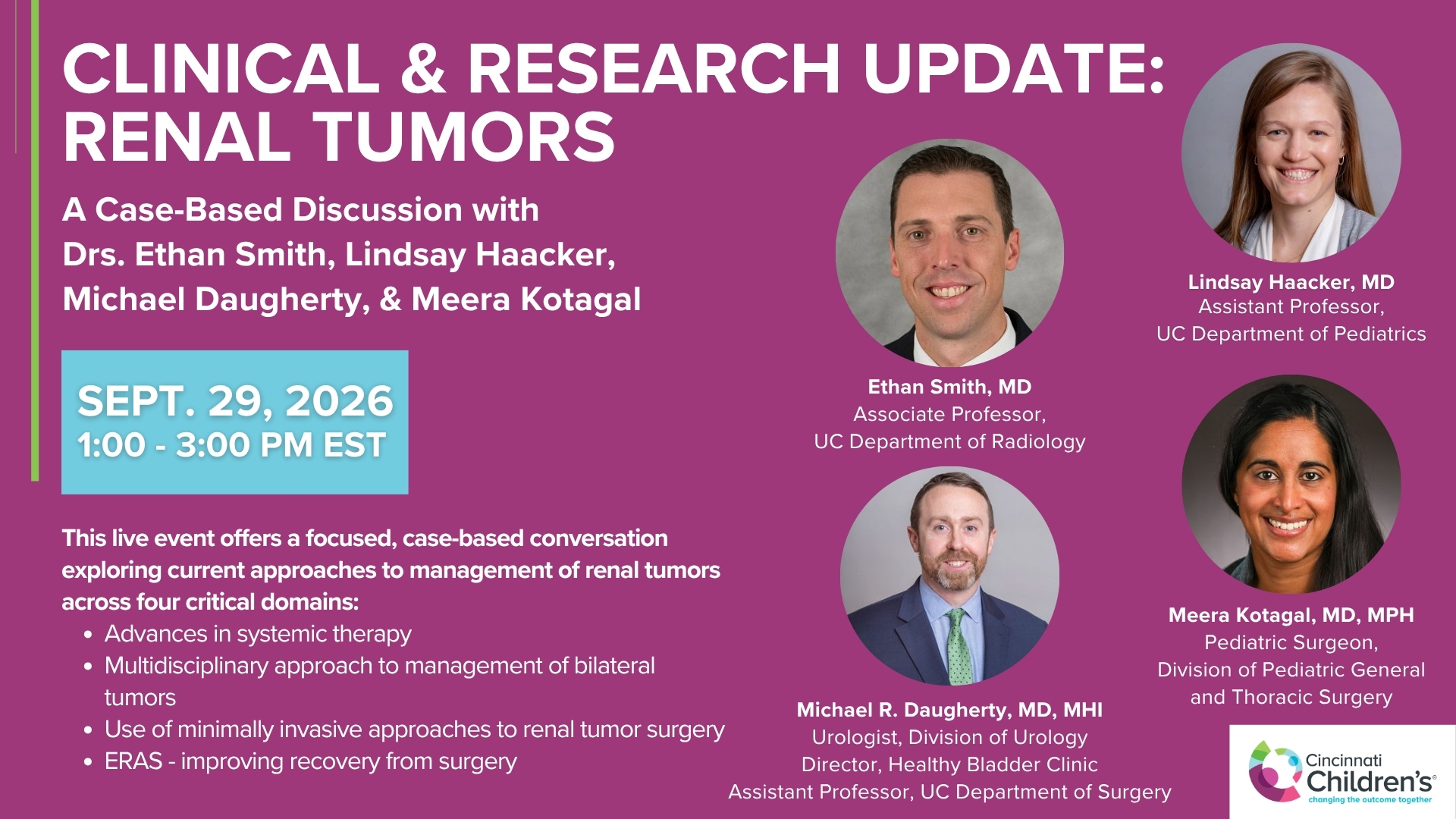
Clinical & Research Update: Renal Tumors with Drs. Ethan Smith, Lindsay Haacker, Michael Daugherty, and Meera Kotagal
71 min · Published Sep 2026
Video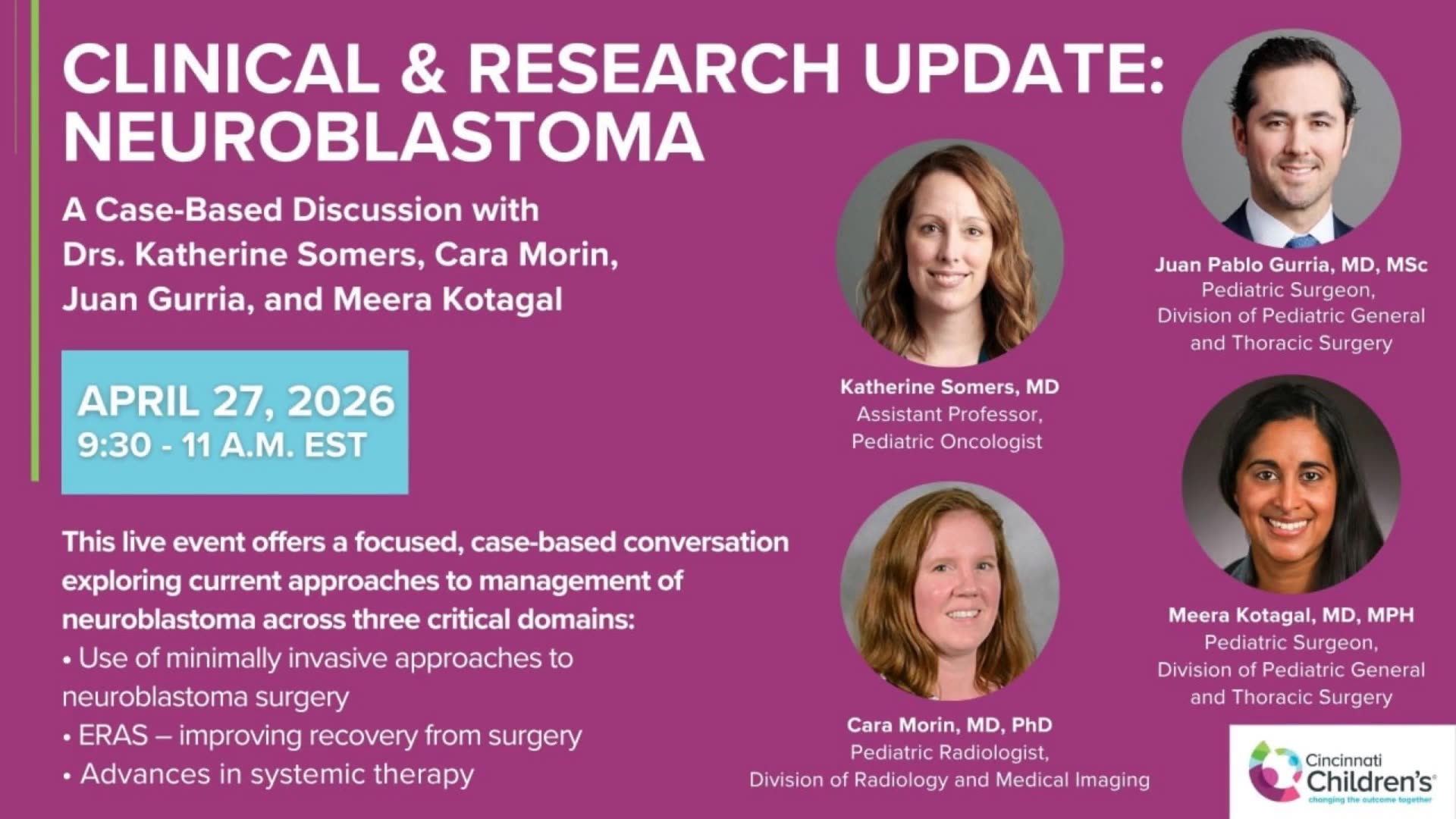
Clinical & Research Update: Neuroblastoma with Drs. Katherine Somers, Cara Morin, Juan Gurria, and Meera Kotagal
67 min · Published Sep 2026
Video
Clinical & Research Update: Sarcoma w/ Drs. Roshni Dasgupta, Joseph Pressey, Arthur Meyer, Luke Pater
66 min · Published Sep 2026
Video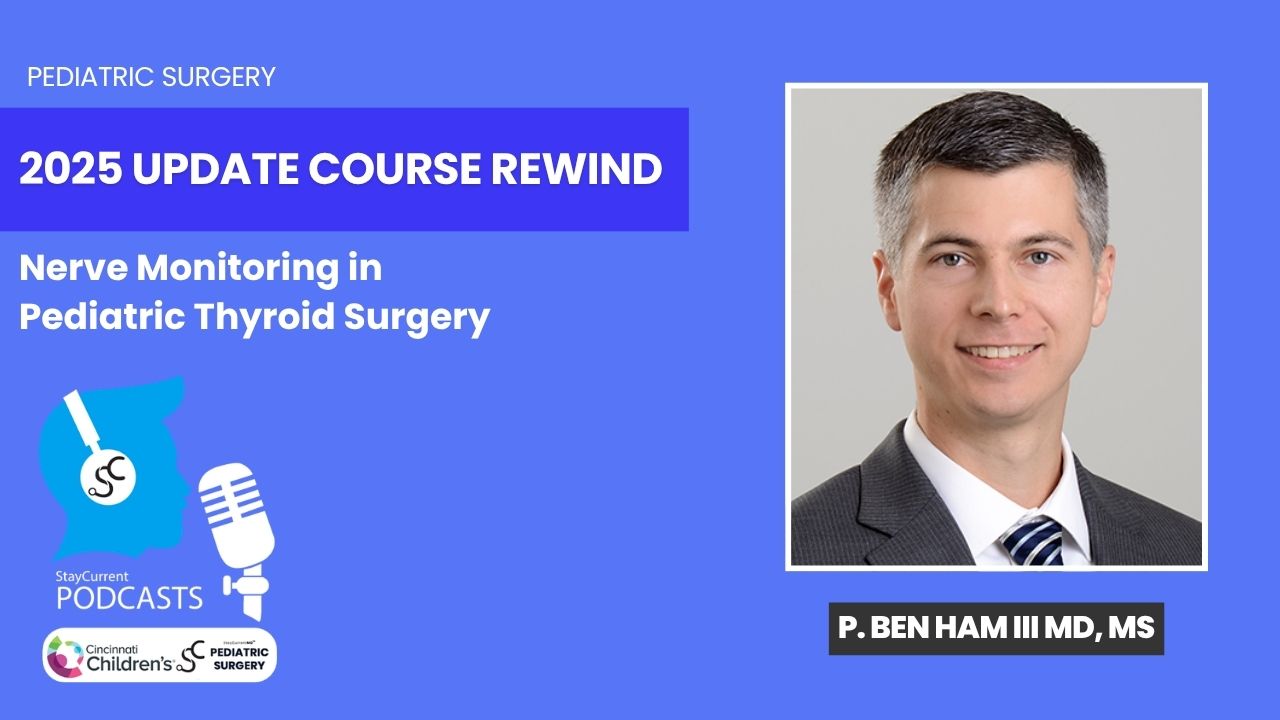
Update Course Rewind 2025: Nerve Monitoring in Pediatric Thyroid Surgery
6 min · Published Jul 2026
Video
Intestinal Atresia Types Explained: Grossfeld Classification for Pediatric Surgery
1 min · Published Sep 2026
Video
Derivation and validation of the Pediatric Community-Acquired Pneumonia Severity (PedCAPS) score: A prospective cohort study
50 s · Published Sep 2026
Video
FETO for Late-Diagnosed Severe Congenital Diaphragmatic Hernia (CDH) at Cincinnati Children's with Dr. Beth Rymeski
4 min · Published Sep 2026
Video
Severe Congenital Diaphragmatic Hernia (CDH) Case: FETO Management & Unexpected Findings with Dr. Beth Rymeski
3 min · Published Sep 2026
Video
Fetoscopic Endoluminal Tracheal Occlusion (FETO) Procedure: Step-by-Step Guide with Dr. Beth Rymeski
4 min · Published Sep 2026
Video
Choledochal Cyst Types Explained: Pediatric Surgery Fundamentals
1 min · Published Sep 2026