


From
StayCurrentMD
Pathological Insights into Non-Neoplastic Renal Parenchyma in Wilms Tumor: Implications for Nephron-Sparing Surgery
Part of
Pediatric Oncology 696 items
dx.doi.org shows its articles on its own site.
Read the article on dx.doi.org ↗Article · Oct 2024 · 1 min read
In brief
In brief
This prospective study examined non-neoplastic kidney tissue in 42 Wilms tumor patients to guide nephron-sparing surgery decisions. Findings suggest that when healthy renal parenchyma exceeds 15%, the risk of abnormalities is low, supporting broader use of kidney-preserving approaches over radical nephrectomy in pediatric patients.
- Non-neoplastic renal parenchyma >15% correlates with lower abnormality rates, supporting expanded nephron-sparing surgery indications
- Surgeons' visual assessment of non-neoplastic parenchyma (30%) closely approximates ellipsoid volume calculation (27%)
- Bilateral Wilms tumor cases show tendency toward basement membrane thickening compared to unilateral disease
- Nephrogenic rests and endogenous nephron alterations warrant careful evaluation when planning nephron-sparing approaches
- Pathological examination of non-neoplastic tissue provides objective criteria for surgical decision-making in Wilms tumor
Written by the GCMD Library team from the article.
Introduction This study aimed to evaluate the non-neoplastic renal parenchyma in Wilms tumor (WT) and investigate its impact on nephron-sparing surgery (NSS). Materials and Methods The non-neoplastic renal parenchyma of WT patients was prospectively collected for pathological examination. The histology of non-neoplastic renal parenchyma was assessed from two perspectives: nephrogenic rests (NRs) and nephrons. Results A total of 46 non-neoplastic renal parenchyma specimens were collected from 42 WT patients. The surgeons assessed the median proportion of non-neoplastic renal parenchyma as 30%, whereas using ellipsoid volume, it was calculated to be 27%. The Youden index of surgeons' assessment peaked at a 15% proportion of non-neoplastic renal parenchyma. The bilateral WT (BWT) group and NSS group exhibited significant differences compared with the unilateral WT group and radical nephrectomy group, respectively, with the BWT group showing a tendency toward thickened basement membrane. Conclusion The presence of NRs and endogenous nephron alternations should be given due attention in WT. The probability of abnormalities is low when the proportion of non-neoplastic renal parenchyma exceeds 15%, providing pathological support for expanding the adaptation of NSS.
Educational content from recorded physician discussions — not medical advice. Talk to your (or your child's) care team about your situation.
Video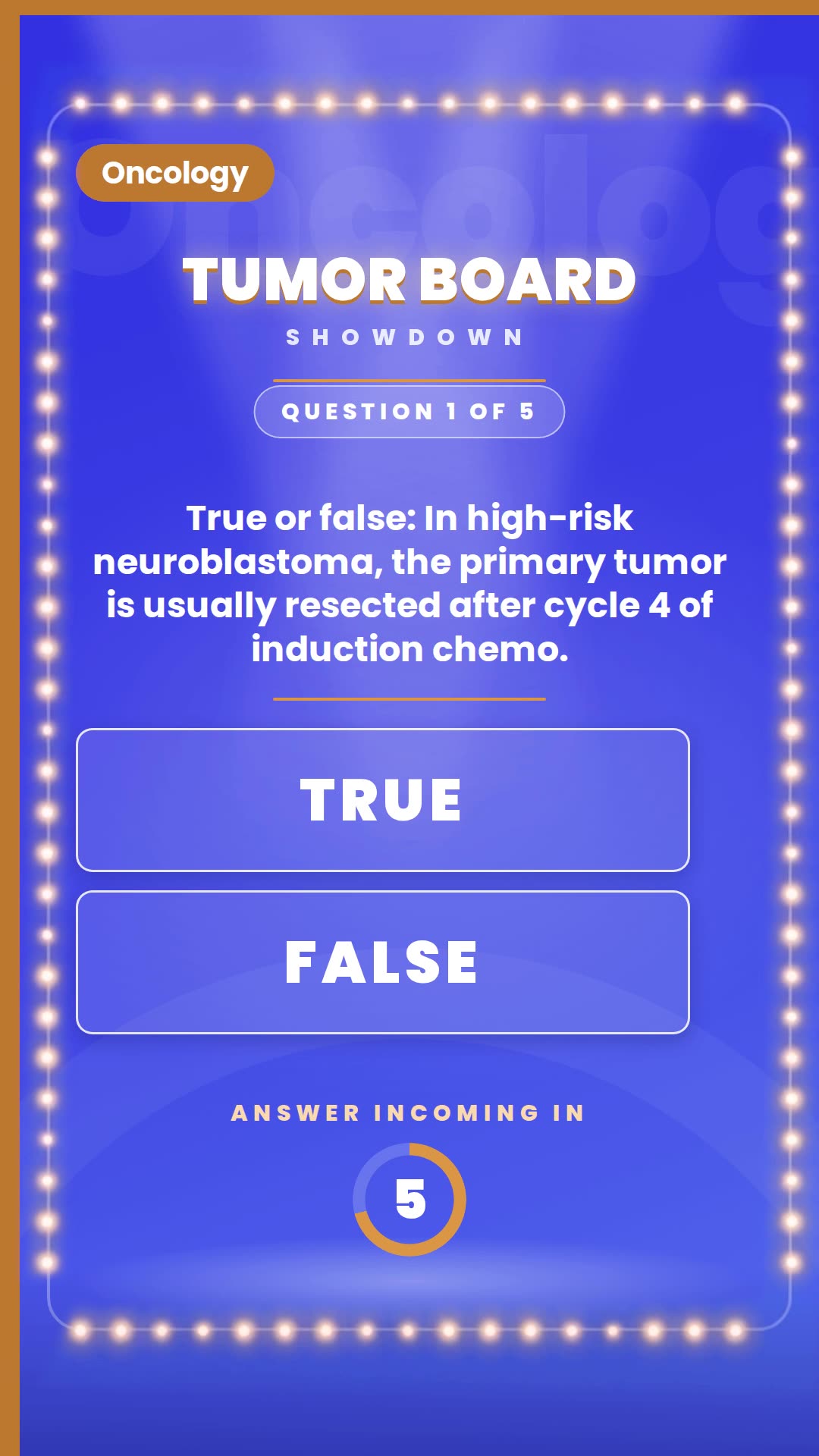
Oncology Tumor Board Showdown: Pediatric Oncology 5 Question Quiz
1 min · Published Oct 2026
Article
Minimally invasive surgery for abdominal and thoracic neuroblastic tumors: A systematic review by the APSA Cancer committee
Juan Pablo Gurria · Published Oct 2026
Video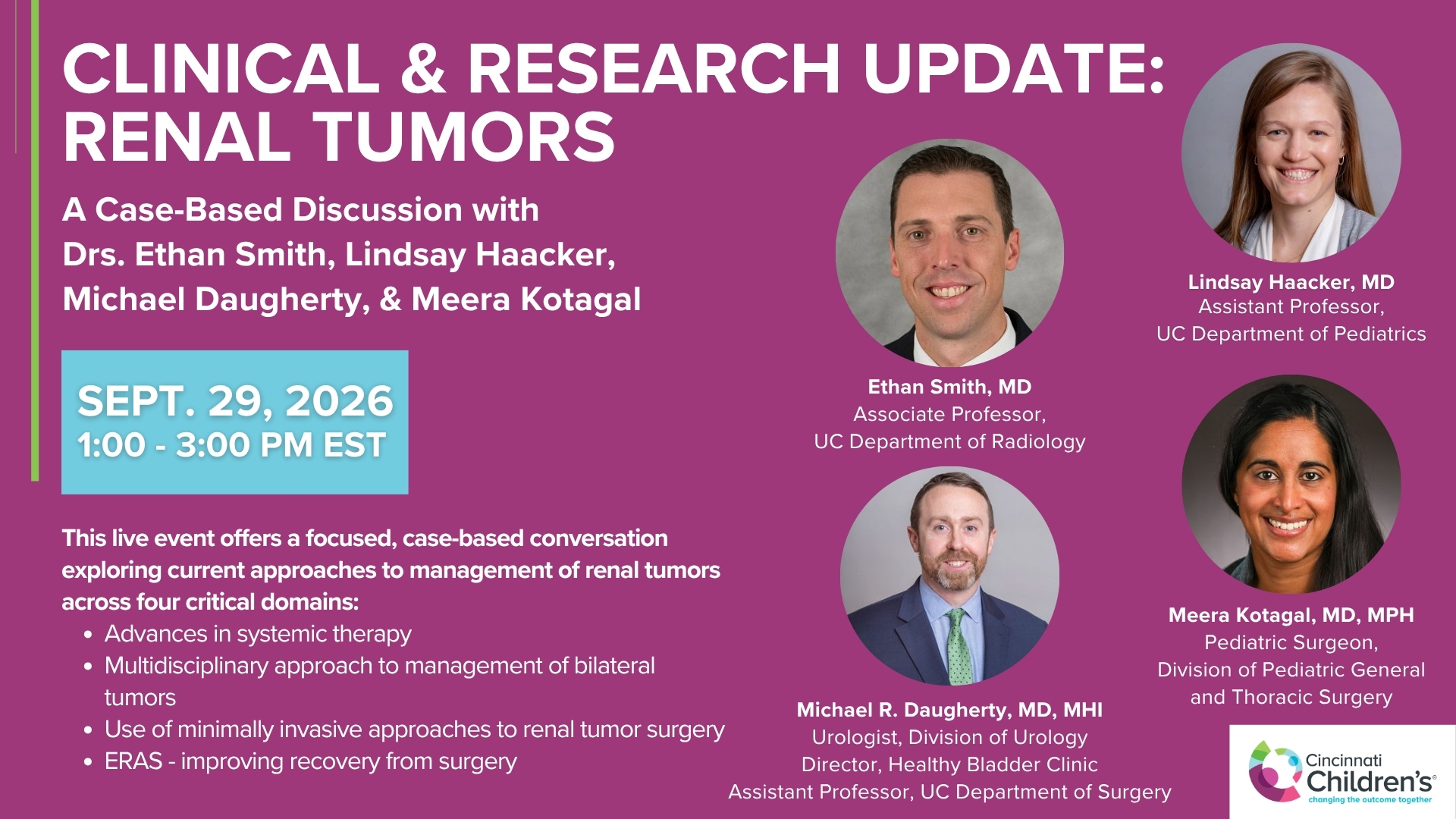
Clinical & Research Update: Renal Tumors with Drs. Ethan Smith, Lindsay Haacker, Michael Daugherty, and Meera Kotagal
71 min · Published Sep 2026
Video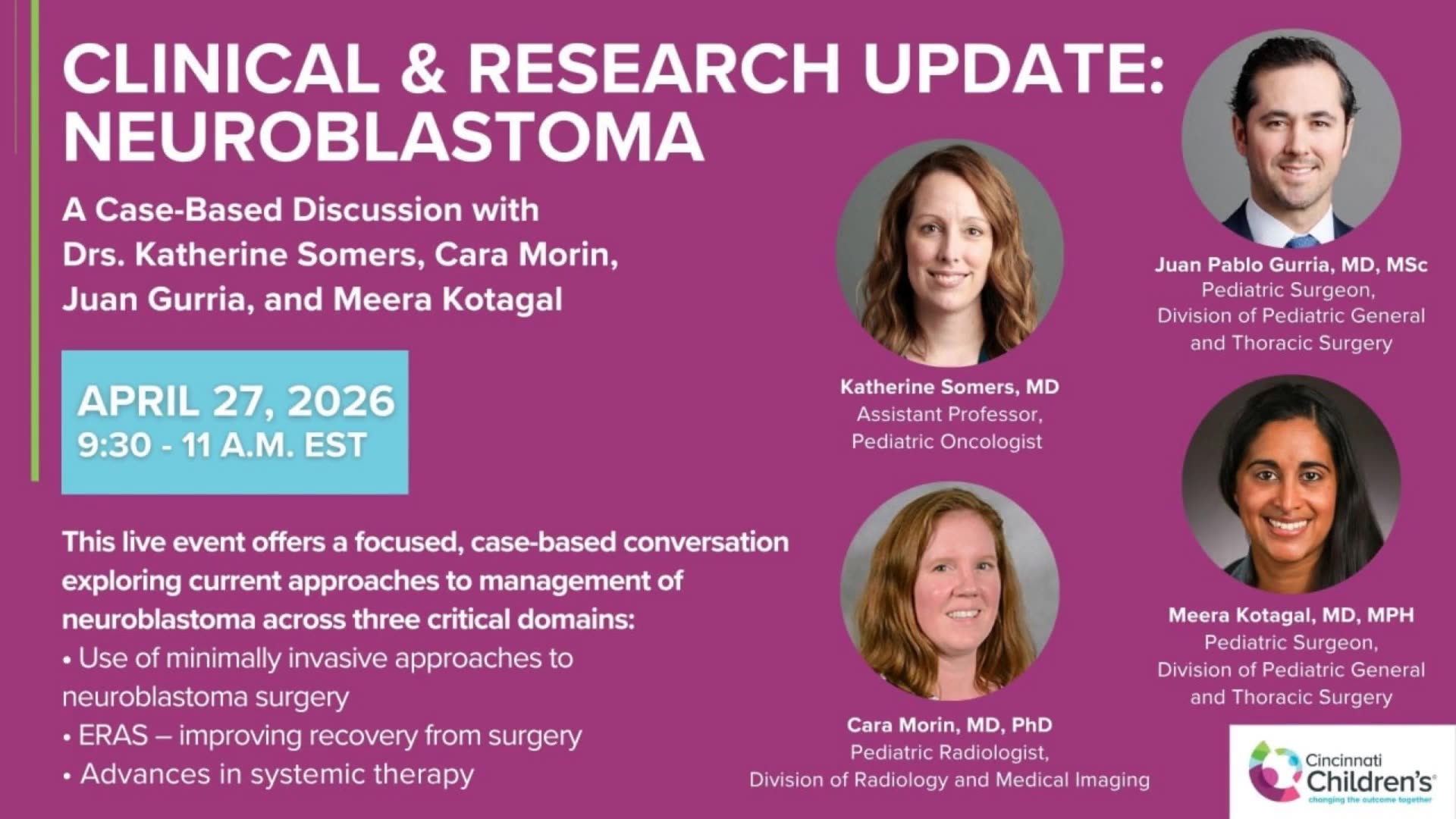
Clinical & Research Update: Neuroblastoma with Drs. Katherine Somers, Cara Morin, Juan Gurria, and Meera Kotagal
67 min · Published Sep 2026
Video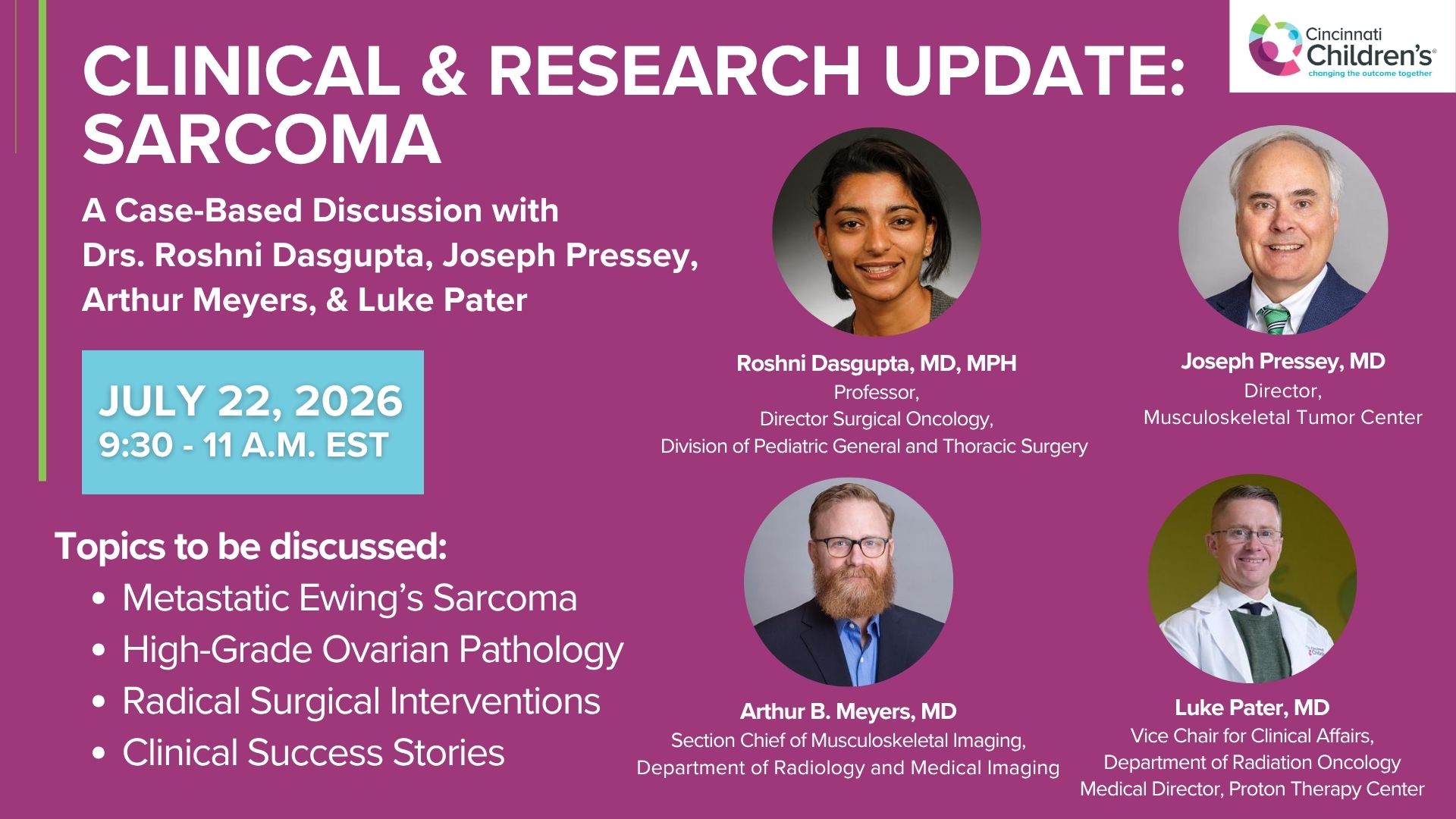
Clinical & Research Update: Sarcoma w/ Drs. Roshni Dasgupta, Joseph Pressey, Arthur Meyer, Luke Pater
66 min · Published Sep 2026
Video
Update Course Rewind 2025: Nerve Monitoring in Pediatric Thyroid Surgery
6 min · Published Jul 2026
Video
Intestinal Atresia Types Explained: Grossfeld Classification for Pediatric Surgery
1 min · Published Sep 2026
Video
Derivation and validation of the Pediatric Community-Acquired Pneumonia Severity (PedCAPS) score: A prospective cohort study
50 s · Published Sep 2026
Video
FETO for Late-Diagnosed Severe Congenital Diaphragmatic Hernia (CDH) at Cincinnati Children's with Dr. Beth Rymeski
4 min · Published Sep 2026
Video
Severe Congenital Diaphragmatic Hernia (CDH) Case: FETO Management & Unexpected Findings with Dr. Beth Rymeski
3 min · Published Sep 2026
Video
Fetoscopic Endoluminal Tracheal Occlusion (FETO) Procedure: Step-by-Step Guide with Dr. Beth Rymeski
4 min · Published Sep 2026
Video
Choledochal Cyst Types Explained: Pediatric Surgery Fundamentals
1 min · Published Sep 2026