


Clinical controversies in anticoagulation monitoring and antithrombin supplementation for ECMO
link.springer.com shows its articles on its own site.
Read the article on link.springer.com ↗Article · Nov 2026 · 1 min read
In brief
In brief
This review examines the clinical challenges of anticoagulation management during ECMO, focusing on the controversial use of antithrombin supplementation for heparin resistance in pediatric and neonatal patients. The authors analyze current monitoring strategies and therapeutic interventions amid limited evidence and high practice variability across centers.
Written by the GCMD Library team from the article.
During extracorporeal membrane oxygenation (ECMO), a delicate balance is required to titrate systemic anticoagulation to prevent thrombotic complications within the circuit and prevent bleeding in the patient. Despite focused efforts to achieve this balance, the frequency of both thrombotic and bleeding events remains high. Anticoagulation is complicated to manage in this population due to the complexities of the hemostatic system that are compounded by age-related developmental hemostatic changes, variable effects of the etiology of critical illness on hemostasis, and blood-circuit interaction. Lack of high-quality data to guide anticoagulation management in ECMO patients results in marked practice variability among centers. One aspect of anticoagulation therapy that is particularly challenging is the use of antithrombin (AT) supplementation for heparin resistance. This is especially controversial in the neonatal and pediatric population due to the baseline higher risk of bleeding in this cohort. The indication for AT supplementation is further compounded by the potential inaccuracy of the diagnosis of heparin resistance based on the standard laboratory parameters used to assess heparin effect. With concerns regarding the adverse impact of bleeding and thrombosis, clinicians and institutions are faced with making difficult, real-time decisions aimed at optimizing anticoagulation in this setting. In this clinically focused review, the authors discuss the complexities of anticoagulation monitoring and therapeutic intervention for patients on ECMO and examine the challenges surrounding AT supplementation given both the historical and current perspectives summarized in the literature on these topics.
Educational content from recorded physician discussions — not medical advice. Talk to your (or your child's) care team about your situation.
Article
Human milk and breastfeeding support in United States pediatric cardiac intensive care units: A multicenter cohort and survey study
Meghan M. Chlebowski · Published Nov 2026
Article
Researchers, Cincinnati Children's Hospital Medical Center
Alessandro de Alarcon · Published Oct 2026
Article
Patient and Family Resources
Alessandro de Alarcon · Published Oct 2026
Article
Resources for Healthcare Professionals
Alessandro de Alarcon · Published Oct 2026
Article
Pdf Non Discrimination Statement.Pdf
Alessandro de Alarcon · Published Oct 2026
Article
Newsroom
Alessandro de Alarcon · Published Oct 2026
Article
Human milk and breastfeeding support in United States paediatric cardiac ICUs: a multicentre cohort and survey study
Dr. Meghan Chlebowski · Published Sep 2026
Article
Long-term outcomes of children undergoing slide tracheoplasty: An institutional review of 227 patients
Dr. Meghan Chlebowski · Published Aug 2026
Article
Practice Patterns and Outcomes of Hemodialysis in Infants Undergoing Congenital Heart Surgery in the United States
Dr. Meghan Chlebowski · Published Jan 2026
Article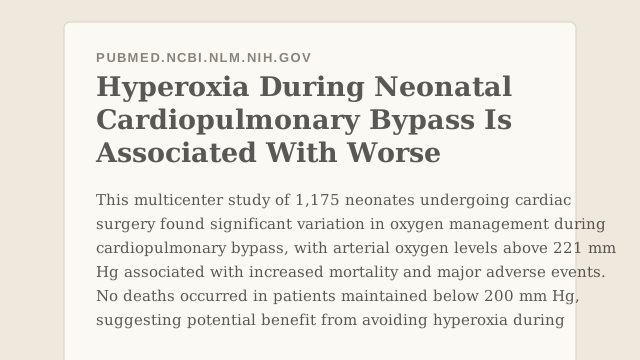
Hyperoxia During Neonatal Cardiopulmonary Bypass Is Associated With Worse Clinical Outcomes: A Multi-Institutional Study
Dr. Meghan Chlebowski · Published Jan 2026
Article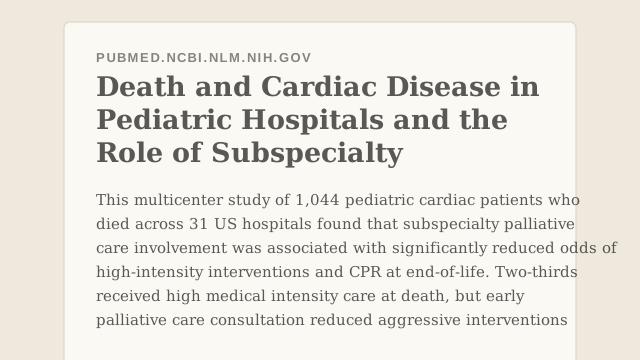
Death and Cardiac Disease in Pediatric Hospitals and the Role of Subspecialty Palliative Care
Dr. Meghan Chlebowski · Published Jan 2026
Video
ALCAPA (anomalous left coronary artery from the pulmonary artery)
Meghan M. Chlebowski · 5 min · Published Nov 2025