


Chapter 1 of 8 · Fundamentals
Introduction and Epidemiology
Expert statements on this page
No expert statements were drawn from this page.
Host summaries · secondary, not cited in answers
Educational content from recorded physician discussions — not medical advice. Talk to your (or your child's) care team about your situation.
Podcast
Topics in 10: Wilms Tumor
12 min · Published Aug 2019
Podcast
Wilms Tumor: Audio Chapter
64 min · Published Jun 2017
Video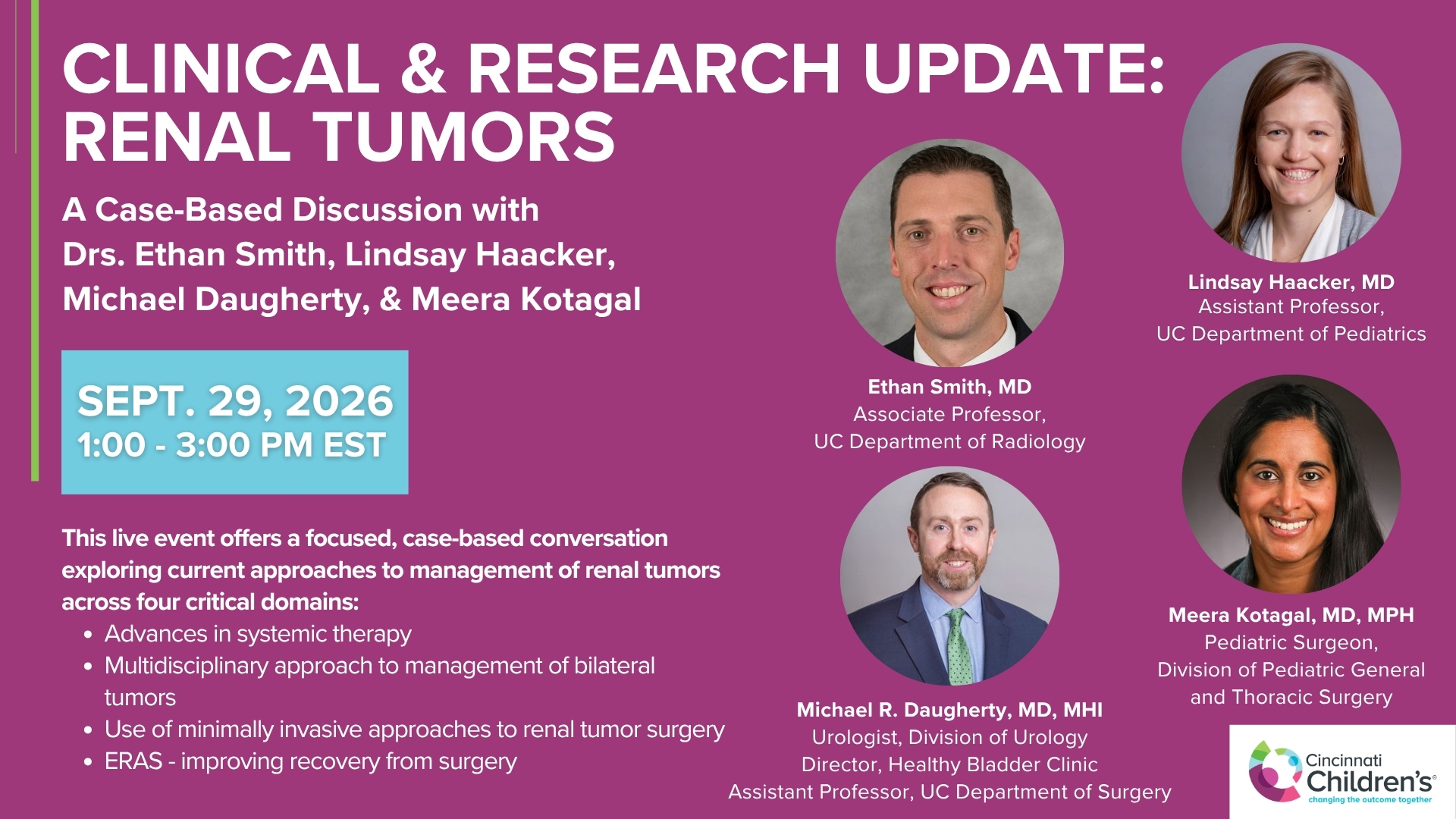
Clinical & Research Update: Renal Tumors with Drs. Ethan Smith, Lindsay Haacker, Michael Daugherty, and Meera Kotagal
71 min · Published Sep 2026
Video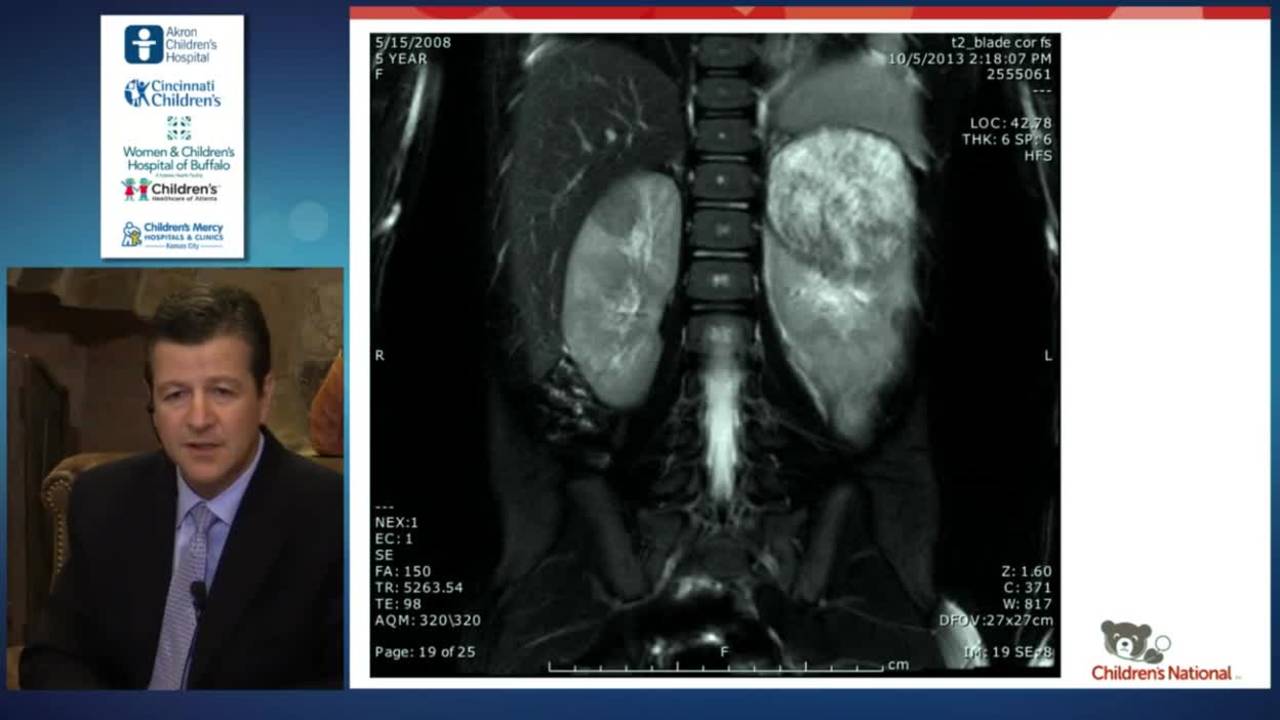
Wilms Tumor Rapid Fire: Update Course 2015
8 min · Published Nov 2015
Video
Wilms Tumor Protocol Violations: Practice Gap discussion at Update Course 2018
9 min · Published Aug 2018
Video
2025 Pediatric Surgery Update Course - Updates in Oncology
21 min · Published Aug 2025
Video
Oncology Tumor Board Showdown: Pediatric Oncology 5 Question Quiz
1 min · Published Oct 2026
Video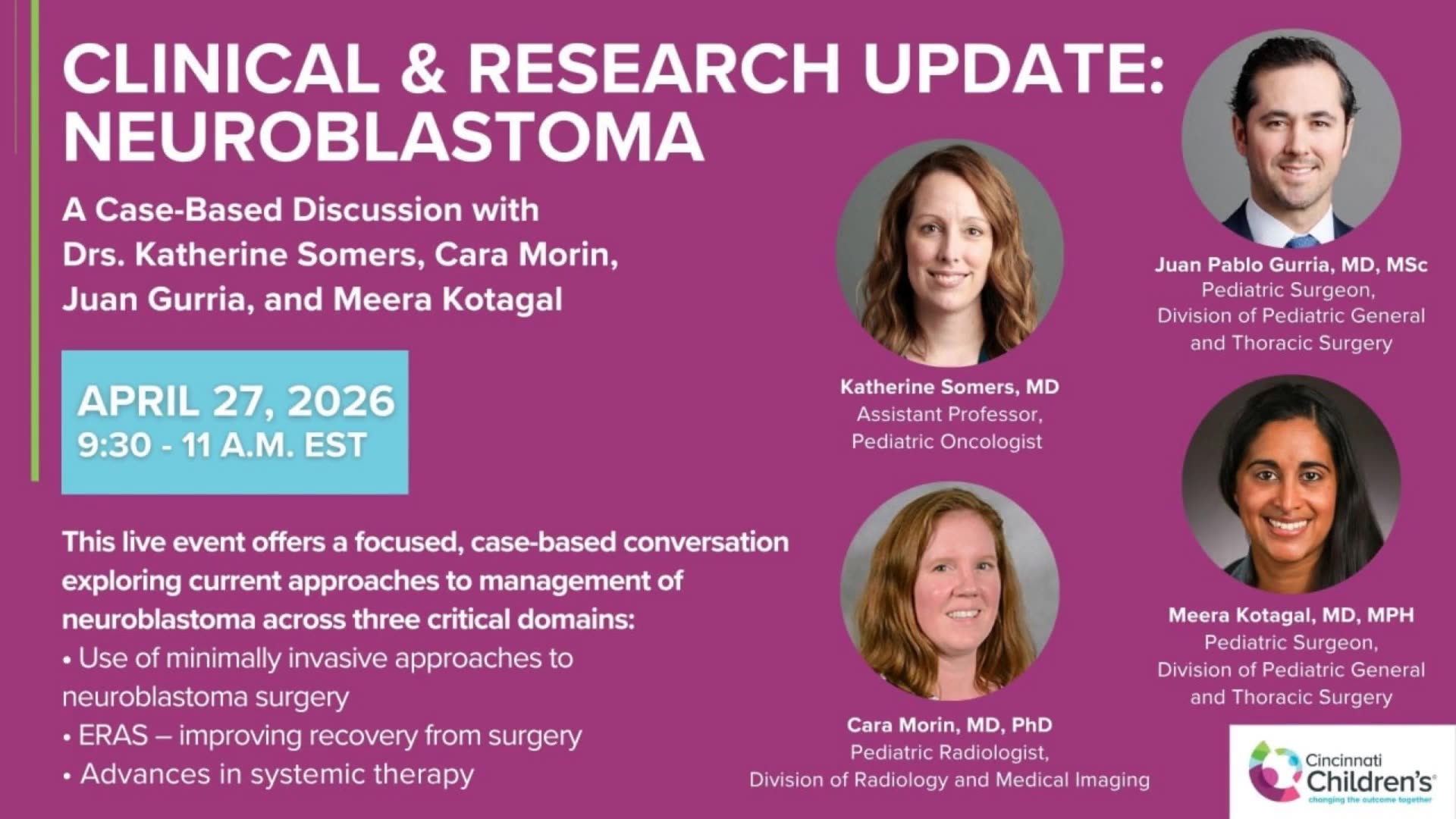
Clinical & Research Update: Neuroblastoma with Drs. Katherine Somers, Cara Morin, Juan Gurria, and Meera Kotagal
67 min · Published Sep 2026
Video
Clinical & Research Update: Sarcoma w/ Drs. Roshni Dasgupta, Joseph Pressey, Arthur Meyer, Luke Pater
66 min · Published Sep 2026
Video
Update Course Rewind 2025: Nerve Monitoring in Pediatric Thyroid Surgery
6 min · Published Jul 2026
Video
Journal of Pediatric Surgery Article Review: June 2023, AAP Issue
Todd Ponsky · 13 min · Published Jul 2026
Podcast
Update Course Rewind 2025: Robotics in Pediatric Surgery: Which indications benefit the most?
Juan Pablo Gurria · 4 min · Published Jun 2026
Video
Intestinal Atresia Types Explained: Grossfeld Classification for Pediatric Surgery
1 min · Published Sep 2026
Video
Derivation and validation of the Pediatric Community-Acquired Pneumonia Severity (PedCAPS) score: A prospective cohort study
50 s · Published Sep 2026
Video
FETO for Late-Diagnosed Severe Congenital Diaphragmatic Hernia (CDH) at Cincinnati Children's with Dr. Beth Rymeski
4 min · Published Sep 2026
Video
Severe Congenital Diaphragmatic Hernia (CDH) Case: FETO Management & Unexpected Findings with Dr. Beth Rymeski
3 min · Published Sep 2026
Video
Fetoscopic Endoluminal Tracheal Occlusion (FETO) Procedure: Step-by-Step Guide with Dr. Beth Rymeski
4 min · Published Sep 2026
Video
Choledochal Cyst Types Explained: Pediatric Surgery Fundamentals
1 min · Published Sep 2026
What the experts said
Wilms tumor is the second most common intra abdominal tumor in children and fifth most common tumor in children overall
Approximately 75% of Wilms tumor cases occur in children younger than five years of age with a peak incidence at two to three years of age
Survival for patients with Wilms tumor when considered as a whole is currently greater than 90%
Anaplastic histology comprises only about 10% of Wilms tumor cases but contributes to over 50% of Wilms tumor mortality
Children with Wilms tumor typically present with an asymptomatic abdominal mass
Associated signs and symptoms such as malaise, pain, microscopic or gross hematuria are found in only about 25% of children with Wilms tumor, as is hypertension
CT of the abdomen and pelvis is generally the definitive imaging study of choice for patients suspected of having a renal tumor based on ultrasound
Intravascular tumor extension occurs in about 6% of Wilms tumor cases
The most common site of metastatic spread of Wilms tumor is the lungs
Stage one Wilms tumors are localized tumors confined within the renal capsule
Stage two Wilms tumors penetrate the renal capsule but are resected with negative margins
Stage three criteria include biopsy or rupture (pre-operative or intraoperative), positive resection margin or gross residual disease, lymph node involvement, or administration of preoperative chemotherapy
Metastatic disease occurs in about 12% of Wilms tumor patients and is considered stage four
Patients with synchronous bilateral Wilms tumor are stage five
For unilateral tumors, up-front resection with regional lymph node sampling is currently the recommendation from the Children's Oncology Group
Most Wilms tumors are resectable at presentation because even large tumors rarely invade surrounding structures
Failure to perform up-front resection and instead administering neoadjuvant chemotherapy results in classification as stage three, mandating flank radiation and doxorubicin
Treatment of favorable histology stage one or two Wilms tumor is limited to vincristine and actinomycin D
For stage one tumors weighing less than 550 grams (tumor plus kidney) in patients less than 2 years of age, no adjuvant chemotherapy is given
Lymph node involvement is associated with increased incidence of tumor relapse and poorer prognosis
Lymph node sampling should be performed even in the absence of abnormal nodes on pre-operative imaging or gross inspection because these circumstances don't reliably predict lymph node negativity
Partial nephrectomy for patients with unilateral non-syndromic disease or laparoscopic nephrectomy are not currently standard of care and should generally only be performed in the context of a clinical trial
About 5% of children with Wilms tumor present with synchronous bilateral disease or stage five disease
Patients with bilateral Wilms tumor receive neoadjuvant chemotherapy with three drugs to shrink tumors and facilitate preservation of normal renal parenchyma
A biopsy is not required in children with bilateral solid renal masses as bilateral Wilms tumor is the very likely diagnosis
Biopsies of bilateral renal masses rarely detect anaplasia even when it exists in the tumor mass
A biopsy if performed in bilateral disease doesn't mandate subsequent radiation as it does in patients with unilateral Wilms tumor
Bilateral nephron sparing surgery should be considered in all patients with bilateral Wilms tumor after either six or 12 weeks of neoadjuvant chemotherapy
Longer courses of pre-operative chemotherapy than 12 weeks are definitely discouraged in bilateral Wilms tumor
Tumor extension into the renal vein and proximal inferior vena cava can in most cases be removed en bloc with the kidney and tumor
Primary resection of tumors with extension above the level of the hepatic veins or into the atrium is associated with higher operative morbidity
Neoadjuvant chemotherapy is generally used for intravascular tumor extension above the hepatic veins or into the atrium
Thrombus extending above the hepatic veins that persists after neoadjuvant chemotherapy probably requires cardiopulmonary bypass to safely remove
About 12% of Wilms tumor patients have evidence of hematogenous metastasis at diagnosis with 80% being pulmonary metastasis
Stage four patients with radiographic disappearance of lung metastasis or tissue confirmation of no viable tumor at week six are considered rapid responders and continue three drug chemotherapy
Slow or incomplete responders to initial therapy are switched to more intensive chemotherapy and receive whole lung radiation