


From
Live Event Content
Update Course 2023 - Updates in Fertility
With Dr. Aaron Rowell & Dr. Leslie Breech · hosted by Dr. Todd Ponsky & Dr. Daniel von Allmen
Chapter 1 of 6 · Fundamentals
Counseling standards
Session introduction and fertility counseling standards
Expert statements on this page
No expert statements were drawn from this page.
Host summaries · secondary, not cited in answers
Educational content from recorded physician discussions — not medical advice. Talk to your (or your child's) care team about your situation.
Video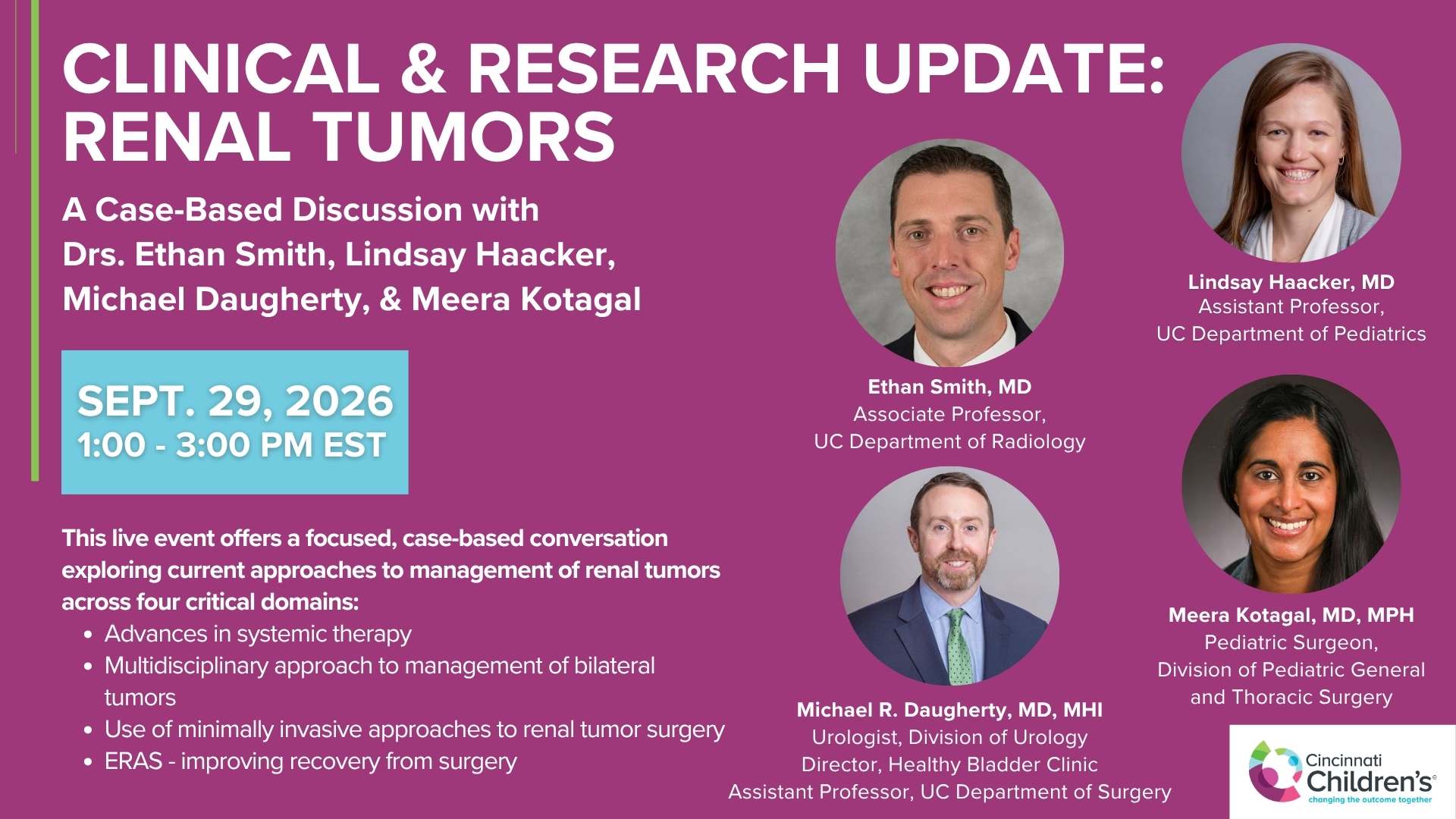
Clinical & Research Update: Renal Tumors with Drs. Ethan Smith, Lindsay Haacker, Michael Daugherty, and Meera Kotagal
71 min · Published Sep 2026
Video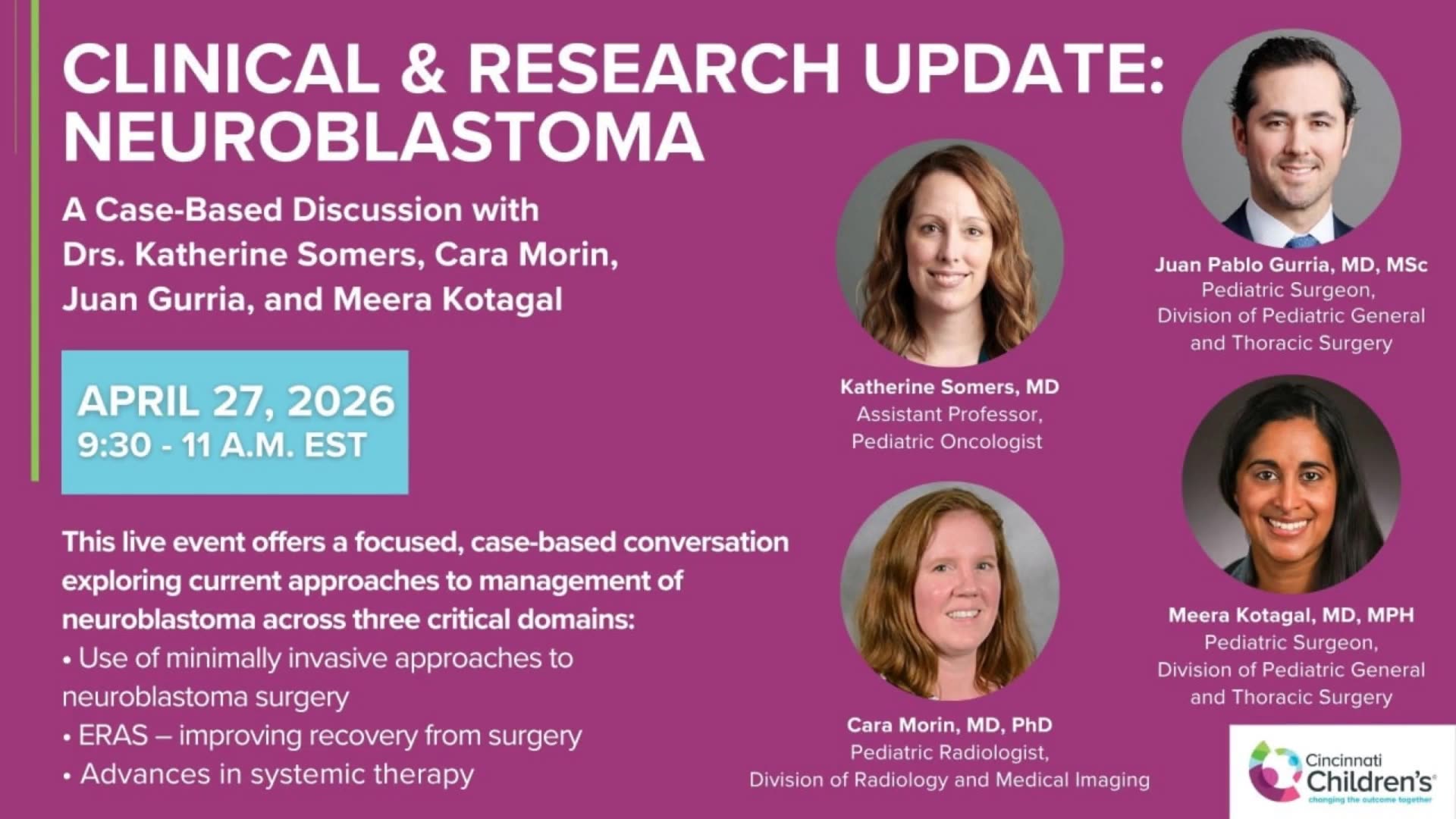
Clinical & Research Update: Neuroblastoma with Drs. Katherine Somers, Cara Morin, Juan Gurria, and Meera Kotagal
67 min · Published Sep 2026
Video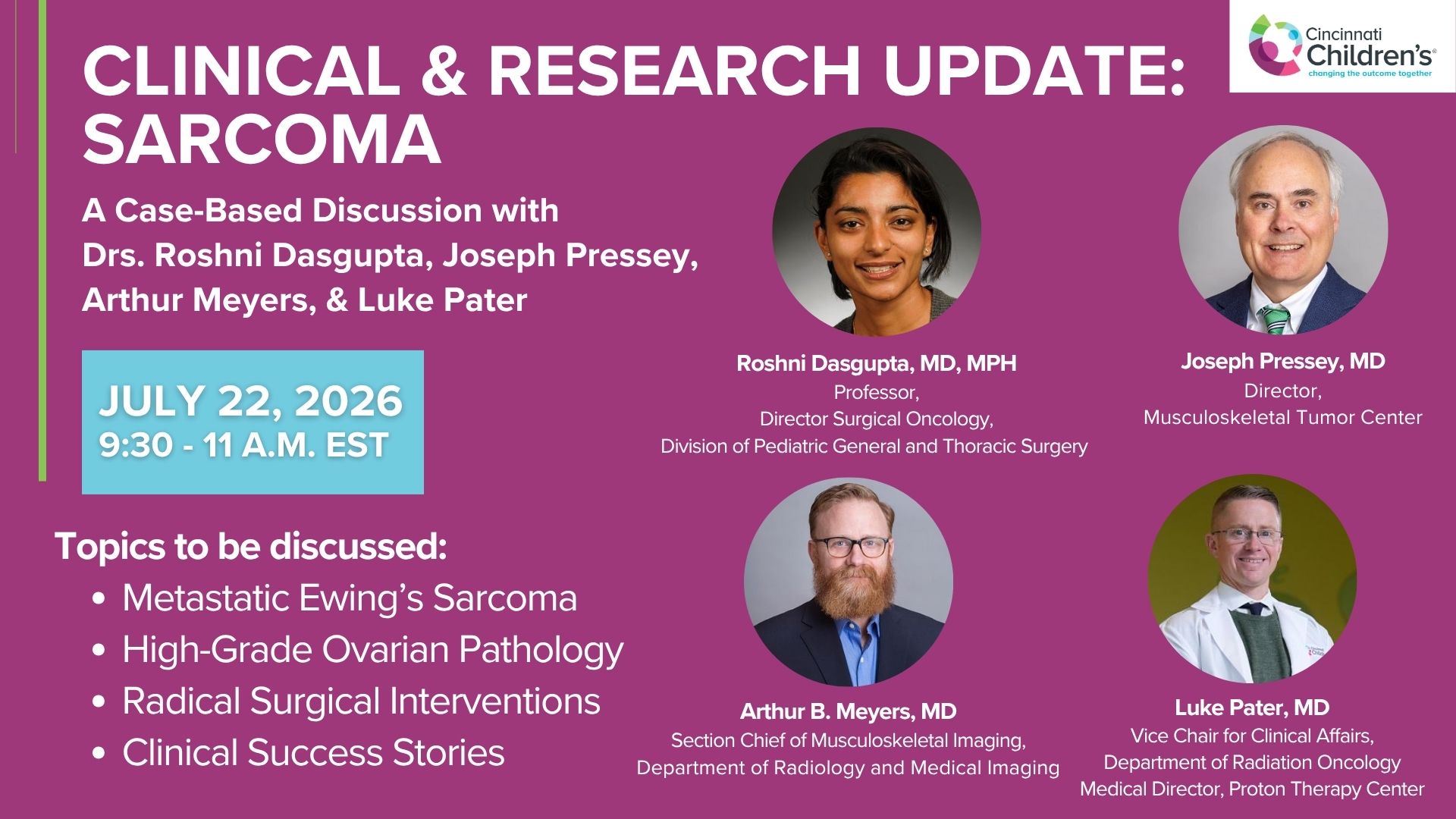
Clinical & Research Update: Sarcoma w/ Drs. Roshni Dasgupta, Joseph Pressey, Arthur Meyer, Luke Pater
66 min · Published Sep 2026
Video
2026 Laparoscopic Pediatric Hernia Repair
123 min · Published Jun 2026
Video
Beyond the Spectrum: Diagnosis, Myths & Management - Caitlin Couch & Leslie Lopez - APP Conference 2026
50 min · Published May 2026
Video
Dysautonomia: Navigating the Journey - Martha Willis - APP Conference 2026
55 min · Published May 2026
What the experts said
Approximately 20 to 30% of families will intervene and do something to preserve fertility when counseled, but all want to be informed of their options.
ASCO, AAP, and ASRM have guidelines that families should receive fertility counseling and documentation prior to starting high-risk chemotherapy, even if no surgery is performed.
At Lurie Children's, an Epic order set triggers fertility counseling consults by nurse practitioners or attending physicians when patients have new cancer diagnosis or stem cell transplant planned.
Cyclophosphamide equivalent dose (CED) of 8-12 g/m² or more in prepubertal patients, or 4 g/m² in postpubertal patients, places them at high risk for premature ovarian insufficiency and makes them candidates for oophorectomy.
A prepubertal 6-year-old's ovary is approximately 2 centimeters in size, about the size of a grape.
Biopsy of a 2 cm prepubertal ovary risks hemorrhage that could delay stem cell transplant or chemotherapy, and damages follicles by crossing the ovarian cortical surface.
Reimplanted ovarian strips can restore ovarian function for approximately 2 to 5 years and can result in live birth.
Live births from reimplanted ovarian tissue have occurred in two children who were 9 years old at the time of tissue harvest, but no one younger, and not yet in the United States.
A small biopsy of one ovary would not provide enough tissue to sustain a child's entire reproductive future.
Unilateral oophorectomy is the recommended approach for prepubertal fertility preservation, with careful attention to technique to avoid damaging the ovary.
In a piglet model mimicking prepubertal children, staying at least 1 centimeter away from the ovarian capsule resulted in healthier tissue parameters: increased glucose production, decreased lactose production, and increased estradiol from ovarian follicles in culture.
Ovarian tissue for fertility preservation is like an organ for transplant—surgical technique matters for avoiding damage during removal, in addition to freezing and thawing protocols.
Using energy devices right next to the fallopian tube could theoretically cause ischemia, stricture, or damage that would be evaluated later.
The fallopian tube is the communication between oocyte and sperm, so it must be protected during ovarian surgery.
The fimbria are very fragile; inadequate distance from energy devices can cause scarring and result in hydrosalpinx.
Cool Seal has a 3 millimeter option suitable for very small children.
Stretching tissue with a Maryland dissector and working medial to lateral along the fallopian tube with the left hand can maintain 1 centimeter distance from the ovarian capsule.
Starting dissection at the uterine-ovarian ligament, coming up the mesosalpinx away from the fallopian tube, and using an endo-loop at the infundibulopelvic ligament can protect the distal fimbria and ovary.
In a series of approximately 140 fertility preservation patients at Lurie Children's, 17 had abdominal-pelvic tumor surgery within 20 months of laparoscopic oophorectomy.
The median time from open abdominal surgery to successful laparoscopic oophorectomy was 29 days; 16 of 17 were completed laparoscopically with no trouble.
One of 17 patients required open oophorectomy by choice because another tumor biopsy was needed concurrently.
Prepubertal patients undergoing fertility preservation have 10-15 or 20 years to see the results of ovarian tissue reimplantation and potentially have fertility restored.
Often what appears as a cystic mass on ultrasound in ovarian torsion is actually edema of the fallopian tube, not a drainable cyst.
There is no good data showing a timeline or appearance that reliably predicts an ovary will not survive after torsion.
In a recent quality improvement project, some institutions were removing the ovary in ovarian torsion cases as much as 25% of the time.
If a black, edematous fallopian tube does not recover after detorsion in an adolescent, consideration should be given to removing the tube due to future ectopic pregnancy risk and the need for open, functional fimbria.
In prepubertal girls with torsion, there is plenty of time to figure out management of an ischemic tube, but in adolescents the future function of the tube must be considered.
Scarring of the fallopian tube is a concern for future fertility and increases risk for ectopic pregnancy.
Incising the ovarian cortex may help release edema and reduce swelling in a torsed ovary.
Most gynecologists untwist torsed ovaries, leave them in place, and obtain follow-up imaging to determine what is inside the ovary that may have caused the torsion.
Peritubal or periovarian cysts increase the risk of torsion and should be removed (cystectomy), not just aspirated, to prevent recurrent torsion.
The highest risk of retorsion with an edematous ovary is in prepubertal girls.
In pubertal females, the posterior cul-de-sac has adequate room to house a 4-5 centimeter ovary with a cyst; monthly ovulation produces similar-sized structures that are well tolerated.
Some patients experience torsion 3, 4, or 5 times, often gymnasts or those with long ligaments or other predisposing factors.
Bipolar impedance-feedback devices (LigaSure, Just Right sealer) have less thermal spread and are acceptable for ovarian surgery when kept far enough from the capsule.
A 2017 meta-analysis of published pediatric fertility preservation techniques showed that burning the ovarian cortical surface with monopolar cautery, using a stapler, or cutting into both ovaries increases hemorrhage risk and damages the follicle-containing capsule.
Oophorectomy should never be performed for ovarian torsion regardless of the ovary's appearance.
Literature suggests retorsion risk could be 10-15%, but the data does not stratify whether this is immediately after surgery or in patients already predisposed to recurrent torsion.