


From
StayCurrentMD
Thymic Sling
Chapter 1 of 5 · Case-Based Learning
Case presentation
Introduction and Case Presentation
Expert statements on this page
No expert statements were drawn from this page.
Host summaries · secondary, not cited in answers
Educational content from recorded physician discussions — not medical advice. Talk to your (or your child's) care team about your situation.
Video
Intestinal Atresia Types Explained: Grossfeld Classification for Pediatric Surgery
1 min · Published Sep 2026
Video
Derivation and validation of the Pediatric Community-Acquired Pneumonia Severity (PedCAPS) score: A prospective cohort study
50 s · Published Sep 2026
Video
FETO for Late-Diagnosed Severe Congenital Diaphragmatic Hernia (CDH) at Cincinnati Children's with Dr. Beth Rymeski
4 min · Published Sep 2026
Video
Severe Congenital Diaphragmatic Hernia (CDH) Case: FETO Management & Unexpected Findings with Dr. Beth Rymeski
3 min · Published Sep 2026
Video
Fetoscopic Endoluminal Tracheal Occlusion (FETO) Procedure: Step-by-Step Guide with Dr. Beth Rymeski
4 min · Published Sep 2026
Video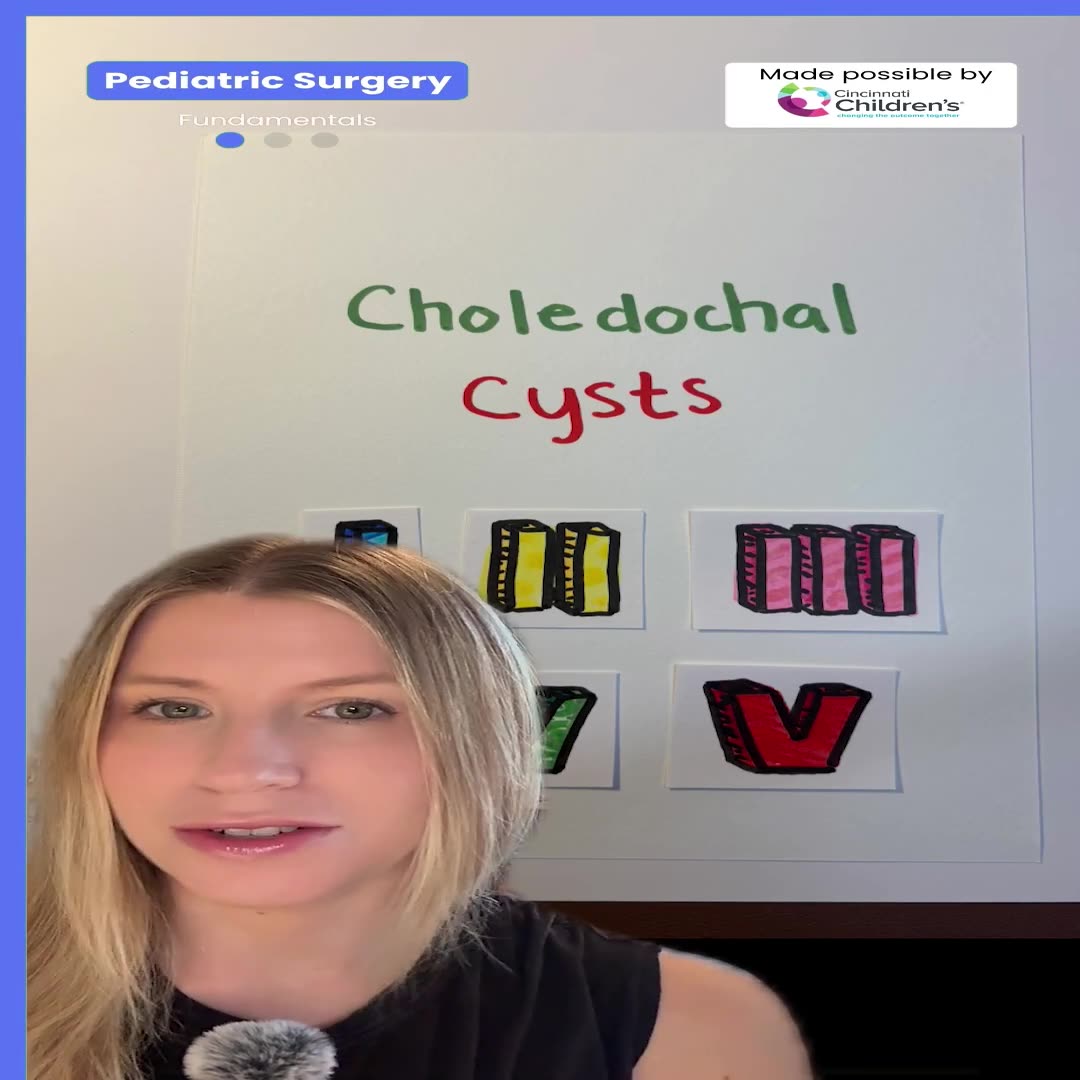
Choledochal Cyst Types Explained: Pediatric Surgery Fundamentals
1 min · Published Sep 2026
What the experts said
The innominate artery slings inside the thymus, keeping everything off the trachea.
The procedure was performed on a six-year-old patient who had a post-tracheostomy area of granulomatous change in her trachea.
Pulsation was visualized through the anterior tracheal wall.
Workup identified a high-riding innominate artery that caused compression on the trachea.
The surgical approach uses a transverse incision with landmarks being the sternal notch or prior tracheostomy site.
The raphe is split using cautery.
The thymus is located directly on the innominate artery in this anatomy.
Once the innominate artery is completely isolated, the thymus is carefully tunneled through the window and under the artery.
The thymus is reflected over the artery to expose the trachea.
The thymus is sutured to the sternum with three horizontal mattress sutures using double-armed 4-0 PDS suture on an RB1 needle over a Teflon pledget.
One month post-operatively, flexible bronchoscopy showed markedly improved transmitted pulsations and improving granulation tissue in the same area.