


Chapter 1 of 4 · Evidence & Research
Trauma coagulopathy
Coagulopathy in pediatric trauma: mechanism versus shock status
Expert statements on this page
No expert statements were drawn from this page.
Host summaries · secondary, not cited in answers
Educational content from recorded physician discussions — not medical advice. Talk to your (or your child's) care team about your situation.
Video
Intestinal Atresia Types Explained: Grossfeld Classification for Pediatric Surgery
1 min · Published Sep 2026
Video
Derivation and validation of the Pediatric Community-Acquired Pneumonia Severity (PedCAPS) score: A prospective cohort study
50 s · Published Sep 2026
Video
FETO for Late-Diagnosed Severe Congenital Diaphragmatic Hernia (CDH) at Cincinnati Children's with Dr. Beth Rymeski
4 min · Published Sep 2026
Video
Severe Congenital Diaphragmatic Hernia (CDH) Case: FETO Management & Unexpected Findings with Dr. Beth Rymeski
3 min · Published Sep 2026
Video
Fetoscopic Endoluminal Tracheal Occlusion (FETO) Procedure: Step-by-Step Guide with Dr. Beth Rymeski
4 min · Published Sep 2026
Video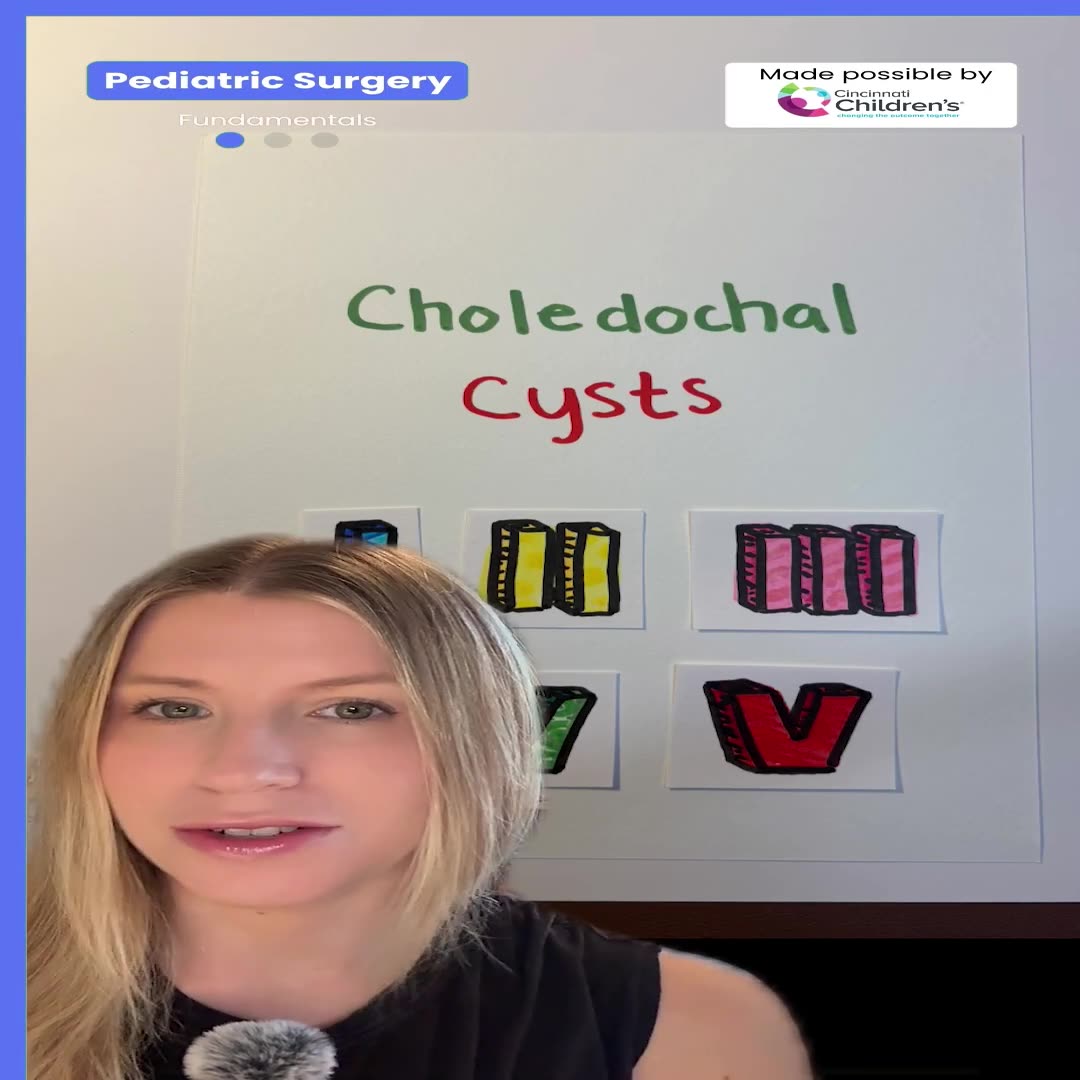
Choledochal Cyst Types Explained: Pediatric Surgery Fundamentals
1 min · Published Sep 2026
What the experts said
Stevens et al. studied two pediatric trauma centers, looking at highest level trauma patients with either blunt solid organ injuries or penetrating injuries who had thromboelastography within first two hours of arrival
TEG abnormalities were not significantly different between blunt solid organ injury and penetrating injury groups
Patients presenting in shock had significant decreases in alpha angle and MA (maximum amplitude) values on thromboelastography
Hemodynamic status or shock may be more predictive of coagulopathy than injury mechanism in pediatric trauma
Short et al. retrospectively reviewed pediatric patients who underwent surgery for inflammatory bowel disease before and after implementation of a multidisciplinary clinic
After implementation of multidisciplinary clinic utilizing ERAS protocols, there was significant decrease in 30-day ER visits post-operatively and 30-day readmission rate for pediatric IBD surgery patients
Approximately 50% of patients with congenital diaphragmatic hernia have gastroesophageal reflux disease
In approximately 30% of hospitals in France and possibly worldwide, surgeons perform fundoplication at time of CDH repair to prophylactically prevent reflux
Montalva et al. conducted 10-year prospective review across 20 hospitals in France examining prophylactic fundoplication at time of CDH repair
Prophylactic fundoplication at time of CDH repair leads to more failure to thrive, more oral aversion, and more need for tube feeds
Patients who had patch repair for CDH had worse GERD more often
Spinella et al. studied 24 children's hospitals across North America and Italy, examining approximately 450 pediatric patients ages 0-17 who received blood through massive transfusion protocol or more than 40 mL/kg over six hours
In pediatric hemorrhage patients who received antifibrinolytic therapy (tranexamic acid or aminocaproic acid), there was reduced mortality at both 6-hour and 24-hour time points