
Quality of life in relation to eating in children and adults born with esophageal atresia - ERNICA Research Collaboration
With Dr. Andre Riedmann & Dr. Mikaela Del Mark Bloom & Dr. Anka Vied Mogolich · hosted by Dr. Jens Stingermann · EUPSA/ERNICA
Part of
Esophageal Atresia 52 items
Educational content from recorded physician discussions — not medical advice. Talk to your (or your child's) care team about your situation.
Video
Care and Nutrition in Esophageal Atresia: An ERNICA animation for parents and families
2 min · Published Nov 2023
Video
QUAD #2 Thoracoscopic Tracheopexy with Dr. Aaron Garrison
CCHMC Pediatric Surgery · 7 min · Published Jan 2024
Video
STEPS-EA trial: Esophageal Atresia
3 min · Published Nov 2023
Video
Esophageal Dilation for children with Esophageal Atresia
3 min · Published Nov 2023
Video
QUAD #1: Cervical Tracheopexy with Dr. Alessandro de Alarcon
Dr. Todd Ponsky · 5 min · Published Dec 2023
Video
Hot New Topics from The Journal Of Pediatric Surgery: Update Course 2017
Dr. Todd Ponsky · 27 min · Published Aug 2017
Only a few other public items share this expert — go deeper there →
Video
What is Gastroschisis? An ERNICA animation for parents and families
2 min · Published Dec 2023
Video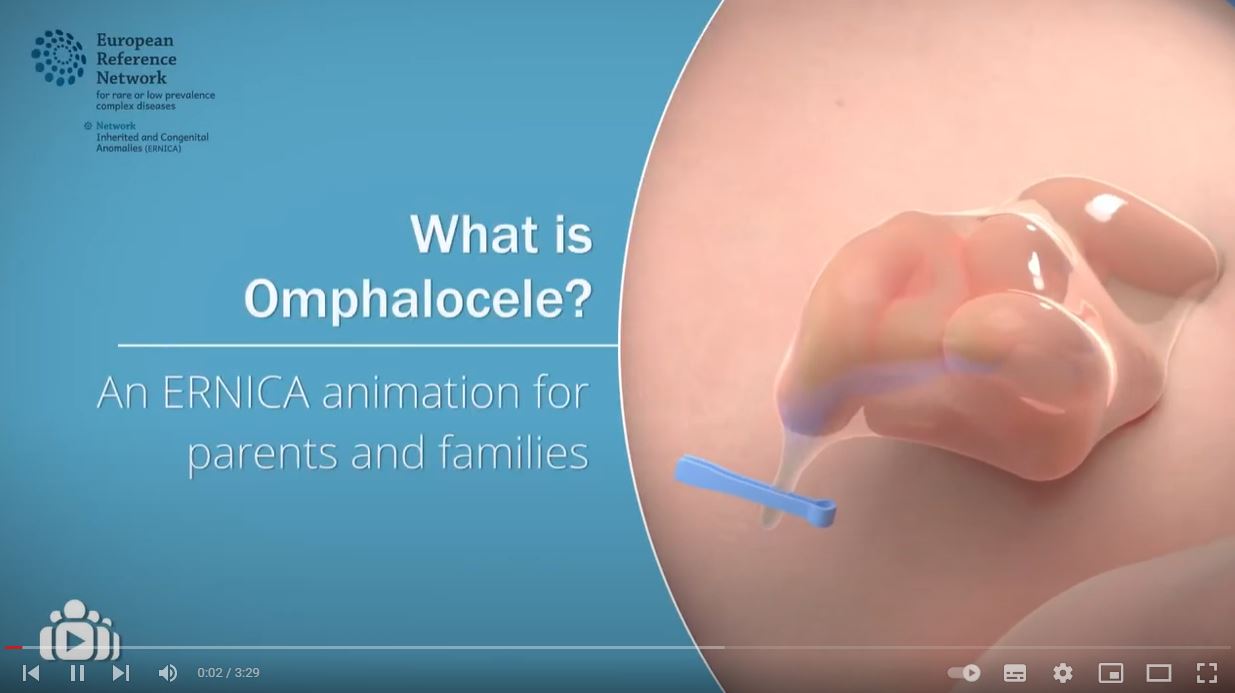
What is Omphalocele? An ERNICA animation for parents and families
3 min · Published Dec 2023
Video
What is Congenital Diaphragmatic Hernia (CDH)? An ERNICA animation for parents and families
3 min · Published Dec 2023
Video
What is small bowel atresia?: An ERNICA animation for parents and families
4 min · Published Dec 2023
Video
Hirschsprung-associated enterocolitis in children: An ERNICA animation for parents and families
3 min · Published Dec 2023
Video
Surgical treatment for Hirschsprung’s Disease: An ERNICA animation for parents and families
3 min · Published Dec 2023
What the experts said
Quality of life in esophageal atresia is not stable but develops and fluctuates across the lifespan.
Sham feeding enabled the child to understand swallowing after gastric pull-up without difficulty.
Peer children and siblings are important for children to observe and learn how eating works.
Pulmonological expertise is crucial because eating without breathing is a real issue for EA patients.
Patients develop their own trial-and-error solutions for eating challenges, such as determining what to eat between football match halves to avoid dumping.
Expert centers for adults with esophageal atresia are needed; currently pediatric specialists provide adult care in some cases.
Health-related quality of life is a multidimensional concept referring to self-perceived impact of disease and treatment on functioning and well-being.
Eight main domains of eating experience in EA children were identified: school cafeteria, children's parties, food limitation, food restriction, vomiting, fluid intake, nutritional intake, gastrostomy, and choking.
The EA-QOL questionnaires include age-specific eating domains: 7 items for children aged 2–7 and 8 items for children aged 8–18, answered on a 5-point Likert scale with 4-week recall.
EA-QOL eating items have been linguistically validated in 16 languages, supporting content and concept transferability across countries.
The number of different digestive symptoms present in a child explained 43–58% of variation in eating-related quality of life scores.
The number of different respiratory symptoms explained only 7–8% of variation in eating scores and did not reach significance in children aged 2–7.
Acceptance of nutritional intake problems increased with child age, while need for social support in eating situations decreased correspondingly.
In children aged 2–7, gastrostomy insertion was an independent predictor of worse eating-related quality of life.
77% of children with EA use coping strategies in nutritional intake situations, employing a mean of 6 different strategies.
In children aged 8–17, no primary anastomosis (child report) and prematurity with esophageal dilatation (parent report) predicted worse eating-related quality of life.
Active coping strategy of attempting to imitate peers in eating situations was most consistently associated with better eating-related quality of life.
Children with delayed EA reconstruction required nutritional intake support in school in 60% of cases, significantly higher than children with primary anastomosis.
Disengagement coping strategies (avoidance, expressing fear/worry, distancing) were associated with worse eating-related quality of life, often independent of disease severity.
Eating-related quality of life outcomes may be positively affected by monitoring and treating digestive morbidity.
Encouraging children to take an active approach to eating problems rather than using disengagement coping may improve quality of life.
A multidisciplinary approach is needed to optimize eating-related outcomes in EA patients.
Generic quality of life instruments like SF-36 did not detect health-related quality of life issues in adults with EA.
More than 200 adults and family members attended focus group evening sessions at the hospital to discuss EA-related issues.
Initial qualitative study with adults identified 144 items related to quality of life in EA.
Pilot study with 42 adults refined the item list by identifying strong and poor items based on response distribution.
The SCIA (condition-specific instrument for adults with EA) contains 33 items across 11 domains with good feasibility, reliability, and validity.
The SCIA covers the ICF framework including body functions, activity, participation, and environmental/personal factors.
SCIA translation and cultural validation is underway with 8 European countries to assess cultural bias and enable wider application.
The SCIA eating and drinking domain contains 7 questions addressing practical eating issues in adults with EA.
Self-assurance for patients to repeatedly try foods that previously caused bolus obstruction is crucial for learning, provided the process is safe.
The first task of medical staff is to make eating safe; once safe, patients and parents should be encouraged to try foods repeatedly.
In children with chronic conditions, avoidance or distancing coping strategies typically relate to poor outcomes, while active coping and problem-solving relate to better health-related quality of life.