


From
Live Event Content
PFIC Family & Scientific Conference - Day 2
With Dr. Henk Vakkad & Dr. Aki Asai & Dr. Richard Thompson & Dr. Bill Balisteri · hosted by Dr. Em Gootee
Chapter 1 of 4 · Evidence & Research
Transplant outcomes
Pediatric Liver Transplantation: Current Prognosis and Prospects
Expert statements on this page
No expert statements were drawn from this page.
Host summaries · secondary, not cited in answers
Educational content from recorded physician discussions — not medical advice. Talk to your (or your child's) care team about your situation.
Video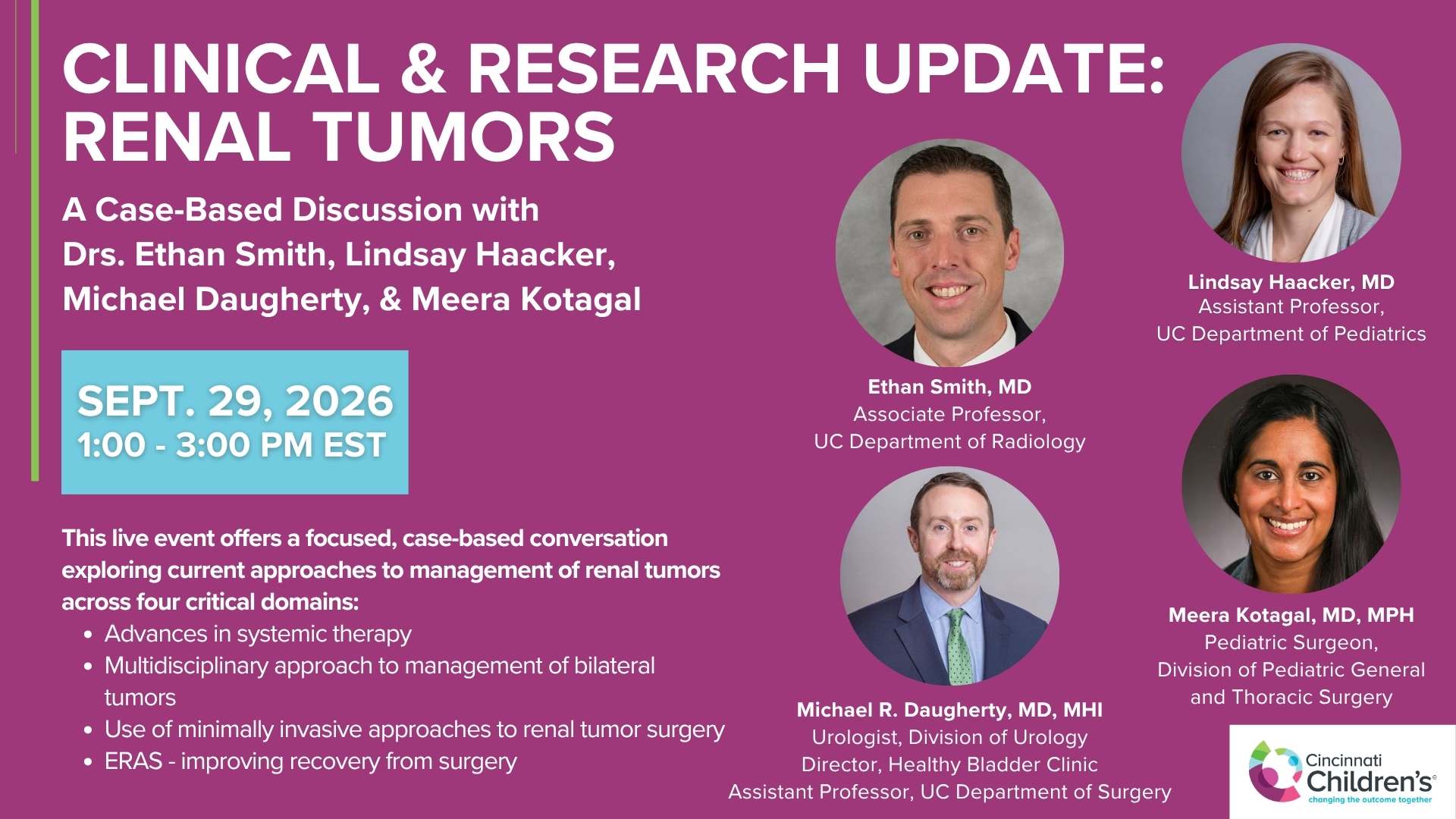
Clinical & Research Update: Renal Tumors with Drs. Ethan Smith, Lindsay Haacker, Michael Daugherty, and Meera Kotagal
71 min · Published Sep 2026
Video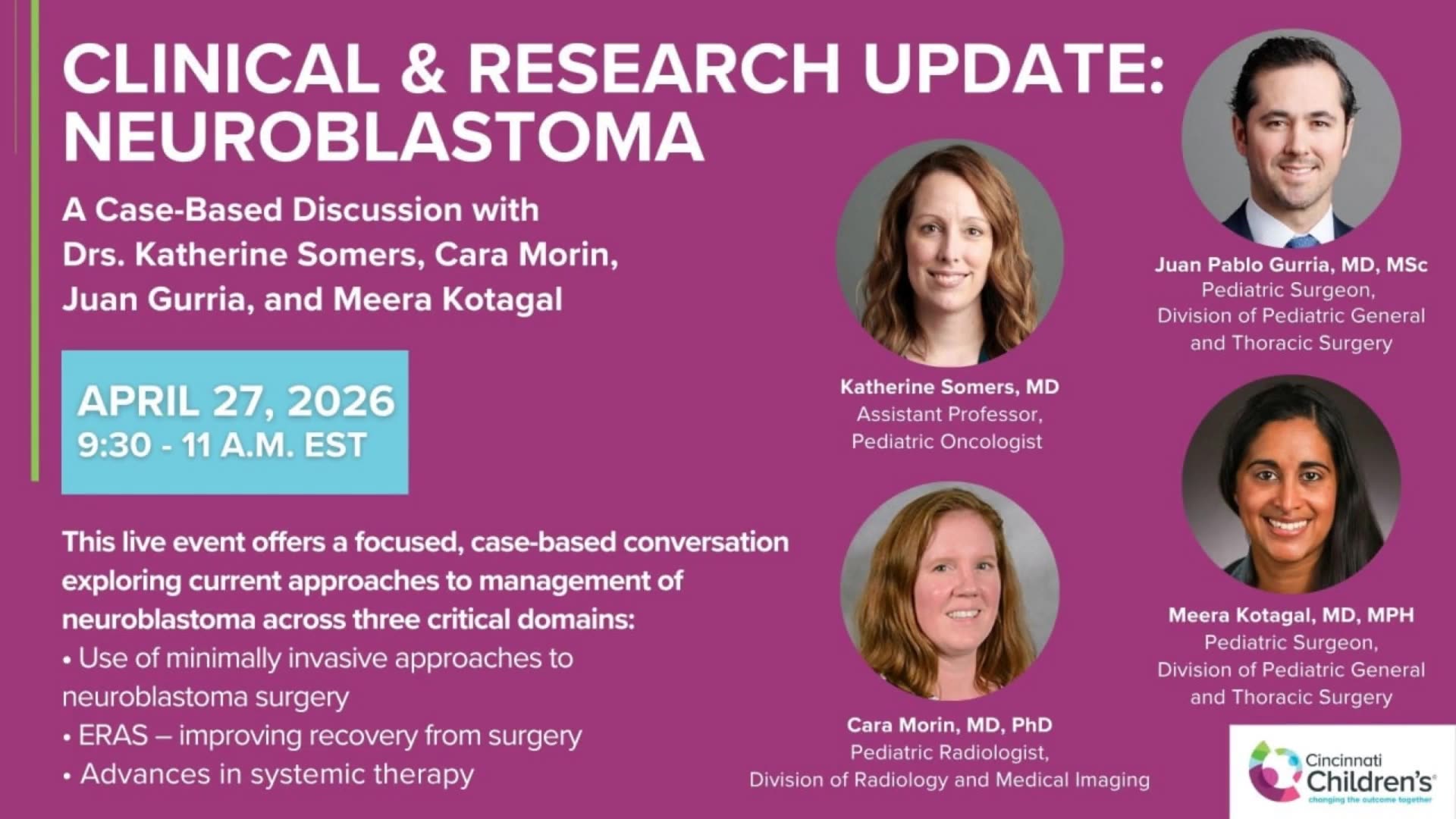
Clinical & Research Update: Neuroblastoma with Drs. Katherine Somers, Cara Morin, Juan Gurria, and Meera Kotagal
67 min · Published Sep 2026
Video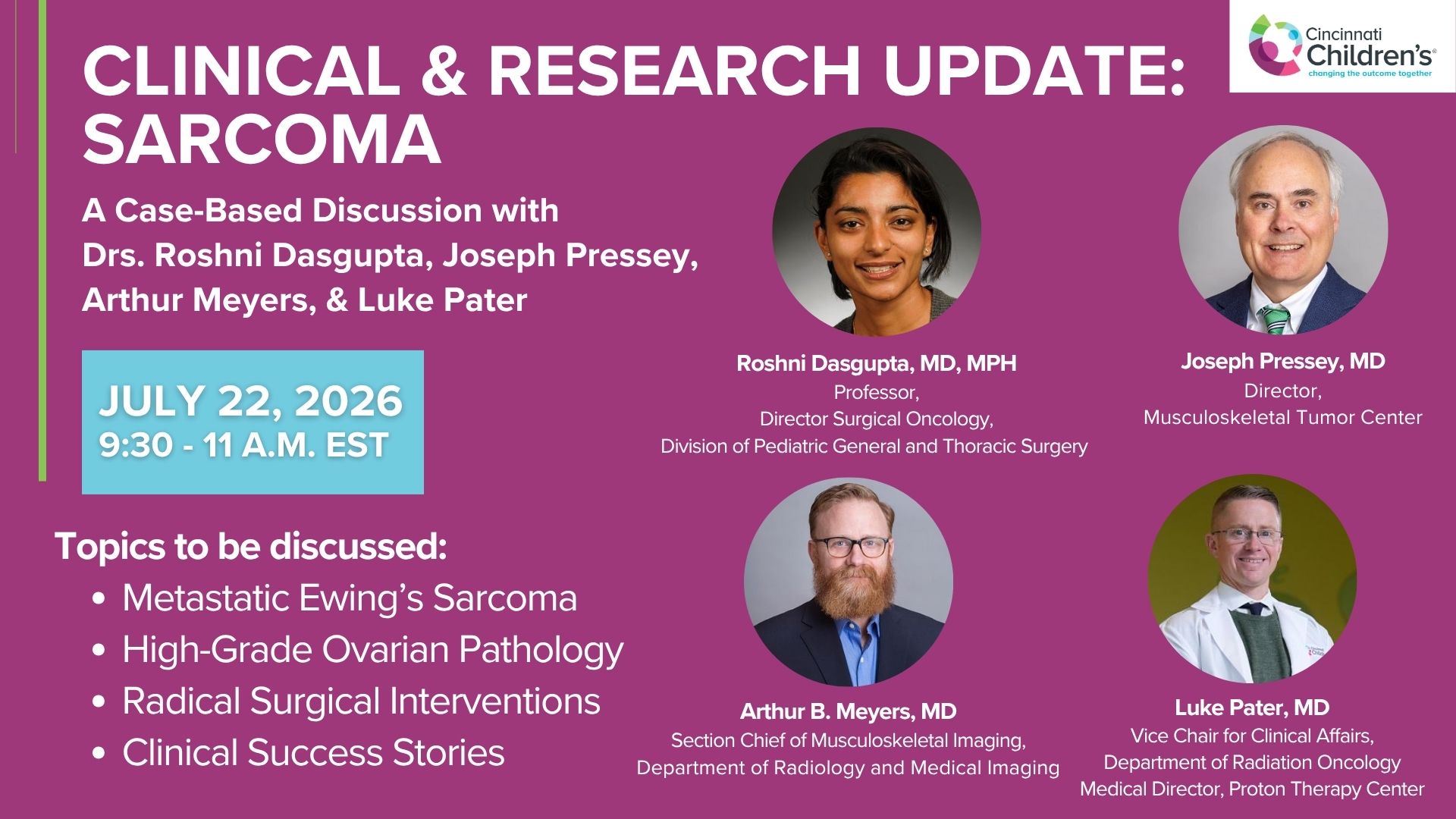
Clinical & Research Update: Sarcoma w/ Drs. Roshni Dasgupta, Joseph Pressey, Arthur Meyer, Luke Pater
66 min · Published Sep 2026
Video
2026 Laparoscopic Pediatric Hernia Repair
123 min · Published Jun 2026
Video
Beyond the Spectrum: Diagnosis, Myths & Management - Caitlin Couch & Leslie Lopez - APP Conference 2026
50 min · Published May 2026
Video
Dysautonomia: Navigating the Journey - Martha Willis - APP Conference 2026
55 min · Published May 2026
What the experts said
Pediatric liver transplantation in Europe has reached approximately 600-700 transplants per year, representing about 10% of total liver transplants (adult plus pediatric).
The European registry analyzed over 16,000 pediatric liver transplants divided into three eras: pre-2000, 2000-2009, and 2010-2017, with approximately 5,000 transplants in each era.
Retransplantation rates have decreased from 20-25% in the early era to below 10% in the most recent decade.
Living donor liver transplantation has increased to 40% of pediatric transplants in Europe, higher than in the United States.
A donor liver segment (2-3 or 2-3-4) transplanted into a child regains complete normal weight within 6 weeks, though the anatomical structure does not regenerate—volume and function recover but you cannot donate twice.
Five-year patient survival for all pediatric liver transplants in the most recent era is approximately 88%, with graft survival at 79-80%.
For all pediatric liver transplant recipients, 50% still have their original graft after 21 years if transplanted above age 12, and after 32 years if transplanted below age 12.
Conditional one-year graft survival (starting from the first transplant anniversary) projects a median graft duration of 41 years, meaning 50% of grafts surviving the first year will last another 40 years.
After the first year post-transplant, the statistical risk of graft loss (death or retransplantation) is approximately 1-2% per year for young children.
Younger children (transplanted before age 6-12) have better long-term graft survival than those transplanted as adolescents or adults, possibly due to immunological tolerance developed when transplanted early.
BSEP deficiency patients can develop antibody-mediated disease post-transplant, presenting with pruritus and low gamma-GT cholestasis when antibodies form against the previously absent BSEP protein in the new graft.
Mutations causing truncated or absent BSEP protein expression carry higher risk of developing post-transplant antibodies against the full-length protein introduced via the graft.
FIC1 deficiency patients post-transplant are at risk of graft steatosis (fat accumulation) and severe diarrhea, as FIC1 is expressed in intestine as well as liver.
Patients with FIC1 deficiency who develop post-transplant diarrhea have higher risk of developing graft fibrosis, and complete bile acid diversion (using IBAT inhibitors) may prevent both diarrhea and graft damage.
Most long-term side effects of immunosuppression do not appear in childhood but emerge in adult patients, including kidney function decline (some cyclosporine-era patients may need kidney transplant) and increased malignancy risk, especially skin cancer.
The majority of pediatric liver transplant recipients develop some degree of graft fibrosis after 1 year and certainly after 5 years, but unlike progressive fibrosis in other liver diseases, this does not appear to progress to cirrhosis or decompensation up to 25 years post-transplant.
Liver transplantation does not cure the child—it replaces the first disease with another medical situation requiring lifelong medical care.
Missense mutations change one amino acid in the protein and may benefit from small molecule chaperones that help the misfolded protein reach the cell surface and function.
Nonsense mutations introduce premature stop codons resulting in truncated proteins that are often degraded, requiring protein replacement via mRNA therapy or gene therapy rather than small molecules.
Jesse Gelsinger died 4 days after gene therapy at age 18 in 1999 from an unusual immune response (immune storm) causing acute liver failure; prior to his death, 2 patients had serious unreported side effects and monkeys given similar treatment had died without this being disclosed in informed consent.
Gene therapy development costs approximately $460 million per drug, and safer drugs attract more funding and develop faster than higher-risk therapies.
Signing a consent form for pediatric liver transplant means accepting at least a 10% risk that the child will not leave the hospital.
The FDA's primary function is patient safety, ensuring experiments have realistic chances of generating useful data and that evidence from trials is sufficient to license therapies for future use.
AAV gene therapy delivers DNA to hepatocyte nuclei where it remains episomal (does not integrate into the host genome), producing a circular DNA fragment that acts like a small chromosome alongside the patient's own chromosomes.
Phase 1 clinical trials involve administering a drug for the first time in humans, typically starting with 10-15 participants to assess primarily safety, toxicity, and tolerability, with regulatory agencies requiring treatment of adults first before pediatric patients.
In phase 1 dose-escalation trials, after the first 1-2 patients are treated, a Data Safety Monitoring Board (DSMB) evaluates side effects and efficacy before allowing enrollment to continue.
AAV gene therapy can only be administered once because the first infusion triggers immunity that neutralizes any subsequent infusion.
AAV gene therapy requires immunosuppressive drugs for 6-12 months post-infusion to manage the immune response to the vector.
Very high doses of AAV may cause liver toxicity and thrombotic microangiopathy, though liver-directed AAV uses much lower doses than AAV for muscular diseases where major complications have been recorded.
Liver-directed AAV gene therapy over the past 10 years, particularly in hemophilia patients, has shown very good safety—the worst outcome is lack of efficacy rather than serious adverse events.
In the Crigler-Najjar AAV gene therapy trial, the first two patients received lower doses and had only transient bilirubin reduction, returning to phototherapy, while higher-dose patients achieved sustained clearance of jaundice.
The target for AAV gene therapy is typically to transduce 20% of hepatocytes, though different diseases require different percentages of enzyme activity—hemophilia can be corrected with just 2-5% factor activity, while other diseases may require 10-20% or more.
AAV gene therapy for spinal muscular atrophy (SMA), a previously lethal condition before age 1, has enabled children to walk and be in good health at age 4-5, though a couple of side effects have been reported in that group.
In one myopathy gene therapy trial, the transgene protein was also expressed in liver and caused hepatic failure and death when AAV was given systemically—the toxicity came from the transgene, not the AAV vector itself.