


Chapter 1 of 5 · Patient & Family Education
Welcome
Welcome and Conference Introduction
Expert statements on this page
No expert statements were drawn from this page.
Host summaries · secondary, not cited in answers
Educational content from recorded physician discussions — not medical advice. Talk to your (or your child's) care team about your situation.
Video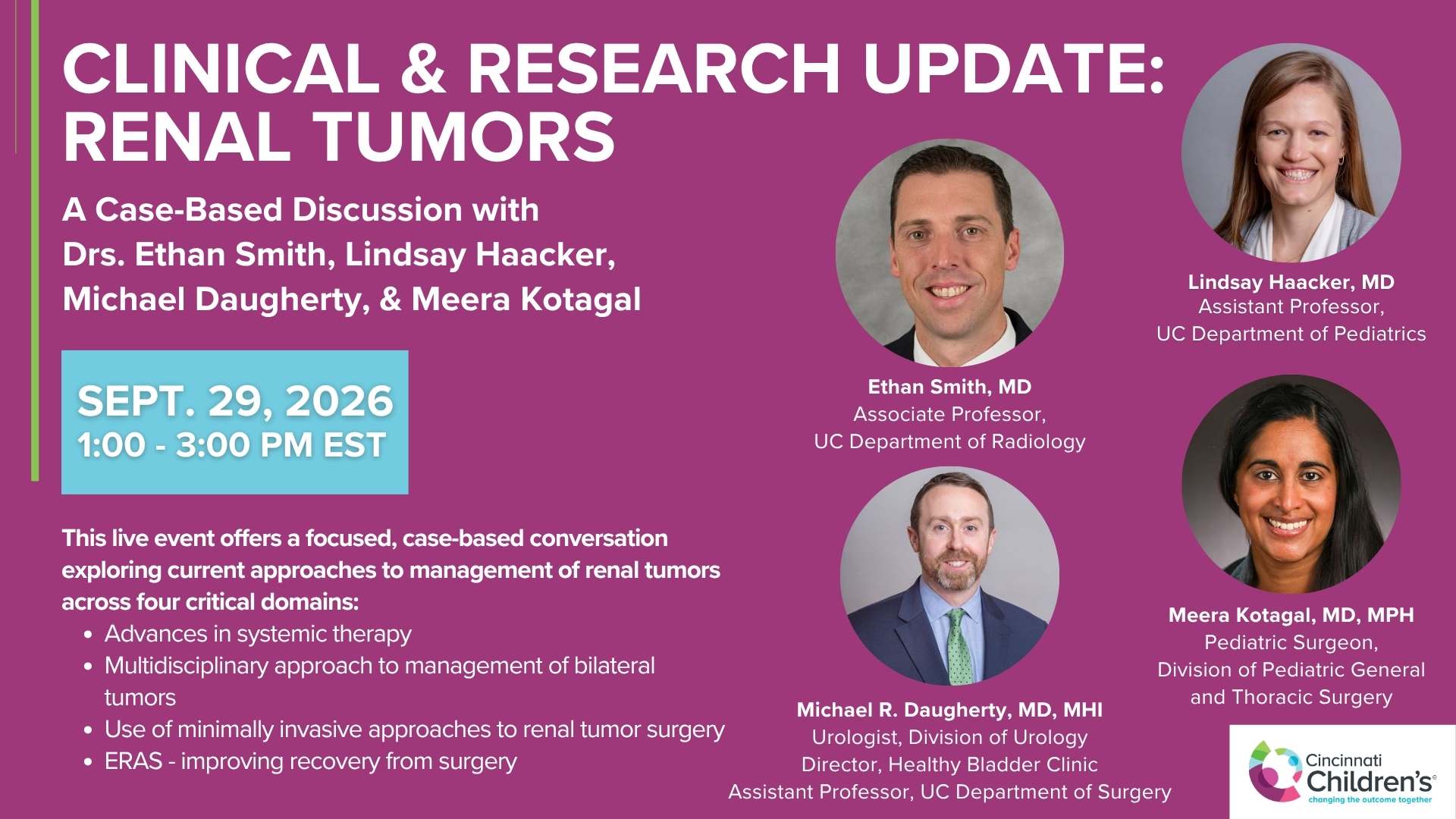
Clinical & Research Update: Renal Tumors with Drs. Ethan Smith, Lindsay Haacker, Michael Daugherty, and Meera Kotagal
71 min · Published Sep 2026
Video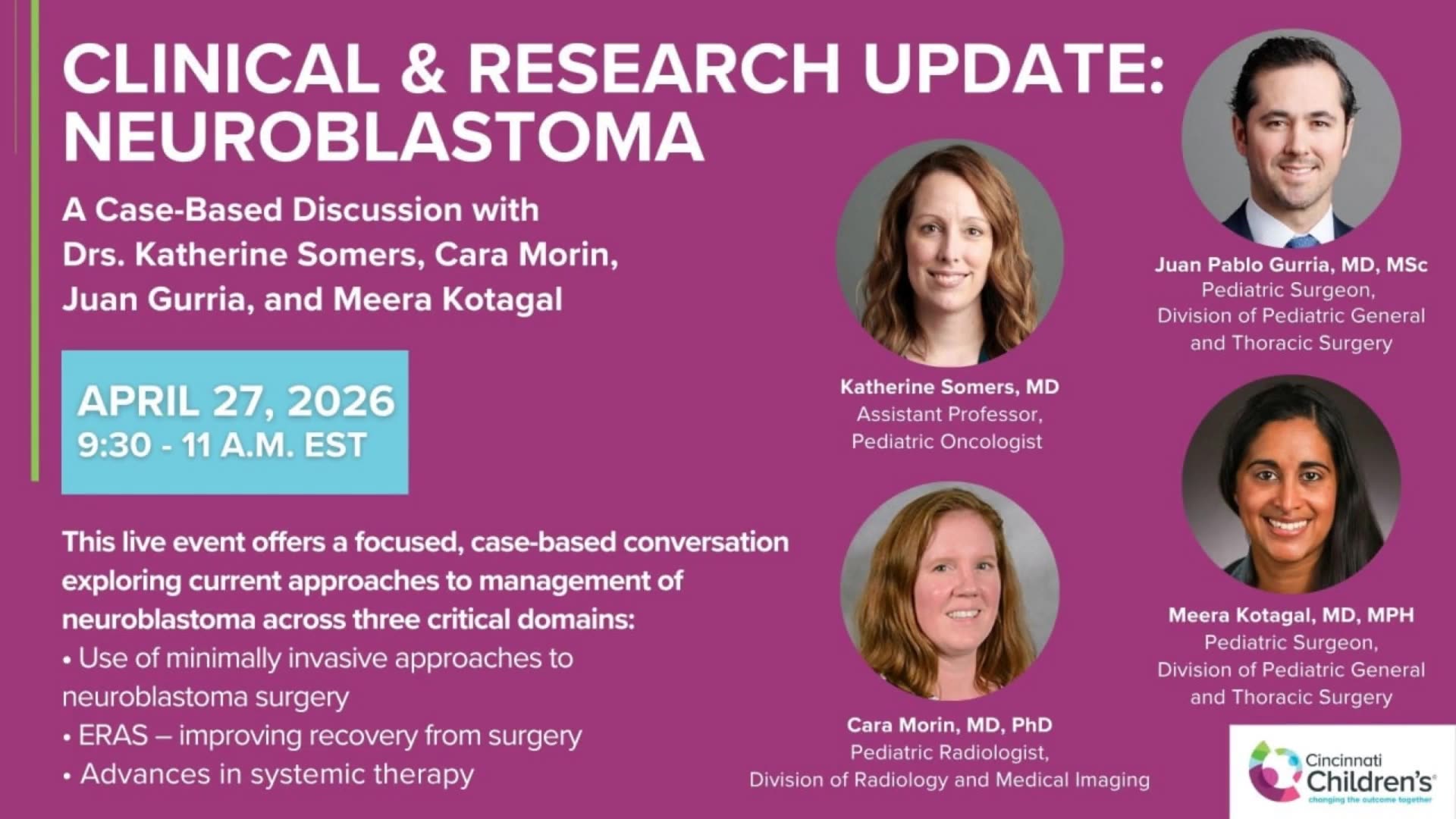
Clinical & Research Update: Neuroblastoma with Drs. Katherine Somers, Cara Morin, Juan Gurria, and Meera Kotagal
67 min · Published Sep 2026
Video
Clinical & Research Update: Sarcoma w/ Drs. Roshni Dasgupta, Joseph Pressey, Arthur Meyer, Luke Pater
66 min · Published Sep 2026
Video
2026 Laparoscopic Pediatric Hernia Repair
123 min · Published Jun 2026
Video
Beyond the Spectrum: Diagnosis, Myths & Management - Caitlin Couch & Leslie Lopez - APP Conference 2026
50 min · Published May 2026
Video
Dysautonomia: Navigating the Journey - Martha Willis - APP Conference 2026
55 min · Published May 2026
What the experts said
Until 2010-2011, only 150 genes were known to cause liver disease when mutated; by 2024 approximately 300 genes are known
In a Yale study of 19 adults with unexplained liver disease, 5 had a monogenetic cause identified through whole exome sequencing
A 32-year-old woman was diagnosed with MDR3 deficiency after presenting with variceal bleed during second trimester of pregnancy; she had cirrhosis and two ABCB4 mutations
Heterozygous ABCB4 mutations have been associated with intrahepatic cholestasis of pregnancy, gallbladder disease (LPAC), and drug-induced liver injury
Patients with ABCB4-related LPAC syndrome may be at increased risk of developing cholangiocarcinoma and hepatocellular carcinoma
In a study of 93 children post-liver transplant, 30% had IQ scores between 71-85 (mildly low) and 7% had scores below 70; 42% were in special education
Pre-transplant weight was the strongest predictor of post-transplant IQ in children, with weight Z-score less than -2 associated with worse cognitive outcomes
Children with cholestasis require approximately 130% of normal calorie requirements for their age due to malabsorption and increased metabolic demands
At diagnosis with PFIC, most children are deficient in at least one, if not 2 or 3 fat-soluble vitamins (A, D, E, K)
In a study of children with biliary atresia on routine vitamin supplements, 10-30% remained deficient in fat-soluble vitamins despite supplementation
DEKA Essentials contains water-soluble vitamin E and higher levels of vitamins, helping avoid need for extra single vitamin supplements in cholestatic infants
Fat-soluble vitamins should be given in the morning with breakfast when bile flow is maximal, and not with cholestyramine or iron
PFIC Network was founded after Emily Gootee's daughter Cedar was diagnosed with PFIC type 2 (BSEP deficiency) at 5 months old at Cincinnati Children's Hospital 12 years ago
The family went 3 years without talking to anyone else with PFIC after diagnosis
Maralixabat took the itch away within 2 days for Alex's son with PFIC-2
Tala (Sharon's daughter with PFIC-1) has had partial external biliary diversion and liver transplant, and currently takes Maralixabat for post-transplant diarrhea
Luca (Laura's son) had BSEP deficiency so severe that by 6 months old he was in decompensated cirrhosis with end-stage liver disease and received emergency transplant
Cholestyramine is frequently considered first-line therapy for pruritus but is unpalatable and difficult for patients to take multiple times daily
Ursodiol may slow or reverse progression of disease primarily in BSEP disease or MDR3 disease
IBAT inhibitors block bile acid reabsorption in the ileum, reducing circulating bile acid levels similar to biliary diversion surgery
Otavixabat (Bylvay) was approved in the US for PFIC in 2021 for children 3 months and older, taken once daily with a meal
Maralixabat (Livmarli) was approved in the US for PFIC in children 5 years and older as of last month, taken twice daily
IBAT inhibitors are not recommended for patients with severe or decompensated liver disease or for BSEP disease with severe ABCB11 mutations predicted to produce absent or nonfunctioning BSEP protein
In the Indigo trial of Maralixabat, responders at week 48 had profound sustained serum bile acid and pruritus reduction, and none were listed for transplant within 4.5 years
All participants in the Indigo trial with severe or truncating ABCB11 mutations were non-responders and quit the study
FIC1 disease response to biliary diversion surgery is difficult to predict; severity of gene mutation and serum bile acid level before surgery are not predictive of response
Biliary diversion surgery can extend transplant-free survival by up to 15 years in BSEP disease patients with mild mutations
Reduction of serum bile acid levels by 75% or to less than 102 micromoles per liter is associated with long-term native liver survival after biliary diversion
MDR3 deficiency biliary diversion is not effective in affecting disease course, so generally not performed
Sharon's daughter Tala had external biliary diversion at 15 months which worked for 2.5 years before requiring liver transplant at 4 years old