
Ovarian Salvage (Torsion & Benign Tumor): Practice Gap discussion at Update...
hosted by Dr. Todd Ponsky · StayCurrentMD
Part of
Ovarian Torsion 3 items
Educational content from recorded physician discussions — not medical advice. Talk to your (or your child's) care team about your situation.
Podcast
Ovarian Torsion with Dr. Jennifer Dietrich
47 min · Published Jan 2017
Podcast
Pediatric Ovarian Tumors Video Podcast
34 min · Published Mar 2018
Podcast
Ovarian Tumors Video Podcast
34 min · Published Mar 2018
Podcast
Ovarian Torsion with Dr. Jennifer Dietrich
47 min · Published Jan 2017
Video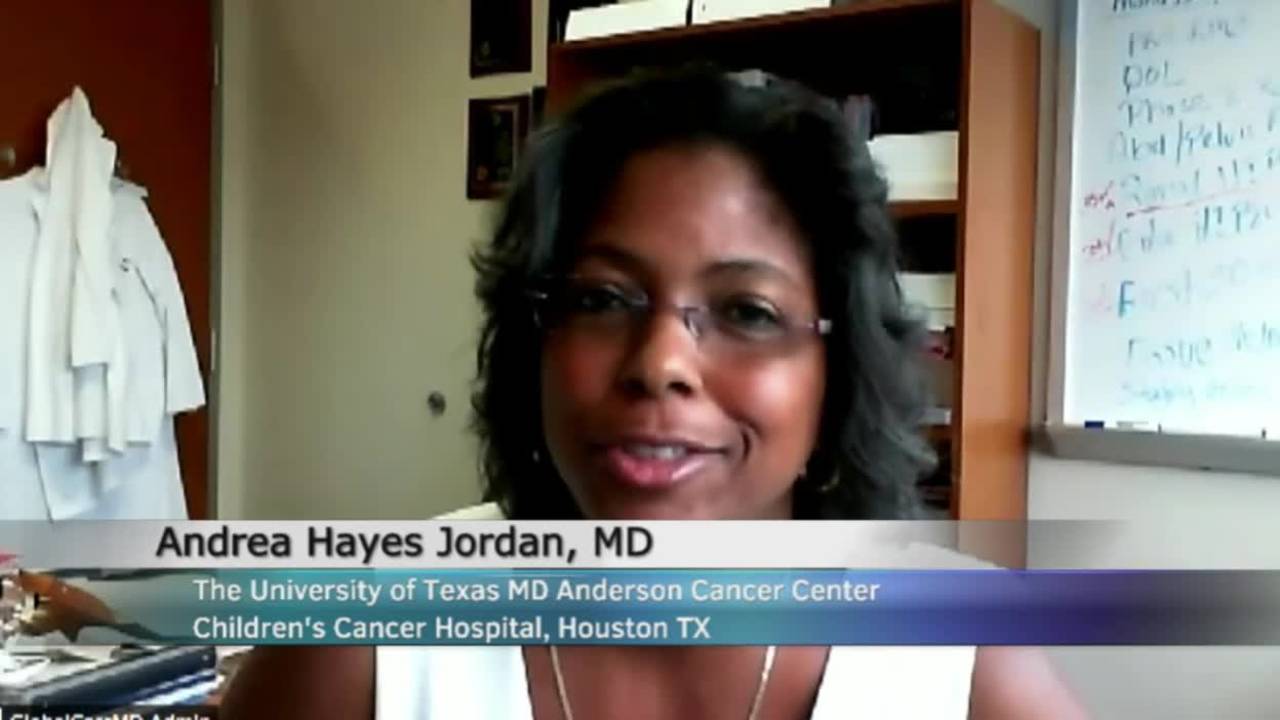
Ovarian Teratoma - Ovarian Torsion - Soft Tissue Sarcoma: Update Course 2015
34 min · Published Nov 2018
Video
Compiled Hayes Jordan Rapid Fire Sessions: Update Course 2015
33 min · Published Nov 2015
Video
Pediatric Surgical Oncology Research Collaborative (PSORC): Studying Rare Pediatric Tumors
56 s · Published May 2026
Video
Update Course Rewind 2025: Hirschsprung + ARM: Rare but Real
1 min · Published May 2026
Video
Update Course Rewind 2025: Hirschsprung + ARM: Rare but Real
1 min · Published May 2026
Video
Pooling Patients to Study Rare Pediatric Tumors: An Introduction to PSORC
56 s · Published May 2026
Video
The fetal frontier: A review of current and emerging fetal therapies for genetic diseases
44 s · Published May 2026
Video
Indocyanine green assists with sentinel lymph node mapping in pediatric and adolescent patients
1 min · Published May 2026
What the experts said
Ultrasound is good at identifying the mass and enlarged ovary but should never provide comfort that torsion is not present
The presence or absence of flow to the ovary on ultrasound should not provide comfort that the patient does not have torsion
A study is underway to improve diagnostic accuracy for torsion and create a scoring system to decrease negative laparoscopies
In 2018, there is no better diagnostic test for torsion than clinical suspicion leading to laparoscopy
Serial ultrasounds after leaving black ovaries in place have shown follicles, indicating functional ovarian tissue was present
For a torsed ovary with a dermoid cyst, the strategy is to detorse, leave the mass in situ, follow with ultrasound to see if the ovary survives, and return to remove the cyst if it does
Ultrasound follow-up over approximately 6 weeks is used to determine if a detorsed ovary survives
Masses in association with ovarian torsion occur in approximately 20% of cases
The risk of malignancy in ovarian masses associated with torsion is very low
The strategy for torsion with a mass is to detorse the ovary, and if the mass can be dealt with at that time with ovarian-sparing surgery, that is acceptable; otherwise close and return after monitoring
There is no urgency in deciding about mass removal; tumor markers can be obtained, the case can be taken to tumor board, and the decision can be made in a non-emergent fashion
Laparoscopic ovarian-sparing mass resection has technical challenges; a Pfannenstiel incision may be easier for palpation and dissection
In ovarian torsion, detorsion should be addressed first, and the mass is a separate issue to be dealt with using ovarian-sparing surgery
If a Pfannenstiel incision is needed to accomplish ovarian-sparing surgery, that is preferable to oophorectomy
Ultrasound is a horrible test for torsion according to a pediatric radiologist who was president of the Pediatric Radiology Society
Ultrasound for ovarian torsion is a coin flip in terms of whether vascular flow is seen
Black, apparently dead ovaries should be left in place after detorsion
When an ovary is malignant, removal is appropriate
Clinical assessment at the time of operation is unreliable in determining the presence of viable ovarian cortical tissue
Kate Dean has funding from the Thrasher Foundation through the Midwest Pediatric Surgeon Consortium to study an algorithm using tumor markers, size, and radiologic confirmation to determine if ovarian masses are benign