
Neuroblastoma: Update Course 2016
With Dr. CCHMC Pediatric Surgery · StayCurrentMD
Educational content from recorded physician discussions — not medical advice. Talk to your (or your child's) care team about your situation.
Video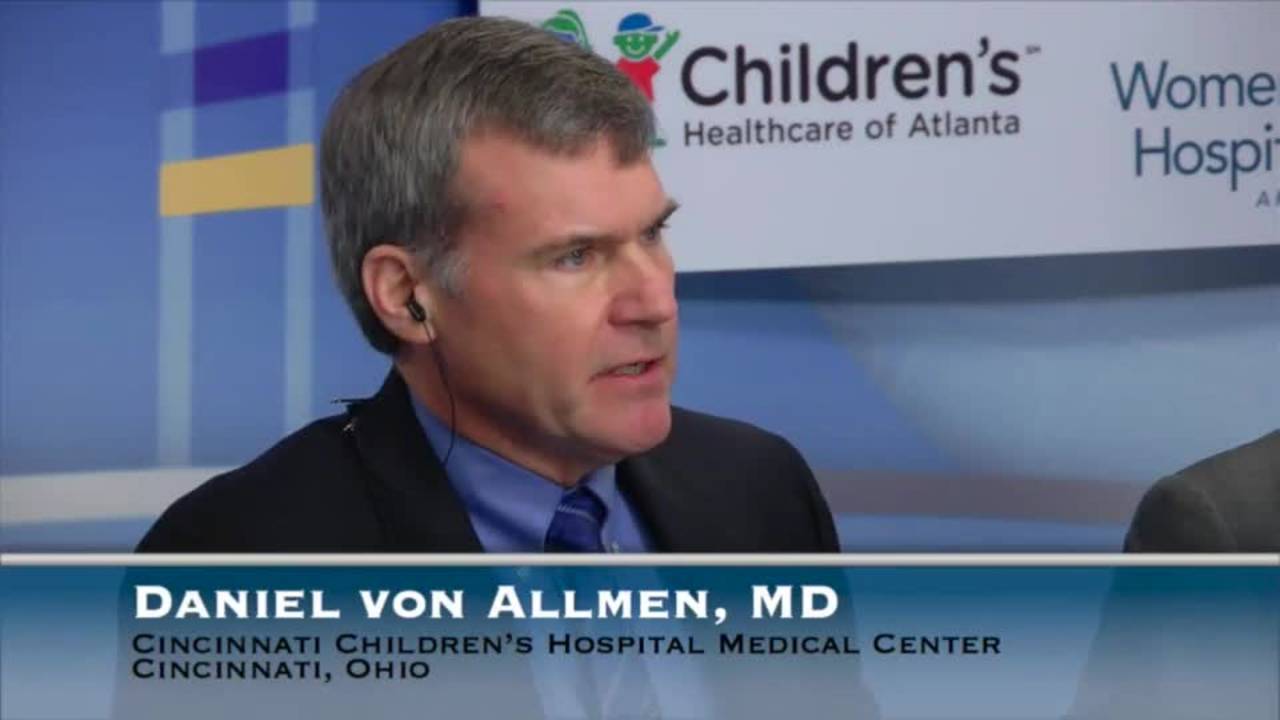
Neuroblastoma: Update Course 2014
CCHMC Pediatric Surgery · 25 min · Published Nov 2018
Video
Dr. Sabine Irtan - Best of the Best in Pediatric Surgery 2025
Dr. Todd Ponsky · 6 min · Published Mar 2025
Video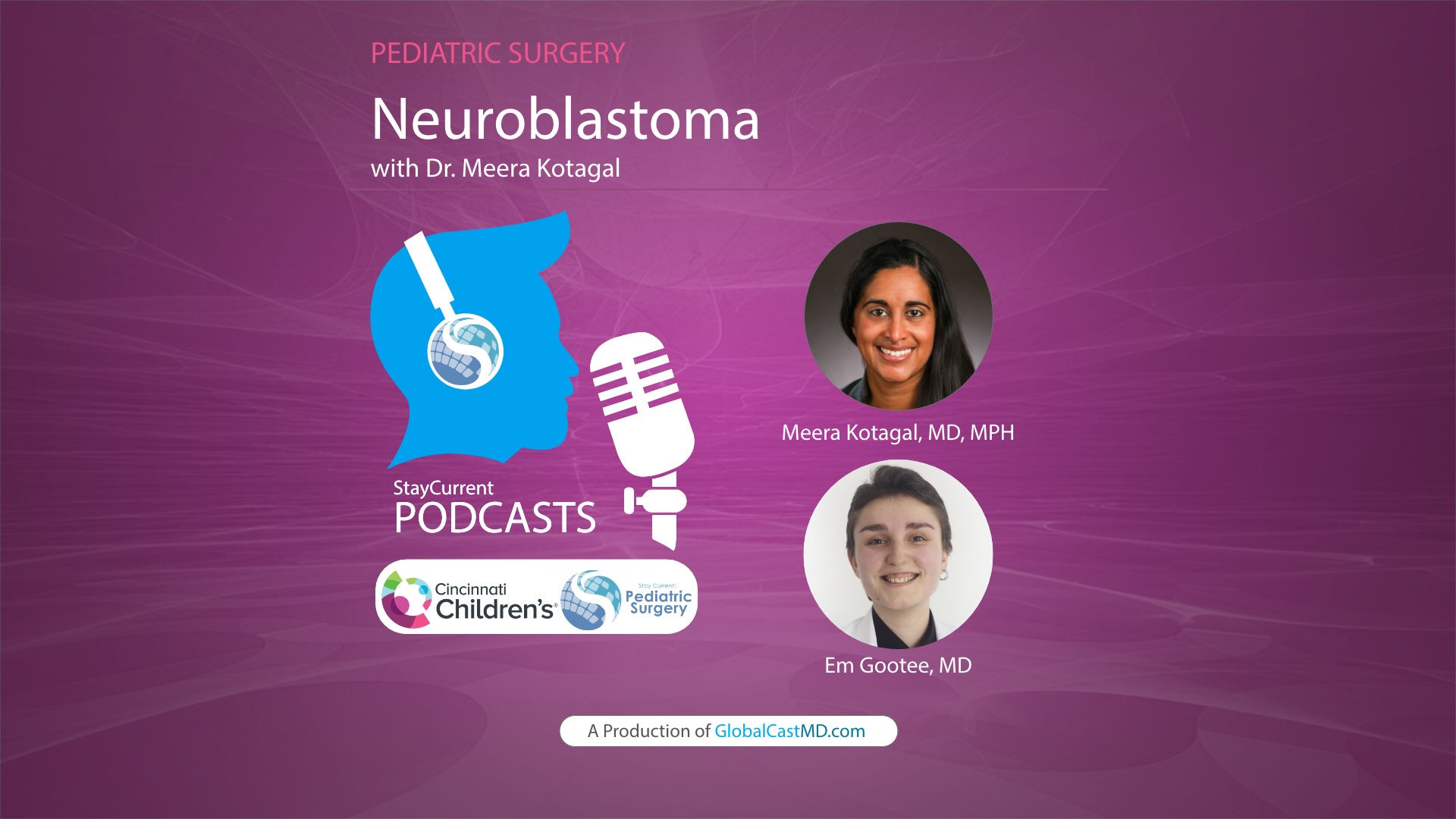
Neuroblastoma with Dr. Meera Kotagal
14 min · Published Sep 2024
Podcast
Neuroblastoma
56 min · Published Aug 2019
Video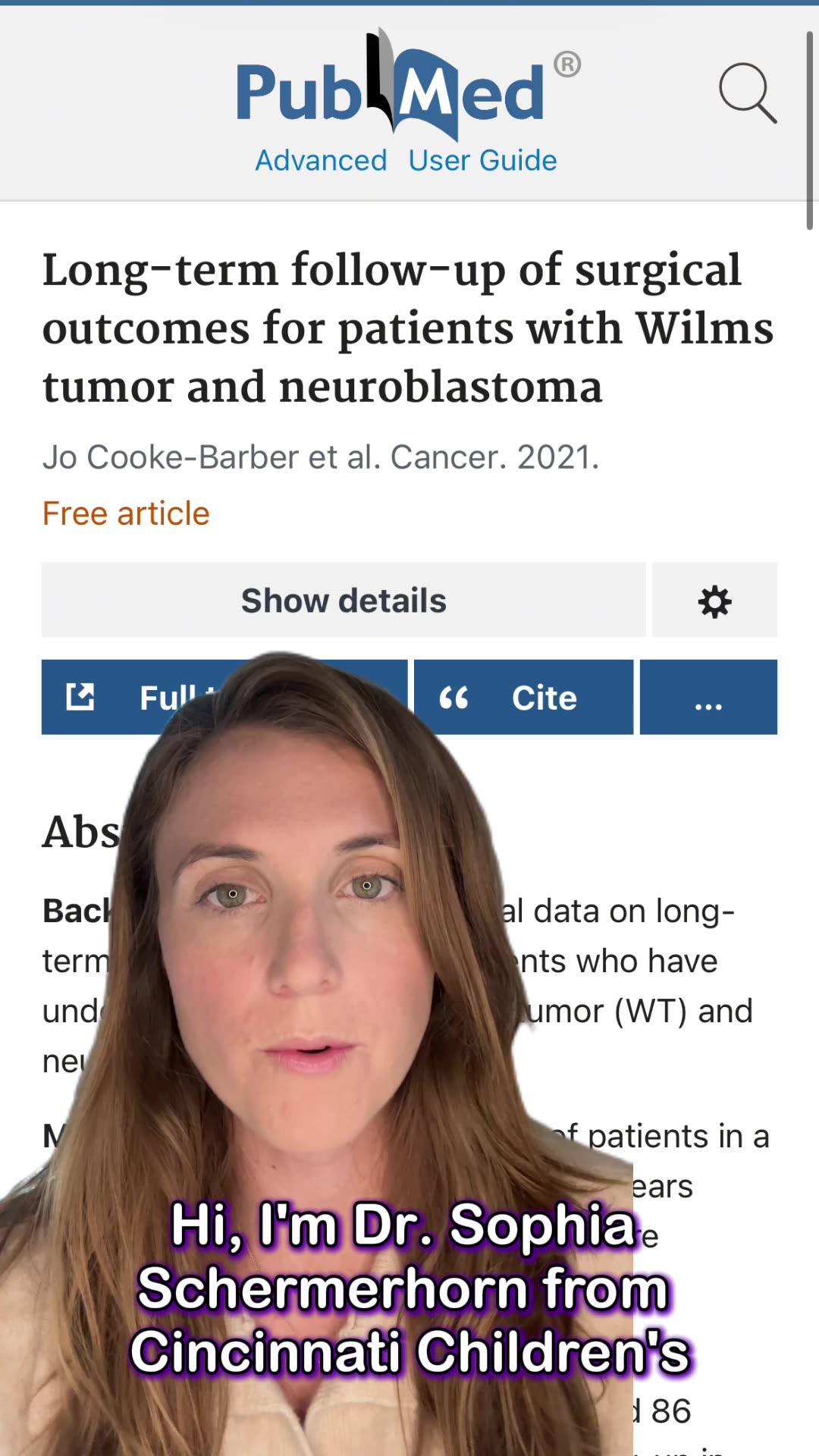
Long-Term Follow-Up of Surgical Outcomes for Patients With Wilms Tumor and Neuroblastoma
1 min · Published Feb 2026
Video
Neuroblastoma
CCHMC Pediatric Surgery · Published May 2020
Video
QUAD #27 - Multidisciplinary - How Do Teams Enhance Outcomes by the CCHMC ADEC Team
CCHMC Pediatric Surgery · 10 min · Published Apr 2025
Video
Update Course Rewind: Highlighting Collaboration from Surgery & Interventional Radiology in the OR 2024
CCHMC Pediatric Surgery · 10 min · Published Mar 2025
Video
Update Course Rewind: MMP-7 & Biliary Atresia Diagnosis 2024
CCHMC Pediatric Surgery · 6 min · Published Mar 2025
Video
Empyema with Dr. Aaron Garrison
CCHMC Pediatric Surgery · 13 min · Published Feb 2025
Video
QUAD #26 - Use of Ultrashort Echo-Time MRI to Measure Tracheomalacia in Neonates with Esophageal Atresia with Dr. Douglas von Allmen
CCHMC Pediatric Surgery · 5 min · Published Feb 2025
Video
QUAD #17 - Innominate Artery Compression and Management Through The Neck - Dr. Doug von Allmen
CCHMC Pediatric Surgery · 5 min · Published Feb 2025
Video
Pediatric Surgical Oncology Research Collaborative (PSORC): Studying Rare Pediatric Tumors
56 s · Published May 2026
Video
Update Course Rewind 2025: Hirschsprung + ARM: Rare but Real
1 min · Published May 2026
Video
Update Course Rewind 2025: Hirschsprung + ARM: Rare but Real
1 min · Published May 2026
Video
Pooling Patients to Study Rare Pediatric Tumors: An Introduction to PSORC
56 s · Published May 2026
Video
The fetal frontier: A review of current and emerging fetal therapies for genetic diseases
44 s · Published May 2026
Video
Indocyanine green assists with sentinel lymph node mapping in pediatric and adolescent patients
1 min · Published May 2026
What the experts said
High-risk neuroblastoma patients continue to have survival rates in the 38-40% range despite aggressive therapy
Surgeons overestimated their degree of resection compared to postoperative imaging in 2/3 of cases (66% concordance rate) in the tandem transplant pilot study
In a repeat study with COG high-risk patients, surgeons underestimated resection extent while radiologists overcalled it, again showing only 66% concordance, suggesting no correlation between surgeon assessment and imaging
The biggest volume response of neuroblastoma tumor occurs with the first two cycles of chemotherapy, with very little response after that (Memorial Sloan Kettering data)
More chemotherapy or other treatments like MIBG make the tumor more fibrotic and make subadventitial dissection more difficult
There is good evidence that aggressive resection improves survival in stage 3 neuroblastoma patients, supported by pre-COG merger studies
Surgical complication rate for aggressive neuroblastoma resection is approximately 30% morbidity with mortality less than 1%
The Riley study showed the only survivors with stage 4 neuroblastoma were those who had primary tumor resection
The Sloan Kettering study suggests stage 4 patients do better with primary tumor resection
Kiely's study showed no difference in survival based on extent of resection
European studies show no difference in survival based on extent of resection in stage 4 disease
High-risk neuroblastoma patients receive 9 different drugs, bone marrow transplantation, and some receive total body radiation, with outrageous morbidity from medical treatment
High-risk neuroblastoma treatment includes tandem peripheral blood stem cell transplants (two sequential transplants), followed by immunotherapy and Retin-A
High-risk neuroblastoma survival improved from 10% to 30-40% with treatment intensification
The Georgia study showed 46% survival with transplantation plus immunotherapy plus differentiating agents, but many deaths were due to intensified treatment rather than cancer
German study of 278 stage 4 high-risk neuroblastoma patients achieved complete resection in almost half and >90% resection in another quarter (75% total achieving >90% resection)
German study outcomes: overall survival 45%, event-free survival 33%, local progression-free survival 58%
German study showed no difference in overall survival, event-free survival, or local progression-free survival based on completeness of resection
European SIOPEN study included 1,324 high-risk neuroblastoma patients (stages 3 and 4) and achieved >95% resection in 76% of patients
SIOPEN study surgical mortality was 0.5% with 10% morbidity (30% if including lesser complications)
SIOPEN study showed significant improvement in event-free survival and overall survival with >95% resection - the first study to show overall survival benefit
SIOPEN study concluded >95% resection results in improvement in event-free survival in high-risk neuroblastoma
COG 3973 study (230 patients) showed statistically significant improvement in local relapse-free survival and event-free survival with aggressive resection
COG 3973 study was not able to demonstrate improvement in overall survival, possibly due to type 2 error from smaller sample size (230 vs 1,300 in European study)
Aggressive neuroblastoma resections using the Kiely subadventitial approach should not be performed by occasional pediatric oncological surgeons doing one case per year or every other year
European neuroblastoma procedures are performed in more than 200 hospitals, yet still demonstrated survival improvements despite this distribution
Older data shows that if the kidney is removed during neuroblastoma resection, survival is worse; renal preservation leads to better outcomes
Renal preservation is important because patients with only one kidney cannot receive as much chemotherapy, which impacts overall survival
Aggressive surgical approach to local neuroblastoma recurrence is justified as long as it is not progressive metastatic disease, though prognosis is worse
New therapies like targeted MIBG therapy may justify surgical removal of bulk disease in recurrent neuroblastoma
Immunotherapy is effective in the setting of minimal residual disease, so achieving 95% resection may improve the impact of medical therapy on metastatic disease
German study concluded aggressive surgery is not justified in stage 4 disease, limited operations decrease complications, and there is limited impact on patient outcome