10 views 0 likes

StayCurrentMD

GCMD Space · View profile →

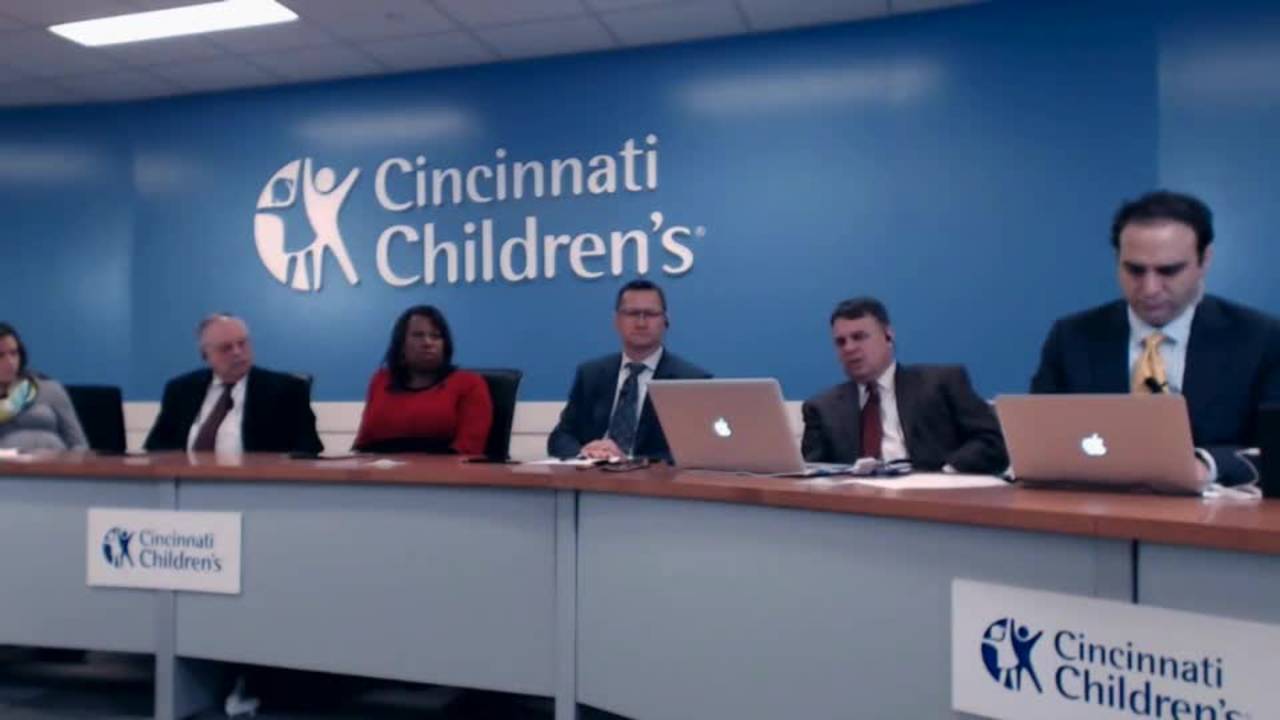
Multidisciplinary Approach: Intestinal Failure Innovations

Video Published 2019-01-11 Updated 2022-08-22

Timestops (6)

Topic Overview

A multidisciplinary panel discussion on intestinal failure management in pediatric patients, emphasizing team-based care models that have reduced mortality from 30-40% to approximately 5% annually. Core clinical themes include early team involvement (neonatology, surgery, gastroenterology, nutrition, social work), standardized central line management with ethanol locks reducing infection rates from 12 to <2 per 1000 catheter-days, lipid restriction strategies (≤1 g/kg/day) to prevent cholestasis, and individualized feeding approaches. The discussants stress that intestinal failure is defined by inability to absorb adequate nutrition for growth, not solely by bowel length, and that functional assessment through feed tolerance and TPN weaning is more predictive than anatomic measurements.

Key Takeaways

  • Multidisciplinary teams reduced intestinal failure mortality from 30-40% to ~5% annually through standardized protocols. (2:23)
  • Ethanol locks (70%, 2-6h dwell, 3×/week) cut line infections from 12 to <2 per 1000 catheter-days when combined with care bundles. (37:31)
  • Limiting lipids to ≤1 g/kg/day reduces cholestasis to <5% without symptomatic essential fatty acid deficiency in practice. (1:09:42)
  • Feed tolerance and TPN weaning predict outcomes better than bowel length; functional assessment guides management decisions. (1:25:29)
  • Lack of vascular access is no longer a common transplant indication; aggressive line preservation strategies are now feasible. (50:04)

Inside this episode

Kai, the Library's AI content creator, listened to this episode and mapped who's speaking, the chapters, key claims, and cases. Every item links to the exact moment in the recording.

AI-enriched

Who's speaking

  • Speaker 1 — host
  • Sam — guest
  • Speaker 3 — guest
  • Speaker 4 — guest
  • Speaker 5 — guest
  • Speaker 6 — guest

Chapters

  • 0:00Defining Team-Based Care Models — Introduction to multidisciplinary intestinal failure teams, composition (neonatology, surgery, GI, nutrition, social work, psychology), and evidence that team approaches reduce mortality from 30-40% to ~5% per year.
  • 10:00Patient Identification and Early Intervention — Criteria for intestinal failure (inadequate bowel length or function), timing of gastroenterology involvement, role of early consultation in at-risk NICU patients, and importance of rotavirus vaccination protocols.
  • 20:00Central Line Management and Infection Prevention — Standardized protocols for line care, ethanol lock implementation (70% concentration, 2-6 hour dwell), reduction of catheter-related bloodstream infections from 12 to <2 per 1000 catheter-days, emergency room protocols for fever management.
  • 40:00TPN Composition and Lipid Management — Lipid restriction strategies (≤1 g/kg/day) to prevent cholestasis, phytosterol toxicity from soy-based lipids, fish oil-based alternatives (Omegaven), essential fatty acid deficiency monitoring, glucose infusion rate optimization.
  • 60:00Growth, Nutrition, and Functional Assessment — Bowel length estimation using normograms, relationship between resection extent and TPN duration, functional assessment through feed tolerance and TPN weaning rather than anatomic measurements, growth expectations in intestinal failure patients.
  • 80:00Feeding Challenges and Surgical Decision-Making — Approach to feeding intolerance, limitations of upper GI studies (low sensitivity for anastomotic problems), role of endoscopy, post-pyloric feeding trials to assess distal bowel function, indications for surgical revision versus conservative management.

Key claims

  • 2:23Team approach to intestinal failure reduced 1-year mortality from 30-40% to approximately 5% per year at University of Michigan — Sam
  • 2:51Cincinnati's intestinal failure program was started in 1984 — Sam
  • 3:47Intestinal failure is defined by inadequate bowel length OR bowel that doesn't absorb nutrition and fluid adequately to maintain growth — Speaker 3
  • 16:56Almost 30% of patients leaving NICU without rotavirus vaccination were readmitted with rotavirus infection — Speaker 1
  • 18:11Joint weekly rounds with surgeons, gastroenterologists, dietitians, and neonatologists help identify protocol deviations and build family rapport — Sam
  • 30:13Breast milk provides not just immunostimulatory benefits but motility effects through oligosaccharides and healing properties — Speaker 1
  • 33:36PIFCON study data showing 25% mortality or transplant referral are now archaic; outcomes have improved dramatically in past 5 years — Sam
  • 37:31Cincinnati reduced catheter-related bloodstream infections from 12 per 1000 catheter-days to 2 per 1000, approaching <1 per 1000 — Speaker 1
  • 38:54Standardized central line bundles and multi-hospital communication networks have reduced line infections across pediatric populations — Speaker 5
  • 39:45Intestinal failure patients have unique propensity for line infections and different infection types compared to general pediatric population — Speaker 5
  • 41:13Toronto experience paper in JPGN examined PICC lines for TPN administration — Speaker 5
  • 44:58Complication-free survival of PICC lines is approximately half that of broviacs according to IR literature — Sam
  • 46:26Subclavian approach for central lines carries higher risk of stenosis compared to jugular approach — Speaker 4
  • 50:04Lack of vascular access is no longer a common indication for intestinal transplant in past 3 years at some centers — Speaker 5
  • 60:20Ethanol locks use 70% concentration with 2-6 hour dwell time, can be given 3 times weekly (Monday/Wednesday/Friday) with good results — Sam
  • 61:04Ethanol locks work better with 6.6 French catheters than smaller catheters; smaller PICC lines tend to occlude — Sam
  • 61:28Younger NPO infants often cannot tolerate TPN windows required for ethanol locks — Sam
  • 63:55UK predominantly uses taurolidine locks rather than ethanol locks for line infection prevention — Speaker 6
  • 64:23Line care education is crucial; recurrent infections warrant revisiting line care practices before implementing locks — Speaker 6
  • 65:32Fungal line infections are pulled more promptly, but some centers now treat through even fungal infections in patients with limited vascular access — Speaker 5
  • 68:34Phytosterols in soy-based lipids are cleared poorly, share cholesterol transporter (down-regulated by endotoxemia), and reduce FXR receptor expression causing hepatocyte damage — Sam
  • 69:42Limiting lipid intake to 1 g/kg/day reduces cholestasis rate to less than 5% of patients — Sam
  • 70:43Fish oil-based lipid (Omegaven) may have anti-inflammatory advantage and benefit patients who don't respond to lipid restriction — Sam
  • 71:50Neonatologists often maintain higher lipid doses (2-3 g/kg/day) due to concern about depriving infants of linoleic acid and affecting brain development — Sam
  • 72:39With lipid restriction protocols, cholestasis rarely emerges from Cincinnati NICU — Speaker 5
  • 74:14Standard metrics for essential fatty acid deficiency are based on malnourished children not on TPN, so altered triene:tetraene ratios may not apply the same way — Speaker 5
  • 74:41Symptomatic essential fatty acid deficiency is not seen in practice with lipid restriction protocols — Speaker 5
  • 75:16Higher glucose infusion rates become less efficient as caloric source and are pushed toward fatty acid and fat deposition — Speaker 5
  • 75:41Age-based glucose infusion rate limits: generally 15-16 in premature/infants, gradually decreasing with age — Speaker 5
  • 76:04Intestinal failure patients may not need to maintain 50th percentile growth; unclear what appropriate growth curve should be for this population — Speaker 5
  • 79:31Neurodevelopmental outcomes in intestinal failure are multifactorial (prolonged hospitalization, recurrent admissions, neonatal insults), not solely attributable to lipid strategies — Speaker 6
  • 82:03Babies with spontaneous intestinal perforation (no functional bowel removed) still require 2-3 months of parenteral nutrition — Speaker 1
  • 85:29Feed absorption and ability to progress feeds are the best measures of bowel function, not absolute bowel length — Speaker 6
  • 86:18Ability to wean TPN while maintaining good growth is the most important functional measure — Speaker 5
  • 88:16Upper GI studies can identify problems but cannot rule them out; absence of findings does not exclude anastomotic issues — Speaker 5
  • 88:43Delayed contrast films may reveal that barium flows into anastomosis but doesn't flow out well, suggesting functional problem — Speaker 5
  • 88:43Some anastomoses are not strictured but kinked or twisted, creating functional rather than anatomic obstruction — Speaker 5
  • 90:45Endoscopy is valuable for visualizing anastomosis diameter; sometimes can get scope on both sides but cannot see anastomosis itself — Sam
  • 94:28Motility abnormalities in short bowel syndrome are not well described; manometric assessment is less helpful in this population — Sam
  • 95:24Post-gastric tube feeding with gastric decompression can demonstrate distal bowel function and avoid unnecessary surgeries — Speaker 1

Points of disagreement

  • 26:18Optimal feeding route for at-risk intestinal failure patients
    • Poll results: 70% NG continuous feeds, 30% ad-lib PO with NG bolus, 0% post-pyloric
    • Speaker 5: Individualized approach based on patient assessment; occasionally uses post-pyloric but now more inclined to give oral feeding a chance
  • 42:57Preferred central venous access for long-term TPN
    • Poll results: 30% PICC line, 30% right IJ broviac, 25% subclavian broviac
    • Speaker 1: Surprised by results; expected majority to favor PICC lines initially
    • Speaker 4: PICC lines acceptable in hospital; convert to broviac for long-term home use to protect vascular access
  • 76:04Growth expectations for intestinal failure patients on TPN
    • Speaker 5: Goal is not 50th percentile growth; unclear what appropriate growth curve should be; patients are smaller population than standard charts
    • Speaker 5: Previously accepted poor growth to get off PN; now seeing linear growth above 50th percentile in patients with genetic potential; should aim for this
  • 92:25Application of STEP procedure for dilated bowel
    • Speaker 4: STEP application to all children with dilated bowel should be viewed with skepticism; more important to find why bowel is dilating first

Open questions

  • What is the optimal growth curve for children with intestinal failure on chronic TPN?
  • Does higher-dose lipid administration once weekly (e.g., 3 g/kg/day) provide equivalent outcomes to daily 1 g/kg/day dosing?
  • What are the long-term neurodevelopmental outcomes of lipid restriction strategies in intestinal failure patients?
  • What is the role of motility studies in distinguishing functional from mechanical obstruction in dilated bowel segments?
  • When is the optimal timing to convert from PICC line to broviac in anticipated long-term TPN patients?
  • What is the clinical significance of abnormal essential fatty acid profiles in asymptomatic TPN patients?
  • Can MRI enterography be optimized to distinguish functional from mechanical problems in air-filled dilated bowel?
  • What is the role of antibiotic locks versus ethanol locks for specific organisms?
  • Should STEP procedure be applied to all patients with dilated bowel, or is it overutilized?
This episode was analyzed and enriched by Kai, the Library's AI content creator. Every item links to the moment it comes from — click a timestamp to listen in context.
Written for:

Intestinal Rehabilitation Programs: How Multidisciplinary Teams Transformed Survival in Pediatric Intestinal Failure

The episode's main topic retold as a plain-language walkthrough — what it is, why it matters, and what the speakers concluded. Written by Kai from the episode transcript and reviewed before publishing.

For the care team · Explainer · AI-written, human-reviewed

Why This Discipline Exists

Thirty years ago, a child who lost most of their small bowel to necrotizing enterocolitis or midgut volvulus faced a one-year mortality approaching 40% 2:23. The problem was not surgical technique—it was that no single specialist could manage the cascade of complications that followed massive bowel resection. Surgeons operated, neonatologists wrote TPN orders, gastroenterologists consulted intermittently, and patients died of catheter sepsis, liver failure, or malnutrition before their remaining gut could adapt. Intestinal rehabilitation emerged as a distinct discipline when centers recognized that survival required coordinated expertise across surgery, gastroenterology, nutrition, and infectious disease, applied continuously from the NICU through years of outpatient management 2:23 2:51.

The Core Clinical Problem

Intestinal failure is defined by inadequate bowel length or function to absorb sufficient nutrition and fluid for growth 3:47. The definition is deliberately functional rather than purely anatomic—a child with 40 cm of jejunum and an intact colon may thrive, while another with dysmotile bowel of any length may remain TPN-dependent. The challenge is not simply keeping the child alive on parenteral nutrition, but orchestrating gut adaptation, preventing TPN-associated liver disease, preserving vascular access, and ultimately achieving enteral autonomy. Each of these goals requires subspecialty knowledge that no single provider possesses.

How the Approach Works

Team Structure and Communication

Intestinal rehabilitation programs center on weekly multidisciplinary rounds where surgeons, gastroenterologists, dietitians, and neonatologists review every patient together 18:11. This is not a billing exercise—it is the mechanism by which protocol deviations are caught (a missed rotavirus vaccination that would cause readmission in 30% of unvaccinated patients 16:56), feeding strategies are adjusted in real time, and families build rapport with a consistent team rather than receiving conflicting advice from rotating consultants.

Central Line Management

Catheter-related bloodstream infections historically occurred at rates exceeding 12 per 1000 catheter-days in this population 37:31. Standardized bundles—line care protocols, ethanol locks (70% concentration, 2-6 hour dwell, administered three times weekly), and emergency department protocols for immediate antibiotic administration in febrile patients—have reduced infection rates to below 2 per 1000 catheter-days at experienced centers 37:31 60:20. Ethanol locks work best with 6.6 French catheters; smaller PICC lines tend to occlude 61:04. Younger NPO infants often cannot tolerate the TPN windows required for lock therapy 61:28. The UK predominantly uses taurolidine locks with similar efficacy 63:55. Critically, recurrent infections warrant revisiting basic line care education before escalating to antimicrobial locks 64:23.

Vascular access preservation has become so effective that lack of venous access is no longer a common indication for intestinal transplant at some centers 50:04. Subclavian approaches carry higher stenosis risk than jugular placement 46:26. PICC lines have roughly half the complication-free survival of tunneled central lines in the IR literature 44:58.

TPN Composition and Liver Disease Prevention

Phytosterols in soy-based lipid emulsions damage hepatocytes by competing for cholesterol transporters (down-regulated by endotoxemia) and reducing FXR receptor expression 68:34. Limiting lipid intake to ≤1 g/kg/day reduces cholestasis rates to less than 5% 69:42. Fish oil-based lipid (Omegaven) offers an anti-inflammatory alternative for patients who develop cholestasis despite lipid restriction 70:43. Neonatologists often resist lipid restriction due to concern about depriving infants of linoleic acid and affecting brain development, preferring 2-3 g/kg/day 71:50. With strict lipid restriction protocols, cholestasis rarely emerges from experienced NICUs 72:39.

Essential fatty acid deficiency is monitored but symptomatic deficiency is not seen in practice 74:41. Standard metrics (triene:tetraene ratios) are based on malnourished children not on TPN, so altered ratios may not carry the same clinical significance 74:14. Glucose infusion rates are optimized by age—generally 15-16 in premature infants and neonates, decreasing with age—recognizing that higher rates become inefficient and drive fat deposition rather than growth 75:16 75:41.

Functional Assessment Over Anatomic Measurement

Bowel length estimation using normograms provides a baseline, but functional capacity—feed tolerance and ability to wean TPN while maintaining growth—is more predictive of outcomes 85:29 86:18. A child with spontaneous intestinal perforation and no bowel resected may still require 2-3 months of parenteral nutrition 82:03. The appropriate growth curve for intestinal failure patients remains unclear; maintaining 50th percentile growth may not be realistic or necessary 76:04. Neurodevelopmental outcomes are multifactorial, influenced by prolonged hospitalization and neonatal insults, not solely by lipid strategies 79:31.

Approach to Feeding Intolerance

Upper GI studies can identify anastomotic problems but cannot rule them out 88:16. Delayed contrast films may reveal that barium flows into an anastomosis but does not flow out well, suggesting functional obstruction 88:43. Some anastomoses are kinked or twisted rather than strictured, creating functional rather than anatomic problems 88:43. Endoscopy allows direct visualization of anastomotic diameter 90:45. Manometric assessment is less helpful in short bowel syndrome, where motility abnormalities are poorly characterized 94:28. Post-pyloric feeding with gastric decompression can demonstrate distal bowel function and avoid unnecessary surgical revision 95:24.

When to Involve This Team

Any neonate with significant bowel resection, prolonged TPN dependence (>60 days), or early signs of cholestasis warrants referral. Early gastroenterology involvement in at-risk NICU patients—before complications develop—is standard at experienced centers. The discussants did not specify exact referral thresholds, but the emphasis on early identification and protocol-driven care suggests that waiting for complications to declare themselves is outdated practice.

Takeaways from this story

  • Team-based care reduced one-year mortality from 30-40% to ~5% by coordinating subspecialty expertise across the full care continuum.
  • Limiting soy-based lipids to ≤1 g/kg/day reduces cholestasis to <5%; phytosterols damage hepatocytes via shared cholesterol transporters.
  • Standardized line care and ethanol locks (70%, 2-6h dwell, 3x/week) cut catheter infections from 12 to <2 per 1000 catheter-days.
  • Feed tolerance and TPN weaning ability predict outcomes better than anatomic bowel length measurements.
  • Upper GI studies can identify anastomotic problems but cannot exclude them; endoscopy and post-pyloric feeding trials assess function.

Keywords

Hashtags

Transcript

Comments

Loading comments…