


Chapter 1 of 3 · Fundamentals
Introduction
Introduction and context
Expert statements on this page
No expert statements were drawn from this page.
Host summaries · secondary, not cited in answers
Educational content from recorded physician discussions — not medical advice. Talk to your (or your child's) care team about your situation.
Video
Intestinal Atresia Types Explained: Grossfeld Classification for Pediatric Surgery
1 min · Published Sep 2026
Video
Derivation and validation of the Pediatric Community-Acquired Pneumonia Severity (PedCAPS) score: A prospective cohort study
50 s · Published Sep 2026
Video
FETO for Late-Diagnosed Severe Congenital Diaphragmatic Hernia (CDH) at Cincinnati Children's with Dr. Beth Rymeski
4 min · Published Sep 2026
Video
Severe Congenital Diaphragmatic Hernia (CDH) Case: FETO Management & Unexpected Findings with Dr. Beth Rymeski
3 min · Published Sep 2026
Video
Fetoscopic Endoluminal Tracheal Occlusion (FETO) Procedure: Step-by-Step Guide with Dr. Beth Rymeski
4 min · Published Sep 2026
Video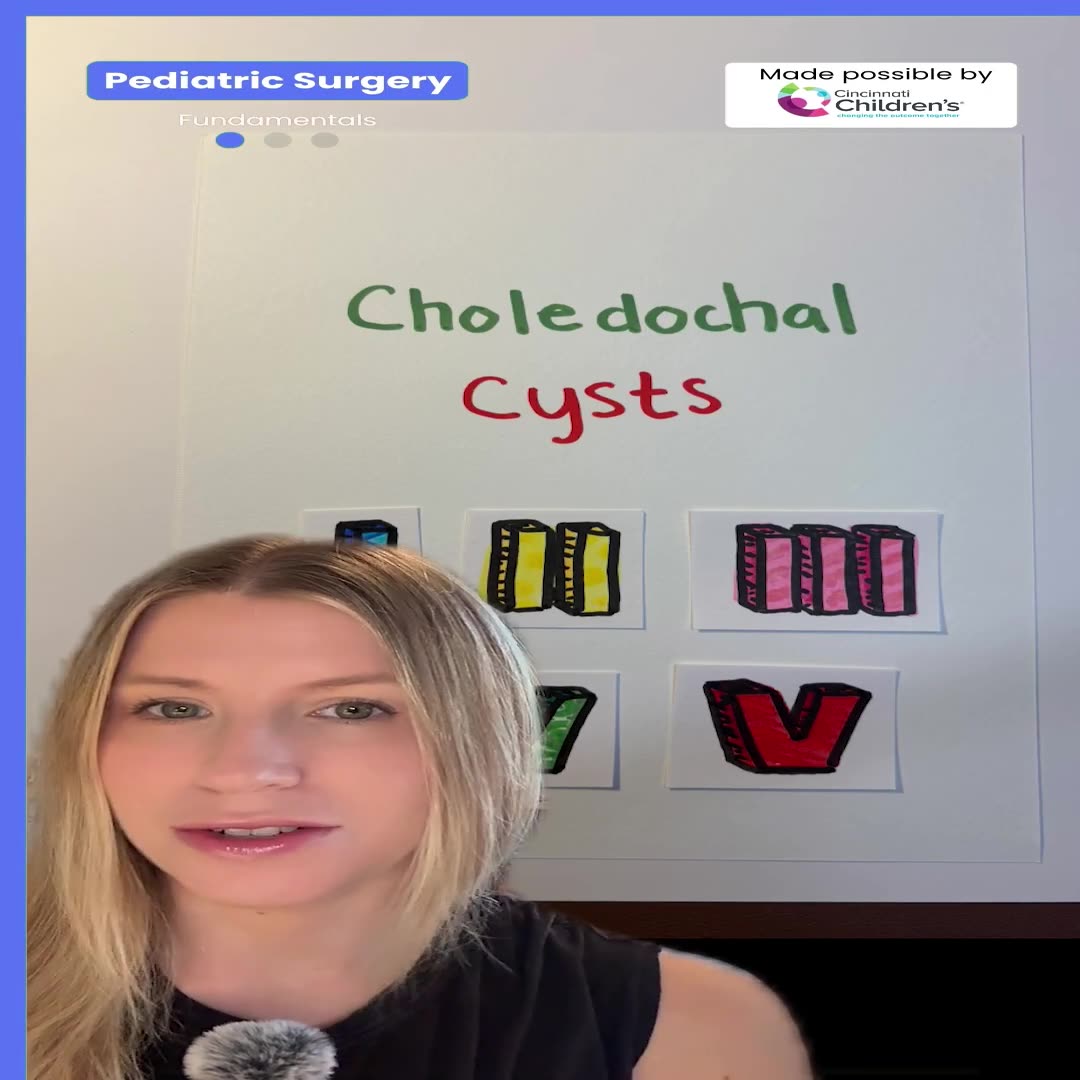
Choledochal Cyst Types Explained: Pediatric Surgery Fundamentals
1 min · Published Sep 2026
What the experts said
The hybrid approach (laparoscopic visualization followed by open inguinal orchidopexy) may be useful when laparoscopic equipment or experience is limited.
The Arena and Romeo study examined patients from 2012 to 2015 at the University of Messina, asking whether open inguinal orchidopexy is safe compared to laparoscopic vessel-sparing approaches for intraabdominal testes.
The study protocol involved inguinal ultrasound for all patients; if the testicle was not localized, laparoscopic exploration was performed, and if the testicle was seen in the abdomen, an open inguinal approach was used.
The series included 19 patients for a total of 21 orchidopexies.
The study reported zero testicular loss and zero atrophy rate.
One patient required a redo operation for high positioning in the high scrotum.