


Chapter 1 of 5 · Fundamentals
Clinical rationale
Introduction and Clinical Rationale for Rectal Irrigations
Expert statements on this page
No expert statements were drawn from this page.
Host summaries · secondary, not cited in answers
Educational content from recorded physician discussions — not medical advice. Talk to your (or your child's) care team about your situation.
Podcast
Hirschsprung Disease â PediaCast 287
Marc Levitt · 38 min · Published May 2014
Video
The use of postoperative calibrations in Hirschsprung disease
59 s · Published Nov 2024
Video
Hirschsprung-associated enterocolitis in children: An ERNICA animation for parents and families
3 min · Published Dec 2023
Podcast
Colorectal Quiz Episode 3: Hirschsprung Disease
20 min · Published Feb 2021
Video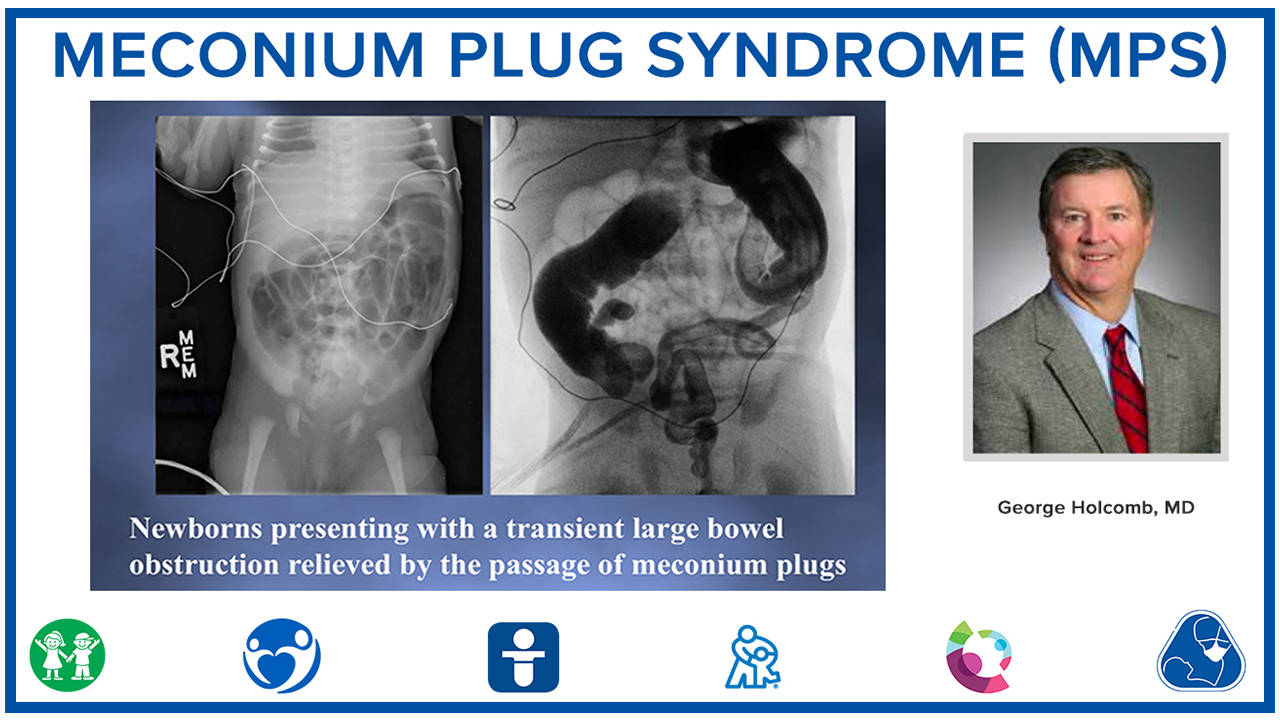
Meconium Plug Syndrome (MPS)
Published Mar 2020
Video
Update Course Rewind: Botox in Hirschsprung Disease 2023
5 min · Published Feb 2024
Video
Validation of an anorectal malformation trainer - Can a high-fidelity model simulate real life?
1 min · Published Jun 2026
Video
Complications and Long-Term Outcomes of Patients With Cloacal Malformation After Bowel Neovagina...
1 min · Published Jun 2026
Video
Safety and utility of long-acting steroid injection for management of post-operative stricture...
1 min · Published Jun 2026
Video
Association Between Social Determinants of Health and Choice of Urinary Reconstruction in Children
1 min · Published Jun 2026
Video
The Perineal Body Preserving PSARP (PPP)
11 min · Published Jun 2026
Video
Update Course Rewind 2025: Hirschsprung + ARM: Rare but Real
1 min · Published May 2026
Podcast
Long-term obstetric and gynecologic care for patients with anorectal malformations
21 min · Published Sep 2026
Podcast
Post-pubertal gynecologic evaluation and management of patients with anorectal malformations
22 min · Published Sep 2026
Podcast
Pre-pubertal gynecologic evaluation and management of patients with anorectal malformations
23 min · Published Sep 2026
Podcast
Methods of gynecologic evaluation for patients with anorectal malformations
21 min · Published Sep 2026
Podcast
Gynecologic care in patients with anorectal malformations: A primer and call to action
18 min · Published Sep 2026
Podcast
Evaluation and Management of Postsurgical Patient With Hirschsprung Disease Neurogastroenterology & Motility Committee: Position Paper of North American Society of Pediatric Gastroenterology, Hepatology, and Nutrition (NASPGHAN)
17 min · Published Sep 2026
What the experts said
Emily Rice is a nurse with the Division of Colorectal and Pelvic Reconstruction at Children's National Hospital.
Rectal irrigations can help a child empty their colon of stool and gas.
Children who suffer from Hirschsprung disease or functional constipation have colons that may not move stool through the body as quickly as it should, a condition called dysmotility.
When stool sits in the colon for too long, it can cause bacteria to grow and can lead to enterocolitis, which is an inflammation of the colon.
Rectal irrigations help keep a child healthy and safe by preventing and treating enterocolitis.
Irrigations put salt water (saline) into the colon to help clean the stool out and prevent infection.
If a child has a history of Hirschsprung disease and is showing signs of enterocolitis or dehydration, caregivers should perform an irrigation and immediately contact the medical team or pediatrician.
A 24-french silicone Foley catheter is used for rectal irrigations in children one year of age or older.
A 20-french silicone catheter is used for children under one year of age.
The irrigation procedure uses 20 milliliters of saline per flush.
The child should be positioned on their back with knees bent and pulled up towards their chest to visualize the anus and allow stool and gas to exit the colon.
The Foley catheter should be gently inserted into the rectum about 4-6 inches.
Slowly turning and moving the catheter back and forth in the rectum may help find pockets of stool that are stuck in the colon.
It is important to wait between each flush for fluid to drain out of the rectum and to ensure 20 milliliters is returned from each flush before repeating.
Irrigation can continue until the fluid draining from the catheter is clear.
The catheter should not be inserted all the way to the end and should not be forced; when gently advanced, it will easily follow the pathway or curve of the colon.
If saline is pushed in but no water or stool comes back out, the catheter should be pulled out a little bit then gently pushed back in.
If no saline or stool returns with irrigation, check the catheter for blockage by food or thick stool, as stool can block the tiny holes at the tip of the catheter.
Massaging the child's belly or having them change positions may help if there is no return of fluid.
If there is still no return after troubleshooting, caregivers should contact the medical team or pediatrician.
If a child develops signs of enterocolitis or dehydration, caregivers should call the medical team or pediatrician immediately.
Signs of enterocolitis include fever, a swollen or large belly, foul-smelling stool, or no stool output in 24 hours.
Signs of dehydration include not urinating as much as normal, fewer wet diapers than usual, a dry or sticky mouth, few or no tears when crying, sunken eyes, cool skin, irritability, dizziness, or being more tired than usual.